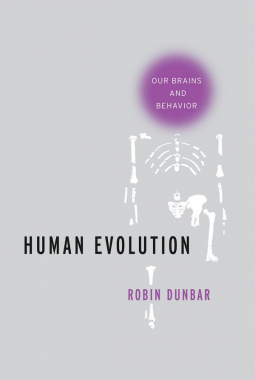
Published by: Oxford University Press
Publication Date: 1st November 2016
ISBN: 9780190616786
R.R.P.: $29.95
Continue reading “Review: ‘Human Evolution’ by Robin Dunbar”
Everything Is Better With Dragons
Book blogger, Autistic, Probably a Dragon
Published by: Oxford University Press
Publication Date: 1st November 2016
ISBN: 9780190616786
R.R.P.: $29.95
Continue reading “Review: ‘Human Evolution’ by Robin Dunbar”
Evening all,
After a busy eight days I was absolutely exhausted and my depression was acting up, so today I have done nothing. I’m feeling much better this evening so I thought I’d write a couple of reviews. I’ve been updating my writers CV and my log of submissions. It’s quite sad, I’ve had a few letters published but nothing else, except for a piece in an anthology about writing, I have two whole sentences in it. I sent a couple of queries off to local papers today but I don’t expect to hear anything, I haven’t when I’ve emailed them before. I keep looking at my submissions log and I’m sure I’ve missed things out; I know I’ve sent queries to a couple of newspapers and to local magazines, I think I must have forgotten to log them. How silly of me.
But that’s enough of that, on to the reviews. Both these books came from netgalley.com and I’ve already given my feedback on that website. I usually wait and do it all at once but I was twitchy last night and needed to distract myself.Continue reading “A couple of quick reviews”
The drug ketamine (a club drug sometimes called ‘Special K’) is legally used as an animal tranquilliser and illegally used to get high. Recent work has shown it also has a antidepressant effect. Continue reading “‘Special K’ metabolite may provide a new drug to treat depression”
When we watched a programme about the evolution of life on Earth, Mumsy asked how geologists knew how old the rocks with the fossils in them were. I said ‘isotopes’, she said ‘what?’ This is my attempt to explain radiometric dating and some of it’s uses.
We’re going to have to start at the beginning, with atoms.
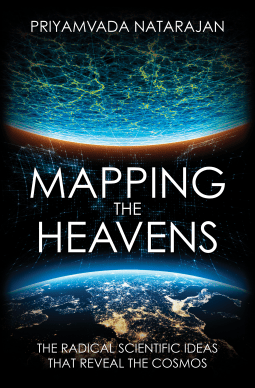
Published by: Yale University Press
Publication Date: 26th April 2016
ISBN: 9780300204414
Format: Hardback
R.R.P : £16.99
Continue reading “Review: ‘Mapping the Heavens’ by Priyamvada Natarajan”
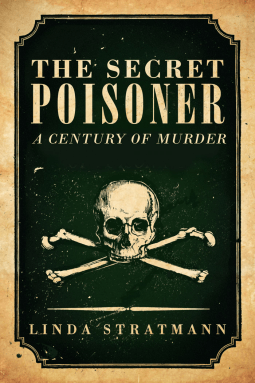
Published By: Yale University Press
Publication Date: 22nd March 2016
ISBN: 9780300204735
R.R.P. (hardback): £20.00 (but it’s cheaper online)
Another one from netgalley.com
Continue reading “Review: ‘The Secret Poisoner’ by Linda Stratman”
 Published by: John Murrey Press
Publication date: 22nd October 2015
Edition: Hardback
Price: £25.00 (although it is available for as little as £6.99 from some online retailers)
ISBN: 9781848548985
Another one from Netgalley in return for a review
Continue reading “Review: ‘The Invention of Nature’ by Andrea Wulf”

Published by: Island Press
Publication Date: 5th May 2016
ISBN: 9781610913812
Price: Hardback £27.00, Paperback 14.00 (from amazon.co.uk)
I received a review copy from Netgalley.com in return for a review – as per usual.
Blurb
Traditional toxicology textbooks tend to be doorstops: tomes filled with important but seemingly abstract chemistry and biology. Meanwhile, magazine and journal articles introduce students to timely topics such as BPA and endocrine disruption or the carcinogenic effects of pesticides, but don’t provide the fundamentals needed to understand the science of toxicity. Written by a longtime professor of toxicology, Modern Poisons bridges this gap.
This accessible book explains basic principles in plain language while illuminating the most important issues in contemporary toxicology. Kolok begins by exploring age-old precepts of the field such as the dose-response relationship and the concept, first introduced by Ambroise Paré in the sixteenth century, that a chemical’s particular action depends on its inherent chemical nature. The author goes on to show exactly how chemicals enter the body and elicit their toxic effect, as well as the body’s methods of defense.
With the fundamentals established, Kolok digs into advances in toxicology, tracing the field’s development from World War II to the present day. The book examines both technical discoveries and their impacts on public policy. Highlights include studies of endocrine-disrupting chemicals in toiletries and prescriptions, the emerging science on prions, and our growing understanding of epigenetics.
Readers learn not only how toxic exposure affects people and wildlife, but about the long-term social and environmental consequences of our chemicals. Whether studying toxicology itself, public health, or environmental science, readers will develop a core understanding of—and curiosity about—this fast-changing field
My Review
It does what it says on the tin in providing an introduction to toxicology that is accessible. If you got through GCSE Biology you’ll be ably to understand the explanations in this book. The range of material, and examples, covered is an excellent illustration of the wide variety of areas covered by modern toxicology, from naturally occurring toxins, like snake venom, to the concentrations of pharmaceuticals in surface water and bacterial resistance to antibiotics.
The language used was generally jargon free, and where technical words were necessary an excellent explanation was provided. The explanation of biological and chemical processes was clear and concise. Later chapters, concerning antibiotic resistance for example, steered clear of the sensationalism often associated with anthropogenic chemicals and their environmental effects, while illustrating those effects. The explanation of epigentics was especially interesting, especially as regards to multigenerational and transgenerational effects.
There’s a lot in this book and it is all interesting. I recommend it to anyone interested in the applied sciences, or if you just what to know how poisons work. It is a good bridge between a textbook and popular science.
5/5

Published: 17 Sep 2015
ISBN: 9781903153574
Pages: 356
Binding: Hardback
Imprint: York Medieval Press RRP £60
Blurb
When a Spanish monk struggled to find the right words to convey his unjust expulsion from a monastery in a desperate petition to a sixth-century king, he likened himself to an aborted fetus. Centuries later, a ninth-century queen found herself accused of abortion in an altogether more fleshly sense. Abortion haunts the written record across the early middle ages. Yet, the centuries after the fall of Rome remain very much the “dark ages” in the broader history of abortion.
This book, the first to treat the subject in this period, tells the story of how individuals and communities, ecclesiastical and secular authorities, construed abortion as a social and moral problem across a number of post-Roman societies, including Visigothic Spain, Merovingian Gaul, early Ireland, Anglo-Saxon England and the Carolingian empire. It argues early medieval authors and readers actively deliberated on abortion and a cluster of related questions, and that church tradition on abortion was an evolving practice. It sheds light on the neglected variety of responses to abortion generated by different social and intellectual practices, including church discipline, dispute settlement and strategies of political legitimation, and brings the history of abortion into conversation with key questions about gender, sexuality, Christianization, penance and law. Ranging across abortion miracles in hagiography, polemical letters in which churchmen likened rivals to fetuses flung from the womb of the church and uncomfortable imaginings of resurrected fetuses in theological speculation, this volume also illuminates the complex cultural significance of abortion in early medieval societies.
As ever, I requested and received this e-book from Netgalley.com
My Review
The relentless emphasis on early sources can be hard work to get through, especially with the copious footnoting and the multiple pages of the bibliography. It made me so happy.
Mistry uses a wide variety of sources, some which have been heavily mined by previous works on the subject and some which are lesser known, if Mistry’s comments are to be believed. They give us a fragmentary but interesting look in to early mediaeval religious and secular thoughts on discussion. Many of the sources themselves relied on earlier sources for their authority, the pronouncements of church fathers and councils passed on in legal codes and penitentials. Much of the discussion arose around the point at which foetus achieves personhood and this the point at which murder is committed. If abortion was murder a different punishment was inflicted.
Even though it was hard going and I sometimes had to re-read a page I found this book very enlightening, and would recommend it for those interested in the European early middle ages, a study of one of the many aspects of the intricacies of life.
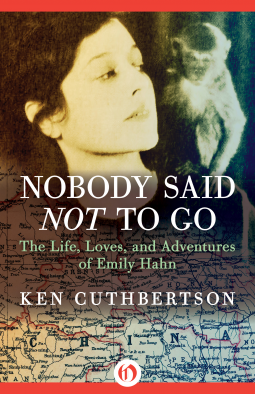
I.S.B.N: 9781504034050
Publication Date: 22nd March 2016
Publisher: Open Road Integrated Media
Blurb
Emily Hahn first challenged traditional gender roles in 1922 when she enrolled in the University of Wisconsin’s all-male College of Engineering, wearing trousers, smoking cigars, and adopting the nickname “Mickey.” Her love of writing led her to Manhattan, where she sold her first story to theNew Yorker in 1929, launching a sixty-eight-year association with the magazine and a lifelong friendship with legendary editor Harold Ross. Imbued with an intense curiosity and zest for life, Hahn traveled to the Belgian Congo during the Great Depression, working for the Red Cross; set sail for Shanghai, becoming a Chinese poet’s concubine; had an illegitimate child with the head of the British Secret Service in Hong Kong, where she carried out underground relief work during World War II; and explored newly independent India in the 1950s. Back in the United States, Hahn built her literary career while also becoming a pioneer environmentalist and wildlife conservator.
My Review
This biography was thoroughly engaging and I read it constantly for three days. Emily ‘Mickey’ Hahn was a trailblazer: a world traveller, writer, and pioneer of sexual honesty in a world where women stayed home and had babies. And definitely didn’t talk about their boyfriends. She visited Belgian Congo at a time when white women didn’t travel alone in Africa, had a relationship with a Chinese man in 1930’s Shanghai, survived the Japanese occupation of Hong Kong, had a child with a married man, and write copiously from the 1920’s until her death in the mid-nineties about her experiences, and her many interests, including apes, the early women’s movement in the U.S., biographies of the Soong sisters, among others, as well as fictionalised accounts of her time in China, depression era New York, and in Africa.
This book is a real find, and a fascinating story that needs to be more widely known, and the subject’s own writing better appreciated. This book is very well written, highly readable and as in-depth as you could want. I can’t commend it highly enough.
5/5
 Everything Is Better With Dragons