
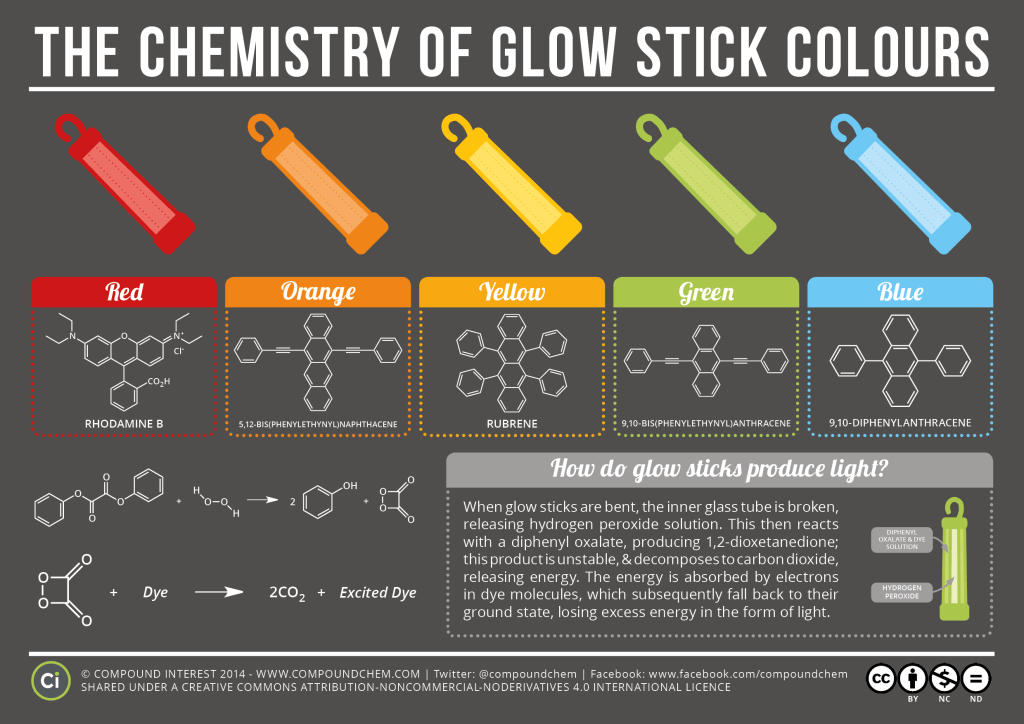
How glow sticks work. It’s quite handy that I happened to write my dissertation, way back in 2003, on the subject of luminescence since that’s what we’re talking about. Unfortunately, I can’t find my dissertation or my OHP slides – yes we were still using overhead projectors at Durham University in the early 2000’s – so I’ve actually had to look things up, mostly Jablonski diagrams. I had a really good one that I used for my dissertation, but like I said, I can’t find them.
Category Archives: Non-fiction
Review: ‘How English became English’ by Simon Horobin
How English Became English
A Short History of a Global Language
Simon Horobin

Published by: Oxford University Press Publications date: 28th January 2016 Edition: Hardback ISBN: 9780198754275 Price: £10.99
Continue reading “Review: ‘How English became English’ by Simon Horobin”
Review: ‘Benjamin Franklin in London’ by George Goodwin
George Goodwin
Publication Date: 16th February 2016
Edition: Hardcover
ISBN: 9780300220247
Price: $32.50
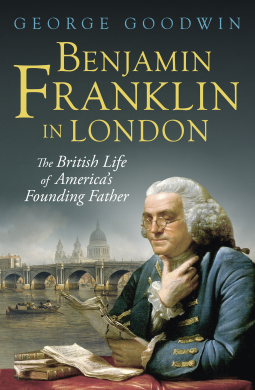
Continue reading “Review: ‘Benjamin Franklin in London’ by George Goodwin”
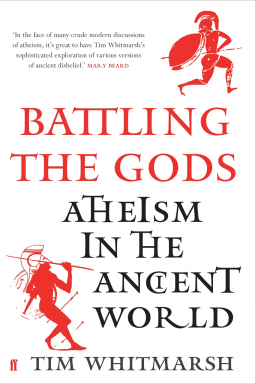
Review: ‘Battling the Gods: Atheism in the Ancient World’ by Tim Whitmarsh
Battling the Gods
Atheism in the Ancient World
by Tim Whitmarsh
Published by: Faber & Faber
Publication Date: 4th February 2016
Edition: Hardcover
ISBN: 9780571279302
Price: £25.00 (GBP)
Continue reading “Review: ‘Battling the Gods: Atheism in the Ancient World’ by Tim Whitmarsh”
Review: ‘Blood Oil’ by Leif Wenar
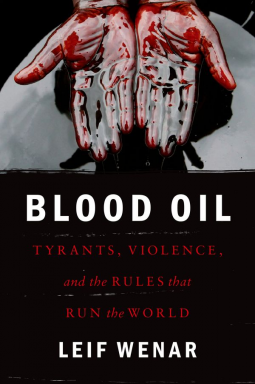
Blood Oil
Tyrants, Violence, and the Rules That Run the World
Leif Wenar
Publisher: Oxford University Press
ISBN: 9780190262921
Publication Date: 1st January 2016
Does Freyja have a personal name?
Random thought as I lay in bed last night contemplating the shiny I’ve won in one of Sebastian Lokason’s giveaways – the prize is Vanir related but I won’t know which of the prizes I’ve won until it arrives later in the month -and the amber hair dodad/bracelet (made by Ember at EmberVoices) that I won earlier this year.
Something is afoot. And not just the funny shaped thing on the end of your leg.
Anyway, ignore the terrible joke, I do have a point.
The god known as Frey, Freyr, Ingvi Freyr, or Frea, has a personal name, recorded a Ing. ‘Frey‘ and the variants mentioned above are titles meaning ‘lord’.
The goddess known as Freya, Freyja, Freo, Frowe, on the other hand does not have a recorded personal name. Her ‘names’ are titles, all meaning ‘lady’. So the question arises, does She have a personal name and if so, what is it?
Review: ‘Conquerors’ by Roger Crawley
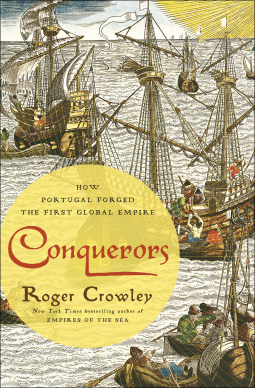
Published by: Random House
Publication Date: Dec 1, 2015
Edition: Hardcover
ISBN: 9780812994001
Price: $30.00
Review: ‘I Call Myself A Feminist’ Edited by Victoria Pepe

Published By: Little, Brown Book Group UK
Publication Date: 5th November 2015
Edition: Paperback
ISBN: 9780349006550
Price: £13.99
Blurb
Is feminism still a dirty word? We asked twenty-five of the brightest, funniest, bravest young women what being a feminist in 2015 means to them.
We hear from Laura Bates (of the Everyday Sexism Project), Reni Eddo-Lodge (award-winning journalist and author), Yas Necati (an eighteen-year-old activist), Laura Pankhurst, great-great granddaughter of Emmeline Pankhurst and an activist in her own right, comedian Sofie Hagen, engineer Naomi Mitchison and Louise O’Neill, author of the award-winning feminist Young Adult novel Only Ever Yours. Writing about a huge variety of subjects, we have Martha Mosse on how she became a feminist, Alice Stride on sexism in language, Amy Annette addressing the body politic and Samira Shackle on having her eyes opened in a hostel for survivors of acid attacks in Islamabad, while Maysa Haque thinks about the way Islam has informed her feminism and Isabel Adomakoh Young insists that women don’t have to be perfect. There are twelve other performers, politicians and writers who include Jade Anouka, Emily Benn, Abigail Matson-Phippard, Hajar Wright and Jinan Younis.
Is the word feminist still to be shunned? Is feminism still thought of as anti-men rather than pro-human? Is this generation of feminists – outspoken, funny and focused – the best we’ve had for long while? Has the internet given them a voice and power previously unknown?
Rachel Holmes’ most recent book is Eleanor Marx: A Life; Victoria Pepe is a literary scout; Amy Annette is a comedy producer currently working on festivals including Latitude; Alice Stride works for Women’s Aid and Martha Mosse is a freelance producer and artist.
Continue reading “Review: ‘I Call Myself A Feminist’ Edited by Victoria Pepe”
Review: ‘Failed’ by Mark Weisbrot
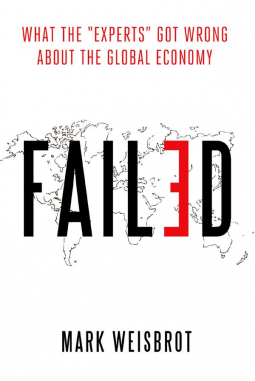
Published by: Oxford University Press
Publication Date: 1st October 2015
ISBN: 9780195170184
Blurb
Why did the Eurozone end up with an unemployment rate more than twice than that of the United States and six years after the collapse of Lehman Brothers? Was crisis in the Eurozone inevitable? What caused the prolonged economic failure experienced by the majority of the world’s low- and middle-income countries at the end of the 20th century?
Failed analyzes and ties together some of the most important economic developments of recent years with the common theme that they have been widely misunderstood and in some cases almost completely ignored. A central argument of Failed is that there are always viable alternatives to prolonged economic failure. Author Mark Weisbrot shows that political agendas are often the root cause of avoidable financial crises and drawing on lessons learned from previous crises, recessions, and subsequent recovers can prevent further failures in the future.
My Review
Interesting yet frustrating information is presented in this book.
The author’s main argument is that the recent recession and current difficulties in the Eurozone have been exacerbated by international financial organisations – the IMF, ECB and EC – in order to force the implementation of policies that would never be accepted by the electorate.
The author then expands the argument to cover historical recessions internationally, such as the Asian recession in the late nineties, and South and Central American financial crises in the first decade of the 21st century. He maintains that the IMF, directed by Washington, could have prevented these problems but chose not to, again in order to force through political changes that couldn’t be made at the ballot box.
If you’ve never considered the role of the IMF et al in politics, this book will be of interest, and an eye opener. If you are aware of the political machinations of the financial sector then it may prove frustratingly basic. The author presents adequate evidence for his claims, but it feels a though the whole book is an extended article, with repeated information padding out the chapters. It could also do with some formatting work. Things didn’t always flow correctly.
3/5
Infection
I saw a video on Facebook a couple of months ago wherein a woman with a giant lump on her arm gets her boyfriend to take a razor blade to said lump.Continue reading “Infection”

