Publication date Thursday, October 26, 2023 Price £14.99 EAN\ISBN-13 9781856755269
Blurb
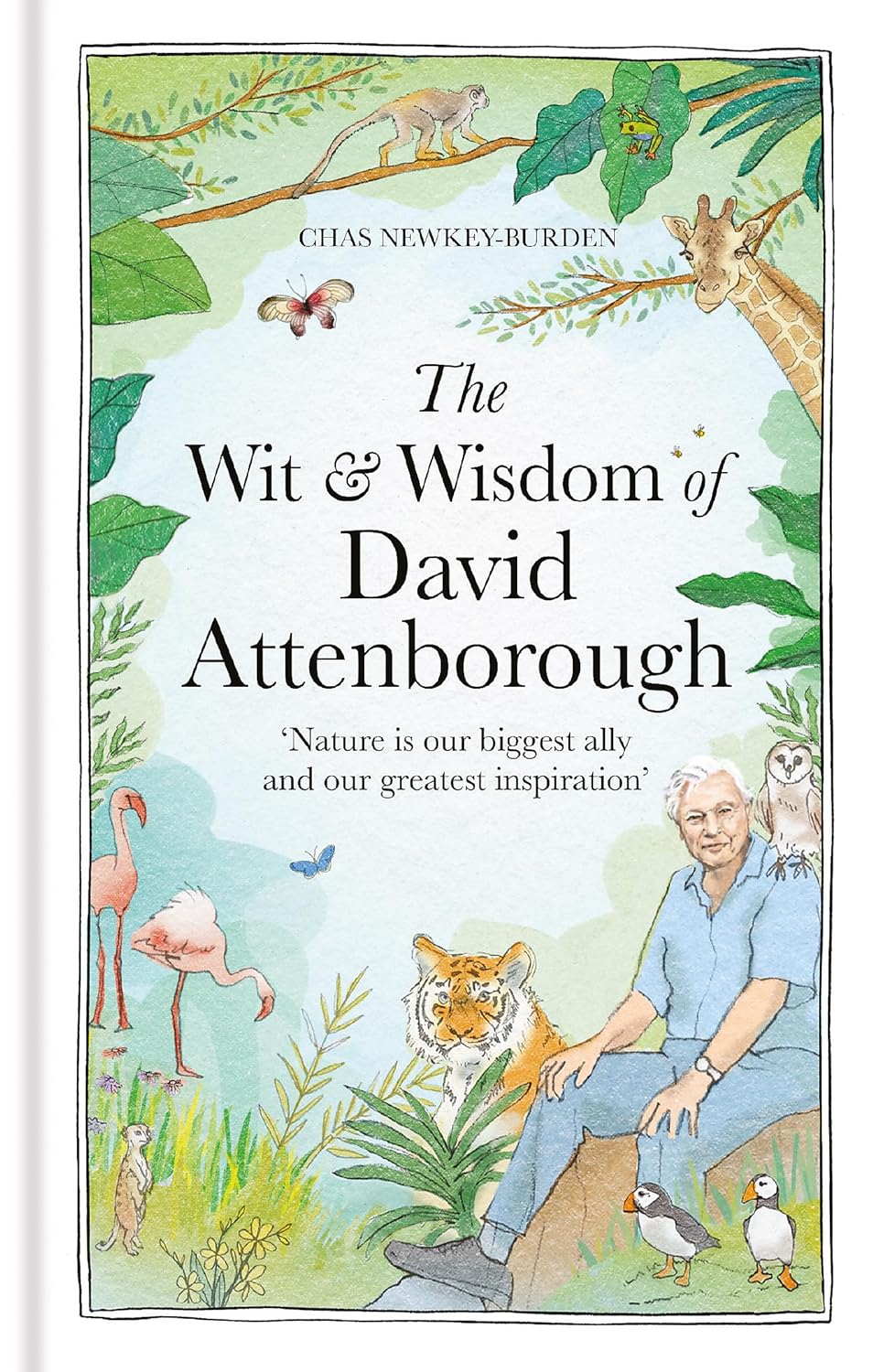
Description A fascinating and entertaining collection of facts, quotes and stories, celebrating Sir David Attenborough’s wicked sense of humour and astute wisdom. David Attenborough is a national treasure, known for his soothing voice, calming presence, passion for the natural world, and his humble, easy-going nature. Despite his incredible talent and influence, he tends to play it all down, one time stating that, ‘I can’t believe I’m still employed’.
So if he won’t celebrate himself, we’ll have to do it for him. Filled with facts, tributes and anecdotes, as well as beautiful illustrations, this enormously positive book celebrates Sir David, providing a fascinating insight into his life as well as showcasing his brilliant sense of humour. Running chronologically, this book begins with his early days, to his first job at the BBC, to eventually becoming the most esteemed naturalist on the planet, as he is today.
Such revelations include:
There are 18 plants and animals named after him
When asked by a reporter how many degrees he had, he said it would be ‘rude to count’*
The single thing that would improve his quality of life is ‘good, workable knees’. Blending his quips galore with his powerful messages on the environment and future of the planet, this timely book showcases everything we love about Sir David, making it the perfect gift for any fan.
3rd September 2023 Ages 9+ | £16.99 Hardback | 60 illus 160pp | 24.0 x 17.2cm
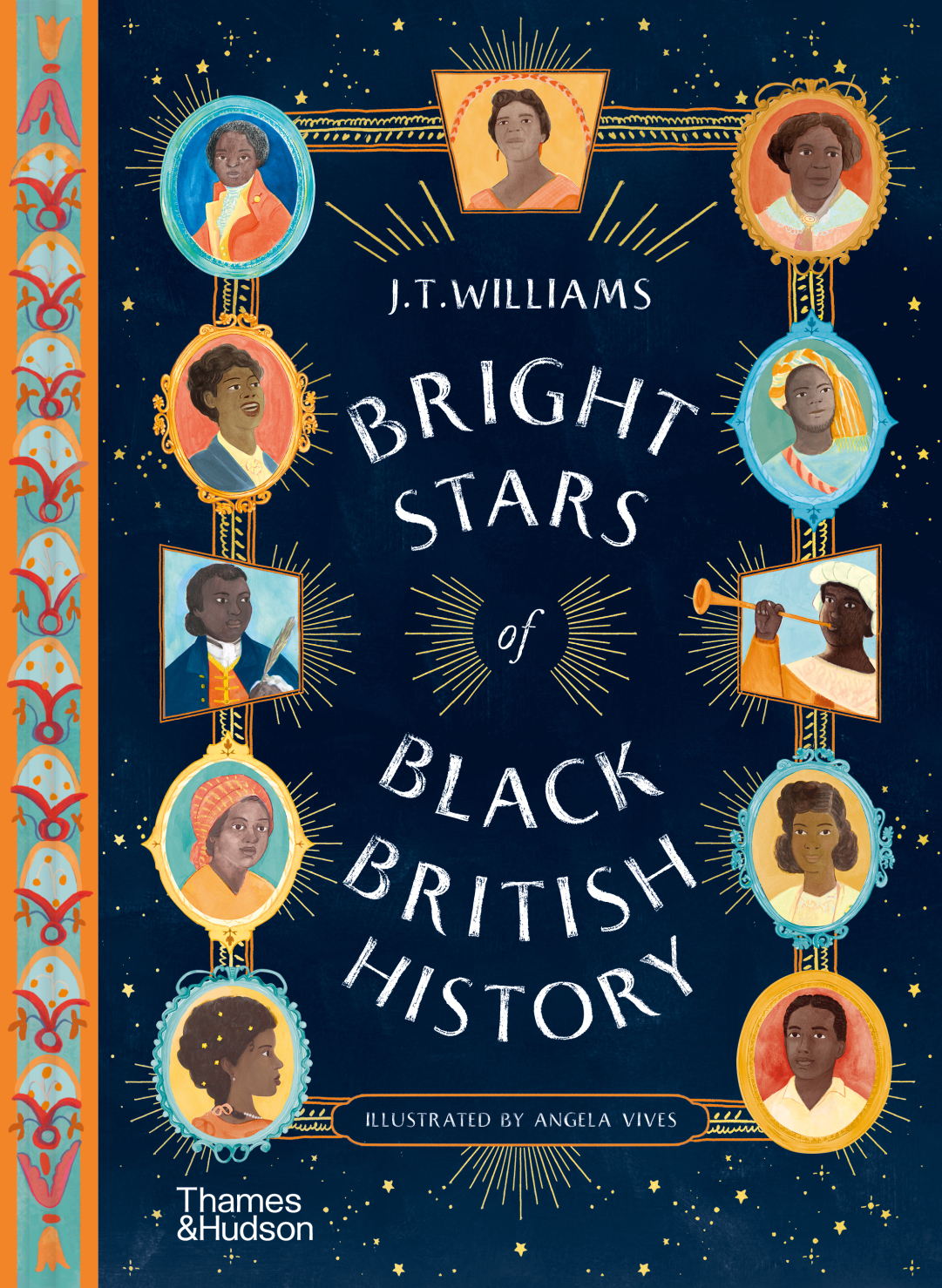
A dazzlingly illustrated collection presenting the extraordinary life stories of fourteen bright stars from Black British history, from Tudor England to modern Britain.
Brought to life through hand-painted illustrations by award-winning illustrator Angela Vives, this important and timely book from author and educator J. T. Williams brings the lives of fourteen shining stars from Black British History into the spotlight, celebrating their remarkable achievements and contributions to the arts, medicine, politics, sport and beyond.
Featuring a constellation of iconic individuals – including storytelling freedom fighter Mary Prince, football star and World War I soldier Walter Tull, and Notting Hill Carnival founder Claudia Jones – ‘Bright Stars of Black British History’ shines a light on the courage, resilience and talent of remarkable individuals who have left a lasting mark on our collective history.
By Amanda J Thomas Imprint: Pen & Sword History Pages: 280 ISBN: 9781473875678 Published: 23rd June 2020
Blurb
The Nonconformist Revolution explores the evolution of dissenting thought and how Nonconformity shaped the transformation of England from a rural to an urban, industrialised society.
The foundations for the Industrial Revolution were in place from the late Middle Ages when the early development of manufacturing processes and changes in the structure of rural communities began to provide opportunities for economic and social advancement. Successive waves of Huguenot migrants and the influence of Northern European religious ideology also played an important role in this process. The Civil Wars would provide a catalyst for the dissemination of new ideas and help shape the emergence of a new English Protestantism and divergent dissident sects. The persecution which followed strengthened the Nonconformist cause, and for the early Quakers it intensified their unity and resilience, qualities which would prove to be invaluable for business.
In the years following the Restoration, Nonconformist ideas fuelled enlightened thought creating an environment for enterprise but also a desire for more radical change. Reformers seized on the plight of a working poor alienated by innovation and frustrated by false promises. The vision which was at first the spark for innovation would ignite revolution.
My Review
I received this book in 2020 from the publisher in return for an honest review. It has taken me a long time to read it. I have been reading in in bursts, a chapter or two at a time around other reviewing commitments and work.
This review is all over the place. I have just finished the book. It took me 3.5 years to read the first ten chapters (140 pages) and less than a day to read the last five (68 pages); I’m a bit confuddled.
The book covers developments from the 1300s to the 1800s, in dissenting religious groups and industrial development, and makes the argument that without the unconventional thinking and organisational support Nonconformists and ‘heretics’ provided to each other, England would not have become the driver of Industrial revolution that it was in the early 18th to late 19th century that it was. The focus is on England, the interactions between England and Continental ideas and people, England and the North American colonies, England and France (because, 1066 and all that). It doesn’t look at technology developed in any of the colonies (usually derived from indigenous or enslaved peoples’ knowledge).
There are some interesting ideas in this book:
The author points out the complex family networks of the Midlands and northern Nonconformist families who supported each others’ business ventures and encouraged/funded new developments in ironworks, among other things. The relationships were longstanding and lucrative for many of the families. The connections went from the Tyne to the Severn, through Liverpool, Manchester, Sheffield, Birmingham and Bristol.
The literacy encouraged by Protestant beliefs – that people should be able to read the Bible in their own language – encouraged education in these families and that enabled people to question social structures and norms, as well as make scientific breakthroughs.
Every group looks back to a golden age of freedom and liberty – the Peasant’s Revolt (which was more of a middling sorts revolt with villainage cannon fodder) looked back to a pre-Norman England, the Nonconformists of the 18th century valourised the Puritanism of the Republic. They never were golden ages, there were always tyrants and inequality and war.
The author doesn’t mention much about the slave trade, although some of the Nonconformist families made their money from making guns and cannons, supporting the East India Company and the slave trade. At least one person mentioned, from the 1700s, was disowned by his Quaker congregation for inheriting a gun company and supporting the slave trade. It is safe to say that without the triangular trade a lot of people wouldn’t have had the funds to support the new products produced by Wedgwood, or fund the research of Priestley and the Lunar society (amongst others). The focus of the book is so narrow that the author can’t bring these considerations into the text. I don’t know if that is a good or bad thing. She does mention the above, but briefly, with no exploration. A wider exploration of the developing empire might have added context.
The final two chapter focus heavily on Thomas Paine, his adventures in North America and France, who he knew and what he wrote. Amanda J. Thomas explores the possible developments of his radical thought from his Quaker upbringing to his return to North America in 1800 after imprisonment in France. The author connects his activities to the rise and fall of radical organisations, especially those in Sheffield, demanding governmental reform. As we all should know, the government of the time, and for decades afterwards, was very opposed to any reform, cracking down heavily, violently against anything that would put the high church gentry and the aristocracy out of control. And yet, people kept dissenting…
There were times when the book felt disjointed, as though it were a collection of essays arranged chronologically, and at other times several chapters would naturally follow from each other. This may be an artifact of the development of the book?
The writing is decent and the story is really interesting. What I think slowed me down was all the family trees (tangled shrubs in some cases) that the author felt the need to write out and share with us in the main text. I don’t think it was always necessary to getting the ideas across clearly and could possibly have be left to an appendix, along with the visual representations of the family trees.
The book has a good bibliography and indexing, notes are clearly identified and information sourced. The author has relied heavily on some sources more than others, usually those about specific families or individuals, which gives a possibly partial impression of events, but also provides interesting nuggets of information about individuals and the social and cultural dynamics of their times. I did not know that Joseph Priestley knew Thomas Paine and Thomas Jefferson, for example, or that Benjamin Johnson was a member of the Royal Society at the same time. I knew Erasmus Darwin and Wedgwood knew each other, because of the weird family dynamics of Charles Darwin and his cousin-wife. In-bred the lot of them -the Wedgwoods, Darwins and Galtons.
So, final thoughts. Interesting ideas and social history that tries to illuminate the development of the co-occurring scientific, religious and political though that brought about the 18th and 19th century Industrial Revolution in England, and makes some attempt to put it into the wider North Atlantic context. Quite well written and extensively researched. Excellent bibliography. Could do with some editing.
Also, I noted some references that make it into Discworld.
Bedford Square Publishers 09 November 2023 £20.00 978-1-9157-9896-1
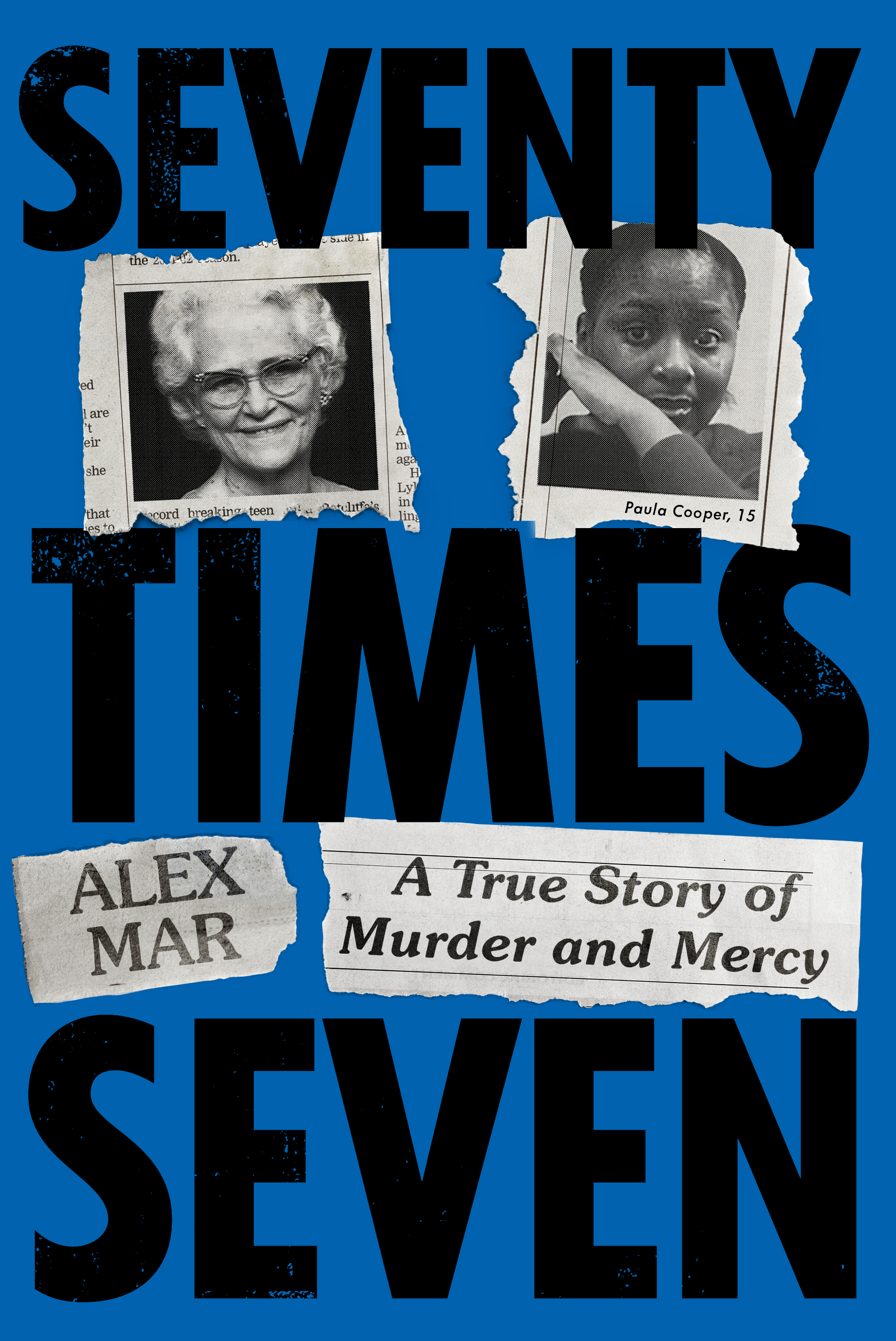
A masterful, revelatory work of literary non-fiction about a teenage girl’s shocking crime — and its extraordinary aftermath.
On a spring afternoon in 1985 in Gary, Indiana, a fifteen-year-old black girl kills a white elderly bible teacher in a violent home invasion. In a city with a history of racial tension the press swoops in.
Paula is sentenced to death, no one decries the impending execution of a tenth grader. But the tide begins to shift when the victim’s grandson Bill forgives the girl, against the wishes of his family, and campaigns to spare her life. This tragedy in a midwestern steel town soon reverberates across the United States and around the world — reaching as far away as the Vatican — as newspapers cover the story on their front pages and millions sign petitions in support of Paula.
As Paula waits on death row, her fate sparks a debate that not only animates legal circles but raises vital questions about the value of human life. This story asks us to consider the nature of justice, and what radical acts of empathy we might be capable of.
In the tradition of Michael Pollan, Anthony Bourdain, and Mark Bittman, “a surprising, flavorsome tour of ancient cuisines” (Kirkus ★)—from Neolithic bread to ancient Roman fish sauce—and why reviving the foods of the past is the key to saving the future.
Many of us are worried (or at least we should be) about the impacts of globalization, pollution, and biotechnology on our diets. Whether it’s monoculture crops, hormone-fed beef, or high-fructose corn syrup, industrially-produced foods have troubling consequences for us and the planet. But as culinary diversity diminishes, many people are looking to a surprising place to safeguard the future: into the past.
The Lost Supper explores an idea that is quickly spreading among restaurateurs, food producers, scientists, and gastronomes around the world: that the key to healthy and sustainable eating lies not in looking forward, but in looking back to the foods that have sustained us through our half-million-year existence as a species.
Acclaimed author Taras Grescoe introduces readers to the surprising and forgotten flavors whose revival is captivating food-lovers around the world: ancient sourdough bread last baked by Egyptian pharaohs; raw-milk farmhouse cheese from critically endangered British dairy cattle; ham from Spanish pata negra pigs that have been foraging on acorns on a secluded island since before the United States was a nation; and olive oil from wild olive trees uniquely capable of resisting quickly evolving pests and modern pathogens.
From Ancient Roman fish sauce to Aztec caviar to the long-thought-extinct silphium, The Lost Supper is a deep dive into the latest frontier of global gastronomy—the archaeology of taste. Through vivid writing, history, and first-hand culinary experience, Grescoe sets out a provocative case: in order to save these foods, he argues, we’ve got to eat them.
Published in partnership with the David Suzuki Institute.
Pub. Date October 2023 Price £16.99 ISBN-13 9780715654866
Description
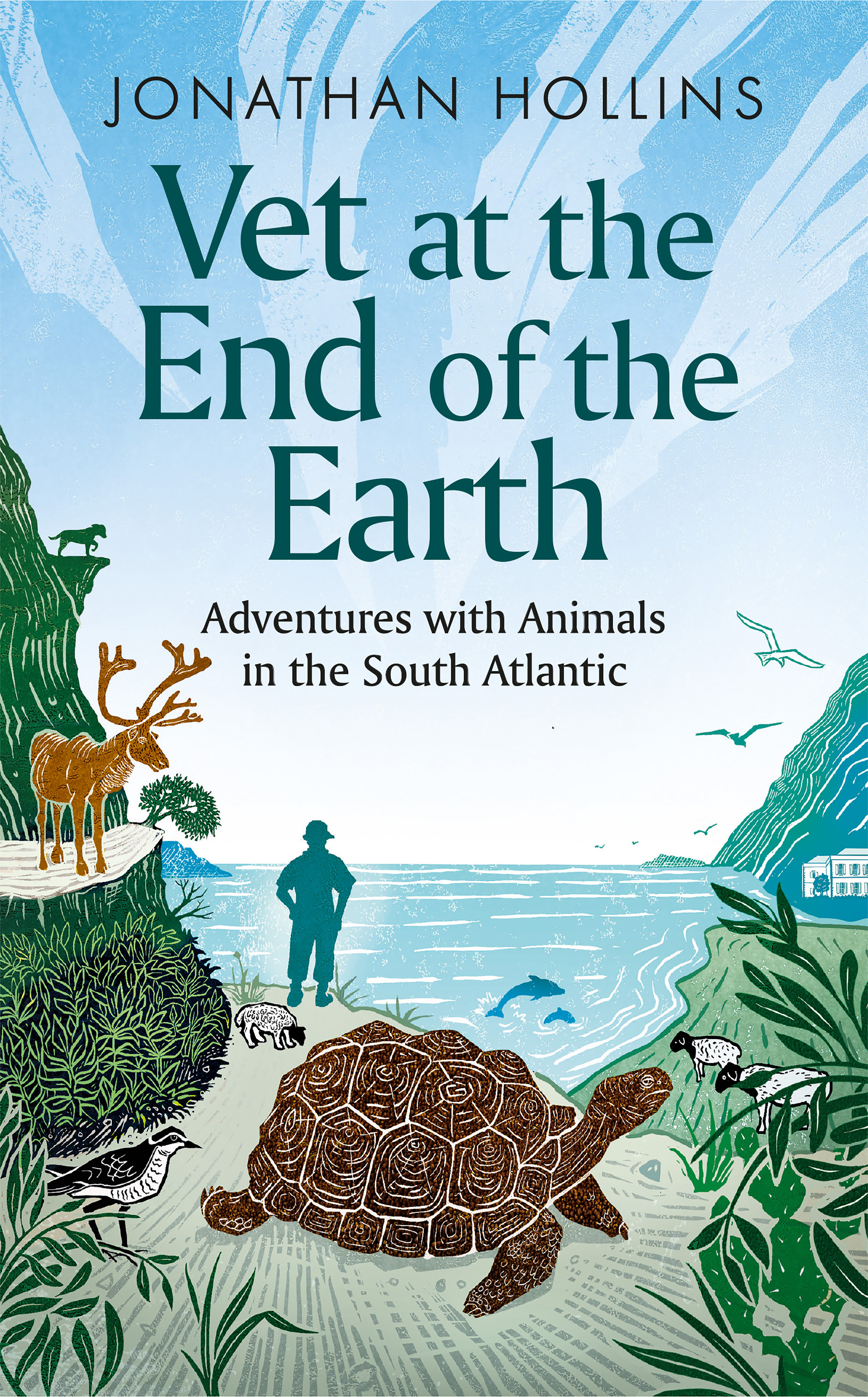
The role of resident vet in the British Overseas Territories encompasses the complexities of caring for the world’s oldest known land animal – a 190 year-old giant tortoise – and MoD mascots at the Falklands airbase; pursuing mystery creatures and invasive microorganisms; relocating herds of reindeer; and rescuing animals in extraordinarily rugged landscapes, from subtropical cloud forests to volcanic cliff faces.
Witty, warm and beautifully crafted, Jonathan Hollins’s tales of island vetting are not only full of wonderful creatures – they are also steeped in the unique local history, cultures and peoples of the islands, far removed from the hustle of modern life. These tales of island vetting are perfect for animal lovers, adventurers and armchair travellers alike.
Paperback £9.99 || $12.95 Jun 30, 2023 978-1-78904-662-5
Synopsis
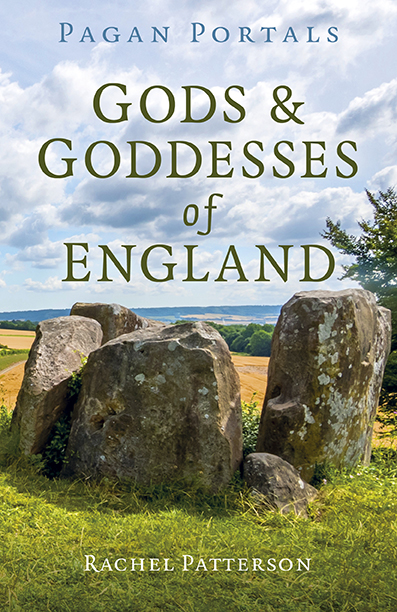
Rachel Patterson unearths and shines light on England’s ancient gods and goddesses – many of whom, until now, had long since been forgotten. Based on archaeological finds and ancient manuscripts, and including information about the tribes that once made their home in England’s pleasant lands, this book serves as a guide to the gods and goddesses of England, with suggested ways to work and connect with these very special deities.
My Review
Trevor at Moon Books sends me emails every now and then with new books and I agree to read and review them. I read this one a while ago, sorry Trevor, I’ve had a bit of a time lately, but I’ve finally got around to writing the review.
Rachel Patterson covers the broad history of Britain from the Iron Age to the Vikings – the broadly speaking non-Christian period, although Christianity existed in Britain and Ireland during the mid to late Roman Imperial period, and continued into the post-Roman period. However, during this period other deities were also worshipped, and some of these were recorded in monuments for the first, and in some cases only, time. Later deities were recorded in manuscripts, the days of the week and personal items.
The second section of the book covers the deities themselves, where they were worshipped and what we know about them, and ways to connect with a few of them.
The book focuses heavily on deities recorded on Roman monuments and in later Christian manuscripts – chronicles, sagas and legal records. The monuments are quite interesting, because they tell us something about the person who erected the monument as well as the deity they were erected to. In the later Cristian documents we obviously get a rather partial and one-sided view – no priest is going to give you a rounded opinion on rival religions, when they believe the gods of that religion are demons and believers are deluded or devil worshippers.
The author doesn’t seem to understand that pagan England is a specific time and place, and that it’s slightly disingenuous to include 2nd century northern British gods and 10th century Scandinavian deities.
The selection of rituals to connect with the deities are fairly standard neo-pagan rituals, that rely on the usual inclusion of elements, calling fairly generic directions, etc., which would not have been included in the original rituals, as they are 18th – 20th century inventions. I honestly don’t think the Matrones care if you call the Quarters, they just want us to remember and honour them.
If you’ve never thought about ancient deities in what is now England, this book is a place to start and if you want to know more, there is a list of books and websites in the further reading section.
I have recommendations of my own, although some are hard to get hold of. Brian Branston wrote ‘The Lost Gods of England’ in 1957, Kathleen Herbert wrote ‘Looking for The Lost Gods of England’ in the early 2000s, and then there’s ‘The Elder Gods: The Otherworld of Early England’, by Stephen Pollington. For the more academic, there is ‘Signals of Belief in Early England: Anglo-Saxon Paganism Revisited’, edited by Carver, Sanmark, and Semple, from 2010. It’s probably the newer and most comprehensive of the sources. These aren’t mentioned in the Further Reading so Patterson may not have heard of them.
Gods and Goddesses of England is easy to read and reasonably informative for those just beginning to explore these ideas.
Rachel Patterson
Rachel is an English witch who has been walking the Pagan pathway for over thirty years. A working wife and mother who has had over 25 books published (so far), some of them becoming best sellers. Her passion is to learn, she loves to study and has done so from books, online resources, schools and wonderful mentors over the years and still continues to learn each and every day but has learnt the most from actually getting outside and doing it.
She likes to laugh…and eat cake…
Rachel gives talks to pagan groups and co-runs open rituals and workshops run by the Kitchen Witch Coven. High Priestess of the Kitchen Witch Coven and an Elder at the online Kitchen Witch School of Natural Witchcraft. A regular columnist with Fate & Fortune magazine, she also contributes articles to several magazines such as Pagan Dawn and Witchcraft & Wicca. You will find her regular ramblings on her own personal blog and YouTube channel. Her craft is a combination of old religion witchcraft, Wicca, hedge witchery, kitchen witchery and folk magic. She lives in Portsmouth, England. Website: www.rachelpatterson.co.uk Personal blog https://www.rachelpatterson.co.uk/blog You Tube:https://www.youtube.com/user/Kitchenwitchuk Instagram https://www.instagram.com/racheltansypatterson/ Twitter https://twitter.com/TansyFireDragon
Publication date Thursday, September 14, 2023 Price £10.99 EAN\ISBN-13 9780857839732
Description
This book is a call to action. It warns that unless we learn to accept and respect our social, cultural and political differences as town and country people, we are never going to solve the chronic problems in our food system and environment.
As we stare down the barrel of climate change, only farmers – who manage two thirds of the UK’s landscape – working together with conservation groups can create a healthier food system and bring back nature in diverse abundance. But this fledgling progress is hindered and hamstrung by simplistic debates that still stoke conflict between conservative rural communities and the liberal green movement.
Each chapter, from Family and Politics to Animal Welfare and the Environment, explores a different aspect of the urban/rural disconnect, weaving case studies and research with Anna’s personal stories of growing up on a small, upland farm. There is a simple theme and a strong message running throughout the book – a plea to respect our differences, recognise each other’s strengths and work together to heal the land.
HARDBACK 978-1-80018-268-4 320 pages 303 × 216 mm 24 August 2023 £30 / $36.95 / C$54.99 / €32.49
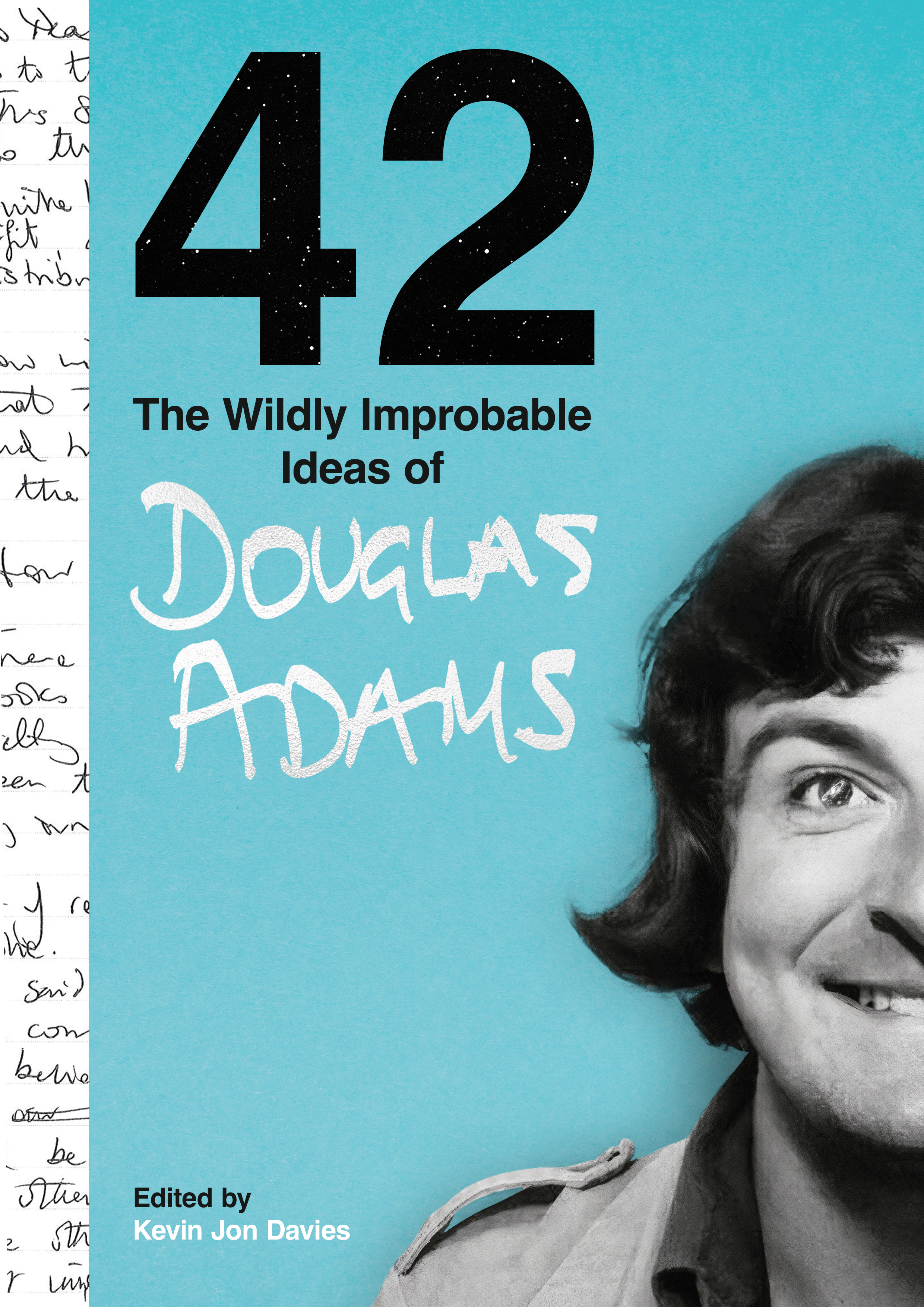
A full-colour compendium of hundreds of never-before-published artefacts from Adams’ archive, including diary entries, notes and musings, letters, photographs, scripts, poems and more.
– Authorised by the estate of Douglas Adams, it includes personal memorabilia from his family. – Features a foreword from Stephen Fry and letters written after Adams’ death from friends and fans: Neil Gaiman, Margo Buchanan, Dirk Maggs, Robbie Stamp, Arvind David.
When Douglas Adams died in 2001, he left behind 60 boxes full of notebooks, letters, scripts, jokes, speeches and even poems. In 42, compiled by Douglas’s long-time collaborator Kevin Jon Davies, hundreds of these personal artefacts appear in print for the very first time. Douglas was as much a thinker as he was a writer, and his artefacts reveal how his deep fascination with technology led to ideas which were far ahead of their time: a convention speech envisioning the modern smartphone, with all the information in the world living at our fingertips; sheets of notes predicting the advent of electronic books; journal entries from his forays into home computing – it is a matter of legend that Douglas bought the very first Mac in the UK; musings on how the internet would disrupt the CD-Rom industry, among others.
42 also features archival material charting Douglas’s school days through Cambridge, Footlights, collaborations with Graham Chapman, and early scribbles from the development of Doctor Who, Hitchhiker’s and Dirk Gently. Alongside details of his most celebrated works are projects that never came to fruition, including the pilot for radio programme They’ll Never Play That on the Radio and a space-inspired theme park ride. Douglas’s personal papers prove that the greatest ideas come from the fleeting thoughts that collide in our own imagination, and offer a captivating insight into the mind of one of the twentieth century’s greatest thinkers and most enduring storytellers.
Fat and Queer: An Anthology of Queer and Trans Bodies and Lives
Format: 304 pages, Paperback Published: May 21, 2021 by Jessica Kingsley Publishers ISBN: 9781787755062 (ISBN10: 1787755061)
Blurb
We’re here. We’re queer. We’re fat.
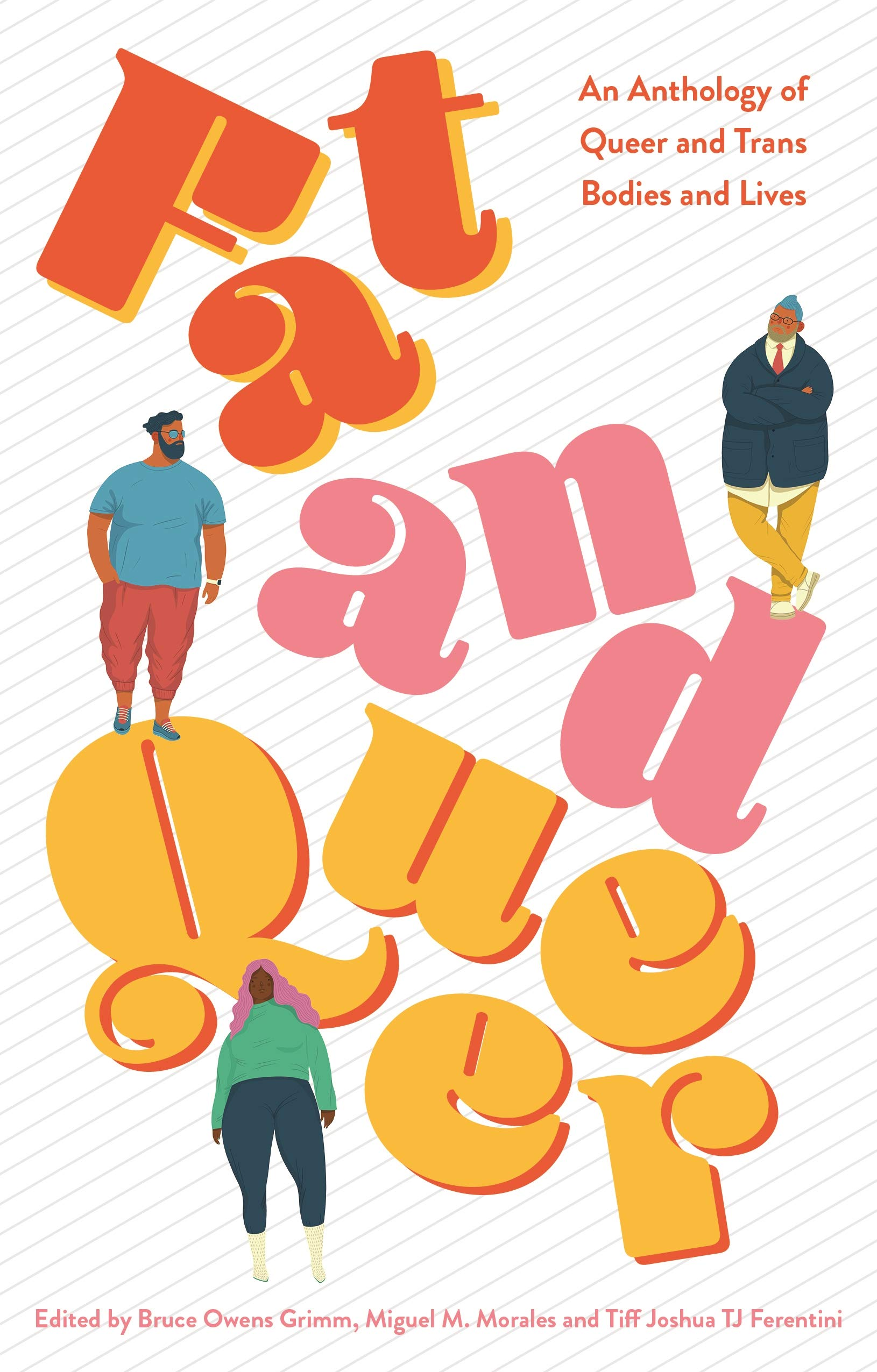
This one-of-a-kind collection of prose and poetry radically explores the intersection of fat and queer identities, showcasing new, emerging and established queer and trans writers from around the world.
Celebrating fat and queer bodies and lives, this book challenges negative and damaging representations of queer and fat bodies and offers readers ways to reclaim their bodies, providing stories of support, inspiration and empowerment.
In writing that is intimate, luminous and emotionally raw, this anthology is a testament to the diversity and power of fat queer voices and experiences, and they deserve to be heard.
2021 Reads Rainbow Awards Winner in Nonfiction 2022 AASECT Book Award Winner
My Review
I’m trying to work my way through my ‘currently reading’ pile before starting any new books. I have a shelf double stacked already, and that’s just downstairs. I’ve had this book a while and took it on holiday to Skegness with me earlier this year, and got 70+ pages in while I was away. I struggled to read it, not because of the book, but because I was worried my Dad would get upset at seeing me reading it. Last night I went up to bed at half eight (I’m ill, feeling tired by 8pm is part of it) and took this book up to read. Finished the last 250 pages four hours later at 12.45 am. I stayed up way past my bedtime because I wanted to read everything in this book. Including the acknowledgements at the end.
I’m fat and queer. There’s a lot of anti-fat bias in the Queer community. To be fair, there’s anti-fat bias in every community except the fat acceptance/advocacy community. It’s ridiculous; people who hate anyone for not being thin, white, abled, neurotypical, cisgender, middle/upper class, etc. are not going to hate a person less for being thin because they have a long list of other things they’ll hate them for. I have yet to find a community in this area, except my Autistic community.
The essays in the book are about a variety subject from people in many intersections we like to classify people as. All the writers are from the Americas, giving the reader an interesting insight in to the culture and practices in that part of the world. I enjoyed reading about the experiences of fat, Queer people trying to work out who they are, what their journeys have been and the emotional impact life has had on them. I discovered reading this book, that there is such a thing as ‘gainers’ and ‘encouragers’. I’d vaguely heard of feederism as a kink, but never read anything by a ‘gainer’. That was really unexpected; I think I learnt something.
I loved the poetry! I enjoy poetry and occasionally write poetry myself. I’ve never written about being fat, my gender identity or my sexuality. I have written about being autistic, my often unstable friendships, and my mental health. And potatoes, because why not? I might give writing about my big belly a try.
It’s a good book, a collection of poetry and essays that will make you think, and, in my case at least, cry like a little baby!






 Everything Is Better With Dragons