The woods that frame the housing estate uncover a series of heinous acts, drawing onlookers in to a space of clandestine, queer sexuality: a liminal space of abject and uncanny experience.
A question echoes in the odd borderlands of being, of fear-fascination, attraction-repulsion, of sex and death…
Fat isn’t the problem. Dieting is the problem. A society that rejects anyone whose body shape or size doesn’t match an impossible ideal is the problem. A medical establishment that equates “thin” with “healthy” is the problem. The solution?
Health at Every Size.
Tune in to your body’s expert guidance. Find the joy in movement. Eat what you want, when you want, choosing pleasurable foods that help you to feel good. You too can feel great in your body right now—and Health at Every Size will show you how.
Health at Every Size has been scientifically proven to boost health and self-esteem. The program was evaluated in a government-funded academic study, its data published in well-respected scientific journals.
Updated with the latest scientific research and even more powerful messages, Health at Every Size is not a diet book, and after reading it, you will be convinced the best way to win the war against fat is to give up the fight.
Paperback, 374 pages Published: March 23rd 2010 by BenBella Books (first published October 11th 2008) Original Title Health at Every Size: The Surprising Truth about Your Weight ISBN:1935618253 ISBN13: 9781935618256 Edition Language: English URL:http://www.haesbook.org/
My Review
I bought this book out of interest, having been a fat person for most of my life and tried diets multiple times that worked temporarily. I’d lose a couple of stone then plateau before starting to increase again. And before I knew it I’d be back to my old weight. In the last year I’ve put on 10 kg. The nurse has got grumpy with me, I’ve returned to the Wellbeing Service Health Trainer I was seeing three years ago (at least), and she’s referred me to Thrive. I have to fill in a food diary and track everything. It’s already screwing with my head. I’m trying not to restrict but I’m struggling with it. I want to get fitter, my weight will do what it will.
I read this book with interest. Linda Bacon is a good writer and she makes the science understandable. The first half of the book is about the science, which shows that restrictive dieting may actually trigger the body’s anti-starvation mechanisms, making the dieter obsessed with food and binge. She discusses the social and political pressures around body size and health.
The basic idea is that rather than restricting food and exercising as punishment for eating, people should try to listen to their body, eat when they’re hungry and move in ways that feel good. The book tries to help the reader with that. It’s very easy to read, and full of information. Many will find it challenging because it questions everything we’re told about weight and health.
The book is US-centric and doesn’t discuss disability in respect to health and food. It also assumes the reader is in a stable living situation where they can afford and cook ‘real’ food. At times it comes off as a bit preachy.
If you’re struggling with your weight, sick of feeling a failure because the diets don’t work, try reading this book.
Elianor Paine is a Magistrate of the Peace in the Kingdom of Trist and a republican secret agent. She has 6 days to subvert her investigation, supplant war-hero Lord Vile, then coerce his adult children to start a revolution, before her masters discover the truth and have her killed. Just how far is she willing to go? And can she change the world without changing herself?
England, 1655. Following the brutal civil wars the country swelters under a cloud of paranoia, suspicion and the burgeoning threat of rebellion. With the fragile peace being won by Cromwell’s ever-efficient Secretary of State John Thurloe, the exiled king Charles Stuart sends two spies on a dangerous mission to wrest back the initiative. These spies are different, however: they are women. Their task? To turn Parliament’s spymaster into their unwitting accomplice. Killing Beauties is a dark tale of subterfuge, jealousy and betrayal. It is sometimes said that women are written out of history, but often they are not yet written in. Killing Beauties is based on the true stories of two female spies from the 1650s and gives them the voice that only fiction can. Pete Langman.Continue reading “Review: Killing Beauties, by Pete Langman”
Are you looking for the right sustainable healthy diet, but you are struggling between all these popular starry-eyed plan meals? Do you want to know what really matters? Well… just keep reading! Time is up. You need to start to keep care of yourself, and this time is for real. Maybe you have already tried different diets, from the strictest to the most flexible but nothing… it is impossible to stand some paper that tells you what to eat and what to avoid. You are also starting to think that maybe the key to everything could be just healthier eating, but what really does that mean? According to the NCBI, 50-70% of Americans are trying to lose weight and eat healthily, but at the same time, obesity in the country is skyrocketing, reaching one-third of the population inexorably. Isn’t it so clear the importance of choosing a right and sustainable diet? In Let’s Spill The Beans you will discover: What are the hidden secrets behind the most lifelong communities of the world Which is the key factor for a real healthy eating What all the gurus never told you about diets false myths about food that are trying to confuse you How you can achieve your weight loss goals in a sustainable and enjoyable way Why the most popular diets have been developed Pros and cons of the trend diets How my life-changing spreadsheet will be your best pal for achieving your dream shape My weekly meal plan suggestion It is not the ordinary diet book where I tell you “what you eat and what to avoid, period.” Because remember, the real key for achieving your goals is not knowing just how you have to do it, but why you are doing it. Only with the right knowledge, everything will be natural and straightforward for you then, and you will stay easily focused on your goals.
In a post-apocalyptic world the human race has evolved beyond us through genetic engineering – and we’ve been left behind to make amends for the damage inflicted on the earth.
The reversal of the extinction of long lost animals is key to our reparations and all of these are housed in the Museum of Evolution – along with another species of human that hasn’t existed for 30,000 years.
Elise belongs to the lowest order of humans, the Sapiens. She lives in an ostracised community of ecological houses, built to blend with an idyllic landscape. Deciding to widen her stagnating life in the manufacturing base, she takes a chance opportunity to become a Companion to a previously extinct species of human.
But Elise has secrets of her own that threaten to be exposed now that she is away from the safety of her home. And while living in the museum, Elise realises that little separates her from the other exhibits…
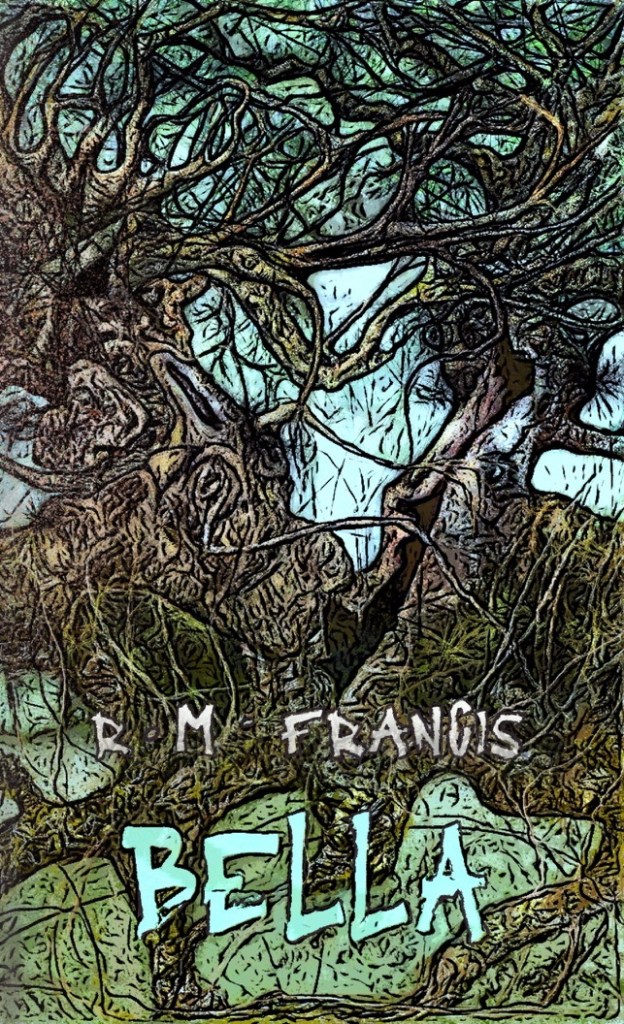
Just had my post delivered. It was all books for blog tours. I’ll be reviewing Bella by R. M. Francis later this month, and a month later The Coronation by Justin Newland.
Thanks to the authors, publishers and blog tour organiser, Love Books Tours.
ISBN: 9781526745576 Buy here Published: 23rd October 2019 Price: £8.00
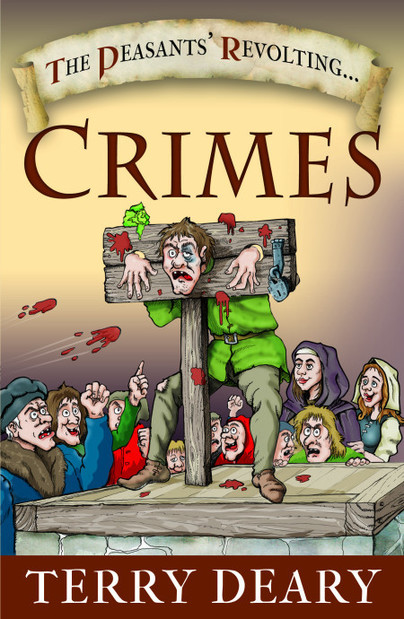
Popular history writer Terry Deary takes us on a light-hearted and often humorous romp through the centuries with Mr & Mrs Peasant, recounting foul and dastardly deeds committed by the underclasses, as well as the punishments meted out by those on the ‘right side’ of the law.
Discover tales of arsonists and axe-wielders, grave robbers and garroters, poisoners and prostitutes. Delve into the dark histories of beggars, swindlers, forgers, sheep rustlers and a whole host of other felons from the lower ranks of society who have veered off the straight and narrow. There are stories of highwaymen and hooligans, violent gangs, clashing clans and the witch trials that shocked a nation. Learn too about the impoverished workers who raised a riot opposing crippling taxes and draconian laws, as well as the strikers and machine-smashers who thumped out their grievances against new technologies that threatened their livelihoods.
Britain has never been short of those who have been prepared to flout the law of the land for the common good, or for their own despicable purposes. The upper classes have lorded and hoarded their wealth for centuries of British history, often to the disadvantage of the impoverished. Frustration in the face of this has resulted in revolt. Read all about it here!
This entertaining book is packed full of revolting acts and acts of revolt, revealing how ordinary folk – from nasty Normans to present-day lawbreakers – have left an extraordinary trail of criminality behind them. The often gruesome penalties exacted in retribution reveal a great deal about some of the most fascinating eras of British history.
My Review
Thanks to Rosie Crofts at Pen & Sword for sending me this book. I’m making my way through my book backlog while trying to keep up with my blog tour commitments.
It’s popular history, so don’t expect in-depth discussion of the crimes or events covered in the book. The author has a rather broad definition of ‘peasant’. A peasant is:
Deary’s broader definition seems to be broadened to ‘a person with a low income and a low social position’. So long as they don’t have land and extensive income or property, the author classes them as a peasant.
The author covers the period from the Norman Conquest to the late-eighteenth century. The crimes are everything from petty theft to forgery, murder and revolt. This book is sometimes humorous and it was good for dipping in and out of. It did keep me amused (even when I had to correct minor things) and it is an easy to read book that builds on Deary’s ‘Horrible Histories’ books. It has a similar format to those books, with the era chapters sub-divided by crime, which makes it easy to find specific crimes in specific eras. Deary uses quotes judiciously to support the text.
Probably a good one for children interested in history who have read all the ‘Horrible Histories’.
For over ten years he was the first detective on the scene when a murder was committed in south London. In the confusion and horror of the crime scene he identified the forensic clues that would later be needed to convict the killer in the calm and measured atmosphere of the Old Bailey; calling out the necessary experts from pathologists to ballistics specialists; protecting the scene against contamination. One slip and a case would crumble; one moment of inspiration and the Yard would have its man.
He was the natural choice when the UN were looking for an experienced detective to create a trail of evidence linking the mass graves of Bosnia to the people who ordered the worst war crimes seen in Europe since the Second World War.
From the Flying Squad to Investigating War Crimes tells of the rise of forensic evidence against the true story backdrop of a detective who has spent a career at the front line in the war against murder – the ultimate crime. It traces the development of forensic science and techniques from the days of the fingerprint to the battery of tests now available to homicide investigators. It is told in the no nonsense style of a pioneer cop who has seen the worst that human beings can do to each other.
This is a review of Testing Pandora (Xandri Corelel #0), Failure to Communicate (Xandri Corelel #1) and Tone ofVoice(Xandri Corelel #2), but that would make the blog post title really long.
I am caffeinated, sorry. Been to Maccys for breakfast with my sister and we had two Millionaire’s Lattes each. Might make this review a bit bouncy.
In the far future, genetic engineering is used to strip all sapient species of disability. But when humans have a brief fad of natural birth, disabled children start reappearing. They’re quickly termed “Pandoras,” the value of their very lives brought into question, and laws are put into place to prevent their births from happening ever again.
Xandri Corelel is one of these Pandoras, a young autistic woman scorned by her family and fighting to eke out a living on the streets of Wraith. Then she meets Chui Shan Fung, captain of the first contact and refugee ship Carpathia. Captain Chui has been watching her, and knows about the talent for understanding alien species that Xandri has cultivated. She wants Xandri as part of her crew–but first, Xandri must pass a test to see if she’ll even fit in.
Wary but hopeful, Xandri joins the Carpathia at Psittaca, a newly-discovered planet peopled by parrot-like sapients. Learning to understand this new species is the easy part compared to trusting her new crew mates. As Xandri continues her diplomatic efforts with the Psittacans, it becomes apparent that the Carpathia’s crew aren’t the only ones to have discovered the planet, but these other visitors don’t have good intentions. In order to protect this beautiful new world, Xandri must find it in herself to overcome years of abuse and neglect, and trust in her new crew.
As one of the only remaining autistics in the universe, Xandri Corelel has faced a lot of hardship, and she’s earned her place as the head of Xeno-Liaisons aboard the first contact ship Carpathia. But her skill at negotiating with alien species is about to be put to the ultimate test.
The Anmerilli, a notoriously reticent and xenophobic people, have invented a powerful weapon that will irrevocably change the face of space combat. Now the Starsystems Alliance has called in Xandri and the crew of the Carpathia to mediate. The Alliance won’t risk the weapon falling into enemy hands, and if Xandri can’t bring the Anmerilli into the fold, the consequences will be dire.
Amidst sabotage, assassination attempts, and rampant cronyism, Xandri struggles to convince the doubtful and ornery Anmerilli. Worse, she’s beginning to suspect that not everyone on her side is really working to make the alliance a success. As tensions rise and tempers threaten to boil over, Xandri must focus all her energy into understanding the one species that has always been beyond her: her own.
Xandri Corelel has spent six months living among the Ongkoarrat after her unceremonious firing from the crew of the Carpathia, and though she misses her home, she has settled into her new life. Then Diver arrives with news that changes everything.
The Hands and Voices–squid- and whale-like symbiotic aliens–are masters of bio-engineering and grow a wide variety of species of coral. Now they are in the process of creating coral that can withstand vacuum, with a most stunning end goal: To grow entire spaceships out of living organisms. The Starsystems Alliance is desperate to lure the Hands and Voices into the Alliance and bring this new technology into the fold. And the Voices and Hands are willing, with one stipulation.
They will only negotiate with Xandri and the crew of the Carpathia.
Returned from exile, Xandri is given the lead on this new mission. She quickly discovers that willingness isn’t the problem; the Hands and Voices want to join, but they want full equality in their membership–including the ability to attend council meetings in person. Amid the sunshine and surf of the tropical, idyllic planet of Song, it seems the biggest hardship Xandri and her friends will face is the task of re-rigging a spaceship to carry creatures the size of killer whales.
I’ve got Testing Pandora and Tone of Voice as ebooks, and Failure to Communicate as a paperback, and I’ve just realised I can get Tone of Voice as a paperback too, so I’ve ordered it. As I write I’m still only 43% of the way through Tone of Voice, but I love these books so much I had to tell you all about them.
You’ve read the very comprehensive book descriptions, right? You don’t need me to re-cap, do you? Because I can. But there might be spoilers.
I won’t then.
Just talk about the writing, Rosie, and try to focus.
Kaia Sonderby is a very fluid writer and her characters spring to life. There are no stereotypes or caricatures. In Xandri we have a sympathetic, realistic depiction of an autistic woman. She is complex and traumatised from years of abuse, and the Carpathia is the first place she feels at home, but she struggles to trust her colleagues.
She battles the inner voice that tells her not to show too much emotion, or any, in case it’s the wrong one; it’s her mother’s voice. The same voice tells her she’s not good enough and nobody will like her, and why can’t she be ‘normal’? The voice of abuse, control and punishment. Her new crew, and friends, help to drown out that voice with acceptance and love. She’s confused by these feelings, too.
She’s not supposed to be able to feel them or empathy. Not according to her parents. Or the ‘experts’ they took her to as a child. Yet, she is an expert at identifying the mannerisms of other species, at reading their body language and negotiating with them. She’s learnt to be, in order to survive. She’s fascinated by the universe, by all the wondrous beauty around her. The descriptions of synesthesia make me slightly jealous, to hear colours and taste sounds must add so much depth to perception of the world. I love the descriptions of Xandri’s experiences as she navigates life. I recognise those experiences as something we have in common. The feeling of utter joy in beauty and beauty in everything, the wonder at the universe, confusion in personal relationships, the feeling of the physical power of a crowded place forcing air out of the lungs, something you can touch. Shutting down. The need for quiet. Forgetting to eat. Being absorbed in an interest to the exclusion of all else.
Kaia writes from personal experience of being autistic and assigned female at birth. Her characters range across species, gender and sexuality, relationship arrangements, as well as neurological designations. They are sympathetic, even when totally alien and/or the bad guys.
I adore the Psittacans, introduced in Testing Pandora. They are parrot-like and very playful, and their relationship with Xandri is a lovely continuing storyline. The Hands, in Tone of Voice, cephalopod-like symbiotes of the whale-equivalent Voices, are also creeping into my ‘aww they’re so cute, I want one!’ book. I hope they make appearances in future novels.
The developing friendship/romantic relationship between Kiri, Diver and Xandri is by turns sweet and frustrating as they all try to work out where they stand with each other. The alternating perspectives of Xandri and Diver inTone of Voice really illustrate this well as they reflect on events as they happen and the reader sees things from different angles. They love and support Xndri for who she is, not who they think she should be.
The planets the Carpathia crew visit are interesting and different. They make reference back to Ancient Earth when they want to explain something, like the gravity or the air. Song is mostly an ocean planet with heavier than standard gravity, Psittacca is a jungle, with a thick atmosphere and lighter than standard gravity, Stillness has invisible predators, Wraith is dark and heavy, highly populated and urban.
The tech seems reasonable. An advanced sentient species from another solar system that develops FTL travel (slingspace), arrives on Earth and saves humanity from ourselves by sharing tech and finally inviting the Earth sentients to join the Alliance is a different take; normally humans centre themselves in that bit of the back story or plot. As the humans are the ones who are a bit behind, it’s perfectly reasonable for the tech to be a bit different. The AI is particularly advanced, Carpathia is a character in her own right.
I found the idea that people would use gene editing and screening to remove disability from the different species in the universe quite disturbing. Not unexpected, given that in Iceland people selectively abort foetuses with Down’s Syndrome and genetic screening of embryos can be used to prevent Tay Sachs during IVF treatment even now. While germ-line genetic manipulation is illegal, gene therapy for single-gene mutation disabilities and diseases can be treated – although it is extraordinarily expensive. Autism, and neurodivergencies in general, are much more complex, very few autistic people have the same genes that are related to the differences in brain wiring, so deleting us is not happening soon, but frighteningly, it’s something some researchers are working towards in the name of ‘curing’ us.
The only way to cure us is to kill us off and screen all embryos for any of the 1000+ genes involved.
Sonderby touches on this in her novels as the ‘Pandora Question’ is brought up in Tone of Voice. After the fad for children au naturale shows that disabilities continue to exist in germ lines, it’s banned and all people are given free embryo screening if they want children. Later, after the Anmerill muck-up, the questions return. It’s debated in the Starsystems Alliance council meetings and on the news casts. Even Carpathia crew are scared of Xandri. Whether people like Xandri should be allowed to exist, whether they’re dangerous, or even real people, are normal topics of conversation.
Sounds familiar if you have any understanding of the history of autism and the way autistic people are treat still.
I love that the author touches on these subjects, as well as the abusive ‘treatments’ Xandri was subjected to, while other characters try to find out more information from Ancient Earth to change the narrative about the Pandoras, just as Neurodiversity activists work to change the narrative about us now. They may be set 4000 years in the future but they reflect our current situation. Children are subjected to abusive ABA, autistic adults are discriminated against, people debate whether we have the right to exist or should be ‘cured’ as though it were a perfectly reasonable thing to do.
These strands to the narrative aren’t heavy handed, they’re background and if you aren’t involved in the online autistic community you might not pick up on them. I like that, these novels are good stories, not polemic. It’s good autistic representation within a complex universe and with a strong plot.