ISBN: 9780857506436 PRICE:£22.00 (GBP) PAGES: 336 Publisher: Random House UK Publication Date: 28th May 2026
Description
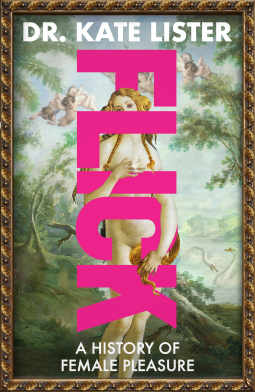
Meet the women throughout history who, quite literally, came before us.
From the host of award-winning History Hit podcast Betwixt the Sheets.
There is a common misconception that before modern day feminism, women throughout history simply lay back and thought of England or their respective place of origin; that the modern ‘sex positive’ movement is a radical break from the past. But women demanding better sex did not arrive with free love or the Rampant Rabbit. It has been a very long fight indeed.
From Ancient Mesopotamian sex goddesses to the contraceptive pill, Kate Lister takes us through history to show us how women’s sexual pleasure was controlled, understood and thoroughly, thoroughly enjoyed.
FLICK is a rousing history of women enjoying sex: sex with themselves, sex with each other, and occasionally sex with men as well.
My Review
Yes, it’s another Netgalley book! Took me a whole month to read it! This was actually a really fun read. But then I wouldn’t expect anything less from Dr Kate Lister, sweary Yorkshire monarch of sex history. I love her podcast. Betwixt The Sheets, so obviously when I saw this book available on NetGalley I had to request it.
The book is exactly what it says on the cover, a history of female pleasure. It covers goddesses, ancient approaches to female sexuality, masturbation, sapphic love, menopause, medicalisation of female sexuality, and everything in between. It mostly focuses on what can broadly be called Western traditions, occasionally venturing further afield, but mostly Europe, south west Asia (when talking about ancient goddesses), and North America.
The overarching theme is one of suppression due to fear. Blame the ancient Greeks, they were weird about women and worshipped the almighty cock (or Zeus as he was also known (my joke)), made up crap about the Mesopotamian civilizations, and then infected the rest of the European world with their misogyny and dodgy medicine for millennia. I am paraphrasing, obviously, and attempting to condense a lot of information into one paragraph, but there is a throughline from ancient Mediterranean civilisations to the modern world, in which female sexuality is feared and vilified, and so is suppressed and made shameful. Whether it’s the Roman disgust at the ‘unmanly’ cunniligus (I learnt so many new euphemisms!), or wandering wombs, or clitorectomies for ‘over sexed’ women, the result is the same. Suppression of female sexuality is a tool in the oppression of women in a patriarchal culture.
Dr Lister’s final point in the book is that until female sexuality is held to be equally acceptable as male sexuality, there is no full equality. While girls are told it’s dirty to touch themselves, but boys are ‘just being boys’; while women are called sluts for having sex because they enjoy it, but men are ‘proper men’ if they get laid a lot; while older women are bullied into dying their hair and having facelifts, but older men are silver foxes, there can be no true equality.
I found it easy to follow and entertaining to read. I could almost hear Dr Lister’s voice, and filthy laugh. This book is not an in-depth exploration focusing on one specific topic in one place and time, but an overview of a variety of related topics that circle around female sexuality and the ways it has been suppressed, controlled and vilified over the last couple of thousand years.
EDITION: Other Format ISBN: 9781035083350 PRICE: £18.99 (GBP) PAGES: 224 Publication date: 1st October 2026 Publisher: TOR
Description
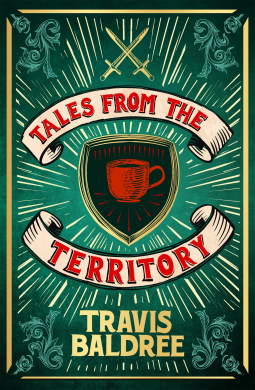
From Sunday Times bestseller Travis Baldree, Tales from the Territory is a beautiful collection of cosy fantasy tales, set in the much-loved world of Legends & Lattes.
There are many tales yet untold . . .
‘GOBLINS & GREATCOATS’: Chaos goblin Zyll is involved in a case of mistaken identity, where she solves a murder at an inn whilst simultaneously stealing all the cutlery.
‘JUST A THIMBLEFUL’: The sweet rattkin baker Thimble finds a new home for his soon-to-be famous cinnamon rolls.
‘PAGES TO FILL’: An act of mercy leads to a life-changing discovery for warrior orc Viv.
In ‘MIROGRAPH’, young succubus Tandri assists a university professor on a mysterious project where art and science collide.
In ‘CAVALIERS & COFFEES’, Viv, now the owner of Legends & Lattes coffee shop, discovers that imitation is not the highest form of flattery.
Featuring bespoke, full-page colour illustrations and endpapers, this is a deluxe collection of cosy short stories.
My Review
I got this one from Netgalley. I know, look at me reading ebooks again. Admittedly, it’s a collection of short stories and I read a few pages, get up, do something else, then go back to reading, but it’s something. Plus, I need to distract myself from all the eviction stress.
This is a collection of short stories featuring, for the most part, characters from Legends & Lattes in their lives before the coffee shop, and one set between the first book and Brigands & Breadknives, which I will review eventually. I’m waiting for the paperback because I don’t want to damage my special editions. The character in the first short story, Zyll, is a major character in Brigands & Breadknives. I love Zyll, she’s a delightful chaos monster.
We already know the characters, but their lives immediately before the events of L&L are only hinted at. In this collection we get to learn a bit more about them and their world. Thoroughly entertaining and colourful, the stories add depth to the world of the Territory, and the city of Thune particularly. I wish there were morse stories in this collection, maybe featuring more characters from the books and new characters?
I will definitely be getting a copy of this book, if possible, to add to my collection.
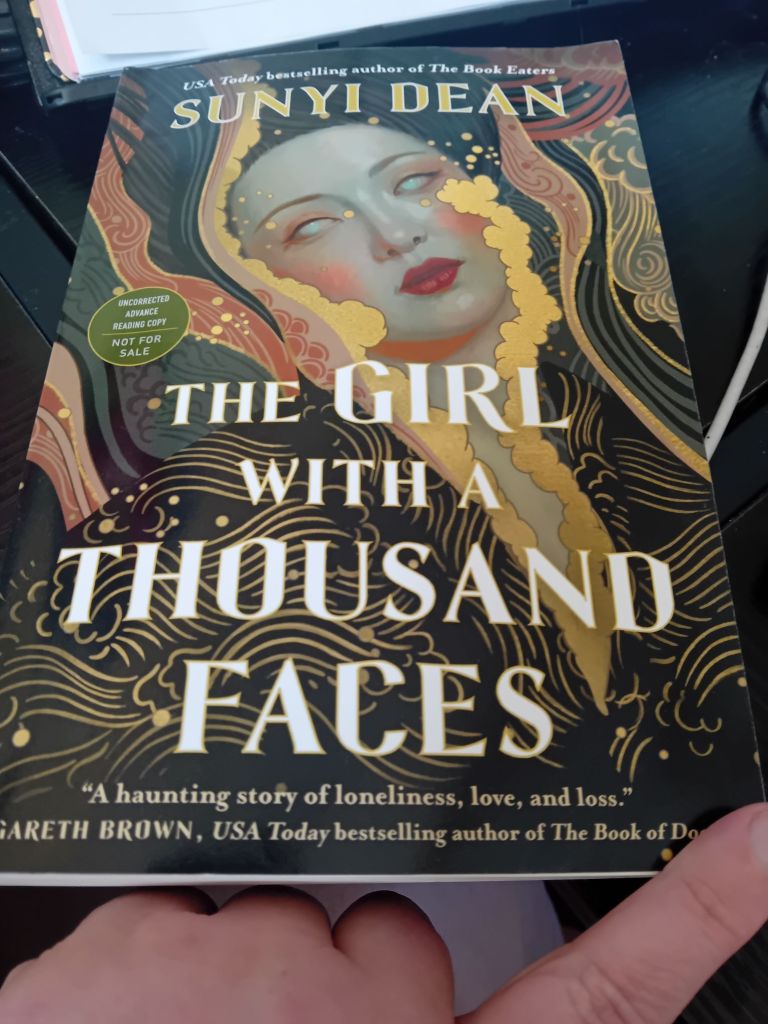
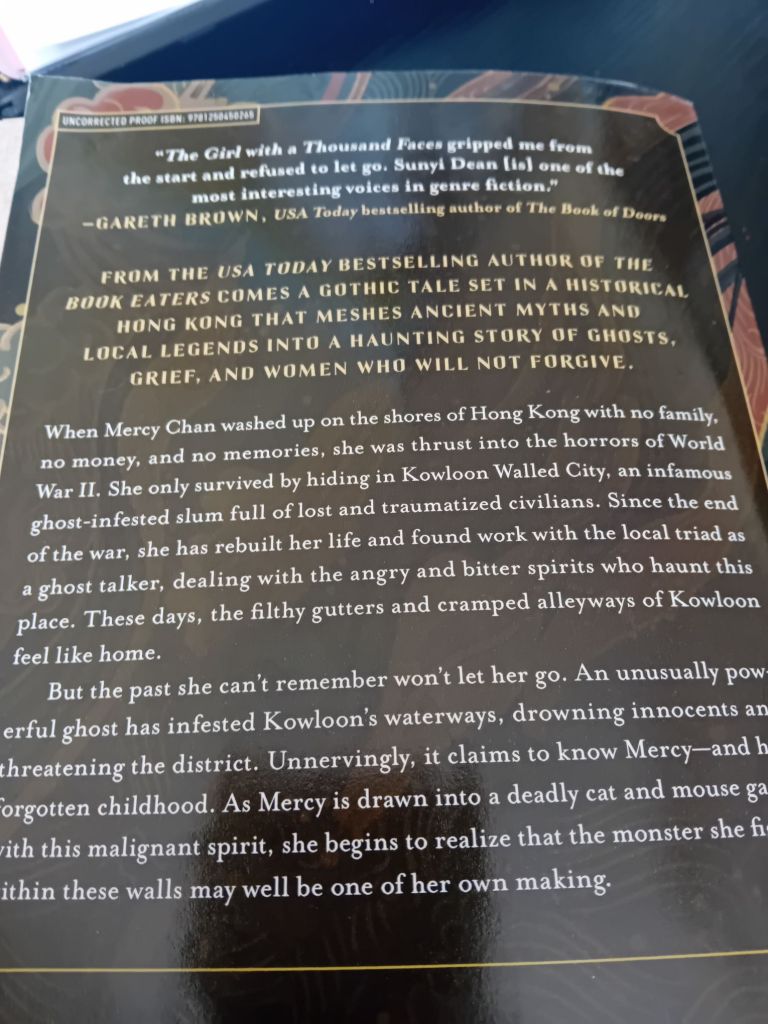
A haunting dark urban fantasy set in historical Hong Kong, where ancient myths and local legends combine in a story of ghosts, grief and women who will not forgive.
Mercy Chan is a triad exorcist with a mysterious past. After washing up on the shores of Hong Kong with no memory during World War II, she found a home in Kowloon Walled City, an infamous, ghost-infested slum full of lost and traumatised civilians. Since the war ended, Mercy has rebuilt her life and found work as a ghost-talker for the local triad, dealing with the angry and bitter spirits who haunt this place.
But the past she can’t remember won’t let her go. An unusually powerful ghost lurks in Kowloon’s waterways, drowning innocents and threatening the district. Unnervingly, it claims to know Mercy – and her forgotten childhood.
As Mercy is drawn into a deadly cat-and-mouse game with this malignant spirit, she begins to realise that the monster she fights within these walls may well be one of her own making.
My Review
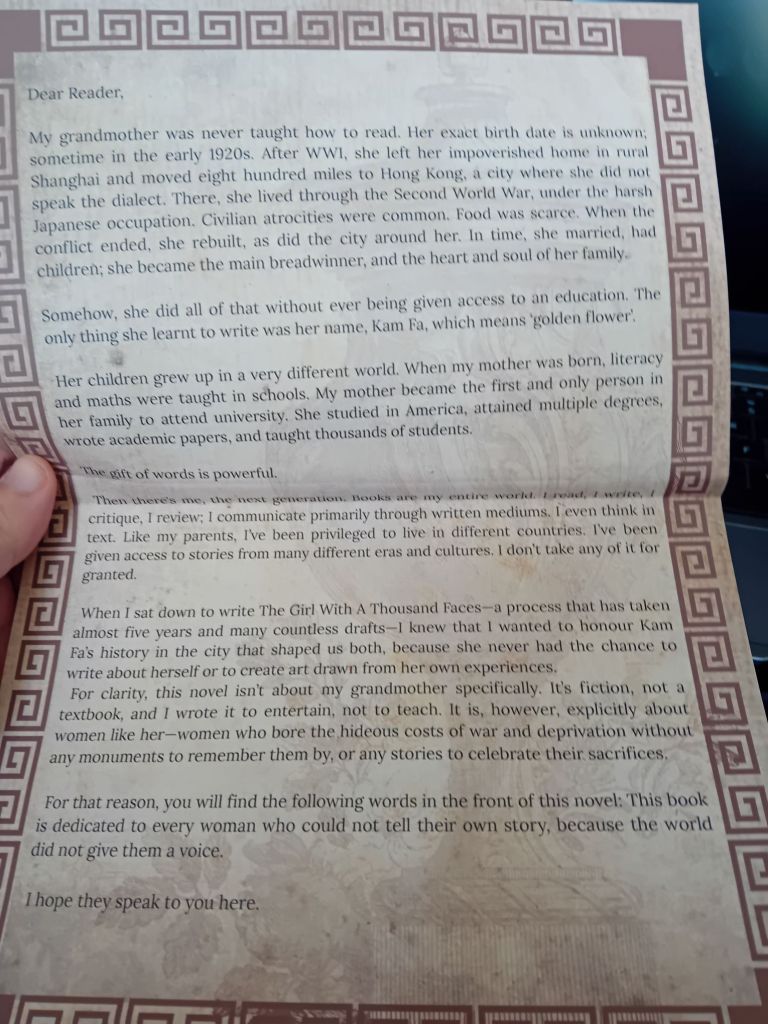
Thanks to the author for my ARC of this book. I’m not sure how I got a copy, Sunyi Dean must have put something on social media, and I’ve got an email from her, so I assume we connected that way. Anyway, late last year I got a package from Sunyi with the book, a letter and a fu talisman for my front door.
This book is due out 7th May-ish, so I spent my Saturday reading. I actually planned to go for a walk to the shop yesterday afternoon but that would have meant stopping reading and I really couldn’t do that, so I ordered a Morrisons delivery for this morning and carried on reading until almost midnight, because I needed to know how Kwun Yam was going to resolve the problems between Chen Mei Chi/Mercy Chan and Sung Siu Yin.
The book is in four parts jumping between the 1920s, 1940s, and 1970s, and from three perspectives, Mercy Chan, Sung Siu Yin, and Kwum Yam, who narrates half the story while the other half is told in close third person from Mercy and the Siu Yin’s perspectives. It’s a really clever way of exploring the lives of the two main characters and how they got where they are.
In 1975 Mercy is a ghost talker in Kowloon, an old, dilapidated district of Hong Kong, a city that has sprouted shiny towers and wide roads after surviving the destruction of the Japanese invasion. Kowloon on the other hand is a slum in the grips of the triads and ghosts. Mercy, originally Chen Mei Chi, doesn’t remember her history or how she’s able to talk to ghosts, but she can, and accompanied by her ghost cat, Bao, she helps ghosts deal with their trauma and move on. She lives well, a comparatively wealthy life working for Cobra Lily, queen of the snakeskin triad.
In 1942, she arrived in Hong Kong with no memory and no money, and hid in Kowloon from the rampaging Japanese. Her Hakka origins and ability to go out at night make her useful to the resistance as a night time message runner. No one else will go out at night, because the ghosts are angry and they are hunting. There are a lot of ghosts in Kowloon – refugees from the city chased out by Japanese exorcist, refugees from the countryside and the victims of massacres. Angry ghosts are dangerous, but they listen to Mei Chi and if they don’t Bao eats them.
In the early 1920s a little girl, her sister, and their grandmother are chased from their village on a remote island by frightened villagers who believe the girl is bad luck. The escape and pray to the Lady of Compassion, Kwun Yan. The temple is hidden in a sea cave below their feet, and when the ground crumbles under them, the girl and her grandmother fall in. The sister runs for help, and the same men who chased them from the village eventually turn up. They condemn her to a slow death by drowning. A storm comes and kills everyone except the sister, who goes to Hong Kong. The sister grows up, marries, has a daughter of her own.
In 1942 the sister and her daughter, running from the Japanese invasion return to the island, and the ghosts are waiting for them. A few months later, both leave again, but to different fates.
And that is all I’m telling you about the story, because I don’t want to spoil it too much.
I really enjoyed this novel; as I said earlier, I spent a day reading it and couldn’t put it down. The characters are fascinating and the worldbuilding, drawing on real history and beliefs, is marvellous. The Chinese experience of WWII is often forgotten, but this book brings to life the times and places it covers, and draws on some of Sunyi Dean’s grandmother’s own experiences as a young woman who left her rural Shanghai community to live in Hong Kong between the world wars. She survived WWII in Hong Kong, which is very impressive. The depictions of life under Japanese military rule are graphic and powerful.
The history was interesting, especially the bits about the Chinese resistance. It was largely lead by Hakka, who also made up much of various Chinese armies. I looked up the Hakka because I hadn’t heard of them before. According to Wikipedia, the Hakka are a sub-division of the Han Chinese who were more nomadic and lived on marginal land. They live all over the world now and speak the Hakka dialect, which is different from Cantonese and other Chinese dialects. They had different cultural traditions to other Han Chinese in that they didn’t bind feet, because women worked in the fields and men often worked in towns or the military, and they built different communal housing structures to other Han Chinese communities. They were often subject to discrimination because they migrated into areas already settled by Han Chinese and were forced on to marginal land.
The central mystery of the novel is who is Sea Sister and why can’t Mercy remember anything before 1942. We follow Mei Chi and Sui Yin as they work out their trauma and their fates collide in a typhoon. There are multiple typhoons in this story, but it’s the South China Sea, I’d be worried if at least one wasn’t mentioned. Discovering the identities and complex relationship of the characters, the trauma they inflicted on each other and how they resolve that trauma, is gripping. The family dynamics, the cultural expectations and the environmental factors make this a complex, insightful tale.
The descriptions of Kowloon, the changing Hong Kong, the island, and swimming in the ocean are tactile; I don’t know if that makes sense, but I could almost see the places and feel the water. The emotional connection built between Mei Chi and Sui Yin, described by Kwam Yam as She narrates the latter half of the novel, is powerful and I cried at least twice.
The underlying theme of this novel is the long term trauma of war and the damage a war can do for generations, as well as the need to forgive, for ourselves as part of finding peace. I get that. There is a lot of pain in the world, if we carry it from one generation to the next, either through karma if you believe in reincarnation or through teaching children to hate in education and cultural contexts, we prolong the pain, we keep the wound open, infected and weeping the pus of hate. Clean it out, cauterize the wound, let it heal.
I wouldn’t dare tell the Chinese they have to find peace with Japanese, or the Indians they have to find peace with Britain; we really don’t deserve it after the fucked up things the Empire did, but if the various European countries could try to heal wounds that would be great, we got too much stuff to do to keep old grudges going. I speak especially to the English. Time to forget the arguments with France and the animosity; the living French ain’t the Normans, the source of our trauma; their descendants are here and we know where they are, what land they’re hoarding, what power they have, and we can deal with them without continuing the generational trauma aimed at the French or the Germans. The living ain’t our enemies and the dead are gone. A little bit of land redistribution and wealth taxes wouldn’t go amiss is all I’m saying…
The setting, a world like our own where spiritual beings, ghosts and gods, are real and treated as such, is interesting. I have heard this called magical realism in a South American context but I’m not sure we can transfer the genre name from there to here. The author uses her own heritage and cultural traditions to infuse the story, essentially an historical novel about two women surviving the massive events of the 20th century in China, into a fantastical, gothic tale of ghosts, spirits, demons and goddesses.
The background details of how to write fu talismans and the relative abilities of Daoist and Catholic priests in exorcisms adds something to the realism. Their joint efforts and contrasting methods of dealing with Resistance ghosts were detailed at one point and while the contrasts are fascinating, the similarities point to a human need, I think. Both use specific prayers, both recognise that an exorcism is forcing a spirit for a body that already has an inhabiting soul, both find ways to contain or release the spirit using incense. The attitude towards the occupying spirit displayed is interesting. The Daoist priests in the story are respectful and realise the ghost is a person, while the English Catholic priest is more dismissive. It reflects different cultural attitudes to death and ancestors.
In most parts of Europe we don’t really go in for ancestor worship anymore (I blame Christianity and the ‘Enlightenment’), and we’ve developed some violent ways of dealing with the unquiet dead (beheadings, mainly, which will deal with the unquiet living as well). We don’t really invite them to tea for a chat about why they’re hanging about, or leave out offerings, unless you count the annual wreathe on the grave stone? It’s probably not a healthy way to deal with grief.
I’m rambling, aren’t I? I found the cultural and historical context of this book absolutely fascinating and it triggered lots of thoughts. I really enjoyed the story and the author’s note was insightful, explaining how the author respectfully changed some things for the story but providing background information in the note. The ways Hinduism and Buddhism are related and change from India to China are interesting topics and I’ll probably go down a rabbit hole learning about it one day, but not today. My neighbour is playing terrible music really loudly, again, and I can’t really concentrate now. It’s a good thing I woke up early and read another book that’s scheduled for review 11th May, or that racket would have interfered in that as well.
No, seriously, the music is awful. I’ve had to put up with it on and off since Friday afternoon, because they’ve had visitors all weekend.
Enjoy your Sunday afternoon, I have another review to write and then I’m going listen to this week’s Small Town Murder bonus episode.
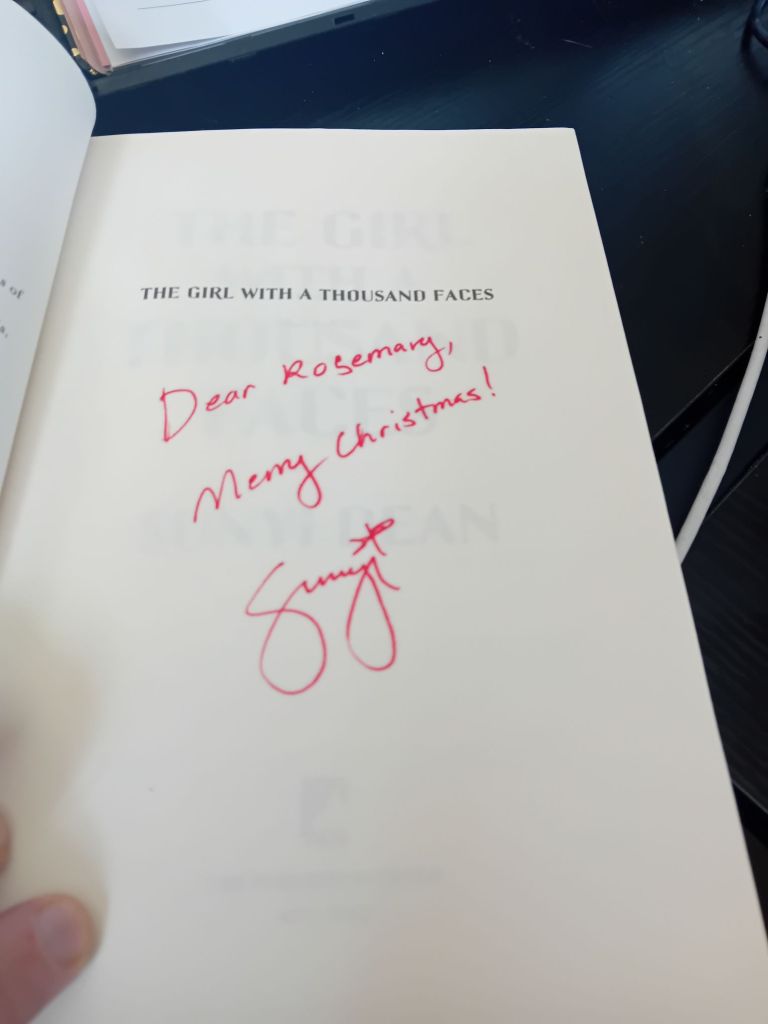
Also, Sunyi, it’s Rosemarie, not Rosemary. See you in Leeds sometime.
Are you looking for the right sustainable healthy diet, but you are struggling between all these popular starry-eyed plan meals? Do you want to know what really matters? Well… just keep reading! Time is up. You need to start to keep care of yourself, and this time is for real. Maybe you have already tried different diets, from the strictest to the most flexible but nothing… it is impossible to stand some paper that tells you what to eat and what to avoid. You are also starting to think that maybe the key to everything could be just healthier eating, but what really does that mean? According to the NCBI, 50-70% of Americans are trying to lose weight and eat healthily, but at the same time, obesity in the country is skyrocketing, reaching one-third of the population inexorably. Isn’t it so clear the importance of choosing a right and sustainable diet? In Let’s Spill The Beans you will discover: What are the hidden secrets behind the most lifelong communities of the world Which is the key factor for a real healthy eating What all the gurus never told you about diets false myths about food that are trying to confuse you How you can achieve your weight loss goals in a sustainable and enjoyable way Why the most popular diets have been developed Pros and cons of the trend diets How my life-changing spreadsheet will be your best pal for achieving your dream shape My weekly meal plan suggestion It is not the ordinary diet book where I tell you “what you eat and what to avoid, period.” Because remember, the real key for achieving your goals is not knowing just how you have to do it, but why you are doing it. Only with the right knowledge, everything will be natural and straightforward for you then, and you will stay easily focused on your goals.
In 1838 the writer Letitia Landon married the governor of Cape Coast Castle, Captain George MacLean while the captain was on leave. It was a whirl-wind romance. They sailed for Cape Coast a few days later, arriving safely after five weeks. Eight weeks later Letty was dead. Initially her death was recorded as accidental – an overdose of prussic acid, but events surrounding her death caused a storm in London’s literary crowd, her husband was accused of neglect or cruelty, and there were rumours of suicide. The mystery remains – how did she die? Award winning writer Audrey Thomas first heard Leticia Landon’s story in 1964 while visiting Ghana. She visited Cape Coast Castle during the two years her husband taught at the University of Science and Technology, Kumasi, Ghana. Their guide told her about the famous English lady who wrote books and who’s death was surrounded by mystery. This is her answer to that mystery.