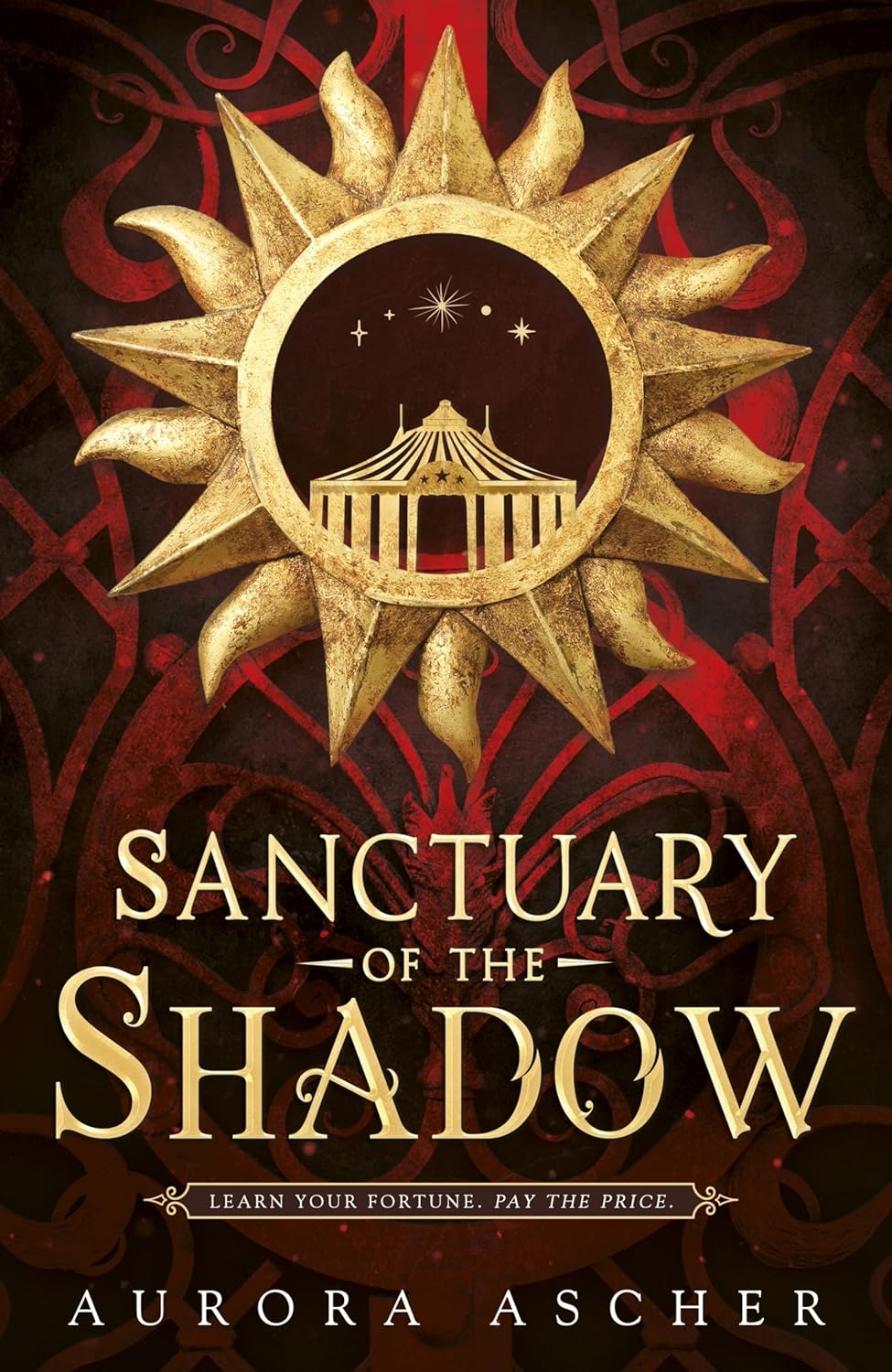
Enter the circus at your own risk… and discover the greatest show on earth in this explosive
and darkly magical fantasy novel.
For humans, the circus is a place filled with wonder and amazement. For Harrow, it’s a place to hide
from those who slaughtered her entire clan. Disguising her abilities as part of her act has kept her
true identity safe for years.
Until he arrives.
A strange new attraction with no name, no memory of who – or even what – he is, let alone an explanation for his odd yet deadly powers. But beneath the layers of anger and isolation, one
glimpse into his inky eyes reveals a soul that calls out to the loneliness in her own. And so, she chooses him.
Harrow is drawn to the darkness, to her insatiable need to soothe the beast who threatens their very existence. But with every secret she unlocks from his past, another from hers is revealed – luring
enemies who will stop at nothing to get their final revenge on Harrow. And she’s afraid she’s given
them the perfect weapon against her because he’s not what he seems.
But maybe it’s time they finally learn neither is she…
Publication date November 2023 Price £9.99 ISBN-13 978178842459
Description The adventures of a group of friends, pre-war, with far too much time on their hands. The Rabbits, as they call themselves, are Archie Mannering, his sister Myra, Samuel Simpson, Thomas of the Admiralty, Dahlia Blair and the narrator, with occasional guests. Their conversation is almost entirely frivolous, their activity vacillates between immensely energetic and happily lazy, and their social mores are surprisingly progressive.
Originally published as sketches in Punch, the Rabbits’ escapades are a charming portrait of middle-class antics on the brink of being shattered by World War I, and fail entirely to take themselves seriously.
Formats available: Paperback First published: 01/04/24 Series:A Flea in History ISBN: 9780993338237
Description
King Henry VIII’s favourite ship, the Mary Rose, is sailing to Portsmouth to stop a French invasion. This should be the easy part of the journey, but for Captain Vlad flea and his crew of rats, the humans and their pets create dangers on every deck.
Join Vlad and Roxton rat as they work out how to avoid Hatch the dog and the Captain Carew’s hawk.
This book has been written and illustrated using the artefacts, research and knowledge of the experts of the Mary Rose Trust. It is a fun way to find out about Tudor ships and what it was like to live on board one of Henry’s fleet.
Publisher : Penguin Life (14 Mar. 2024) Language : English Paperback : 272 pages ISBN-10 : 0241588227 ISBN-13 : 978-0241588222
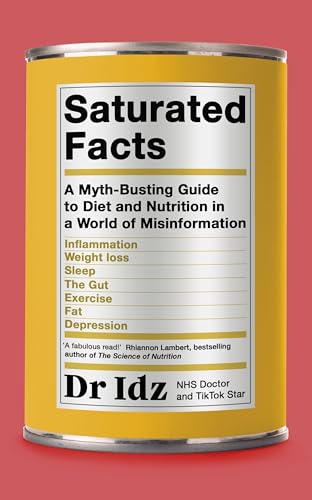
Are carbs the enemy? Am I getting enough protein? Should I worry about inflammation? Do calories count? And do any diets really work?
We are constantly bombarded with advice on how to live a ‘healthier’ life. From the benefits of intermittent fasting and the keto diet, to the growth of veganism and the dangers of inflammation, poor-quality, dubiously sourced information on how we can live and feel better is everywhere. But where should we turn for advice we can trust?
Dr Idrees Mughal (Dr Idz), an NHS doctor with a masters in nutritional research and a board certification in lifestyle medicine, has made it his mission to educate, inspire and empower the public when it comes to diet and lifestyle. His signature videos have attracted millions of followers online, and now he’s collected this wealth of information in his first book, Saturated Facts – your science-backed guide to living better.
Whether you’re looking to lose weight, sleep better, avoid disease or just have more energy as you go about your day, Saturated Facts is the comprehensive guide you need to make smarter decisions about your health.
My Review
This book arrived on publication day. I spent a couple of days reading and digesting it. There was a lot to think about. I’m interested in nutrition science, I’ve read a few other books on the subject, and I’ve even done a couple of level 2 nutrition courses. I like the science. The human body and how it processes food is fascinating and not generally as simple as people believe. It really is more complicated than individual nutrients and calories in-calories out.
I really liked the structure of this book, the references to specific studies and scientific consensus, and all the sources are listed at the back. There should always be sources! It made my brain happy to read this book. Dr Mughal makes the scientific papers legible to the non-specialist and lay reader (I did chemistry, biochemistry and geology, and I understand autism paper, everything else I need translating). I appreciate the effort. I also appreciate the author’s debunkings of myths.
A lot of the information wasn’t new to me, but the level of detail was, and I found that satisfying. The nutrition advice is sound, as far as I know and I generally eat quite well roughly following the advice, something I learnt years ago. I think this book would be really useful for people needing a clear explanation, backed up by named sources, before they engage in a change in diet.
I read a couple of statements in the book, also ostensibly supported by scientific sources, but which are actually a bit dodgy. In fact I found some of them rather upsetting and ignorant.
The first is a reference to Autistic people and faecal transplants, and how after a faecal transplant Autistic children showed ‘less autistic symptoms’. For a start that paper you referenced, Dr Idz, was from October 2005 and has already been debunked by better people than me. Common criticisms include: the children weren’t asked if it helped, their parents were asked for their subjective observations; the language used by the researchers was prejudicial and biased – comparing autistic children vs ‘healthy’ children; the researchers failed to consider the fact that autistic people often have gastric difficulties and limited diets due to sensory sensitivities so it’s hard for us to get balanced diets when we need our safe foods. If children are forced to eat food that upsets them either digestively or sensorily, they will have ‘more autistic symptoms’, because they’re in pain! Strangely enough, you’d probably be grumpy if you can’t eat something because it makes you want to vomit from the texture/taste/smell/sight (baked beans, mushy peas, avocado, I’m looking at you, or not actually because bleurgh) or because your belly hurts because you’re having a response to the food. Children don’t have the words, often, to specifically describe their pain or to work out the cause. This is especially true of those with other complex conditions or who struggle with verbal speech. Instead of giving us faecal transplants, try working out what’s causing the problems in the first place?
If you use a paper that’s so thoroughly wrong to make a point, why should I trust you’re other citations? I know about autism. I don’t know as much about nutrition, you could be bullshitting me and passing it off as scientific consensus. Also, the phrase ‘in mice’ is important in some of the cited papers about helping fat people be less fat.
On to the second one. Doctors and health care professionals generally engage in a lot of anti-fat bullying. I generally get nurses, for some reason, telling me I need to lose all the weight or I’ll get a horrible illness and die. Completely ignoring my genetics, my actual lifestyle, my medical conditions and neurotype. Doctors get funny when I need procedures that require anaesthetic (if you can mutilate healthy stomachs in the name of weight loss, you can do a fucking colposcopy under anaesthetic, stop being a dick about it). Doctor Mughal does in fact acknowledge the anti-fat biases of his colleagues but moves on extremely quickly and seems to push it off as a minor issue. On the subject of fatness he’s quite contradictory – it’s a disease that needs treatment, but also fat people are responsible for being fat, fat people are treated badly by doctors but doctors can’t help their biases.
And Dr Idz is no better than the rest of them on that count. He doesn’t question statements about fat people being more anxious (what do you think happens when people are bullied all their lives?) and doesn’t question the cause and effect of fatness and type-2 diabetes, even though genetics has been shown to be more of an influence than body size.
I’m fat so of course I must live on take aways and sit around all day. Who can afford to live on takeaways? Plus they upset my digestion. I probably have some sort of irritable bowel conditions (or as I call it ‘the anxiety shits’) and I have a hiatus hernia. Also, autistic food pickiness. I know what I can and can’t eat. But still, I like learning more about this stuff as a science-minded person. Don’t be too shocked, will you?
He also misunderstands the purpose of fat activism – it’s a movement for equality. Even if fat people lost that magical 10% of their starting weight, there would still be lots of fat people in the world, and we shouldn’t be excluded from participating in life, shouldn’t be denied healthcare and employment, and we shouldn’t be bullied because of ignorance and prejudices. That’s it. It’s not a difficult concept.
So, over all, watch it if you’re fat and kinda sensitive about stuff, because this book repeats a lot of the biased bollocks we already hear from HCPs, but when he sticks strictly to nutritional advice, Dr Idz really does a good job of explaining the science in an easily understandable way, with citations, mostly from the last decade, with a small number of exceptions (yes, I looked). I like citations, have I mentioned that.
I gave this book a 3/5 on GoodReads purely for the autism bollocks he repeated without question. I’d have got a 4 or 5 if he’d refrained from that and I hadn’t started questioning his sources.
Format: 304 pages, Hardcover Published: March 21, 2024 by Hodderscape ISBN:9781529390582 (ISBN10: 1529390583) Language: English
Description
Welcome to the Grand Abeona Hotel: home of the finest food, the sweetest service, and the very best views the galaxy has to offer. Year round it moves from planet to planet, system to system, pampering guests across the furthest reaches of the milky way. The last word in sub-orbital luxury – and a magnet for intrigue. Intrigues such as:
Why are there love poems in the lobby intray?
How many Imperial spies are currently on board?
What is the true purpose of the Problem Solver’s conference?
And perhaps most pertinently – who is driving the ship?
At the centre of these mysteries stands Carl, one time stowaway, longtime manager, devoted caretaker to the hotel. It’s the love of his life and the only place he’s ever called home. But as forces beyond Carl’s comprehension converge on the Abeona, he has to face one final question: when is it time to let go?
Publication date Thursday, February 29, 2024 Price £22.00 EAN\ISBN-13 9781804191002
Description
Making dinner from scratch can feel like a chore – often half the battle is trying to find something that’s quick, nutritious and, most importantly, delicious. But delicious doesn’t have to mean demanding.
After their debut book, Sunday Times bestseller It’s All About Dinner, Kitchen Sanctuary is back – this time focusing on quick and easy meals, all made in 30 minutes or less!
With chapters such as Champion Chicken; Moreish Meat; Fantastic Fish; Vitally Veggie; Perfect Pasta; Rice, Noodles, Grains and Bread; Snack Suppers; Super Sauces – as well as a section dedicated to Smart Shortcuts containing Nicky’s top tips for speeding up dinner – you’ll be able to whip up a range of fabulous meals for the whole family, every day of the week, no matter how little time you have.
Gogmagog tells the story of an epic journey through the sixty-mile long ghost of a dragon.
Travel is by boat, a rickety steam launch captained by veteran taxi pilot Cady Meade, on the river Nysis. In her heyday Cady carried people and goods from the thriving seaports of the estuary into Ludwich, the capital city. Now she’s drunk, holed up in a rundown seaside resort, telling her bawdy tales for shots of rum.
All that’s about to change, when two strangers seek her out, asking for transport, one of whom – a young girl – is very ill, and in great danger. The other, an artificial being of singular character, has secrets hidden inside his crystal skull. So begins the voyage of the Juniper.
The Nysis is unlike any other river. Mysteries unfold with each port of call. Not many can navigate these channels, not many know of its whirlpools and sandbanks, and of the ravenous creatures that lurk beneath the surface.
Cady used to have the necessary knowledge, and the powers of spectral navigation.
But her glory days are well behind her now. This might well be her final journey.
Publication date Thursday, February 29, 2024 Price £20.00 EAN\ISBN-13 9781914240829
Description “This is a heart-breaking story, beautifully told. I hope it finds a million readers”. – Andrew O’Hagan
John MacDonald must find his mother.
Born into the slums of Glasgow in the late ’70s, a 4-year-old John’s life is filled with the debris of alcoholism and poverty. Soon after witnessing a drowning, his mother’s addictions take over their lives, leaving him starving in their flat, awaiting her return.
A concerned neighbour reports her, and he is forcibly taken away from his mother and placed into the care system. There, he dreams of being reunited with her. His mind is consumed with images and memories he can’t process or understand, which his eventual adoptive parents silence out of fear as he grows into a young man within a strict Catholic and Romany Gypsy community.
This memoir is about how John found his way to his true identity, Juano Diaz, and how, against all odds, his unstoppable love for his mother sets him free.
The epic environmental coming of age fantasy continues. An ideal series for YA and MG readers who love fantasy, the magic of nature and want a stellar female cast of characters.
After one of the bloodline Elementals is snatched, Hannah and her guardian – a magical silverback fox called Alpha – must journey into the unknown to save a future still under threat.
But is it a trap?
As old enemies emerge and darkness spreads across the worlds, Hannah discovers that her own mother has mysteriously gone missing. With Gaia, the Mother of all Nature, hellbent on seeking revenge against those that are trying to destroy her, Hannah realises she’s running out of time and that to save the future, might just mean the mother of all sacrifices.
Published by Monoray in February 2024 at £10.99 in Paperback.
Description
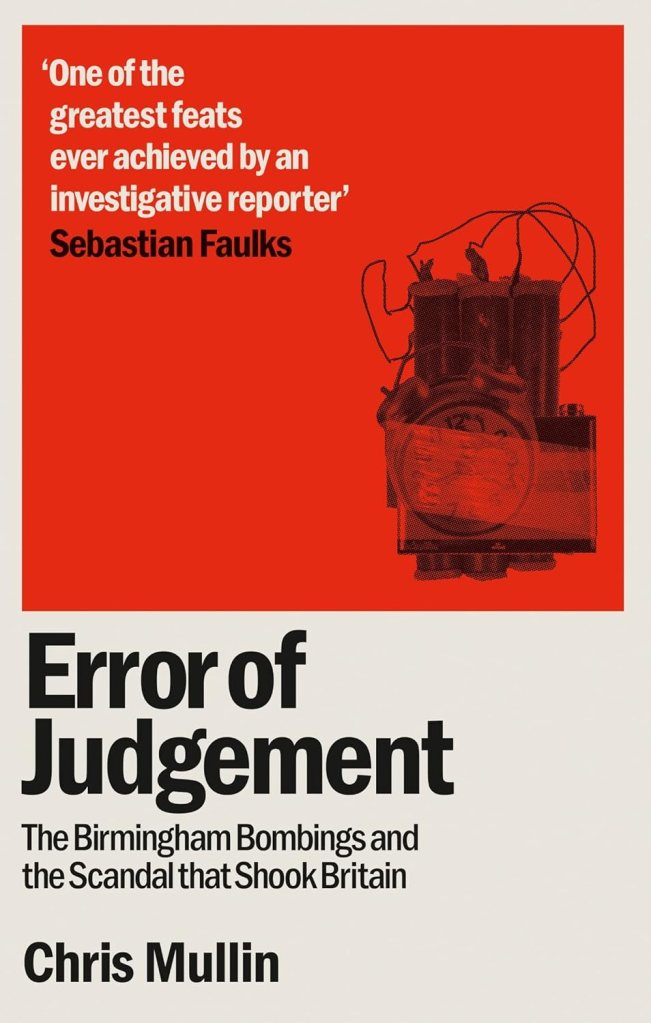
Error of Judgment lit a fire under the political and legal establishment when it was first published, shattering the prosecution case against six Irishmen wrongly convicted of with the Birmingham bombings and going on to change the course of British legal history. It also resulted in significant reforms to the legal system and the quashing of many other wrongful convictions.
Now 50 years on from the bombings and with a new preface and several new chapters covering the aftermath of the case, this new edition of Error of Judgement tells the complete story of one of Britain’s most significant miscarriages of justice.
On the evening of 21st November 1974, bombs planted by the IRA in two crowded Birmingham pubs exploded, killing 21 people and injuring at least 170. Within a day of the explosion, six men – Paddy Hill, Gerry Hunter, Richard McIlkenny, Billy Power, Johnny Walker and Hughie Callaghan – were arrested and charged. All were found guilty.
Methodically, with total clarity and a tone that is both gripping and impassioned, investigative journalist Mullin unpicked every detail of the case, revealing gaping holes in the prosecution case and an establishment determined to close ranks. Error of Judgement is a graphic illustration of what can go wrong when our police and criminal justice system is under pressure to get results and how difficult it is to persuade those responsible to own up once mistakes become obvious.





 Everything Is Better With Dragons