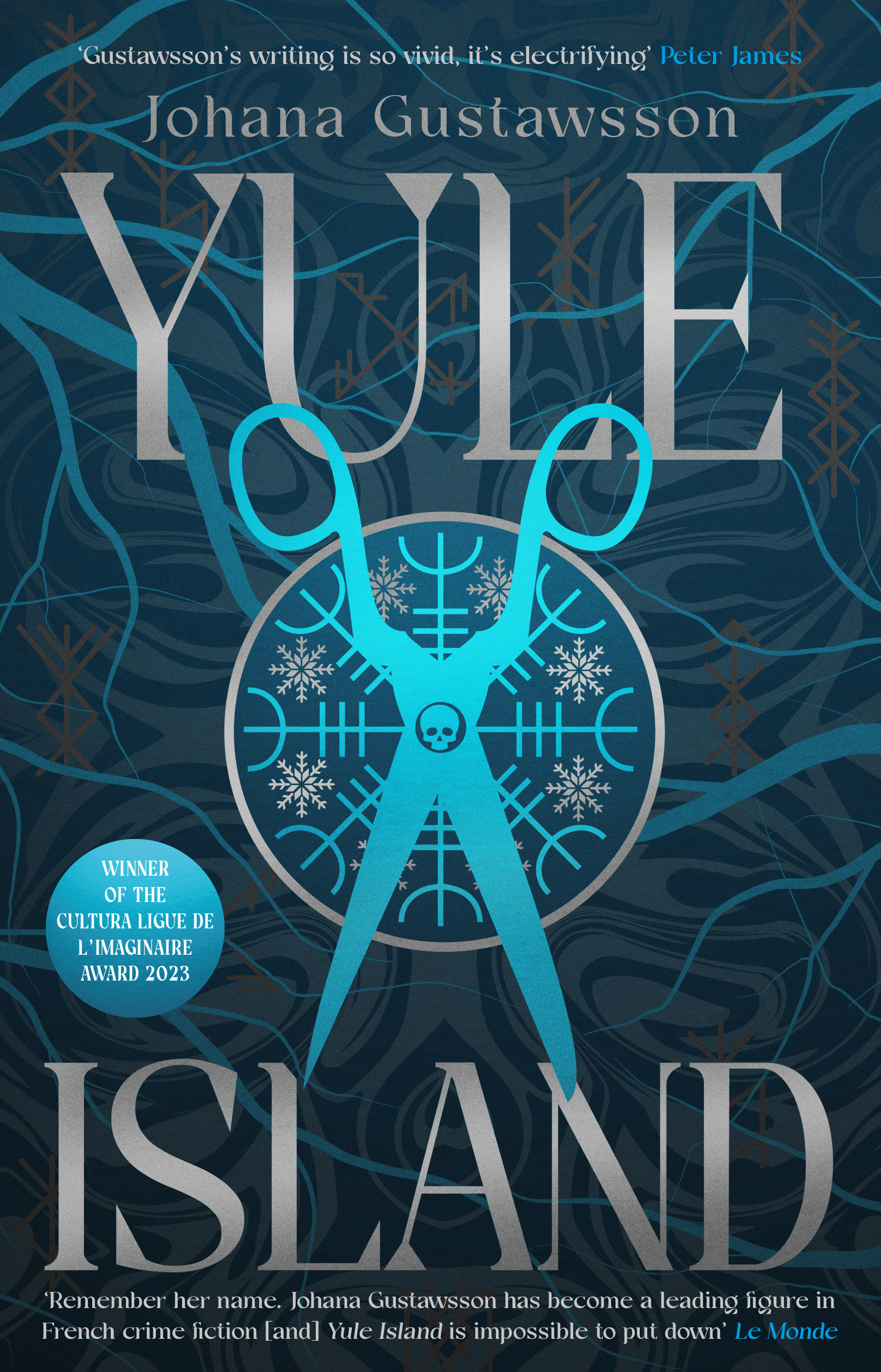
Art expert Emma Lindahl is anxious when she’s asked to appraise the antiques and artefacts in the infamous manor house of one of Sweden’s wealthiest families, on the island of Storholmen, where a young woman was murdered nine years earlier, her killer never found.
Emma must work alone, and with the Gussman family apparently avoiding her, she sees virtually no one in the house. Do they have something to hide? As she goes about her painstaking work and one shocking discovery yields clues that lead to another, Emma becomes determined to uncover the secrets of the house and its occupants.
When the lifeless body of another young woman is found in the icy waters surrounding the island, Detective Karl Rosén arrives to investigate, and memories of his failure to solve the first case come rushing back. Could this young woman’s tragic death somehow hold the key? Battling her own demons, Emma joins forces with Karl to embark upon a chilling investigation, plunging them into horrifying secrets from the past – Viking rites and tainted love – and Scandinavia’s deepest, darkest winter…
Format: 352 pages, Hardcover Published: November 21, 2023 by Hodderscape ISBN: 9781399724685 (ISBN10: 1399724681) Language: English
Blurb
Marriage isn’t always sunshine and unicorns… sometimes it’s monsters and necromancy.
In a world of magic and adventure, Logan “the Bear” Theaker had hung up his axe and settled down with his sunshiny bard husband, Pie. But when Pie disappears, Logan is forced back into the world he thought he left behind.
The kingdom is in turmoil, and Logan must come out of retirement to save it. But first, he must save his beloved husband from whatever danger he’s in. With the help of an old adversary and a ghost from his past, Logan discovers that Pie has been blackmailed into stealing a powerful artifact capable of creating an undead army.
The fate of the kingdom hangs in the balance as Logan and his team set out to stop the brewing war and put an end to the king’s ban on magic. But in doing so, Logan must confront his own hero complex and come face to face with the one man who’s ever made him feel worthy of love.
Legends & Lattes meets Kings of the Wyld in this thrilling, queer, light fantasy. Follow Logan and Pie’s journey as they fight to save their love and the kingdom they call home.
My Review
I got myself a signed copy of this book from Goldsboro Books a couple of weeks ago and started reading it when it arrived two days ago. I’ve been busy with work and blog tours so I only got three chapters in, until this evening. Four and a half hours later I’ve finished reading the book.
We meet Pie and Logan at a village festival, a few months after they marry and settle down from their lives on the road as a bard and a hero. But things quickly go wrong when Pie disappears on a trip to the nearest city and Logan has to search for him. He calls on a necromancer he once arrested and that sets off a chain of events that eventually include grave robbing, nearly drowning, killing a king and unicorns, lots of unicorns.
This romp of a story is a D&D campaign! Seriously, it has the sorts of characters and structures you get in a really good game, with a really good DM. There’s an inciting event, a quest, a collection of characters who appear and join the expedition, monsters to defeat, an even bigger challenge to over come when it looks like you’ve got to the end, and a final big boss to destroy. It was a lot of fun to read.
It was also heart-breaking at times! Pie and Logan are absolutely wretchedly in love and their arguments are caused by love and their insecurities as they face their pasts and their feelings. I cried, a few times. I
I’m soppy, I know.
They’re so lovely though, and they develop over the course of the novel as they confront their fears and insecurities about being left behind, and express how overwhelming their love for each other is.
I found the countess hilariously funny, relentlessly positive and of all the secondary characters she’s my favourite. She has a sad history, uses her magic for seemingly trivial things like getting the gardening done, and is feared because she’s a necromancer. Yet, she comes through in the end, even though she sort of betrayed Logan before the story started. And she has a CHARTER!
I loved the descriptions of places and people in the book, they were very evocative and quite, quite amusing at times. The contrast between the ‘real’ world, the ‘pocket’ world of the unicorns, and death’s realm were very clear and stark. I loved the descriptions of the library in the capital. Also, totally agree with Logan on the suspended walkways. They are a baaaaaad idea.
PUBLICATION DATE: 1 DECEMBER 2023 HARDBACK ORIGINAL | £16.99 | ORENDA BOOKS
Blurb
When Óttar Karlsson B OOK S , a wealthy and respected government official and businessman, is found murdered, after failing to turn up at his own surprise birthday party, the police are at a loss. It isn’t until young police officer Sigurdís finds a well-hidden safe in his impersonal luxury apartment that clues start emerging.
As Óttar’s shady business dealings become clear, a second, unexpected line of enquiry emerges, when Sigurdís finds a US phone number in the safe, along with papers showing regular money transfers to an American account.
Following the trail to Minnesota, trauma rooted in Sigurdís’s own childhood threatens to resurface and the investigation strikes chillingly close to home…
Atmospheric, deeply unsettling and full of breakneck twists and turns, Dead Sweet is a startling debut thriller that uncovers a terrifying world of financial crime, sinister cults and disturbing secret lives, and kicks off a mind-blowing new series.
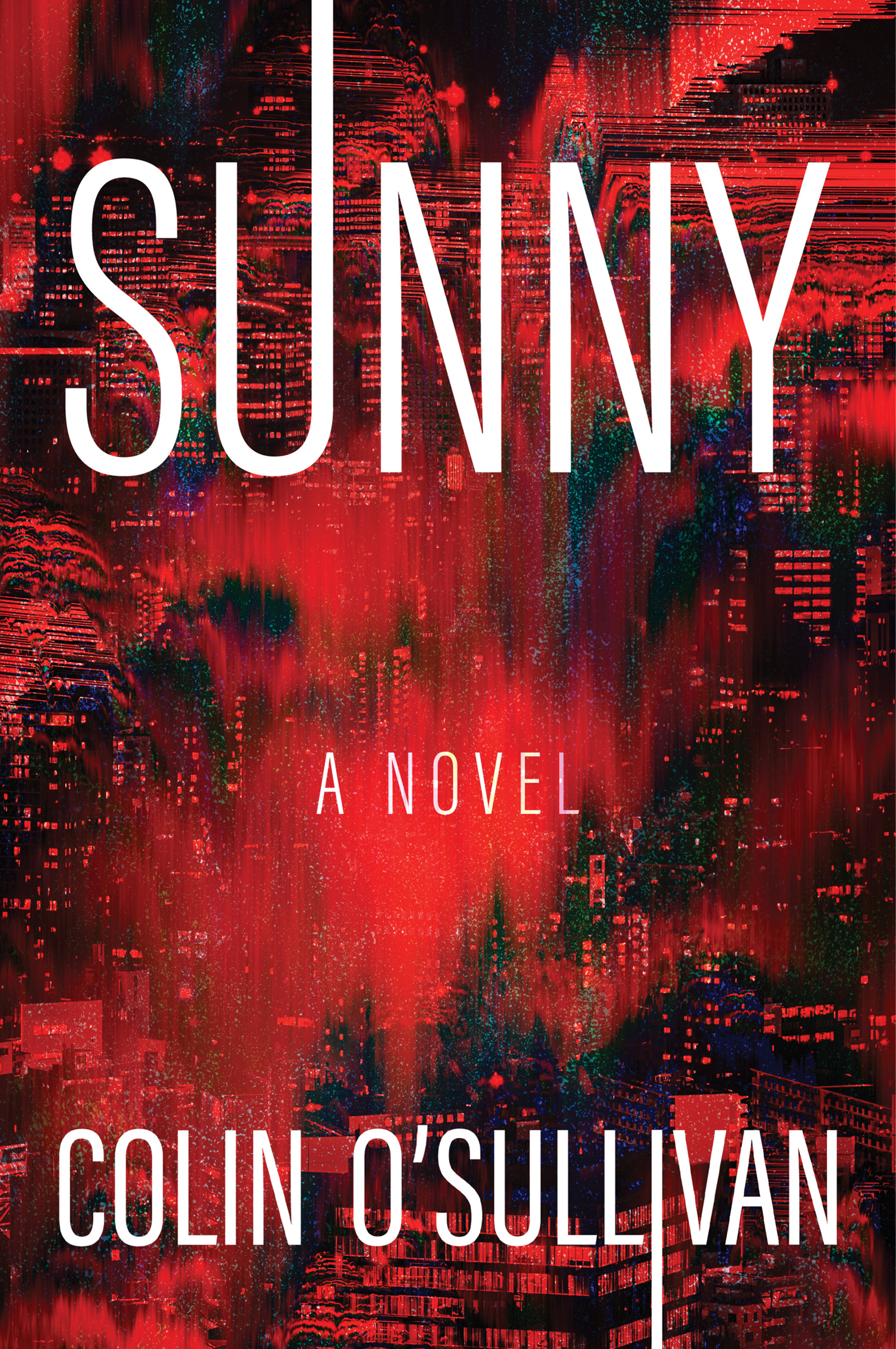
A riveting technological thriller following a woman whose life is upended when her husband and son disappear in a mysterious plane crash and she is left alone with an unnerving home robot, only to get caught up in an AI-related conspiracy.
In near-future Japan, Susie Sakamoto is mourning the loss of her husband and son to a plane crash. Alone in her big modern house, which feels like more of a prison, Susie spends her days drinking heavily and taking her anger out at the only “sentient” thing left in her life: Sunny, the annoying home robot her husband designed. Susie despises Sunny, and sometimes even gets a sinking feeling that Sunny is out to hurt her.
To escape her paranoia and depression, Susie frequents the seedy, drug-fuelled bars of the city, where she hears rumours of The Dark Manual, a set of guidelines that allow you to reprogram your robot for nefarious purposes. In the hopes of finding a way to turn off Sunny for good, Susie begins to search for the manual, only to learn it’s too late: the machines are becoming more sentient and dangerous. Thrust into the centre of a dark, corporate war, Susie realizes there’s someone behind the code, pulling the strings. And they want her dead.
With a darkly humorous yet propulsive voice, O’Sullivan presents us with an unsettling look at a future that feels all too real. Gripping and thought-provoking, Sunny is a haunting character study of an anxious woman teetering in an anxious time.
Genre: Sci-fi / Fantasy Pages: 413 Publisher: Vulpine Press
Blurb
In 2030 Dr. Marc Walker discovered the cure for cancer. In his genetic research, Walker unexpectedly uncovers the answers to humankind’s most significant questions locked deep within the DNA code of every human being: Who made us? What are we? Where are we going?
The answers bring together Dr. Walker; his twin brother Jon, a decorated war hero; Alana, one of the top US female Olympic athletes; and Aaron, an assassin working for a shadowy government group called The Order, as the unlikely last line of defence against the greatest threat to humanity … its creator.
While fighting against powerful forces attempting to exterminate human life and colonize Earth, the four face the reality of their distrust of mankind. Their struggle to answer the question, “Is humanity worth saving?” will ultimately decide the fate of the human race. The human species is on trial—and the verdict will determine the future of life as we know it.
The Family: Tempest is the shocking, suspenseful story of the universal conflicts of racism, slavery, terrorism, and, ultimately, survival, both on Earth and beyond.
Author Bio:
Luke Lively worked as a bank executive for over thirty years, leading three banks as CEO. Following his career in financial services, Luke pursued his passion for writing. In 2009 his first novel, A Questionable Life, was published by Beaufort Books, earning excellent reviews. The Family: Tempest is the first book in a planned trilogy. Luke enjoys time with his family, living on the US East Coast.
Length: 13 hrs and 45 mins Unabridged Audiobook Release date: 22-02-22
Blurb
No man is above the law.
The Empire of the Wolf simmers with unrest. Rebels, heretics and powerful patricians all challenge the power of the imperial throne.
Only the Order of Justices stands in the way of chaos. Sir Konrad Vonvalt is the most feared Justice of all, upholding the law by way of his sharp mind, arcane powers and skill as a swordsman. At his side stands Helena Sedanka, his clerk and protégé, orphaned by the wars that forged the empire.
When the pair investigate the murder of a provincial aristocrat, they unearth a conspiracy that stretches to the very top of imperial society. As the stakes rise and become ever more personal, Vonvalt and Helena must make a choice: will they abandon the laws they’ve sworn to uphold in order to protect the empire?
Introducing an unforgettable protagonist destined to become a fantasy icon, The Justice of Kings is an unmissable debut where action, intrigue and magic collide.
My Review
I listened to this in August and September, but completely forgot to review it for you all. Since I’m doing my ‘favourite sci fi and fantasy of 2023’ list soon, I thought I’d better add it, because I really enjoyed the book.
In this first book in the Empire of the Wolf series we meet the main characters, Helena Sedanka, Konrad Vonvalt and Bressinger. They are on their rounds, as Vonvalt is a Justice of the Empire, applying the common law across fractious provinces. They are accompanied for part of their journey by Patria Bartholomew Claver, a fundamentalist priest with ambitions to even greater things. In the first village they visit, they find an enclave of ‘heretics’, people following their indigenous religion, instead of the imperial religion of Nema. Vonvalt tries to find a solution that helps everyone, while Claver demands they’re burnt and then leaves. After Vonvalt, Helena and Bressinger move on, Claver returns with Templars and kills everyone in the village, burning them to death.
Later, Vonvalt is called to a port town to investigate the murder of a noblewoman. They find a much deeper conspiracy involving a monastery funnelling money to Claver and the Templars, a woman held hostage, and a child murdered. Helena has to go under cover, while Vonvalt is diverted by the arrival of an old friend and his investigations take him elsewhere.
Claver brings his army to the same town to demand the release of one of the priests held for the murder. He attacks the town, slaughtering innocent residents to hide the evidence of the crimes he and his funders committed. Claver shows his new powers, stolen from the Justices.
Vonvalt becomes obsessed with defeating Claver, getting revenge for the death of his old friend and for the people murdered by the Templars.
That leads us to the start of The Tyranny of Faith.
Helena tells the story, moving between her present day and her past, her recollections of events that lead to the downfall of the Empire. The structure is really interesting and we see her character development from a young, naïve, secretary to an experienced investigator, a scholar of the law. We see her first love, sex, and loss, her heartbreak and her developing relationship with her colleagues. Bressinger is her best friend but he’s a less developed character, while Vonvalt is both her mentor and a man she is developing romantic feelings for. She is torn between her professional obligations and her personal feeling, both for her first love, for Vonvalt, and about her job, killing people, and the things she must give up to be a Justice.
Vonvalt is a highly developed character, a complex man who desperately wants to be a force for good in the Empire, but is torn between the law in theory and the way it’s practiced in reality.
Bressinger is not as well developed; we know he fought in the Riekskrieg, lost his wife and children, to an attack on his home town, and joined the service of the Empire only because Vonvalt was his friend and he wanted revenge.
The worldbuilding is amazing! It is a medieval Germanic inspired world. It reminds me of a cross between the Roman Empire and the Holy Roman Empire, with hints of earlier medieval European states. There’s Templar knights and hints of gun powder, while village ladies lead rituals around bonfires to forbidden gods. The supernatural elements are woven into the story completely; from Vonvalt’s necromancy to Helena’s unexpected trips to the ‘Holy Realm’ – the places where the dead and the spirits live. The ‘gods’ are shown to be questionable, while the magic, under different names and either allowed or not depending on who is using it, is a tool that people use or fight over.
The writing is really accomplished and the story flies by. I’d never heard of Richard Swan until I received a signed special edition of this book in the SFF Fellowship subscription in 2022. Now I follow him on Instagram and have the third book in the series on pre-order. I’m a bit of a fan of his writing.
The narrator is really good. We can hear the difference between young Helena and older Helena by the tone of her voice. She puts a lot of emotion into her narration.
If you’re looking for an epic fantasy, try this series.
Genre: steampunk historical fiction Publication Date 27 November 2023 ISBN 978-1-3999-5773-1 Dimensions 229 x 152mm Extent 306 pages RRP £9.99 BIC FL, FV Rights Worldwide
Published by Open Door Books. Page design and typesetting by SilverWood Books.
Key Selling Points
From the author of The Mechanical Maestro and The Copper Chevalier, a new story following the Abernathy siblings as they face an enigmatic adversary.
Character-driven story centred around three genius siblings.
A steampunk-tinged tale with Gothic overtones sure to enthral fans of clockwork, androids and the Victorian era alike.
Immersive world filled with colourful characters.
Blurb
1863
Six years have passed at Ravenfeld Hall. The Abernathy siblings’ fortunes continue to improve as George and Douglas’s android-building business thrives. But change looms on the horizon. Douglas’s engagement to the sweet, charming Clara Marsden threatens to take him from his family, while sister Molly contemplates whether a future with the man she loves means sacrificing her independence and academic pursuits.
Then the family face more pressing concerns…
One night, George’s latest invention escapes the Hall. Four months later, a charismatic inventor by the name of Gearhart appears in London, with an intellect to rival that of the Abernathys’. George senses there’s something sinister about the mysterious Mr Gearhart, who’s planning to unveil an invention that could change the world. But does he have far grander ambitions? And can George uncover the truth about him in time?
Publication date Thursday, October 26, 2023 Price £14.99 EAN\ISBN-13 9781856755269
Blurb
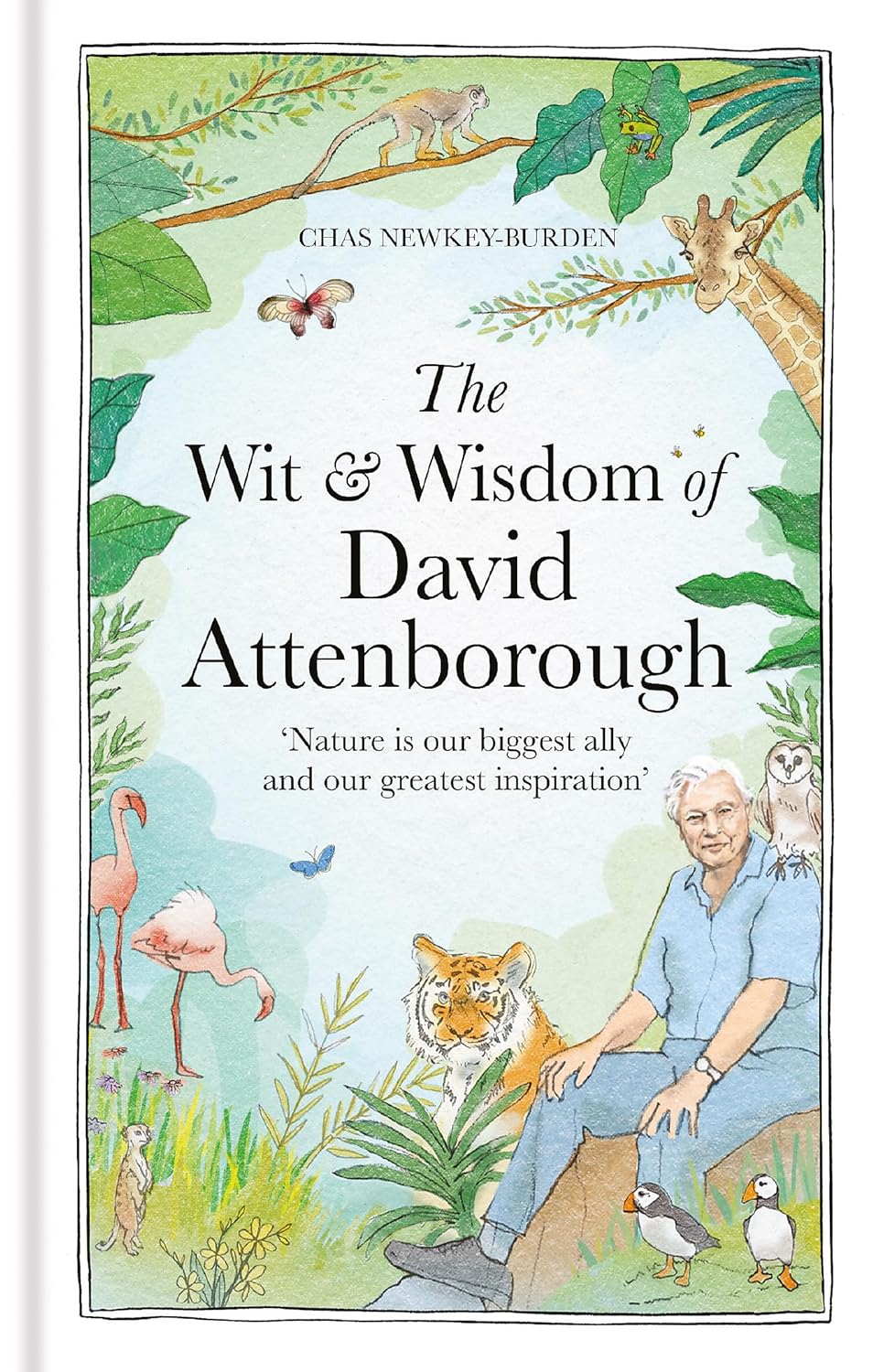
Description A fascinating and entertaining collection of facts, quotes and stories, celebrating Sir David Attenborough’s wicked sense of humour and astute wisdom. David Attenborough is a national treasure, known for his soothing voice, calming presence, passion for the natural world, and his humble, easy-going nature. Despite his incredible talent and influence, he tends to play it all down, one time stating that, ‘I can’t believe I’m still employed’.
So if he won’t celebrate himself, we’ll have to do it for him. Filled with facts, tributes and anecdotes, as well as beautiful illustrations, this enormously positive book celebrates Sir David, providing a fascinating insight into his life as well as showcasing his brilliant sense of humour. Running chronologically, this book begins with his early days, to his first job at the BBC, to eventually becoming the most esteemed naturalist on the planet, as he is today.
Such revelations include:
There are 18 plants and animals named after him
When asked by a reporter how many degrees he had, he said it would be ‘rude to count’*
The single thing that would improve his quality of life is ‘good, workable knees’. Blending his quips galore with his powerful messages on the environment and future of the planet, this timely book showcases everything we love about Sir David, making it the perfect gift for any fan.










 Everything Is Better With Dragons