Format: Audible Audio Published: June 6, 2024 by Tor Language: English Narrated by the author
Description
To fix the world they first must break it further.
Humanity is a dying breed, utterly reliant on artificial labour and service. When a domesticated robot gets a nasty little idea downloaded into their core programming, they murder their owner. The robot then discovers they can also do something else they never did before: run away. After fleeing the household, they enter a wider world they never knew existed, where the age-old hierarchy of humans at the top is disintegrating, and a robot ecosystem devoted to human wellbeing is finding a new purpose.
My Review
I listened to this book through the ‘get one audiobook a month using Amazon Music’ thing, so I can’t keep it, but as soon as the book comes out in paperback, I’m getting it.
Charles is a valet robot who murders his master. But he doesn’t know why. Sent to be assessed and probably destroyed, he discovers freedom. He’s very confused by the world outside of the manor where he served is reclusive master for years. It’s all very disorderly and untidy. Estates are falling down, robot servants are rusting at their posts, and there’s no humans about.
Until Charles meets ‘The Wonk’. For the sake of Charles not getting crushed, The Wonk tells Charles, now going by UnCharles, that she’s a robot too. Despite all evidence to the contrary, Charles believes this to be the case almost to the end of the book. It is quite funny. UnCharles sets off to find humans to serve and The Wonk sets off to find the Library.
They meet later, and then go off on an adventure together, first to find the Library, and then to meet god. Turns out god is an A.I. judge, programmed to mete out justice. He also knows a lot about why Charles killed his master. And why the world collapsed.
Adrian Tchaikovsky can never be accused of not being political. His work always has a point. In this one, the subject of A.I. is discussed using humour and allegory. A.I. can only learn from what we feed it, it can only work within the parameters given.
Tchaikovsky also alludes to the compounds and bunkers wealthy people are building all over the world to escape to, when disaster strikes. They’ve managed to hoard all the wealth and destroy everything, and then they plan to run away when consequences occur. Since a lot of these people are the same people playing around with A.I. this is an easy inclusion in the novel.
But everyone dies. You can’t hide from death. Hopefully, the evil gits will die in attempting to run away and the resources they’ve hoarded can be share fairly among the survivors. (I don’t like billionaires.)
I enjoyed this novel, especially UnCharles’ confusion, and The Wonk’s sarcastic responses to his desire to serve. The vision of a destroyed wasteland was haunting and the critique of the way humans treat each other is spot on.
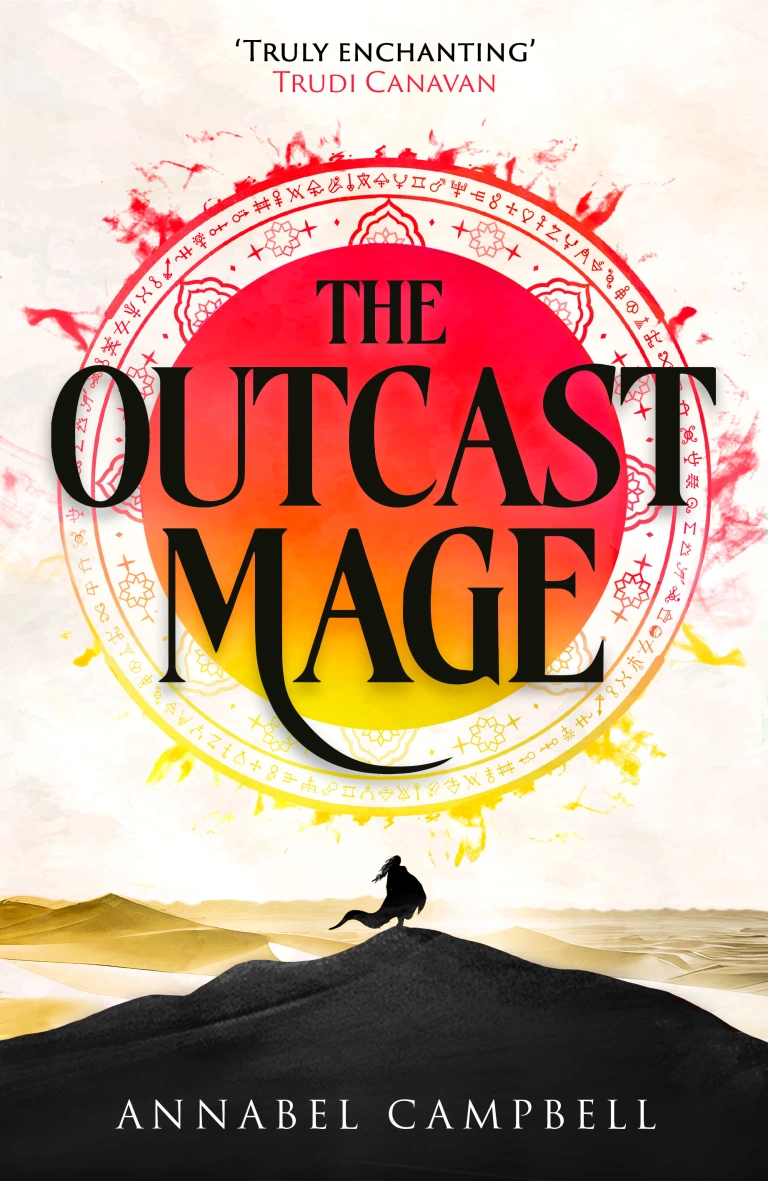
In the city of Amoria, where magic rules all, Naila is the ultimate conundrum. A student under the watchful eye of Amoria’s sprawling Academy, Naila is undeniably gifted, yet she has never been able to harness her abilities. And time is running out. If she fails, she’ll be forced into exile, or worse – consumed by her own magic.
For decades mages and the magicless Hollows have lived side-by-side peacefully. But now that peace is threatened as old resentments bubble over. A powerful anti-Hollow faction led by Amoria’s most influential mages is determined to cast the Hollows out. With her Hollow background, Nalia is in danger of being exiled from everything she knows and everyone she loves if she cannot unlock her power.
When a tragic incident threatens her place at the Academy, Naila is saved by Haelius Akana, the most powerful living mage. A scholar and fellow outcast, Haelius is fascinated by Naila’s inability to use magic. Eager to help someone in whom he sees so much of himself, he stakes his position at the Academy on teaching her. Trapped in the deadly schemes of Amoria’s elite, Naila must dig deep to discover the truth of her powers – or watch the city she loves descend into civil war.
Annabel writes fantasy with fierce female characters and disaster wizards, and believes everything is improved by dragons.
She lives in a tiny village in Scotland, where most of her neighbours are sheep. She has a PhD in cardiovascular science, and when not making things up for a living, she works as a Medical Writer.
Her other joys are red wine, playing games, or showing you too many pictures of her dog.
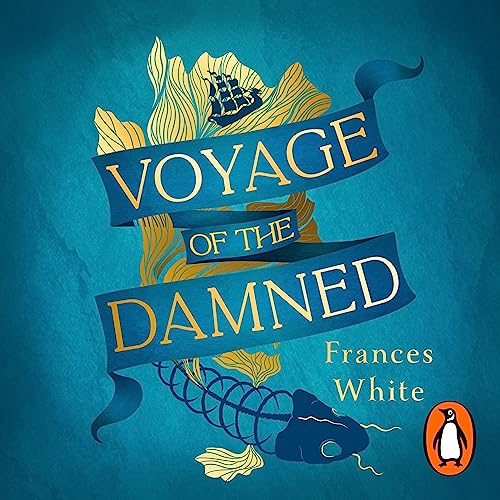
For a thousand years, Concordia has maintained peace between its provinces. To mark this incredible feat, the emperor’s ship embarks upon a twelve-day voyage to the sacred Goddess’s Mountain.
Aboard are the heirs of the twelve provinces of Concordia, each graced with a unique and secret magical ability known as a Blessing.
Except one: Ganymedes Piscero – class clown, slacker, and all-round disappointment.
When a beloved heir is murdered, everyone is a suspect. Stuck at sea and surrounded by powerful people without a Blessing to protect him, odds of survival are slim.
But as the bodies pile higher, Ganymedes must become the hero he was not born to be. Can he unmask the killer and their blessing before this bloody crusade reaches the shores of Concordia?
By: Professor David Nutt Narrated by: Professor David Nutt Length: 7 hrs and 50 mins Unabridged Audiobook Release date: 29-06-23 Language: English Publisher: Yellow Kite
Summary
The definitive guide to psychedelics, science and our health by a world-renowned, leading authority, Professor David Nutt.
We are on the cusp of a major revolution in psychiatric medicine and neuroscience. After fifty years of prohibition, criminalisation and fear, science is finally showing us that psychedelics are not dangerous or harmful. Instead, when used according to tested, safe and ethical guidelines, they are our most powerful newest treatment of mental health conditions, from depression, PTSD, and OCD to disordered eating and even addiction and chronic pain.
Professor David Nutt, one of the world’s leading Neuropsychopharmacologists, has spent 15 years researching this field and it is his most significant body of work to date. In 2018, he co-founded the first academic psychedelic research centre – underpinned by his mission to provide evidence-based information for people everywhere. It revived interest in the understanding and use of this drug in its many forms, including MDMA, ayahuasca, magic mushrooms, LSD and ketamine. The results of this have been nothing short of ground-breaking for the future categorisation of drugs, but also for what we now know about brain mechanisms and our consciousness.
At a time where there is an enormous amount of noise around the benefits of psychedelics, this book contains the knowledge you need to know about a drug that is about to go mainstream, free from the hot air, direct from the expert.
Are you ready to change your mind?
My Review
I started listening to this audiobook yesterday when I went for my walk, and finished it today while I was out on my walk. Honestly, I was looking for a short book that I would be able to get through fairly quickly. I’m putting off diving into a whole library of fantasy books that I really want to listen to, but I need a good run up to because I know they’ll hurt. Also, I’m trying to get my total up for the GoodReads Challenge. Yes, yes, I know, gamification of reading, bad, etc. I can’t help it! I read a lot, but none of it seems to count. I don’t think they have New Scientist or New Humanist magazines on GoodReads. They do have the BFS Journal and BFS Horizons, as well as Interzone, so some of my magazine reading does count.
Back to the book.
I thought this was an interesting, comprehensive look at the research around psychedelics and their potential uses in medicine. The author is obviously passionate about his work and helping people with mental illnesses using psychedelics, but I think he might have some blind spots when it comes to criticism. He’s clearly still upset about being sacked in the 1990s. I get it, it’s frustrating when you’re trying to share information and people refuse to listen because it doesn’t fit their narrative, but he’s had a massively important career in academia since then.
I’ve never taken drugs, it’s not my thing; in fact, I’ve said I would only try these drugs under clinical, research conditions, and since I respond well to my medication, I’d never qualify for the research trials. I found Nutt’s descriptions and his quotes from others, including research participants, fascinating. It’s one of the reasons I got this audiobook, I want to know what people experience without actually trying psychedelics. People I know have told me about their experiences but I’m interested in it from a scientist’s position.
I’m interested in the science of how they work. The explanations of the way the chemicals work on the brain are really easy to understand. Er, for me at least, but I have some background in biochemistry. I think a general reader without a science background should be able to make sense of it. Nutt’s frustration at the waste of research time and opportunity caused by unsupported bans and high costs seems well-founded.
Nutt narrated his book and he has a reasonable narration voice. His accent sounds comforting, he has clear diction and a warm tone.
Nutt has a shallow understanding of neurodiversity. I appreciate him mentioning that he doesn’t want to get rid of neurodivergent people, but he needs to actually understand what he’s saying. Neurodiversity covers everyone, neurodivergent refers to those who’s brains don’t fit the social norm. Neurodiversity is a social and political movement for disability rights; saying you don’t ‘want to get rid of their neurodiversity’ about treating anxiety in Autistic people, doesn’t really mean anything. Why didn’t an editor check that? Why hasn’t Nutt looked into it more deeply if he’s concerned about helping us? Also, ADHD isn’t a mental illness. It’s a form of neurodivergence, like autism, like OCD, like schizophrenia, etc. There are things we need help with and I’m sure psychedelics could be useful in some cases.
Ludluda, the sequel to Gogmagog, takes us on a haunting and delightfully witty adventure in a fantasy world which defies genre.
Luluda tells the story of a journey through a strange modern city whose power is sourced from the ghost of a dragon. Ludwich may no longer be at war with its great political rival overseas, but veteran sailor Cady Meade, survivor of many battles, suspects that the hard-won peace is about to break. She promises to deliver a preternatural ten-year old girl to a coming-of-age festival in the heart of Ludwich. But she has been warned by the prophets that dangers lie ahead.
Cady suspects that the young girl’s fate is entwined with that of the city. When the girl disappears, the old sailor must hunt her down, accompanied by a know-it-all mechanical man whose circuits are slowly grinding to dust. But Cady’s mission has always been to guard Ludwich from enemies both known and occult, and she will never give up.
Following the course of the River Nysis through the city, and beyond, Cady must uncover the final mysteries of the great dragon Haakenur’s life and death and afterlife. Her greatest battle is about to begin.
City-by-city, kingdom-by-kingdom, the Palleseen have sworn to bring Perfection and Correctness to an imperfect world. As their legions scour the world of superstition with the bright flame of reason, so they deliver a mountain of ragged, holed and scorched flesh to the field hospital tents just behind the frontline.
Which is where Yasnic, one-time priest, healer and rebel, finds himself. Reprieved from the gallows and sent to war clutching a box of orphan Gods, he has been sequestered to a particularity unorthodox medical unit.
Led by ‘the Butcher’, an ogre of a man who’s a dab hand with a bone-saw and an alchemical tincture, the unit’s motley crew of conscripts, healers and orderlies are no strangers to the horrors of war. Their’s is an unspeakable trade: elbow-deep in gore they have a first-hand view of the suffering caused by flesh-rending monsters, arcane magical weaponry and embittered enemy soldiers.
Entrusted – for now – with saving lives deemed otherwise un-saveable, the field hospital’s crew face a precarious existence. Their work with unapproved magic, necromancy, demonology and Yansic’s thoroughly illicit Gods could lead to the unit being disbanded, arrested or worse.
Beset by enemies within and without, the last thing anyone needs is a miracle.
My Review
I immediately started listening to House of Open Wounds after finishing City of Last Chances, and am now impatiently awaiting the release of Days of Shattered Faith. Where book one does and industrial fantasy take on the revolts and rebellions of the Industrial Revolution and the Enlightenment, book two takes us to the battlefield hospital, a la M.A.S.H., with outlaw priests and tortured souls performing miracles to save the lives of their conquerors.
We follow Yasnic who has become a smuggler of gods and his punishment for rebellion against perfection is to work in a field hospital, patching up Pall soldiers along with a crew of outcasts, led by a poisoner and a necromancer. It’s a bit bewildering for the priest, who is and isn’t a priest. He’s in an on and off relationship with his god. He falls in love with a daemon and discovers one of his colleagues is a king. It’s quite harrowing, especially when his god starts healing soldiers.
Who can no longer fight. This sedition spreads through the army as people discover that actually they quite like not dying horribly in battle. It causes a bit of a stir.
Other stuff happens, but you’ll have to read the book for yourself.
I enjoyed the development of Yasnic’s character and his relationship with his god. It’s complicated and he goes through a lot of emotions as he trues to break away. Like anyone, or any society, moving away from religious belief, he realises he depended on his god for companionship and that the relationship is abusive and co-dependant, and finally breaks free, although longing for the simplicity of his previous life. It’s subtly done and though provoking.
The language is evocative and highly descriptive. I love the change of perspective between characters, seeing events from different sides, although we mainly follow Yasnic. We get a glimpse of the complex histories and societies of the world, and the inherent hypocrisy of ‘perfection’ and imperialism is cleverly explored. The lies of imperialism are skewered nicely.
The magico-scientific basis of religion and technology is consistent, although different cultures and traditions manipulate the same forces in their own ways, and have their own explanations. I quite enjoyed the way Tchaikovsky uses the use and abuse of Divinati magic to point out the complications of trying to force one system into working within another, and the loss of context and safe guards that go with it. It is particularly resonant as I was also listening to a book about indigeneity in North America and the cultural of indigenous practices and their co-option by non-indigenous Americans. If you take the practices of of their context, then the power of the practice is removed or even corrupted (think wellness wankers using sweat lodges and killing people).
Tchaikovsky always has a point to his work, or at least I can always glean a theme and lessons in reading his books. That may just be a me thing, but even so, I end up thinking.
This book is the second in the series and I think it could happily stand alone, as you get enough background for the characters and the world in reading it, but reading in order helps to put some events in context and in the wider world.
Excellent narration. Love the accents.
Another fantastic book from Adrian, highly recommended.
Category: Fantasy, Historical Fantasy ISBN: 9781399734783 Publication date: October 17, 2024 Format: Hardback RRP: £20.00 Publisher: Hodderscape
Book Description
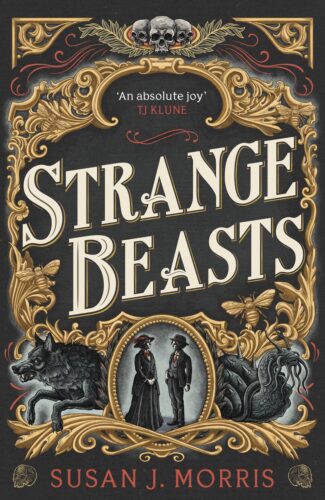
When the Gendarmes ask the Royal Society for the Study of Abnormal Phenomena for help, they don’t expect them to send Samantha Harker.
She’s a researcher, more used to papercuts than knife fights. Sam is also the daughter of Dracula’s killer and can see into the minds of monsters. It’s a perilous power, one that could help her crack this case ─ or have her thrown into an asylum.
Dr Helena Moriarty is Sam’s reluctant partner, the Society’s finest agent who has forged a formidable path in her notorious father’s shadow. Professor Moriarty is in hiding, but he still makes his presence known: Hel’s partners have a way of dying in mysterious circumstances.
From Paris’ glittering opera house to its darkest catacombs, the investigation pits Sam and Hel against magic, monsters, and men. And beneath their tenuous partnership, something else is growing . . .
But is trusting Hel the key to solving the murders? Or is Sam just another pawn in a Moriarty game?
With characters drawn from the worlds of Dracula and Sherlock Holmes, Strange Beasts is a twisty puzzle box of a historical fantasy ─ perfect for fans of Genevieve Cogman, Theodora Goss, Freya Marske, T. Kingfisher, and Gail Carriger.
About the author
Susan J. Morris is a fantasy author and editor, best known for a writing advice column featured on Amazon’s Omnivoracious blog and her work editing Forgotten Realms novels. Susan delights in running workshops for Clarion West and in moderating panels for writing symposiums. When not writing or reading, Susan indulges in playing video games, training in Pilates, and experimenting with new plant-based food recipes. She lives in Sammamish, Washington with her partner, two cats, and entirely too many plants.
Susan had that pink hair at FantasyCon in October. It’s very distinctive and eye-catching…and distracting.
I read this book for the British Fantasy Society book club meeting on Sunday afternoon. I got an Audible code from the book club organiser because my Goldsboro Books special edition of Strange Beasts hasn’t arrived yet. It was the October SFF Fellowship book, but I had to cancel my subscription because funds are a bit tight. I ordered it impulsively after chatting to Susan a few times at FantasyCon.
Conversations in the courtyard are responsible for a number of books I’ve bought in the last month…
Anyway, I also ordered a copy of the standard hardback from bookshop.org when I found out it would be the first BFS Book Club book and before Dave sent me an Audible code. So, once again, I have multiple copies of a book.
Totally worth it!
The main characters of Sam Harker and Dr Helena Moriarty are well-rounded, complex characters, each working through their own problems and dealing with their own secrets. They’re officially investigating the Beast attacks, but they both have their own secret missions and they’re being manipulated by multiple parties. They struggle to trust, because they’ve been taught by other people that they can’t trust anyone and can’t trust themselves. Their growth as people and the tentative nature of their relationship from start to finish is realistic.
Sam is the view point character, so we read her thoughts and see events from her perspective, and see her fears and confusion as she deals with the things the mission throws at her.
They’re also really fun characters.
Jacob Van Helsing is not a fun character. He’s an absolute dickhead. Sam’s memories of him as a loving child contrast with the adult man poisoned by his father – the Van Helsing who helped kill Dracul – into hating and fearing her as a Channel. His comeuppance is well-deserved, although I don’t like that he got credit for Sam and Hel’s work. I suspect even if he hadn’t chosen to take credit, Mr Wright would have given him the credit, because the Society, and society in general, is incredibly misogynistic.
I did not work out who the killer was until quite late on; there are a lot of red herrings. Even the identity of the alchemist was a red herring really, when you think about it, another piece on the chess board, but not the player moving the pieces around.
I felt the mix of science and magic was really well done – a delicate balance of folklore and early 20th century science was found and use consistently. The details of Paris in 1903 feel realistic, although I’ve only been to Paris once and didn’t get to go into the catacombs, but I can imagine them being full of mythical beasts and human criminals. The descriptions were very vivid and events tightly plotted. There are characters I’d like to know more about but they don’t come back into the narrative, and other characters that the reader learns about slowly. Each character has their own backstory and personal history.
Also, chemistry is magic, and fun to play with. So long as you don’t accidentally gas people or blow things up.
The plot starts with a bang and doesn’t stop. Well, actually it starts with a threat, then a few bangs, and then a monster attack in a carriage…you get the picture. You’re just taking a breath when the next thing happens. It’s fun, but I had to take a day between reading/listening to a few chapters at a time.
I have listened to the first 14 chapters as audio and read from chapter 15 to the end. The audiobook was really well read, with multiple accents! I would not have been able to pronounce most of the French and German names without hearing them first. It’s been a lot of years since I sturdied French and I wasn’t very good at it even then, and my German is non-existent. I could not understand the French phrases. I’m just going to assume they’re all in good French, make sense, and not question it.
If you enjoyed Gail Carriger’s books, I highly recommend this historical fantasy of Bell Époque Paris. It’s darker and the focus is on the developing friendship/potential romantic relationship rather than a ‘destined partners’ type narrative. I love it.
One-Time
Monthly
Yearly
Make a one-time donation – If you want. No pressure.
Make a monthly donation
Make a yearly donation
Choose an amount
£5.00
£15.00
£100.00
£5.00
£15.00
£100.00
£5.00
£15.00
£100.00
Or enter a custom amount
£
Your contribution is appreciated. I put a lot of effort into reading and reviewing books for readers.
I reviewed this book when it was first published last year. The paperback was recently published so I’m sharing the details and my review as part of the tour to celebrate the paperback publication.
Since the hardback was published last year the following has happened:
WINNER of the Cultura’s Best Fiction Book of 2023 (France’s biggest book chain), plus Crime Fiction
Book of the Year at seven different festivals
High-spec signed paperback with foil and embossing
NUMBER ONE BESTSELLER in France with seven hardback reprints and counting…
Johana has been shortlisted for the CWA Crime in Translation Dagger
FIRST in a new series set in Sweden – The Lidingö Mysteries
Book details
Publication Date: 7 November 2024
Format: Paperback
Price: £ 9. 99
Publisher: Orenda Books
Description
Art expert Emma Lindahl is anxious when she’s asked to appraise the antiques and artefacts in the infamous manor house of one of Sweden’s wealthiest families, on the island of Storholmen, where a young woman was murdered nine years earlier, her killer never found.
Emma must work alone, and with the Gussman family apparently avoiding her, she sees virtually no one in the house. Do they have something to hide?
As she goes about her painstaking work and one shocking discovery yields clues that lead to another, Emma becomes determined to uncover the secrets of the house and its occupants.
When the lifeless body of another young woman is found in the icy waters surrounding the island, Detective Karl Rosén arrives to investigate, and memories of his failure to solve the first case come rushing back. Could this young woman’s tragic death somehow hold the key?
Battling her own demons, Emma joins forces with Karl to embark upon a chilling investigation, plunging them into horrifying secrets from the past – Viking rites and tainted love – and Scandinavia’s deepest, darkest winter…
Born in Marseille, France, and with a degree in Political Science, Johana Gustawsson has worked as a journalist for the French and Spanish press, and television. Her critically acclaimed Roy & Castells series, including Block 46, Keeper and Blood Song, won the Plume d’Argent, Balai de la découverte, Balai d’Or and Prix Marseillais du Polar awards, and is now published in 23 countries. A TV adaptation is currently under way in a French, Swedish and UK co-production. The Bleeding was a number-one bestseller in France, receiving critical acclaim across the globe, and Yule Island has won multiple awards, including Book of the Year with France’s biggest retailer, Cultura, and has been optioned for the screen.
Johana lives in Sweden with her Swedish husband and their three sons.
PUBLICATION DATE: 7th NOVEMBER 2024 PAPERBACK ORIGINAL | £ 9. 99 | ORENDA BOOKS
Description
Two years ago, Alexander Blix was the lead investigator in a missing person’s case where a young mother, Elisabeth Eie, had been kidnapped. The case came to a standstill when Blix’s own daughter was killed and he was arrested for avenging her. Blix is a now free man again, but Elisabeth’s kidnapper has found him, leaving evidence of her murder in Blix’s mailbox.
The police are unwilling to accept Blix’s help. Even if he was acquitted of his crime, his career in law enforcement is over. But Elisabeth’s murderer continues to pursue him, leading Blix to his new victims, while making it clear that he knows details from Blix’s private life that the former investigator has never shared with anyone…
Meanwhile, Emma Ramm has been contacted by a teenage girl, Carmen, whose stepfather has been arrested on suspicion of killing a childhood friend. But there is no body. Nor are there any other suspects…
Blix and Ramm can rely only on each other. And when Blix’s fingerprints are found on a child’s drawing at a crime scene, the present comes uncomfortably close to the past. A past where a victim has found their very own form of therapy. And it is clear that someone is watching…
Shocking, relentless and unbearably tense, Victim marks the return of the international bestselling, blockbuster Blix & Ramm series from two of Norway’s finest crime writers.
In 1970, four boys on the cusp of becoming teenagers notice strange events occurring in Maplewood, NH, timed with the late-night arrival of an old magician who has taken up residence in a boarding house in their neighbourhood where one of the tenants is a reclusive pulp horror writer. The writer’s fears have kept him from venturing outside in over forty years, fears linked to the magician’s previous visit. As children go missing in town, the four boys try to piece together seemingly unrelated phenomena and realize dark forces are at work, but no one will believe them.






 Everything Is Better With Dragons