TBL Post: Psychedelics: The Revolutionary Drugs That Could Change Your Life – A Guide from the Expert, by Professor David Nutt

By: Professor David Nutt
Narrated by: Professor David Nutt
Length: 7 hrs and 50 mins
Unabridged Audiobook
Release date: 29-06-23
Language: English
Publisher: Yellow Kite

Summary

The definitive guide to psychedelics, science and our health by a world-renowned, leading authority, Professor David Nutt.

We are on the cusp of a major revolution in psychiatric medicine and neuroscience. After fifty years of prohibition, criminalisation and fear, science is finally showing us that psychedelics are not dangerous or harmful. Instead, when used according to tested, safe and ethical guidelines, they are our most powerful newest treatment of mental health conditions, from depression, PTSD, and OCD to disordered eating and even addiction and chronic pain.

Professor David Nutt, one of the world’s leading Neuropsychopharmacologists, has spent 15 years researching this field and it is his most significant body of work to date. In 2018, he co-founded the first academic psychedelic research centre – underpinned by his mission to provide evidence-based information for people everywhere. It revived interest in the understanding and use of this drug in its many forms, including MDMA, ayahuasca, magic mushrooms, LSD and ketamine. The results of this have been nothing short of ground-breaking for the future categorisation of drugs, but also for what we now know about brain mechanisms and our consciousness.

At a time where there is an enormous amount of noise around the benefits of psychedelics, this book contains the knowledge you need to know about a drug that is about to go mainstream, free from the hot air, direct from the expert.

Are you ready to change your mind?


My Review

I started listening to this audiobook yesterday when I went for my walk, and finished it today while I was out on my walk. Honestly, I was looking for a short book that I would be able to get through fairly quickly. I’m putting off diving into a whole library of fantasy books that I really want to listen to, but I need a good run up to because I know they’ll hurt. Also, I’m trying to get my total up for the GoodReads Challenge. Yes, yes, I know, gamification of reading, bad, etc. I can’t help it! I read a lot, but none of it seems to count. I don’t think they have New Scientist or New Humanist magazines on GoodReads. They do have the BFS Journal and BFS Horizons, as well as Interzone, so some of my magazine reading does count.

Back to the book.

I thought this was an interesting, comprehensive look at the research around psychedelics and their potential uses in medicine. The author is obviously passionate about his work and helping people with mental illnesses using psychedelics, but I think he might have some blind spots when it comes to criticism. He’s clearly still upset about being sacked in the 1990s. I get it, it’s frustrating when you’re trying to share information and people refuse to listen because it doesn’t fit their narrative, but he’s had a massively important career in academia since then.

I’ve never taken drugs, it’s not my thing; in fact, I’ve said I would only try these drugs under clinical, research conditions, and since I respond well to my medication, I’d never qualify for the research trials. I found Nutt’s descriptions and his quotes from others, including research participants, fascinating. It’s one of the reasons I got this audiobook, I want to know what people experience without actually trying psychedelics. People I know have told me about their experiences but I’m interested in it from a scientist’s position.

I’m interested in the science of how they work. The explanations of the way the chemicals work on the brain are really easy to understand. Er, for me at least, but I have some background in biochemistry. I think a general reader without a science background should be able to make sense of it. Nutt’s frustration at the waste of research time and opportunity caused by unsupported bans and high costs seems well-founded.

Nutt narrated his book and he has a reasonable narration voice. His accent sounds comforting, he has clear diction and a warm tone.

Nutt has a shallow understanding of neurodiversity. I appreciate him mentioning that he doesn’t want to get rid of neurodivergent people, but he needs to actually understand what he’s saying. Neurodiversity covers everyone, neurodivergent refers to those who’s brains don’t fit the social norm. Neurodiversity is a social and political movement for disability rights; saying you don’t ‘want to get rid of their neurodiversity’ about treating anxiety in Autistic people, doesn’t really mean anything. Why didn’t an editor check that? Why hasn’t Nutt looked into it more deeply if he’s concerned about helping us? Also, ADHD isn’t a mental illness. It’s a form of neurodivergence, like autism, like OCD, like schizophrenia, etc. There are things we need help with and I’m sure psychedelics could be useful in some cases.

Review: Lovebroken, by Finley de Witt

Publication Date: 28th January 2024 £12.99 ISBN: 9781805142256
Thema subject category: DNC – Memoirs
paperback 216 x 138 mm 320 pp Portrait Author location: Hastings

Have you ever struggled with your mental health, your terrible relatives or a dysfunctional relationship? Or simply wondered what the hell is wrong with you? This story is for you.

Finley recounts their chaotic life with deadpan humour and honesty, wryly embracing their colourful lovers and a series of futile attempts to fix them. When a catastrophic encounter in France sends them into meltdown, they
wind up receiving daily psychoanalysis on the NHS with a cast of unsettling characters – mainly the therapists.

On leaving hospital, Finley stitches their life back together, living for a short time with a Bristol theologian before finding domestic bliss with a transgender civil servant. A cutting-edge approach to mental illness eventually leads them to a key revelation about their past, and they finally understands themself through the lens of their history. Aware at last of what they had survived, they face an agonising decision about their future.

Trauma has never been so funny or so shocking.

Continue reading “Review: Lovebroken, by Finley de Witt”

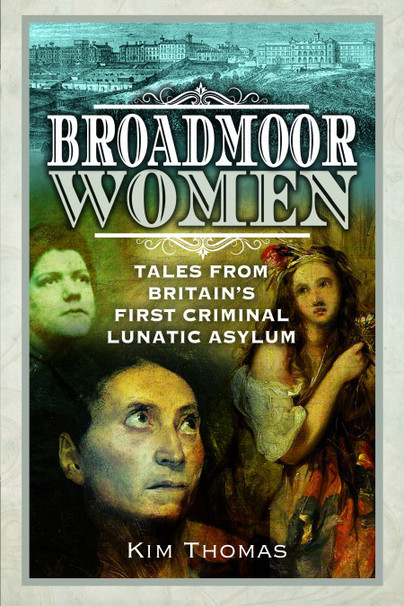
Pen & Sword Review: Broadmoor Women – Tales from Britain’s first criminal lunatic asylum, by Kim Thomas

By Kim Thomas
Imprint: Pen & Sword History
Pages: 192
Illustrations: 20 black and white illustrations
ISBN: 9781526794260
Published: 12th April 2022

Blurb

Broadmoor, Britain’s first asylum for criminal lunatics, was founded in 1863. In the first years of its existence, one in five patients was female. Most had been tried for terrible crimes and sent to Broadmoor after being found not guilty by virtue of insanity. Many had murdered their own children, while others had killed husbands or other family members.

Drawing on Broadmoor’s rich archive, this book tells the story of seven of those women, ranging from a farmer’s daughter in her 20s who shot dead her own mother to a middle-class housewife who drowned her baby daughter. Their moving stories give a glimpse into what nineteenth-century life was like for ordinary women, often struggling with poverty, domestic abuse and repeated childbearing. For some, Broadmoor, with its regime of plain food, fresh air and garden walks, was a respite from the hardships of their previous life. Others were desperate to return to their families.

All but one of the women whose stories are recounted in this book recovered and were released. Their bout of insanity was temporary. Yet the causes of their condition were poorly understood and the treatment rudimentary. As well as providing an in-depth look at the lives of women in Victorian England, the book offers a fascinating insight into the medical profession’s emerging understanding of the causes and treatment of mental illness.

My Review

Rosie Crofts, who does the marketing for Pen & Sword, sent me an email about this book a couple of weeks ago. I sat down and read it over the weekend.

I quite enjoy microhistories; the life of a single person or building can tell you something about the world around them. This book investigates the lives of seven women who were incarcerated in Broadmoor in the first forty years.

Most of them killed their children, one killed her husband and one killed her mother. Most of them had hard lives, limited by social conventions and/or poverty. Respectability was important to them all, and in court could be leveraged by a defendant so that they received a ‘guilty but insane’ or ‘not guilty by reason of insanity’ verdict. Often judges and juries were sympathetic to women who killed new born children in ‘puerperal insanity’ or ‘lactation insanity’. Psychiatrists and doctors didn’t really understand what was going on in people’s minds, and were still clinging to the idea that uteruses could cause madness; one particular belief was that women were so fragile that breast feeding for too long would cause madness.

Some of them had pre-existing mental health conditions before they committed their crimes and hadn’t received any or very limited care. Medical care for mental illness was limited at the time, as people were expected to look after their family members and doctors didn’t really understand how brains and hormones worked. Really bad cases were dropped in asylums and either left or experimented on, observed and drugged. Except in rare cases, like Tukes’ Retreat in York where the Quakers believed in calm, purposeful activity and loving kindness.

They averaged about 7 years in Broadmoor and were often released back to their families. Some husbands started petitioning for their release almost immediately after they were convicted, out of love or desperation for someone to care for their children. Returning to their families was often the worst thing that could happen to the women for several years, since it was the family/home environment that triggered the mental breakdown in the first place.

The regime at Broadmoor in the early years was based on improvement and calm, providing patients with a safe place to recover from their madness, time to heal and return to equanimity before being released. The early superintendents took after Dr. Tuke in their care of the patients; nutritious food, rest and care by sympathetic staff. Their regime was based on the latest (in the 1860s) scientific information. It would still be considered good care, now. Unfortunately, in between 1900 and 2000 there was a change in attitudes from care to abuse and back again. Seriously, I’m working on a project about this for work and it gives me nightmares to think about what happened to people with mental illnesses, learning disabilities or who were otherwise neurodivergent in asylums and residential centres.

I found this book interesting, it humanises the history of Broadmoor and gives us a snapshot into the social conditions of the late Victorian period. It would have been interesting to learn about the lives of the women warders alongside the patients. How did some working class women end up as warders and some as patients?

Could have done with some copy editing.

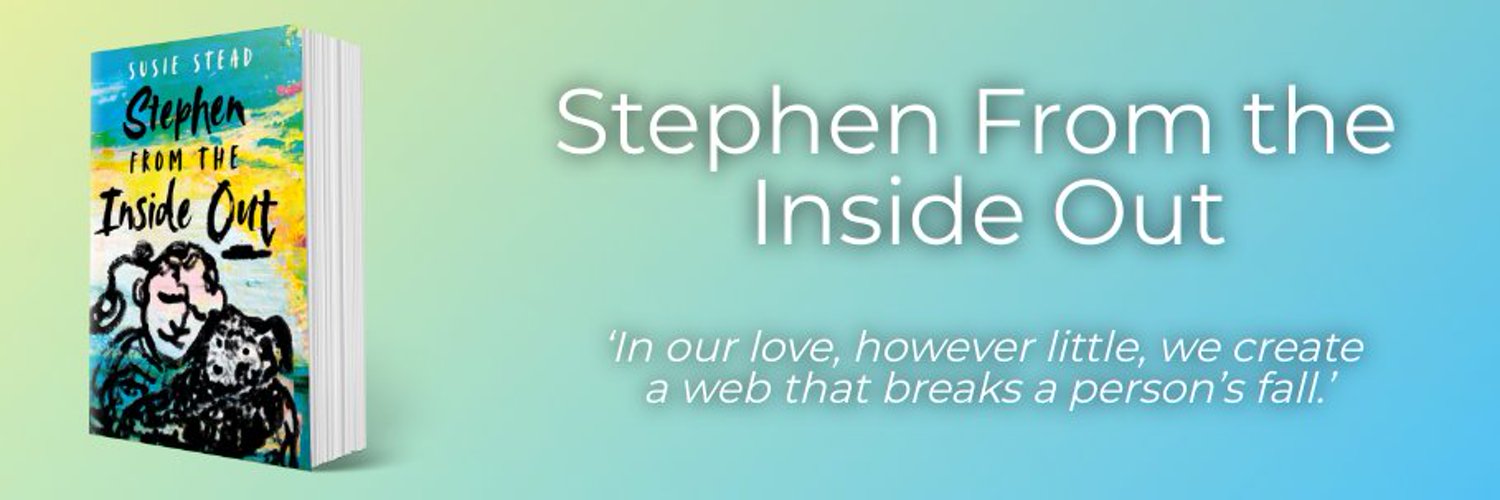
Review: Stephen From The Inside Out, by Susie Stead

Publication date: 2 Apr 2021
Category: Biography / Memoir
Paperback price: £9.99
Page count: tbc
ISBN: 978-1-911293-68-2
E-book price: £3.99
ISBN: 978-1-911293-67-5

Stephen struggled for most of his life with severe mental health issues, endured 25 years inside British psychiatric wards and never felt acceptable outside, in the ‘normal’ world. People found him difficult and demanding yet on the inside was a man with wide interests, deep longings and an integrity that would not be compromised, whatever the cost.
This is his story, inside and out; a story of grave injustices, saints and bigots, a faithful dog, a wild woman, a fairy godmother and angels hidden in plain sight.
It is also the story of the author, Susie, who started off by wanting to ‘help’
Stephen ‘get better,’ and instead found herself profoundly challenged by a
friendship she did not expect.
Idiosyncratic, unorthodox, tragic, yet at times hilarious – this book not only tells a compelling and important story but will be vital reading for anyone who cares about mental health in our contemporary world or who might just be open to a different way of seeing: from the inside out

Continue reading “Review: Stephen From The Inside Out, by Susie Stead”

Local author spotlight: Laurie Kennedy

I know Laurie through being involved in the local adult autistic groups, and he’s just published his book about mental health, Positively Negative. Laurie has kindly agreed to write a post for the blog about creating and publishing his book.

Continue reading “Local author spotlight: Laurie Kennedy”

I can’t read ebooks at the moment

It’s the brain, I can’t focus on the words and I just don’t want to touch a screen. If that makes any sense. Blogging isn’t fun at the minute, sorry.

I love to read and one of the the major bonuses of books is they allow me to escape. But, when my mental health is bad, as it has been for several months now, I need the tactile sensation of paper and turning pages to be able to focus enough to actually read. So screens don’t work for me.

I’ve thought long and hard about it, and I’ve decided to cancel all ebook reviews for March. I have one physical book blog tour review booked in, ‘Stray and Relation’ by Dizzy Greenfield, which I have already read and the review will be posted on 17th March, but any other reviews will be for books I have in my TBR pile from various publishers. I also have a couple of books for April that I want to get read and reviewed ahead of time.

There’s another problem, I am feeling under pressure to agree to so many blog tours I don’t feel like I have time to just read for the fun of it, everything has to be done to a timetable, and I’m just not up to that right now. When my mental illnesses are playing silly buggers I can easily read the four books I have scheduled for this month in about ten days. But right now, the added pressure of ‘I must read this book by this date’ is too much for me.

I need to take things easy for a while. I had to cancel a couple of tours in January, but February was mostly physical books and I managed the two e-books fine, but I can’t do it this month, I’m overwhelmed and close to shutting down entirely. I’m going to email the affected blog tour organisers after I finish this post, but I thought you, loyal readers, should know first, that regular service has broken down and it’ll resume when I’m up to it.

I have three books on the side by my desk that I’ve read and haven’t reviewed yet because I haven’t been up to it. I have a pile of Pen & Sword books that I’ve started that I’m struggling to finish because I can’t focus. I’ve read 12 Tamora Pierce books since January, because Tortall is where I go when I can’t be here, when being here is too painful.

Sorry.

I have a new support worker, who is helping me with my emotional stuff and my regular appointments with the psychologist continue. I have sent my PIP paperwork to the Tribunal service because I was denied it at Mandatory Reconsideration. My rent goes up next month and I’m unsure of my ESA at the moment. After my Christmas Eve assessment I was moved to the work related activity group, so I sent new evidence and requested a Mandatory Reconsideration. I also contacted my MP for advice. I got my MR notice on Friday and I think it says I’m getting Support again, but I’m waiting for the award notice before I feel certain.

All this stress has, strangely enough, taken a massive toll on my mental health, which is never robust at the best of times. My resilience is low, unfortunately, despite all the support I have from my family, especially my sisters who bear the financial and emotional brunt of my mental illness and autism. I had been making progress, until about August last year when I started to go down hill again. It’s easy enough, one little thing trips me up, and then it spirals until I can’t function and I’m suicidal again.

To be blunt, I don’t need something I do as a hobby making things worse than they already are.

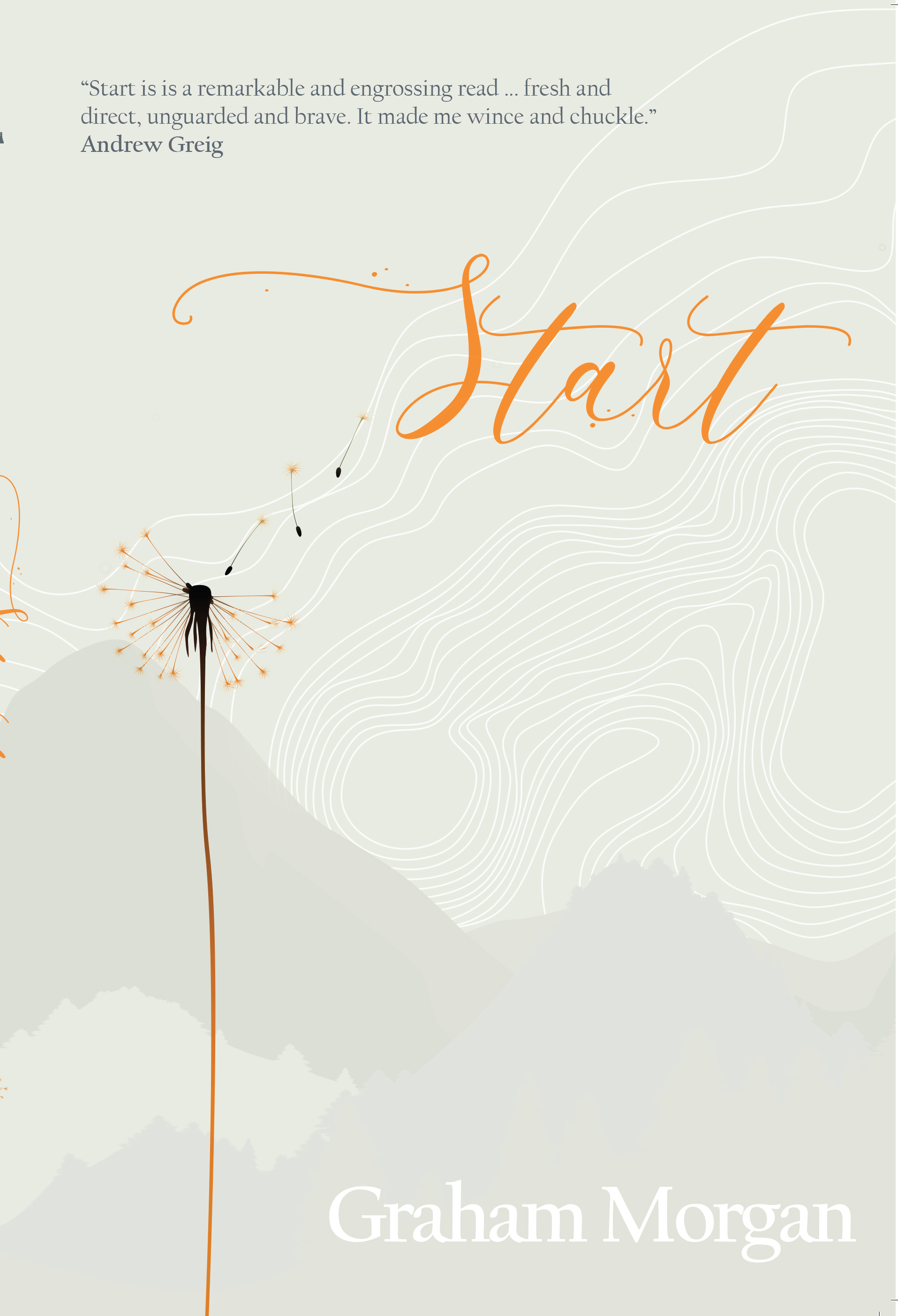
Review: ‘Start’, by #Graham Morgan,#FledglingPress, #LoveBooksGroupTours

9781912280070

Published By: Fledgling Press

Publication: 1 October 2018

I.S.B.N.: 9781912280070

Format: Paperback

Price: £11.99

ISBN 9781912280087

Format: Ebook

Price: £5.99

Blurb

Graham Morgan has an MBE for services to mental health, and helped to write the Scottish Mental Health (2003) Care and Treatment Act. This is the Act under which he is now detained.

Graham’s story addresses key issues around mental illness, a topic which is very much in the public sphere at the moment. However, it addresses mental illness from a perspective that is not heard frequently: that of those whose illness is so severe that they are subject to the Mental Health Act.

Graham’s is a positive story rooted in the natural world that Graham values greatly, which shows that, even with considerable barriers, people can work and lead responsible and independent lives; albeit with support from friends and mental health professionals. Graham does not gloss over or glamorise mental illness, instead he tries to show, despite the devastating impact mental illness can have both on those with the illness and those that are close to them, that people can live full and positive lives. A final chapter, bringing the reader up to date some years after Graham has been detained again, shows him living a fulfilling and productive life with his new family, coping with the symptoms that he still struggles to accept are an illness, and preparing to address the United Nations later in the year in his new role working with the Mental Welfare Commission for Scotland.

https://www.amazon.co.uk/Start-Under-Compulsory-Community-Treatment-ebook/dp/B07JBCVK54/ref=sr_1_1?s=books&ie=UTF8&qid=1542728968&sr=1-1&keywords=start+graham+morgan

Continue reading “Review: ‘Start’, by #Graham Morgan,#FledglingPress, #LoveBooksGroupTours”

End of year grousing about mental illness and autism assessments

I don’t often post personal updates these day; the blog has evolved over the last year. Of the last twenty posts, sixteen have been reviews, or blog tour related. The other four have been about my novels. I feel like I need to write a personal post today though.

Continue reading “End of year grousing about mental illness and autism assessments”

What shall we do with the exhausted Rosie?

Just kill me now.

Please.

Okay, I’m joking. Well, mostly. Don’t kill me, I’m too busy. Novels to write, books to review, that sort of thing.

Continue reading “What shall we do with the exhausted Rosie?”

I’ve been sleeping a lot

Yep, I over did it last week and have basically spent two days asleep. Which is why I’m awake at one in the morning writing a blog post. I’m hoping getting things written down will allow me to get some sleep tonight.

Continue reading “I’ve been sleeping a lot”