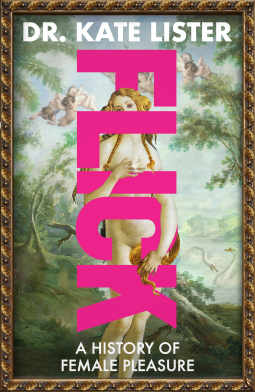
Review: Flick, by Dr Kate Lister

ISBN: 9780857506436
PRICE:£22.00 (GBP)
PAGES: 336
Publisher: Random House UK
Publication Date: 28th May 2026

Description

Meet the women throughout history who, quite literally, came before us.

From the host of award-winning History Hit podcast Betwixt the Sheets.


There is a common misconception that before modern day feminism, women throughout history simply lay back and thought of England or their respective place of origin; that the modern ‘sex positive’ movement is a radical break from the past. But women demanding better sex did not arrive with free love or the Rampant Rabbit. It has been a very long fight indeed.

From Ancient Mesopotamian sex goddesses to the contraceptive pill, Kate Lister takes us through history to show us how women’s sexual pleasure was controlled, understood and thoroughly, thoroughly enjoyed.

FLICK is a rousing history of women enjoying sex: sex with themselves, sex with each other, and occasionally sex with men as well.

My Review

Yes, it’s another Netgalley book! Took me a whole month to read it! This was actually a really fun read. But then I wouldn’t expect anything less from Dr Kate Lister, sweary Yorkshire monarch of sex history. I love her podcast. Betwixt The Sheets, so obviously when I saw this book available on NetGalley I had to request it.

The book is exactly what it says on the cover, a history of female pleasure. It covers goddesses, ancient approaches to female sexuality, masturbation, sapphic love, menopause, medicalisation of female sexuality, and everything in between. It mostly focuses on what can broadly be called Western traditions, occasionally venturing further afield, but mostly Europe, south west Asia (when talking about ancient goddesses), and North America.

The overarching theme is one of suppression due to fear. Blame the ancient Greeks, they were weird about women and worshipped the almighty cock (or Zeus as he was also known (my joke)), made up crap about the Mesopotamian civilizations, and then infected the rest of the European world with their misogyny and dodgy medicine for millennia. I am paraphrasing, obviously, and attempting to condense a lot of information into one paragraph, but there is a throughline from ancient Mediterranean civilisations to the modern world, in which female sexuality is feared and vilified, and so is suppressed and made shameful. Whether it’s the Roman disgust at the ‘unmanly’ cunniligus (I learnt so many new euphemisms!), or wandering wombs, or clitorectomies for ‘over sexed’ women, the result is the same. Suppression of female sexuality is a tool in the oppression of women in a patriarchal culture.

Dr Lister’s final point in the book is that until female sexuality is held to be equally acceptable as male sexuality, there is no full equality. While girls are told it’s dirty to touch themselves, but boys are ‘just being boys’; while women are called sluts for having sex because they enjoy it, but men are ‘proper men’ if they get laid a lot; while older women are bullied into dying their hair and having facelifts, but older men are silver foxes, there can be no true equality.

I found it easy to follow and entertaining to read. I could almost hear Dr Lister’s voice, and filthy laugh. This book is not an in-depth exploration focusing on one specific topic in one place and time, but an overview of a variety of related topics that circle around female sexuality and the ways it has been suppressed, controlled and vilified over the last couple of thousand years.

Highly recommended.

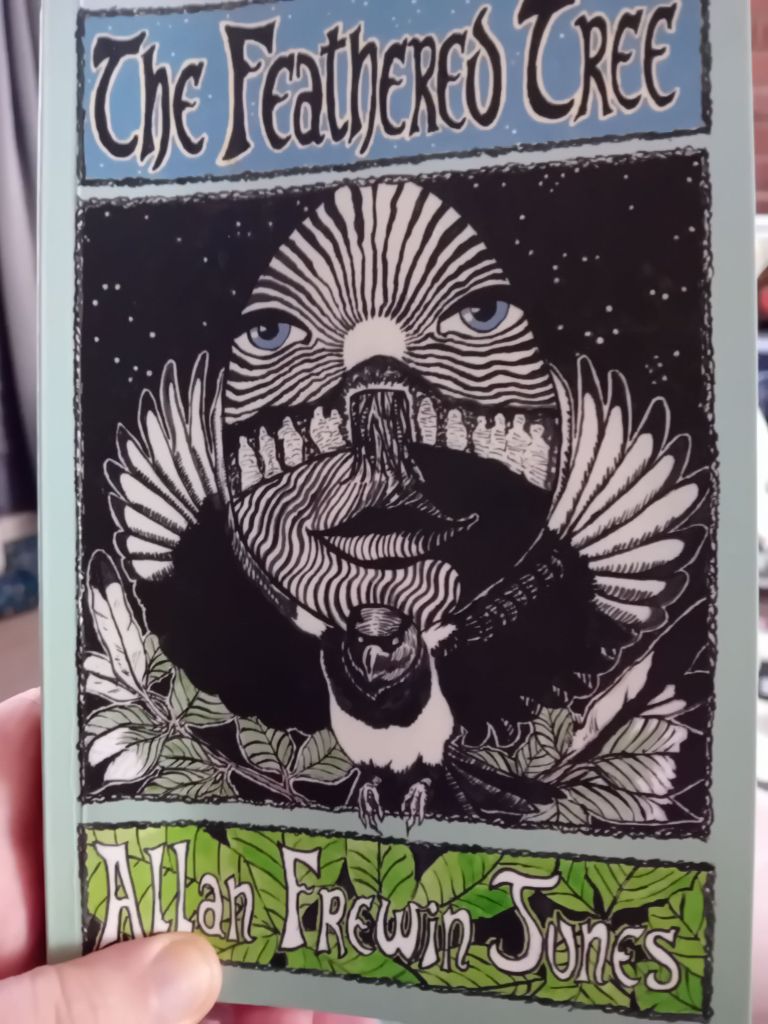
Review: The Feathered Tree  by Allan Frewin Jones

My Review

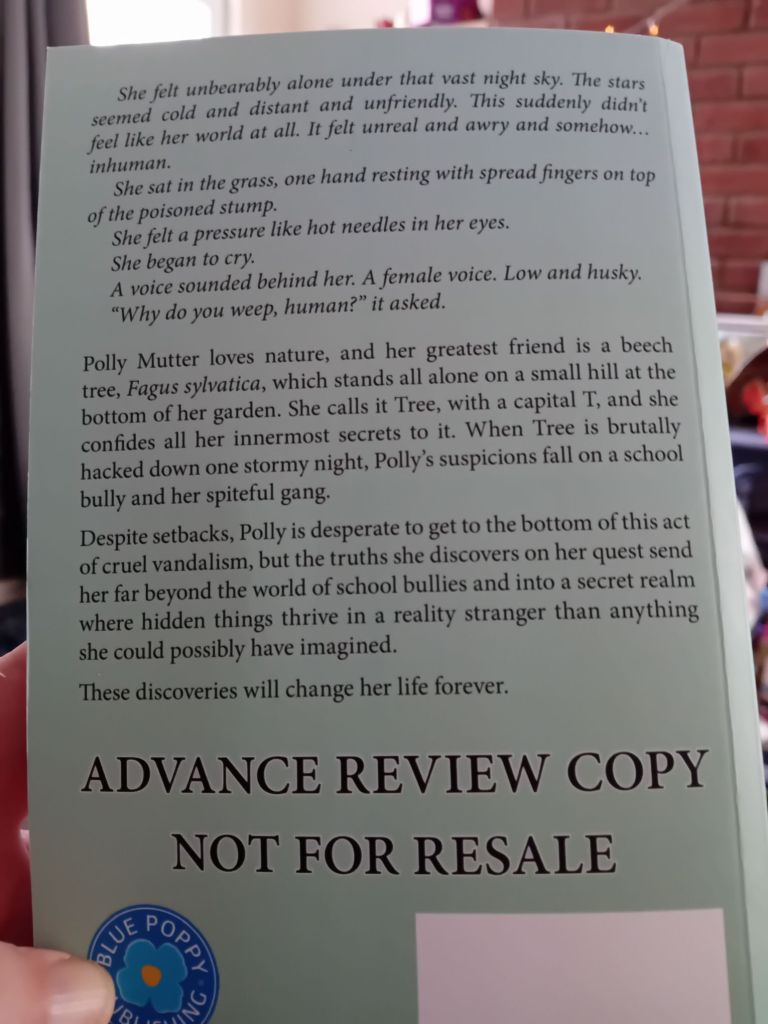
The publisher sent me this ARC a couple of months ago and it was on my list for June, but I’ve got a gap and I thought I’d read it now. It came with a lovely letter, a magpie feather and some beech seeds.

I made a post on Instagram last week when I had read the first 23 chapters. Here’s my summary from there:

The MC is 16 but acts younger in some ways. Immediately got Au vibes, from her and her new friend, Quinn. Tree and corvid special interests.

The writing is probably more what I’d have read at 12 rather than 16. It actually reminds me of the tone and comprehension level of the first two Song of the Lioness books but obviously not set in a secondary world or with knights and battles.

The supernatural element of the dryad and setting in the west country feels familiar but also unfamiliar, a weird, uncannyness. Could be real, could be a traumatised teenager on her summer hols daydreaming, if you see what I mean.

Easy to read, short chapters.

Bullying element is sensitively handled, and an experience I recognise. Just because they aren’t beating you up doesn’t mean they aren’t bullies. Teenage girls are absolute bitches at times and their boy ‘friends’ are nasty little cowards hoping to touch a boob if they are just unpleasant enough. Touched a nerve, sorry.

Now, having finished the book, I have more to add:

The way Polly and Quinn share their joy in their interests is really sweet, they really want to know each other and their interests, and the description is an amazing description of two autistic people sharing their special interests and being intoxicated with it and each other.

The final trick from Ashley and her friends is awful, but Quinn seeing the truth about his sister, and Nyssa and the tree-wights coming to the rescue is really engrossing.

I cried. The way Polly and Quinn celebrate planting saplings and joining the song of nature is so powerful. I couldn’t help myself, I cried so much.

This is a story for younger teenagers, but it explores things they will be interested in, like first love, dealing with family difficulties and unusual family structures, being bullied, and the transition from secondary school to Further Education. It is written in a way that would have appealed to me as a younger teenager, but these days I don’t know what twelve-year-olds are reading.

The environmental theme is strong in this book, and I can see the intention – humans have messed up, we can do better, and some people are. I can see that the author is linking folklore to modern environmental issues, but it is a little unsubtle at times. Maybe it needs to be for the intended readership age to get the message over, but it can also put them off. Kids don’t like being told what to think, it’s better to let the theme speak for itself.

Frewin Jones has done a good job of integrating the folklore elements in with the coming of age story. It’s possible that the characters could be imagining things, like Polly and her friendship with Nyssa could be a teenager going through a difficult time telling stories to make things better, but the way it’s written pulls it together so that we the reader knows that Polly is really experiencing these things.

There’s something of a romanticism of the past and folklore, which is fine, but can be slightly misleading about history. We don’t know the beliefs of people in the West Country pre-Christian conversion. There are a lot of folk stories, and the Cornish saints had some good stories, but no one knows the significance of the stone circles or the individual stones that they set up. I read a lot of Rosemary Sutcliffe etc. as a young teen, I know this stuff when I see it – it’s based on 19th and 20th century beliefs about prehistoric beliefs and lives, based on limited understanding of the archaeological evidence available at the time. See also, the green man etc. for 19th century fuckery with folk traditions and folklore. I’ll forgive it because 30 years ago I wouldn’t have known that. I’ve read a lot of mythology and folklore because I read books where the author wasn’t quite correct. Go forth children and read all the archaeology, history, mythology, and folklore!

I enjoyed this story. It was well-written, pitched well for the target audience and sensitively deals with difficult topics. Some of the Devon dialect from the elderly neighbour was fun; my gran is an old lady from Devon but she doesn’t use a lot of dialect anymore, which is a shame.

Also, visit Devon, it’s amazing!

Review: Nine Goblins, by T. Kingfisher

Book Description

No one knows exactly how the Goblin War began, but folks will tell you that goblins are stinking, slinking, filthy, sheep-stealing, henhouse-raiding, obnoxious, rude, and violent. Goblins would actually agree with all this, and might throw in “cowardly” and “lazy” too for good measure.

But goblins don’t go around killing people for fun, no matter what the propaganda posters say. And when a confrontation with an evil wizard lands a troop of nine goblins deep behind enemy lines, goblin sergeant Nessilka must figure out how to keep her hapless band together and get them home in one piece.

Unfortunately, between them and safety lies a forest full of elves, trolls, monsters, and that most terrifying of creatures…a human being.


My Review

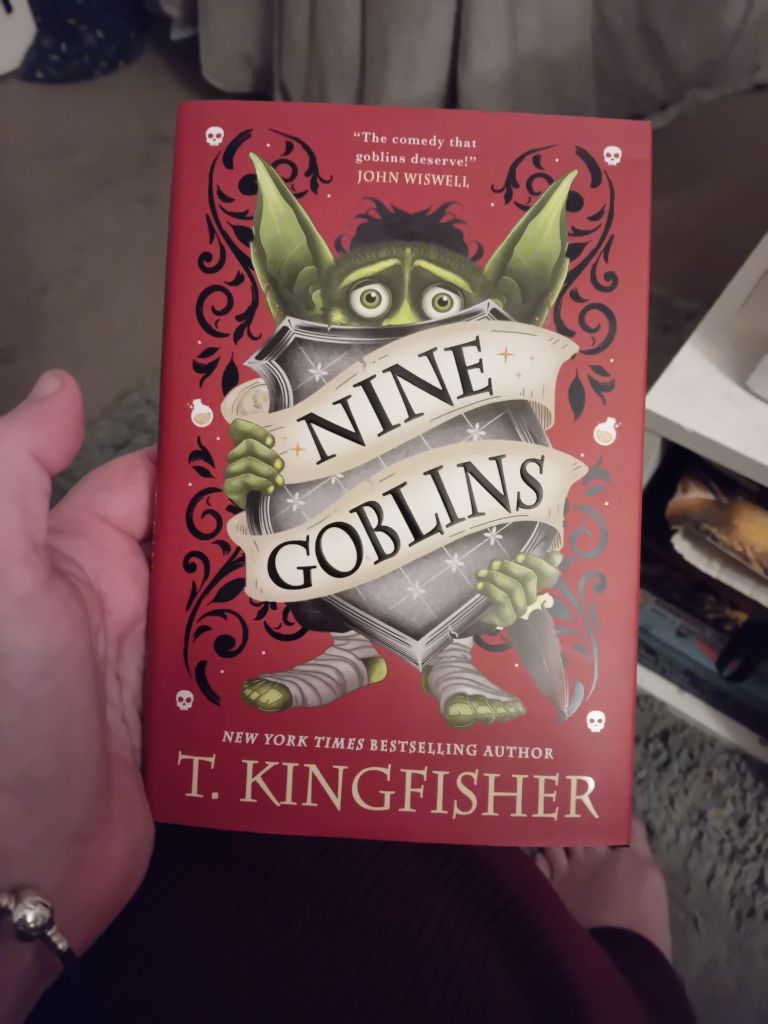
I wasn’t planning to buy this book when I went into Waterstones Grimsby this afternoon. I was looking for the paperback edition of A Song of Legends Lost, by M. H. Ayinde. I have a lovely hardback and the paperback has just come out so I can start reading it at last. Anyway, this little gem was sat on the shelf and the cover made me pick it up. The blurb made me buy it.

I also found another dragon for my collection, a Charlie Bears Cuddle Cubs Collection one, its green with tired eyes and is currently sat with my blue and yellow Suki brand dragon that I got from Leeds Royal Armouries, and my ‘TY Original Beanie Babies’ dragon Scorch. The dragon shelf is full, so I’ve had to shift those three to a different part of the desk.

I need a bigger dragon shelf…

Back to talking about books and not my weird dragon stuffy collecting.

So, as I said I was initially attracted by the cover and then the description. I started reading while waiting for my bus home, then on the bus and I’ve just spent 2 hours on my settee finishing it. It’s a novella, obviously, and the first adult book the author wrote after writing best selling children’s books. It has too many dead bodies for a children’s book, although I’m pretty certain kids like goblins that are always picking their nose or ear, or running away and stripping off, or things blowing up. It’s funny, well-written and has a satisfying story arc and ending. I haven’t read any T. Kingfisher books, I don’t think, but I have Clockwork Boys on my TBR pile. I think I like the writing style of this book, so I’m hopeful that I’ll like a longer novel.

Review: Apparently, Sir Cameron Needs to Die, by Greer Stothers

ISBN: 9781835413807
Format: Paperback
Pages: 384
Published:
3 Feb 2026 (US)
3 Feb 2026 (UK)

Description

In Which Many Dangerous and Homosexual Things Happen.

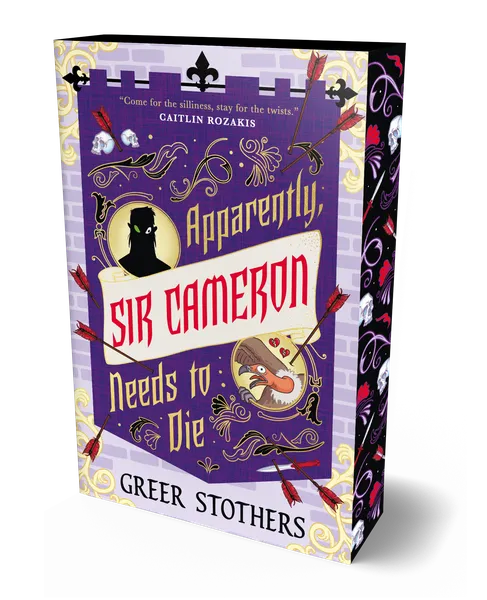
All his life, Sir Cameron has stayed as far away from danger as possible. He is quite frankly too handsome to die a pointless death in battle. But then the Church hands down a prophecy to his fellow knights: the only way to defeat their nemesis, the mad sorcerer Merulo, is to kill Sir Cameron. Short of ideas, Cameron throws himself on the mercy of the one person who now actually wants him to survive: the mad sorcerer.

Merulo isn’t thrilled to be babysitting a spoilt, attention-seeking knight, but transmogrifying him into a vulture is at least entertaining. Cameron, meanwhile, is on a voyage of self-discovery. It turns out he’s really, really into surly sorcerers who lock him up and tell him what to do. Who knew?

As a legion of knights surround their stronghold, the sorcerer’s poisonous ambitions draw ever closer to fruition. Cameron is quite invested in not dying, but he finds he’s also invested in Merulo. And sometimes, supporting the sorcerer you care about means taking an interest in their hobbies. Even if that hobby is trying to kill God.

Even if it might get you killed, too.

Fall in love with this laugh-out loud, genre-bending romp full of concussed elves and queer romance like you’ve never seen before.

Continue reading “Review: Apparently, Sir Cameron Needs to Die, by Greer Stothers”

Review: Dead Silence, by S.A. Barnes

Format: 352 pages, Paperback
Published: January 24, 2023 by Tor Trade
ISBN: 9781250778543

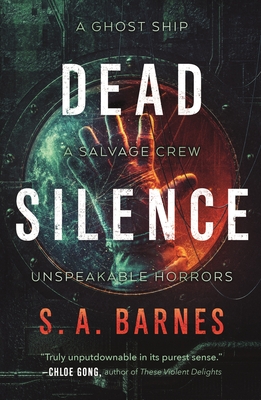
Titanic meets Event Horizon in this SF horror novel in which a woman and her crew board a decades-lost luxury cruiser and find the wreckage of a nightmare that hasn’t yet ended.

Claire Kovalik is days away from being unemployed―made obsolete―when her beacon repair crew picks up a strange distress signal. With nothing to lose and no desire to return to Earth, Claire and her team decide to investigate.

What they find is the Aurora, a famous luxury spaceliner that vanished on its maiden tour of the solar system more than twenty years ago. A salvage claim like this could set Claire and her crew up for life. But a quick search of the ship reveals something isn’t right.

Whispers in the dark. Flickers of movement. Messages scrawled in blood. Claire must fight to hold on to her sanity and find out what really happened on the Aurora before she and her crew meet the same ghastly fate.


My Review

I ordered this book after seeing it on one of the GoodReads challenge lists. I hadn’t heard of it before although the author’s name pinged something in my brain. I liked the description and thought it would be entertaining.

Oh boy! I read the hype at the beginning of the book when it arrived and thought it might be exaggeration, just a touch.

I was wrong! It’s really good!

I read this book in an evening. At one point I had to skip forward to find out what happened, and then I went back once I was reassured at least some people would be alright.

The story is told from the perspective of the traumatised and quite likely psychic Claire Kovalik, team lead for a maintenance crew. The five-person crew service the comms network that’s scattered across the solar system, they live for weeks at a time on a tiny space vessel, being picked up and dropped off by larger freighters. It’s Claire’s last rotation, at 33 she’s considered too old, and due to her history, too unstable, to carry on.

Then, they hear a beacon. After an argument, they head out into uncharted territory to find the source of the beacon. What they find is the first and only luxury space liner. Twenty years lost, the Aurora’s disappearance destroyed the company that built it, allowing Verux, the company Claire works for, to take over. It’s worth a fortune to those who find and salvage it. But there are secrets.

Claire and her crew go aboard the Aurora and find terrible things.

We swap to Claire in the mental hospital, some time after she boards the Aurora with her crew. She doesn’t remember much. Her old mentor, Max, and a bully from Verux, Reed, a nepo-hire, who is determined to prove she murdered her crew for money, are questioning her. Claire tells them everything she can remember, up to the point where her skull is fractured. The hallucinations, the violent deaths of her colleagues, the developing romantic relationship between her and Kane, her number two, and the plan to get the Aurora back to the comms network so they can call for help.

Reed fails and Max recruits Claire to go back to the Aurora with him – she’s the only person who survived. Her mental illness might actually have helped. When they get there, Claire finds the neatly wrapped bodies of three of her colleagues and the last hallucinating in a room padded with mattresses. She also finds a conspiracy that Verux really don’t want to get out.

There is madness. There are explosions.

I loved it!

Claire is a beautifully flawed character. She blames herself for everything when it’s clearly not her fault, she refuses to let people care for her and fears what will happen when they do – convinced she’ll cause their deaths somehow, and she’s severely traumatised by events of her childhood. Also, she can see ghosts.

The relationship between Claire and Kane is sweet and develops naturally as they go through difficult events. The resistance Claire feels about getting close to people is a response to her trauma, and Kane’s calming presence, knowing her past, slowly helps her build trust in herself and him.

The corporate evil of Varux is entirely believable – destroy a competitor and then try to clear up the mess by murdering people. I know this has happened in real life, although usually the firms involved distance themselves by saying it was rogue contractors – see VWs slave plantations in the Amazon during the 1980s, or mining companies that regularly allow their ‘security contractors’ to murder local activists – especially in the Amazon. Putting it in space makes it sound like fiction, but this shit is happening in the real world now. I direct you to Silent Coup: How Corporations Overthrew Democracy by Claire Provost and Matt Kennard ( I have a Left Book Club copy that I’m reading at the moment) for more information.

I was absolutely rivetted by this book, by the mystery of how the people went mad and what happened to Claire, allowing her to escape and return to rescue what was left of her crew. Definitely going on my favourites list for this year.

Review: Moojag and the Lost Memories, by N.E. McMorran

The stand-alone sequel to ‘Moojag and the Auticode Secret’, endorsed by award-winning authors Patience Agbabi, Alex Falase-Koya, Ben Davis, and Daniel Aubrey.

A multigenerational story, featuring a neurodivergent cast and audhd, non-binary, POC, main characters, for readers 8 years and over.

When Nema returns to Gajoomdom, she discovers three forgetful grannies who have totally lost track of time. If she and Moojag can’t help them remember, everyone’s memories are in danger. But turns out not everyone is who they thought they were. Who will they rescue? Will they rescue them in time to save their perfect Real World from the nasty Conqip?

‘Lost Memories’, inspired by the author’s grandmother, and living with dementia and disability during the pandemic, shows us the impact of loss and the power of memory, as well as the importance of future technology when used for good.

Continue reading “Review: Moojag and the Lost Memories, by N.E. McMorran”

Maria and the Star-Dragons: Epilogue

Epilogue – A month (I.G.A.S.S. Standard) later, on Ascend

            Maria flopped on to xyr settee, drained from spending all day on a video call giving evidence in the trial of the former human governor of Aurox. For a week xe’d been giving depositions against the regime on Aurox and their crimes, including the harassment Maria and Sahrai had received from Josh Dalton, the senior security officer. It had upset xyr when evidence of the abuse of the bovids had been presented and the testimony of human prisoners forced to labour on Rocky Horror.

Continue reading “Maria and the Star-Dragons: Epilogue”

Maria and the Star Dragons: Chapter 20

Chapter 20 – Maria still among the Auroxians

            Maria listened to the conversation around xyr. Xe laughed quietly (for xyr) when Dr Suah Painen repeated the Auroxian saying about the jungle.

            “That’s one way of describing the vegetation around here.”

Continue reading “Maria and the Star Dragons: Chapter 20”

Maria and the Star-Dragons Chapter 19

Chapter 19: Dr Suah Painen’s adventures on Aurox

            Although a geologist by trade, Suah had been on enough new planets to have picked up basic skills in cultural analysis. Observing the Auroxians had been a distraction from the horror of events since arriving on Aurox. She shuddered, remembering the day the research party had been attacked.

Continue reading “Maria and the Star-Dragons Chapter 19”

Maria and the Star-Dragons: Chapter 18

Chapter 18 – Maria in the PFMs den

Maria watched the frantic activity as Lah-Shah and his honour guard arrived at the den.

“Come on Mrrh-waa, we’d better go and rescue him from your family.” Xe waited while the tablet translated for Mrrh-waa.

Continue reading “Maria and the Star-Dragons: Chapter 18”