TBL Post: Psychedelics: The Revolutionary Drugs That Could Change Your Life – A Guide from the Expert, by Professor David Nutt

By: Professor David Nutt
Narrated by: Professor David Nutt
Length: 7 hrs and 50 mins
Unabridged Audiobook
Release date: 29-06-23
Language: English
Publisher: Yellow Kite

Summary

The definitive guide to psychedelics, science and our health by a world-renowned, leading authority, Professor David Nutt.

We are on the cusp of a major revolution in psychiatric medicine and neuroscience. After fifty years of prohibition, criminalisation and fear, science is finally showing us that psychedelics are not dangerous or harmful. Instead, when used according to tested, safe and ethical guidelines, they are our most powerful newest treatment of mental health conditions, from depression, PTSD, and OCD to disordered eating and even addiction and chronic pain.

Professor David Nutt, one of the world’s leading Neuropsychopharmacologists, has spent 15 years researching this field and it is his most significant body of work to date. In 2018, he co-founded the first academic psychedelic research centre – underpinned by his mission to provide evidence-based information for people everywhere. It revived interest in the understanding and use of this drug in its many forms, including MDMA, ayahuasca, magic mushrooms, LSD and ketamine. The results of this have been nothing short of ground-breaking for the future categorisation of drugs, but also for what we now know about brain mechanisms and our consciousness.

At a time where there is an enormous amount of noise around the benefits of psychedelics, this book contains the knowledge you need to know about a drug that is about to go mainstream, free from the hot air, direct from the expert.

Are you ready to change your mind?


My Review

I started listening to this audiobook yesterday when I went for my walk, and finished it today while I was out on my walk. Honestly, I was looking for a short book that I would be able to get through fairly quickly. I’m putting off diving into a whole library of fantasy books that I really want to listen to, but I need a good run up to because I know they’ll hurt. Also, I’m trying to get my total up for the GoodReads Challenge. Yes, yes, I know, gamification of reading, bad, etc. I can’t help it! I read a lot, but none of it seems to count. I don’t think they have New Scientist or New Humanist magazines on GoodReads. They do have the BFS Journal and BFS Horizons, as well as Interzone, so some of my magazine reading does count.

Back to the book.

I thought this was an interesting, comprehensive look at the research around psychedelics and their potential uses in medicine. The author is obviously passionate about his work and helping people with mental illnesses using psychedelics, but I think he might have some blind spots when it comes to criticism. He’s clearly still upset about being sacked in the 1990s. I get it, it’s frustrating when you’re trying to share information and people refuse to listen because it doesn’t fit their narrative, but he’s had a massively important career in academia since then.

I’ve never taken drugs, it’s not my thing; in fact, I’ve said I would only try these drugs under clinical, research conditions, and since I respond well to my medication, I’d never qualify for the research trials. I found Nutt’s descriptions and his quotes from others, including research participants, fascinating. It’s one of the reasons I got this audiobook, I want to know what people experience without actually trying psychedelics. People I know have told me about their experiences but I’m interested in it from a scientist’s position.

I’m interested in the science of how they work. The explanations of the way the chemicals work on the brain are really easy to understand. Er, for me at least, but I have some background in biochemistry. I think a general reader without a science background should be able to make sense of it. Nutt’s frustration at the waste of research time and opportunity caused by unsupported bans and high costs seems well-founded.

Nutt narrated his book and he has a reasonable narration voice. His accent sounds comforting, he has clear diction and a warm tone.

Nutt has a shallow understanding of neurodiversity. I appreciate him mentioning that he doesn’t want to get rid of neurodivergent people, but he needs to actually understand what he’s saying. Neurodiversity covers everyone, neurodivergent refers to those who’s brains don’t fit the social norm. Neurodiversity is a social and political movement for disability rights; saying you don’t ‘want to get rid of their neurodiversity’ about treating anxiety in Autistic people, doesn’t really mean anything. Why didn’t an editor check that? Why hasn’t Nutt looked into it more deeply if he’s concerned about helping us? Also, ADHD isn’t a mental illness. It’s a form of neurodivergence, like autism, like OCD, like schizophrenia, etc. There are things we need help with and I’m sure psychedelics could be useful in some cases.
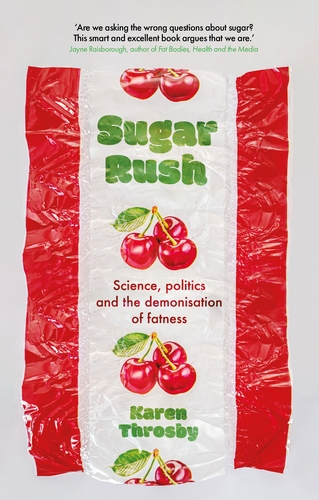
TBR Pile Review: Sugar Rush, by Karen Throsby

Format: Paperback
ISBN: 978-1-5261-5155-1
Pages: 304
Price: £19.99
Published Date: June 2023
Published by Manchester University Press

DESCRIPTION

In the second decade of the twenty-first century, the crusade against sugar rose to prominence as an urgent societal problem about which something needed to be done. Sugar was transformed into the common enemy in a revived ‘war on obesity’ levelled at ‘unhealthy’ foods and the people who enjoy them. Are the evils of sugar based on purely scientific fact, or are other forces at play?

Sugar rush explores the social life of sugar in its rise to infamy. The book reveals how competing understandings of the ‘problem’ of sugar are smoothed over through appeals to science and the demonization of fatness, with politics and popular culture preying on our anxieties about what we eat. Drawing on journalism, government policy, public health campaigns, self-help books, autobiographies and documentaries, the book argues that this rush to blame sugar is a phenomenon of its time, finding fertile ground in the era of austerity and its attendant inequalities.

Inviting readers to resist the comforting certainties of the attack on sugar, Sugar Rush shows how this actually represents a politics of despair, entrenching rather than disrupting the inequality-riddled status quo.


My Review

Throsby uses a variety of sources from 2016 to 2019 to interrogate the focus on sugar are ‘the’ bad nutrient. She links this to pre-existing food hysterias, and austerity, with its focus on punishing the poor, the fat, the abject Other.

The structure of this book is that of an academic textbook, with an introduction, sources used, and chapter conclusions, while the writing is more like that one would find in a popular science book, easy to read and understand. The tone is one of enquiry and interest, rather than anger or scoffing at the writers of the source materials. The arguments and conclusions are supported strongly and are convincing, at least to this reader.

I highly recommend this to fat activists, disability rights activists, anyone interested in social equity, and dietitians. Really considering buying a copy to give my dietitian…

TBL List Review: The Incredible Unlikeliness of Being, written and read by Alice Roberts

Format: 392 pages, Paperback
Published: January 1, 2014 by Heron Books
ISBN: 9781848664791 (ISBN10: 1848664796)
Language: English

Alice Roberts takes you on the most incredible journey, revealing your path from a single cell to a complex embryo to a living, breathing, thinking person. It’s a story that connects us with our distant ancestors and an extraordinary, unlikely chain of events that shaped human development and left a mark on all of us. Alice Roberts uses the latest research to uncover the evolutionary history hidden in all of us, from the secrets found only in our embryos and genes – including why as embroyos we have what look like gills – to those visible in your anatomy. This is a tale of discovery, exploring why and how we have developed as we have. This is your story, told as never before.


My Review

The book takes the foetal development from before ovum and sperm meet to birth, and going from head to toe, to discuss both foetal development and evolution. The author is uniquely place to write this sort of book, having spent years as both a scientist and a science communicator. I enjoyed Alice Roberts’ documentaries that I’ve seen, and this book from ten years ago holds up well, although the science continues to move on.

I found this book really interesting. I have some background in biology, but not a huge amount, I only did a year of university chemistry, mostly biochemistry and molecular biology. I suspect if you didn’t manage to pass GCSE biology and don’t watch documentaries, you might struggle with this book, but for the reasonably educated, it’s a good book. It’s a foundation at least, for university study. It’s not a textbook however, it is written with a general audience on mind. If you enjoy Dr Roberts’ documentary series’ you’ll be fine with this book.

I giggled at the occasional digs at creationists, because they deserve it for their wilful ignorance. If you’re sensitive about that, you probably need a slightly less advanced book before you get to this one. And you need to escape whatever cult you’re in that’s stopping you from getting an education…

I’m listening to Ancestors, by Alice Roberts next.

Exoplanets, moon moons and the scientists of Lincolnshire

A few years ago, when I was looking around the University of Lincoln for my MA course, the guide, a 2nd year undergraduate, said he hadn’t known Isaac Newton was from Lincolnshire until he’d come to the University. I think he was from Nottinghamshire. Sir Isaac isn’t our only famous scientist however.

Continue reading “Exoplanets, moon moons and the scientists of Lincolnshire”

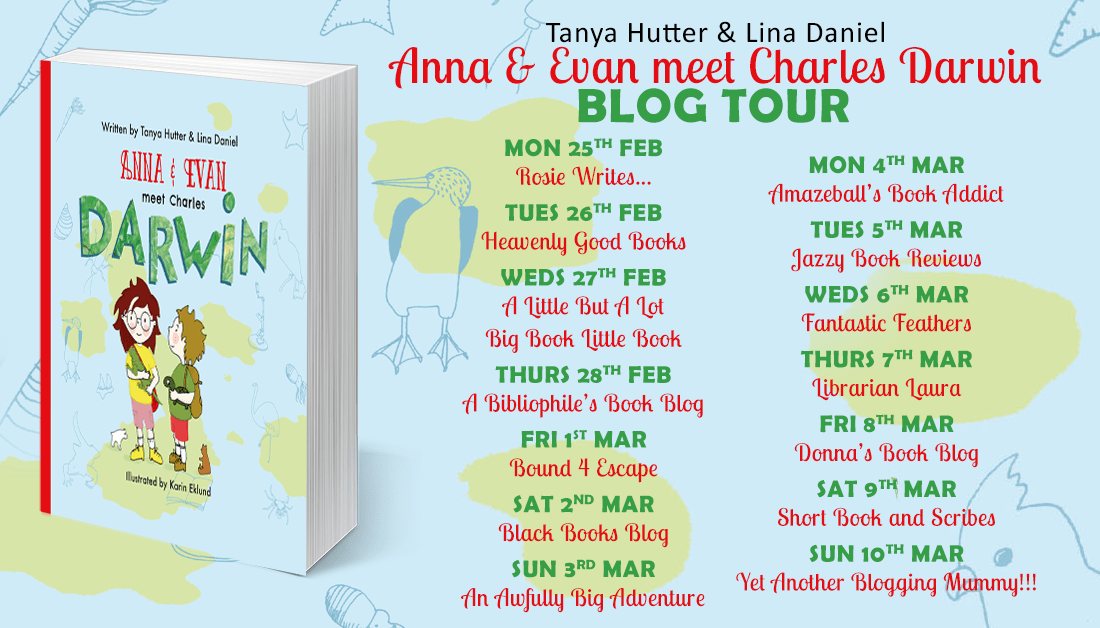
Children’s Book Review: ‘Anna & Evan Meet Charles Darwin’, by Tanya Hutter & Lina Daniel, illustrated by Karin Eklund


Title: Anna & Evan meet Charles Darwin
Author: Tanya Hutter and Lina Daniel
Illustrator: Karin Eklund
Release Date: 28th February 2019
Genre: Picture Book
Page Count: 30
Publisher: Clink Street Publishing
Goodreads Link: https://www.goodreads.com/book/show/44016125-anna-evan-meet-charles-darwin
Amazon Link: https://www.amazon.co.uk/Anna-Evan-Meet-Charles-Darwin-ebook/dp/B07NJGGB5C

Blurb

Join Anna and Evan on a magical adventure to the Galapagos Islands where they meet Charles Darwin, discover unusual animals and learn some interesting scientific facts.

This engaging and educational book is ideal for young children to encourage curiosity and interest in the natural world and science.

The project was supported by L’Oréal UK and Ireland For Women In Science Fellowship.

The Department of Chemistry at Cambridge tweeted: https://twitter.com/ChemCambridge/status/1095236077911187456

Continue reading “Children’s Book Review: ‘Anna & Evan Meet Charles Darwin’, by Tanya Hutter & Lina Daniel, illustrated by Karin Eklund”

I have questions…

Specifically, questions about the universe.

Right, so the universe is expanding. Current theory and available data suggests this.

My question, a question I’ve had for about 20 years, is, what is the universe expanding in to?

This is another of my ‘brain won’t shut off’ thoughts.

I was trying to visualise it all last night but I struggled with something. When people refer to ‘the universe’ do they mean the mass and energy created in the Big Bang, that now forms the galaxies of the universe? Or are they referring to everything, all that is?

I tried to come up with a way to visualise what I mean and I’m struggling. The best I’ve got so far is a balloon. At Big Bang, the singularity of energy that ‘exploded’ to produce all the energy and matter in the universe, is represented by a flaccid balloon. It starts to inflate and expands as air is forced into it, representing the expansion of the universe. There’s lots of energy produced, formation of stars, dark energy etc.

Now, what is that balloon expanding into?

Is there a reality outside of the universe, a box the balloon is expanding into? If there is, does the ‘box’ grow to fit the ever expanding balloon, or is there a limit that the balloon will reach? And what is the nature of that box? And, if we continue the analogy, will the balloon burst at some point in time, stretched to breaking point by the mass and energy that makes it?

Say there isn’t a ‘box’, what is there? Does something come into being with the expansion of the universe into that space? What is the nature of that space?

It’s all so confusing!

My confusion was added to when I read an article in New Scientist a few years ago about bubble universes. What’s in the space between?

See, this is why I never got anywhere as a scientist, my brain gets distracted by probably pointless questions that others have probably already answered. In the other hand, it does provide me with inspiration for writing. Got something bubbling away.

Bonus Review: ‘Testosterone Rex’, by Cordelia Fine

36524697

Published by: ICON

Publication Date: 24th January 2017 

ISBN: 9781785783180

Format: Paperback

Price: £8.99


Blurb

Many people believe that, at its core, biological sex is a fundamental, diverging force in human development. According to this overly familiar story, differences between the sexes are shaped by past evolutionary pressures: Women are more cautious and parenting-focused, while men seek status to attract more mates. In each succeeding generation, sex hormones and male and female brains are thought to continue to reinforce these unbreachable distinctions, making for entrenched inequalities in modern society.

In Testosterone Rex, psychologist Cordelia Fine wittily explains why past and present sex roles are only serving suggestions for the future, revealing a much more dynamic situation through an entertaining and well-documented exploration of the latest research that draws on evolutionary science, psychology, neuroscience, endocrinology, and philosophy. She uses stories from daily life, scientific research, and common sense to break through the din of cultural assumptions. Testosterone, for instance, is not the potent hormonal essence of masculinity; the presumed, built-in preferences of each sex, from toys to financial risk taking, are turned on their heads.

Moving beyond the old “nature versus nurture” debates, Testosterone Rex disproves ingrained myths and calls for a more equal society based on both sexes’ full, human potential.

Continue reading “Bonus Review: ‘Testosterone Rex’, by Cordelia Fine”

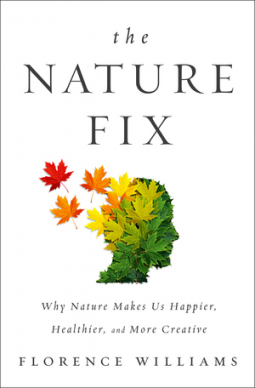
Bonus Review number two: ‘The Nature Fix’, by Florence Williams

Published by: W.W. Norton and Company

Publication Date: 7th February 2017

Format: Hardcover

I.S.B.N.: 9780393242713

Price: $26.95


Blurb

For centuries, poets and philosophers extolled the benefits of a walk in the woods: Beethoven drew inspiration from rocks and trees; Wordsworth composed while tromping over the heath; Nikola Tesla conceived the electric motor while visiting a park. Intrigued by our storied renewal in the natural world, Florence Williams sets out to uncover the science behind nature’s positive effects on the brain. From forest trails in Korea, to islands in Finland, to groves of eucalyptus in California, Williams investigates the science at the confluence of environment, mood, health, and creativity. Delving into completely new research, she uncovers the powers of the natural world to improve health, promote reflection and innovation, and ultimately strengthen our relationships. As our modern lives shift dramatically indoors, these ideas—and the answers they yield—are more urgent than ever.

Continue reading “Bonus Review number two: ‘The Nature Fix’, by Florence Williams”

Review: ‘Earth’, by Jeffrey Jerome Cohen and Linda T. Elkins-Tanton

                                                                 Publication Date: 9th May 2017

Published by: Bloomsbury Academic  

Edition: Paperback

I.S.B.N.: 9781501317910 

Price: $14.95


Blurb:

Object Lessons is a series of short, beautifully designed books about the hidden lives of ordinary things.

In Earth, a planetary scientist and a literary humanist explore what happens when we think of the Earth as an object viewable from space. As a “blue marble,” “a blue pale dot,” or, as Chaucer described it, “this litel spot of erthe,” the solitary orb is a challenge to scale and to human self-importance. Beautiful and self-contained, the Earth turns out to be far less knowable than it at first appears: its vast interior an inferno of incandescent and yet solid rock and a reservoir of water vaster than the ocean, a world within the world. Viewing the Earth from space invites a dive into the abyss of scale: how can humans apprehend the distances, the temperatures, and the time scale on which planets are born, evolve, and die?

Object Lessons is published in partnership with an essay series in The Atlantic.

Continue reading “Review: ‘Earth’, by Jeffrey Jerome Cohen and Linda T. Elkins-Tanton”

Review: ‘Between XX and XY: Intersexuality and the myth of two sexes’ by Gerald N.Callahan

Published by: Chicago Review Press

Publication Date: 1st November 2016

ISBN: 9781613736548

Continue reading “Review: ‘Between XX and XY: Intersexuality and the myth of two sexes’ by Gerald N.Callahan”