PUBLICATION DATE: 15th AUGUST 2024 PAPERBACK ORIGINAL | £ 9. 99 | ORENDA BOOKS
On her first day back from maternity leave, Detective Sam Shephard is thrown straight into a cold-case investigation – the unsolved murder of a highly respected Anglican Priest in Dunedin.
The case has been a thorn in the side of the Police hierarchy, and for her boss it’s personal. With all the witness testimony painting a picture of a dedicated church and family man, what possible motive could there have been for his murder?
But when Sam starts digging deeper into the case, it becomes apparent that someone wants the sins of the past to remain hidden. And when a new potential witness to the crime is found brutally murdered, there is pressure from all quarters to solve the case before anyone else falls prey.
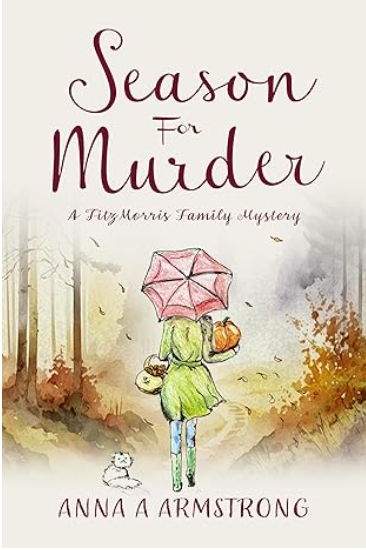
Enjoy a visit to the idyllic Cotswolds where the blackberry jam is delicious, the pumpkins are ripe and a killer is plotting death.
Vivian Plover is an unlikely murderer but needs must. If her bumbling husband is ever going to reach the exalted office of Lord-Lieutenant, Vivian, in sensible shoes, twin set and pearls has some murderous work to do. She is beset by challenges, from her godson’s fake fiancée to Dee’s meddling.
With the worthies of Little Warthing falling foul of accidents, can Dee FitzMorris thwart her scheme or will she find herself yet another victim?
Rarely has murder been so amusing.
Indulge in this quirky and humorous cozy crime novel that will keep you entertained from start to finish. Set in modern-day England, amidst the charming British Cotswold countryside, “Season for Murder” delivers a captivating blend of mystery and comedy. With its light-hearted atmosphere and engaging whodunit plot, this British detective series is a must-read for fans of cozy crime murder mysteries.
Season For Murder – excerpt
Vivian Plover liked graveyards, especially this one in Little Warthing. She approved of the magnificent medieval church at its heart, famous for being the finest in all of the Cotswolds.The graveyard was a benign resting place, neatly measured out by Victorian railings on three sides and flanked on the fourth by a burbling river, on which glided a pair of swans enjoying the autumn sunshine. The graves were politely placed side by side. Vivian found it comforting that their respective size denoted the social importance of each occupant.
Even in death, breeding will out.
Vivian shifted her miserly weight on the bench beneath the giant yew tree which looked out at the sea of graves. Her uninspiring hair and features were groomed to the point of stiffness and her painfully appropriate clothes added to her air of rigidity. Only her thoughts were original. It’s reassuring that on my whim anyone I choose can end up here. She smiled.
Format: 384 pages, Hardcover Published: June 20, 2024 by W&N ISBN: 9781399607537
It is said there is a price that every passenger must pay. A price beyond the cost of a ticket.
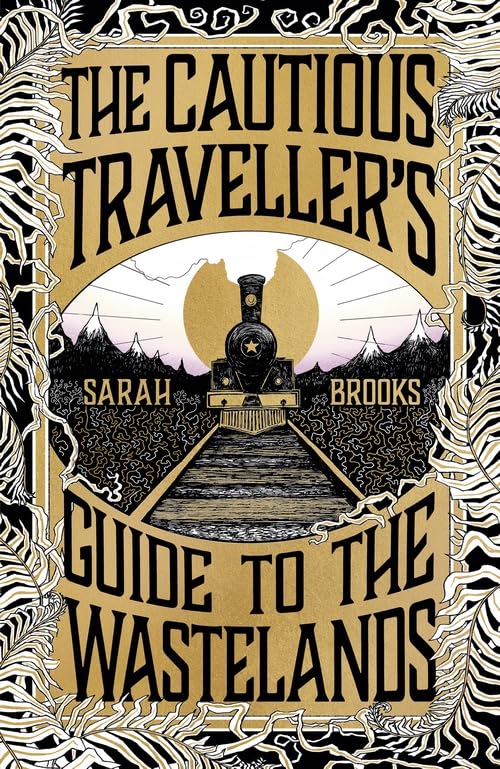
It is the end of the 19th Century and the world is awash with marvels. But there is nothing so marvellous as the Wastelands: a terrain of terrible miracles that lies between Beijing and Moscow.
Nothing touches this abandoned wilderness except the Great Trans-Siberian Express: an impenetrable train built to carry cargo across continents, but which now transports anyone who dares to cross the shadowy Wastelands.
On to the platform steps a curious cast of characters: a grieving woman with a borrowed name, a famous child born on the train and a disgraced naturalist, all heading for the Great Exhibition in Moscow.
But the old rules are changing, and there are whispers that the train isn’t safe. As secrets and stories begin to unravel the passengers and crew must survive their journey through the Wastelands together, even as something uncontrollable seems to be breaking in . . .
My Review
I picked this book up at the ‘It’s Strange Up North’ event in June. Sarah Brooks is delightful, and signed this book for me. Actually, I think the books sold at that event were officially sold before publication date.
We have here a tale of a train that runs through the Siberian landscape from Beijing to Moscow, but a landscape transformed by some magical power. The land is utterly strange and bizarre creatures live there. It’s dangerous for humans to travel across the ‘Wasteland’, but trade demands that they must, so ‘the Company’ built a railway track and sends one train back and forth across it.
But the landscape is changing, it’s mimicking the the world that is intruding on it and eventually things go very wrong.
In this novel, set in 1899, we follow Marya, a young woman grieving the deaths of her parents, out to find the truth of the last crossing, and Weiwei, the child of the train – born on the train and raised by the crew – who also wants to know what happened. In the process of their separate investigations, they rouse the suspicions of the Company consultants, known as ‘Crows’.
As they seek answers they are changed, and the choices they, and their allies make – the Wasteland Girl, Elena, Alexei the engineer, Suzuki the Cartographer, and The Professor – bring changes to the whole world.
The action builds up as the train travels, there’s tension as they struggle with water shortages and mad English naturalists running off to get samples, while a Russian priest screams about blasphemy, and French aristocrats laze about. Someone has clearly been reading Agatha Christie.
This was something like Murder On The Orient Express, in that there’s a mystery to be solved – what happened on the last crossing? It’s also a historical fantasy of the late nineteenth century, with luxury carriages for the wealthy, crowded third class accommodation, steam trains, fantastical technology, and a landscape that is utterly strange but entrancing. The transformation of the train from a mechanical wonder to another kind of wonder, a terrifying, moving forest, luxuriant and free, a travelling Eden, is the central narrative, around which everything else is built, everything else is just the humans trying to understand it, understand their places in this new reality, and decide if they want to be a part of it or not.
It reminds me a bit of the magic used by Priya in Tasha Suri’s The Burning Kingdoms series. Except the magic isn’t controlled by anyone, the train and the landscape decides where it’s going.
The train and the landscape are intertwined, and the people realise they are intertwined with the landscape too, and the Walls are false promises of strength holding up ultimately weak Empires and greedy corporations.
How lovely! What a wonderous thought, a wonderous world it would be, if the old empires fell because a magical forest rose, rather than because we started murdering each other by the millions.
‘The Company’ is clearly modelled after the East India Companies of the 17th to 19th centuries (Dutch and British – both equally greedy and murderous, with their own armies), with a Victorian railway company thrown into the mix. If the East India Company hadn’t fallen apart by the 1850s, they might have got into trans-continental railways, I suppose, and the trans-Siberian train route has been around for about 100 years. It’s actually three or four connected routes, that started when the Russian Empire decided it would quite like to get to it’s furthest eastern reaches, near China, more easily. You can travel all the way from Moscow to Beijing, which would be fun, if you didn’t have to go to multiple dictatorships to do so. The train network made it easy for Russian troops to support China during the Japanese invasion in the 1940s, but also meant the Chinese and Russians could kill each other easily over bits of territory they both claimed in the 1910s.
I would call them silly buggers, but come on, we didn’t do much better. Empires are bad for everyone.
Anyway, I was quite enthralled by this book. I loved the lavish descriptions of the Wastelands and the way the train transformed. I found Marya and Weiwei, two very different people, to be sympathetic and engaging characters, and the narrative tightly constructed.
Enjoyable historical fantasy. Especially if you like trains. And magical, murderous landscapes.
Release Date 2024-08-13 Formats Ebook, Paperback EBook ISBN 13th August 2024 | 9781915998132 | epub & mobi | £4.99/$7.99/$8.99 Paperback ISBN 13th August 2024 | 9781915998125 | Paperback | £9.99/$17.99/$23.99
Blurb
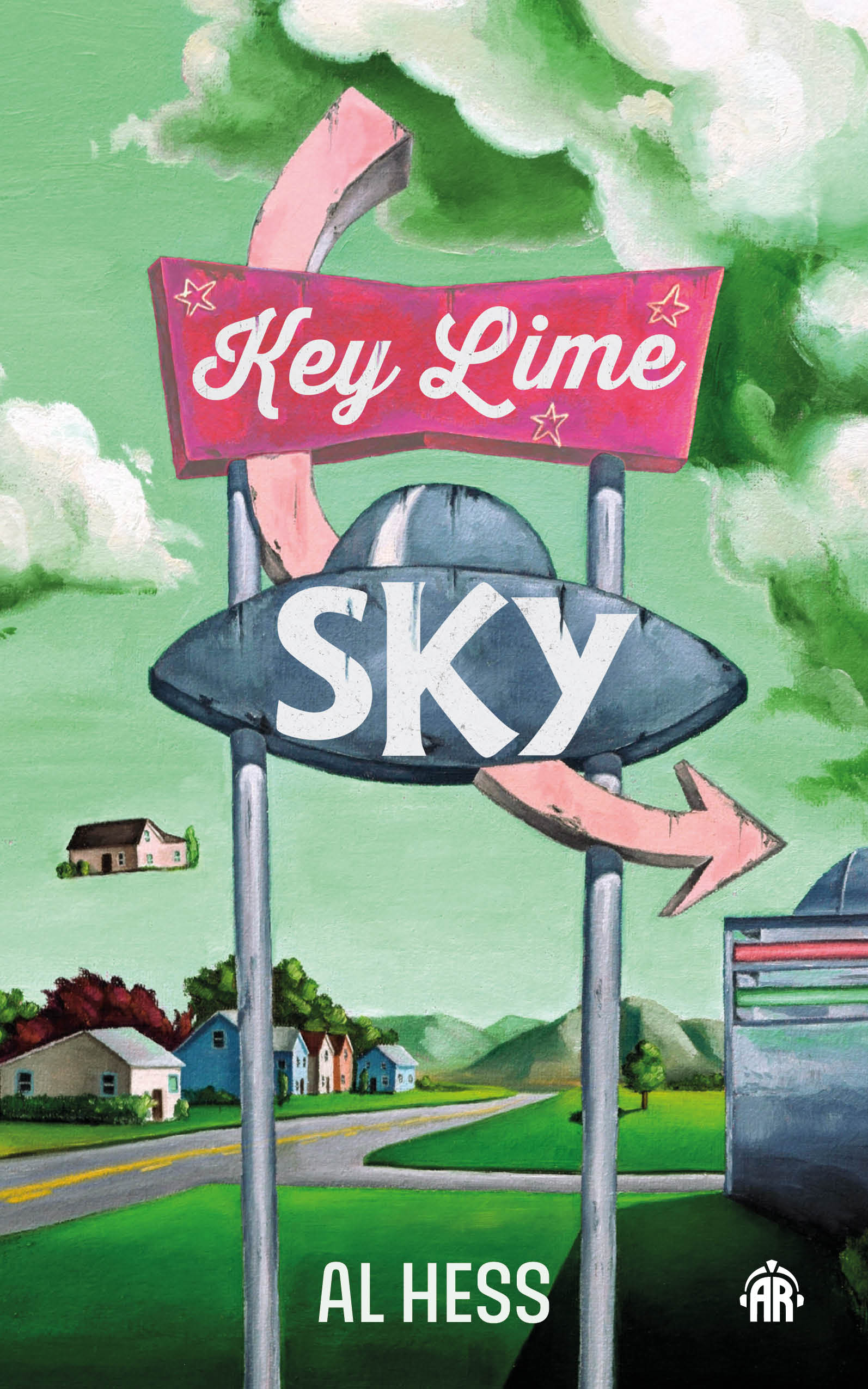
An alien invasion hits the town of Muddy Gap, but a disgruntled pie aficionado is the only one who seems to remember it…
Denver Bryant’s passion for pie has sent him across Wyoming in search of the best slices. Though he dutifully posts reviews on his blog, he’s never been able to recreate his brief moment of viral popularity, and its trickling income isn’t enough to pay his rent next month.
Driving home from a roadside diner, Denver witnesses a UFO explode directly over his tiny town of Muddy Gap. When he questions his neighbors, it appears that Denver is the only person to have seen anything – or to care that the residents’ strange behavior, as well as a shower of seashell hail, might be evidence of something extraterrestrial. Being both non-binary and autistic, he’s convinced his reputation as the town eccentric is impeding his quest for answers. Frustrated, he documents the bizarre incidents on his failing pie blog, and his online popularity skyrockets. His readers want the truth, spurring him to get to the bottom of things.
The only person in town who takes him seriously is handsome bartender, Ezra. As the two investigate over pie and the possibility of romance, the alien presence does more than change the weather. People start disappearing. When Denver and Ezra make a run for it, the town refuses to let them leave. Reality is folding in on itself. It’s suddenly a race against time to find the extraterrestrial source and destroy it before it consumes not only Muddy Gap but everything beyond. Denver’s always been more outsider than hero, but he’s determined to ensure that a world with Ezra – and with pie – still exists tomorrow.
Key Lime Sky is the second book from AL Hess at Angry Robot – check out his previous work, World Running Down.
By Julie Cook Imprint: Pen & Sword History Pages: 184 Illustrations: 32 black and white illustrations ISBN: 9781399003414 Published: 10th October 2022 £14.00
Description
A History of Girl Guides and Girl Scouts: Brownies, Rainbows and WAGGGS charts the evolution of the Girl Guides and Girl Scouts from its early days as a movement started before WW1 right through to the modern day. With real life interviews with Girl Guides and Girl Scouts from their 90s down to young children, this book looks at what being a Girl Guide has meant through the ages up to the present day. With dramatic and often emotional stories of what it was like to be an evacuated Brownie in the Second World War, a disabled Girl Guide and with tales of girls’ heroism throughout the two great wars both in the UK and the United States, this book extols the Guiding and Scouting movement as one that has evolved with women and girls’ rights and its hopes for the future.
My Review
Thanks to Rosie Crofts at Pen & Sword for sending me a copy of this book, way back in 2022. I was sent it in return for an honest review.
I wanted to review this book because I was in Brownies and Guides, and have some really good memories of being part of the Guiding movement. I got me through most of my teens and gave me something to do on a Wednesday evening for 7 years, and trips away. I still see my Brownie leader. I was also her Young Leader in a different Guide group when I was 17/18 after I left my original Guide group just before I turned 16. I managed a whole year out of Guides. When I went to university, I joined the Guides and Scouts association there, but didn’t do anything with them. There were so many people and they were not as welcoming as you would expect.
Reading this book brought back memories. I’d completely forgotten about the toadstool and mirror we used as a pool in Brownies to do our Promise. I can’t remember what Six I was in, but I think my sister made it to Seconder in her Six. I must have joined in 1990, or 1991, because I had the ‘new uniform’, a pair of trousers and a jumper, while my sister had the old brown dress and she joined a year before me. You had to wait until there was space before you could join. The leaders, Brownie Owl and Tawny Owl, were school teachers at my cousins’ primary school. We used to play games and make things. My best friend also went to that Brownies, but didn’t stay long because a lot of our games were floor based and she couldn’t take part, and I can’t remember her from then; we met in secondary school in 1994 and we’ve been friends ever since she talked at me until I finally responded. I did a few badges, mostly the walking and camping related ones. I think I tired to do some of the more domestic ones, but I wasn’t very good at the.
I went up to Guides in 1993 when I turned 10. My Guide leader was the vicar’s wife and a Marie Curie nurse. Our Guides, and the Brownies, were attached to the local C of E church. We did a lot of stuff in and around the church and the vicarage, because they had a huge garden, and knew a lot of people. We went camping, to adventure centres, did flower arranging, candle making and jam making, we went to The Body Shop for a special visit about make-up for beauty related stuff, followed by a trip to McDonalds, we went ice skating and to Cleethorpes swimming pool for a special treat. We went to Poacher 96, a big international camp help every four years at Lincolnshire Show Ground. We learnt about child safety and care. I got badges in walking, camping and other random stuff. We got new neckers around 1998, in Royal Stuart Tartan. Before that, I can’t remember what colour we had, or if we even had one.
There was one camp where I wanted to try climbing and abseiling, but I only just managed to climb the climbing wall and had to be helped down the internal stairs of the climbing tower, because I was too scared to abseil once I got to the top. I wet the sleeping bag every night of that camp. I was still bed wetting at that point. Luckily I was sleeping in my own tent, although I shared it with one other Guide who was as anxious as I was. I’d have preferred to have my own tent to myself. That was the camp where the leader went to buy ‘Seventeen’ magazine for a group of fifteen year old Guides (so I must have been 12 or 13) and was scandalised when she realised what was in Seventeen magazine. Some of those girls seemed impossibly more mature and sophisticated than me, even though they weren’t much older really.
At another camp, we stayed in dorms (I had adult nappies for this occasion) at an adventure centre and I fell in a river while canoeing. I don’t mind falling in rivers, that’s fun. We also went climbing on that trip too. I got sunburnt and hid under a rock after doing the easiest climb and abseil.
On one weekend trip to a local water sports centre, my sister and I had a dome tent and we played ‘how many guides can you get in a 2-person dome tent’.
The answer is 12. Twelve teenage Guides full of sugar, who’d just spent the day canoeing around an old clay pit.
I’m sure my experience in a Guide group in the 1990s in a small town in northern Lincolnshire will be different from a Guide in 1990s London or a coastal town in Cornwall.
This book isn’t a deep archival research based book, it outlines the story of Girl Guiding and Girl Scouting in Britain and the US in 1910, and shares the stories of Guides, Scouts, and Brownies from the last 80 years. It was written during the pandemic lockdowns, so the interviews were performed over video calls. Some of the quotes come from previously published memoirs to illustrate the experiences of other Guides.
The book shows there’s a rich social history to be found in the stories of Guides and Girl Scouts, ready to be mined. There are bits and pieces of information in this book that every Guide and Girl Scout should know – like who founded them (Agnes Baden-Powell in the UK, Juliette Gordon-Low in the US) and when, the origins of the names and uniforms, that sort of thing. It also looks to the future and the current needs of girls. GirlGuiding UK regularly surveys members in about the things that are currently important to them and has found some disturbing things about the way girls feel about their bodies and abilities.
Guides and Girl Scouts did consider opening to boys when I was a member, just after Scouting UK and Boy Scouts of American opened up to girls, but they decided that girls need a place away from boys, to develop their identities away from the influence of social expectations of the way children and teenagers of different genders should interact. The GirlGuiding UK website makes it clear that men can volunteer to help units in some capacities, but it is a girls-only organisation and the leaders are all women, for instance, had my grandad still been alive while I was a Guide, he could have taught us knots for a badge and been a tester, but he couldn’t have been a leader, although he’d been a Scout Leader in South Shields while my Dad and Uncle were in the Cub Scouts.
This book was fascinating and reminded me of the fun and adventures I had in my Guiding days. A great addition to any Guide’s library.
I was going to write a review of Terry Pratchett: A Life With Footnotes, by Rob Wilkins, but I’m still crying slightly from the ending, and it’s too hot, and I had to go to Lidl for food and now I’m overwhelmed and tired, so no review today. I am even more convinced than ever that STP was neurodivergent even before his Alzheimer’s diagnosis.
There was a lady struggling with her shopping trolley trying to get home from Lidl, the wheels fell off. Loads of people passed her and didn’t stop to help. I helped her carry the loaded trolley to the river and waited while she phoned someone to come and help. It didn’t seem right to let her struggle. Her English wasn’t great, but then, this is Grimsby, most people here only speak passable English at the best of times, speaking it as a second language is quite impressive, to me at least. We managed to communicate enough to do what needed to be done.
The cat is shedding everywhere and I think I’m allergic. Well, I’m allergic to quite a lot of things, and the last lot of blood tests I had ruled out pet dander, but it could be pet hair, I suppose? I’m not giving up animals, so I’ll just stick with prescription strength antihistamines.
I’m going to read a book about Girl Guides and Girl Scouts this afternoon. I was in the Brownies and Guides, and a Young Leader. My Dad and Uncle we Scouts, my Grandad was a Scout leader. I’m still in touch with my Brownie Leader, who was also my Leader as a Young Leader. I have some stories to tell, and I’m sure if you asked, my Brownie and Guide Leaders probably have some embarrassing photos of me they’d share. My Guides were attached to our local Anglican Church, even when I stopped going to church I continued going to Guides, until the summer of 1999, when I left because I was doing my GCSEs and I slapped another Guide for calling me a ‘retard’ because I couldn’t find something.
She was a nasty little bitch.
We’d just got a new Guide leader and I hadn’t bonded well with her, so I left. A year later I was doing a historic churches fundraising walk and my former Brownie leader mentioned they’d been short staffed for a camp that summer. I asked her why she hadn’t rung me. After that I joined her Guides as a Young Leader. It was a different Guides group.
At the time, Immingham had 3 Guides groups, two attached to churches and one secular. My group was held in the church hall, and you could go from Rainbows to Guides there. I’d gone from the CofE group to the secular group. It served the less well-off girls who wanted to be Guides. You see, the local Anglicans and Methodists could be a bit up themselves and very hypocritical. Poor girls from the council estate weren’t really welcome there, and it was a trek for them to get to the church halls where those groups were held.
I’m told there’s only one Guide group left in Immingham now, and the Scouts long since shut up shop. The old church hall got sold off, as well, to the local private dentist, because the church couldn’t afford to keep it up. The old vicarage has also been sold as a private house too. We used to do a lot of outdoors stuff in the vicarage grounds, and if you believe my old Brownie leader, I was 3 when I saw a Brownies group at the summer fete and demanded to join. I had to wait until I was seven though. And I got one of the new uniforms. Which were made from incredibly uncomfortable fabric, but were much more practical that the brown dresses the other girls had to wear. I preferred trouser even then.
Did you know you can generate AI art images on WordPress? I didn’t but I wanted an image for this post, because Maria takes their investigation down to the planet of Aurox.
By Debbie Blake Imprint: Pen & Sword History Pages: 232 Illustrations: 25 mono ISBN: 9781399094511 Published: 11th November 2022
Description
The Victorian belief that women were the ‘weaker sex’ who were expected to devote themselves entirely to family life, made it almost inconceivable that they could ever be capable of committing murder. What drove a woman to murder her husband, lover or even her own child? Were they tragic, mad or just plain evil?
Using various sources including court records, newspaper accounts and letters, this book explores some of the most notorious murder cases committed by seven women in nineteenth century Britain and America. It delves into each of the women’s lives, the circumstances that led to their crimes, their committal and trial and the various reasons why they resorted to murder: the fear of destitution led Mary Ann Brough to murder her own children; desperation to keep her job drove Sarah Drake to her crime. Money was the motive in the case of Mary Ann Cotton, who is believed to have poisoned as many as twenty-one people. Kate Bender lured her unsuspecting victims to their death in ‘The Slaughter Pen’ before stripping them of their valuables; Kate Webster’s temper got the better of her when she brutally murdered and decapitated her employer; nurse Jane Toppan admitted she derived sexual pleasure from watching her victims die slowly and Lizzie Borden was suspected of murdering her father and stepmother with an axe, so that she could live on the affluent area known as ‘the hill’ in Fall River, Massachusetts.
My Review
Thanks to Rosie Crofts at Pen & Sword for sending me this book almost two years ago now. I’ve been busy and I’ve finally got around to reading my Pen & Sword books. I still have a couple of hundred to work through, but I’ll get there eventually. My TBR pile continues to grow, as always.
This book covers the lives of seven well-known women who committed murder in the 19th century. I’ve heard of all of the women, and I’ve even written reviews of books about some of them.
The book is very competently written, covering the lives, murders and deaths of these women. There is little to no sensationalism and the writer draws on sources from the time, especially newspaper articles.
There is little exploration of the social rules and cultural beliefs surrounding each of the women. Why were some of the women found not guilty but socially punished, while some were found guilty and hanged? Why did some feel the need to kill their children? What prevented them from making other choices? Social class and cultural beliefs about a woman’s place and ‘natural character’ are barely mentioned and not explored.
This book is a good, basic introduction to these women and their crimes. You need to start somewhere, and this book has a good bibliography if you find yourself interested in one or other of the women and want to delve further.
About Debbie Blake
Debbie Blake is a freelance writer whose historical articles have been published in various publications in the UK, Ireland, Canada, and the United States. She has written articles for the internet and runs two blogs Women’s History Bites and The Wee History Blog. She is the author of Daughters of Ireland: Pioneering Irish Women and The Little Book of Tipperary, published by The History Press.






 Everything Is Better With Dragons