
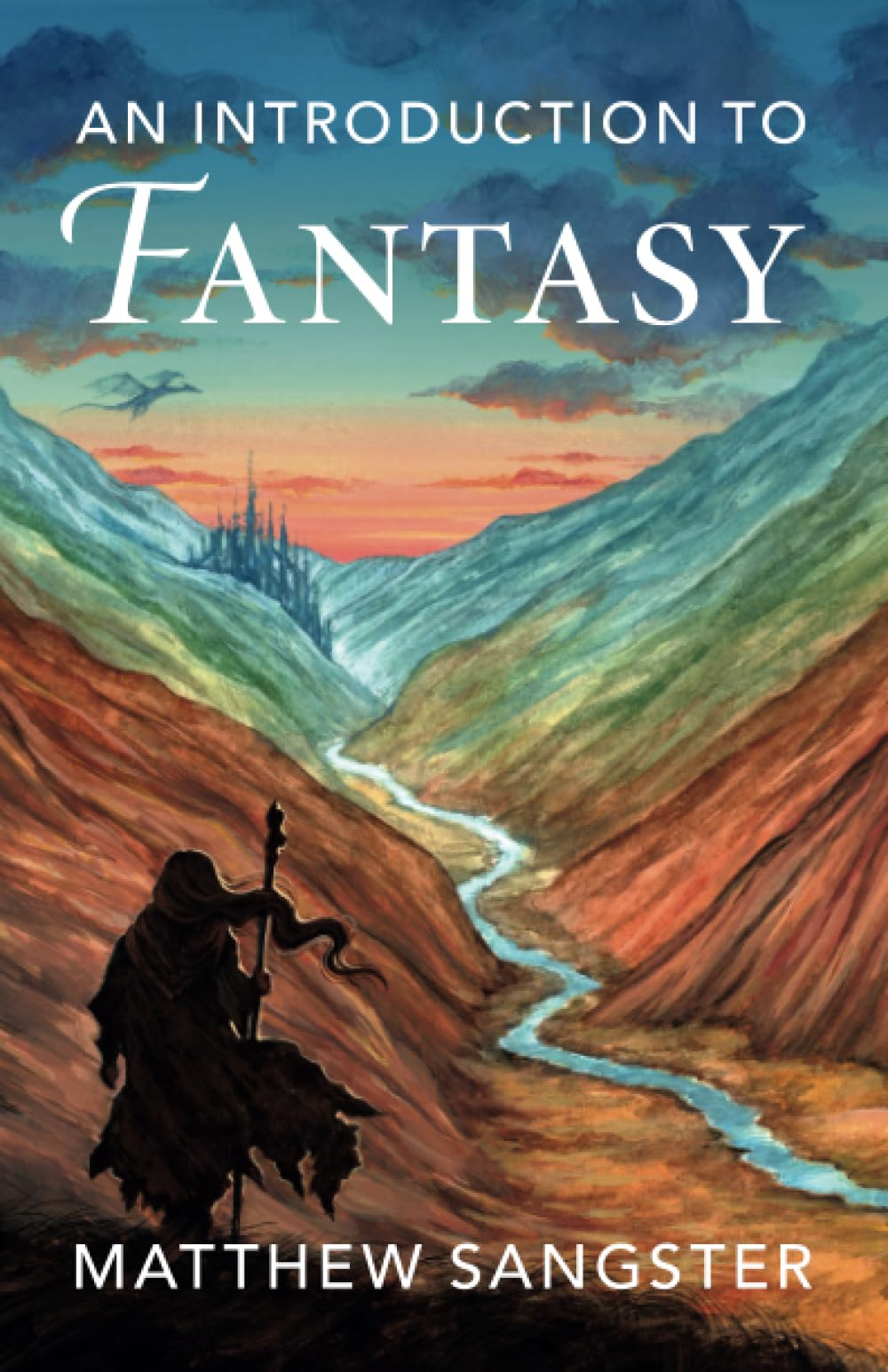
Published: September 7, 2023 by Cambridge University Press
ISBN: 9781009429948
Providing an engaging and accessible introduction to the Fantasy genre in literature, media and culture, this incisive volume explores why Fantasy matters in the context of its unique affordances, its disparate pasts and its extraordinary current flourishing. It pays especial attention to Fantasy’s engagements with histories and traditions, its manifestations across media and its dynamic communities.
Matthew Sangster covers works ancient and modern; well-known and obscure; and ranging in scale from brief poems and stories to sprawling transmedia franchises. Chapters explore the roles Fantasy plays in negotiating the beliefs we live by; the iterative processes through which fantasies build, develop and question; the root traditions that inform and underpin modern Fantasy; how Fantasy interrogates the preconceptions of realism and Enlightenment totalisations; the practices, politics and aesthetics of world-building; and the importance of Fantasy communities for maintaining the field as a diverse and ever-changing commons.
Literary awards:
Mythopoeic Scholarship Award for Myth and Fantasy Studies (2024)
My Review
I’ve been working my way through this book since last October, around blog tours, getting slightly too obsessed with YouTube , and a lot of crochet. I finished the last 40 pages this evening and now I need to tell you all about it. Matthew Sangster is a product of Glasgow University’s Centre for Fantasy and the Fantastic, and the access to many fantasy novels and academic works show in the text. Sangster mentions works by some of the most well-known in fantasy, such as Le Guin and Tolkein, and some more unexpected authors, especially those from earlier centuries. He draws out six important points about fantasy, over the chapters of this books and they form his core arguments:
- Fantasy arises from figurative language
- Iteration is a defining technique – new stories build on old in new ways
- Contemporary fantasy builds on some of the oldest forms
- Fantasy exists in conversation with realism
- Worldbuilding is both the prevailing metaphor of modern fantasy and used to develop plots and characters
- Fantasy is a form practised in community rather than one by unique geniuses.
I had to read the ‘Envoi’ chapter to get that. Sangster helpfully lists these points for the reader. It certainly helps with the summary. He does try to be accessible throughout the book, and uses a lot of examples to make his points, referencing very well-known authors, TTRPG series, video games, and film franchises in the process. It was heavy going at times, but that might be my lack of formal education in Literature at University Level. My M.A. is in Creative Writing, not Literature, after all.
Sangster raises some good points, especially about the tendency of ‘literary’ culture to consider ‘genre’ fiction as lesser, as the mode of storytelling is not ‘realistic’ and therefore can’t possibly impact readers. Fantasy, Sangster argues, explores the real world using the fantastical as a foil, a universalising storytelling mode that draws on cultural language. Fantasy can tell stories in ways that resonate with people far more effectively than straight up realism. It digs down into the root, builds on older foundations and finds new ways to explore ancient concerns.
I certainly find fantasy a useful vehicle for understanding the world, particularly in the work of Terry Pratchett. Fantasy communities, whether specific fandoms, organisations for writers, or online groups (such as the BFS Discord – Join the BFS, and come to our Discord, we have quiz nights and shadow daddies!), work in dialogue with the stories and their creators. New worlds spin off from the original, and people have a shared language to communicate with, across time and culture (see: Vimes’ Boots Theory of Economics).
I found Sangster’s work thoughtful and interesting, although it is very much an academic text so possibly not something a casual reader might go for. Useful for those interested in SFFH in an academic setting e.g., if you’re doing your M.A. in Fantasy and Sci-Fi literature or as a basis for a Doctorate in the field. Yes, those do exist, and yes, they’re a bit serious. (Again, see Glasgow University).

 Everything Is Better With Dragons