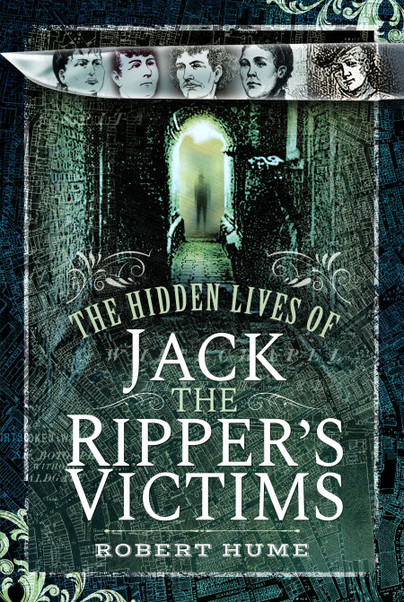
Pen & Sword Review: ‘The Hidden Lives of Jack the Ripper’s Victims’, by Robert Hume

The Hidden Lives of Jack the Ripper's Victims
ISBN: 9781526738608
Published: 18th September 2019
£15.99

Mary Ann Nichols, Annie Chapman, Elizabeth Stride, Catherine Eddowes and Mary Jane Kelly are inextricably linked in history. Their names might not be instantly recognisable, and the identity of their murderer may have eluded detectives and historians throughout the years, but there is no mistaking the infamy of Jack the Ripper.

For nine weeks during the autumn of 1888, the Whitechapel Murderer brought terror to London’s East End, slashing women’s throats and disembowelling them. London’s most famous serial killer has been pored over time and again, yet his victims have been sorely neglected, reduced to the simple label: prostitute.

The lives of these five women are rags-to-riches-to-rags stories of the most tragic kind. There was a time in each of their lives when these poor women had a job, money, a home and a family. Hardworking, determined and fiercely independent individuals, it was bad luck, or a wrong turn here or there, that left them wretched and destitute. Ignored by the press and overlooked by historians, it is time their stories were told.

Continue reading “Pen & Sword Review: ‘The Hidden Lives of Jack the Ripper’s Victims’, by Robert Hume”

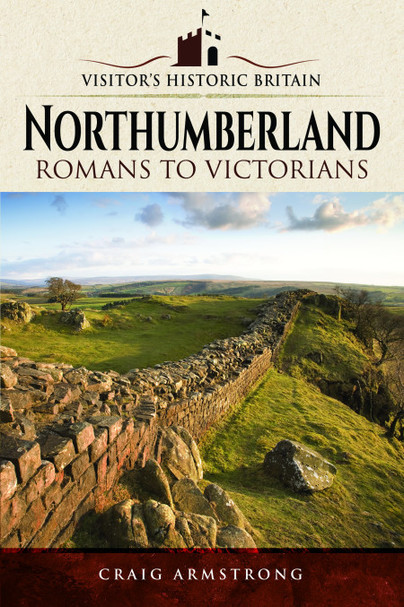
Pen & Sword Review: Northumberland Romans to Victorians, by Craig Armstrong


Imprint: Pen & Sword History
Series: Visitors’ Historic Britain
Price: £12.99
ISBN: 9781526702784
Published: 16th March 2020

Northumberland…to the Romans it was Ad Fines, the limit of the Empire, the end of the Roman World. It was here in 122 AD that the Emperor Hadrian decided to build a wall stretching from coast-to-coast to provide protection, to show the might of the Empire, and as a statement of his grandeur. Visitors to Northumberland can walk the Wall visiting milecastles, Roman frontier forts and settlements such as Housesteads (where you can see the oldest toilets you’ll ever see) or Vindolanda (where you can take part in an archaeological dig) where wooden tablets detailing life on this frontier (the oldest example of written language in Britain) were discovered, or the remains of Roman temples and shrines (such as the Mithraeum at Carrawburgh). After the Romans left, Northumberland became the heart of one of the greatest kingdoms of Anglo-Saxon Britain, Northumbria. The home of Saints, scholars and warrior kings. Visitors can see the ancient seat of this kingdom at the medieval Bamburgh Castle, visit Hexham Abbey (built in 674 AD), or tour the magnificent remains of the 7th century Priory at Tynemouth (where three kings are buried – Oswin (d. 651), Osred (d. 790), and the Scottish King Malcolm III (d. 1093).

No other county in Britain has as many medieval remains as Northumberland. From the most grand such as Alnwick Castle (known as the Windsor of the North, the home of the Dukes of Northumberland, the capital of Northumberland, and, to many, Hogwarts!) to humble remains such as the Chantry at Morpeth. At Warkworth visitors can tour the medieval church (scene of a 12th century Scottish massacre), Warkworth Castle (another Percy possession and the setting for a scene in Shakespeare’s Henry IV), a medieval hermitage, and the fortified bridge gatehouse (one of the only surviving examples in Britain).

Northumberland was ravaged during the Anglo-Scottish Wars and this led to the development of family clans of Border Reivers who were active during the 16th and early 17th centuries. Raiders, looters, blackmailers and courageous cavalrymen the Reivers have left many surviving remnants of their harsh time. Peel Towers dot the landscape alongside Bastle Houses. The active can even walk in the footsteps of the Reivers by following the Reivers Way long distance path.

Victorian Northumberland was dominated by both farming and, increasingly, by the industrial genius of some of its entrepreneurs. The greatest of these, Lord Armstrong (known as the Magician of the North), has left behind one of the most magnificent tourist sites in Britain; his home at Cragside. Carved from a bare hillside and transplanted with millions of trees and shrubs and crowned with the beautiful Cragside House visitors can walk the grounds taking advantage of various trails and spotting wildlife such as red squirrels before visiting the first house in the world to be lit by electricity!

Continue reading “Pen & Sword Review: Northumberland Romans to Victorians, by Craig Armstrong”

Review: Beer & Sauerkraut: An Insider’s Guide to Germany, by John Morgan

Summary:

John Morgan was born in the UK in 1938 and qualified there as a chartered surveyor.

He moved to Zurich for three years in 1969 to work for a US conglomerate.

He then moved to Germany, where he eventually established a successful property consultancy firm together with a Dutch partner, selling this in due course to a German bank.

John has a German wife and four sons and now lives in retirement on Lake Constance. Having dual nationality and conversing today mostly in German, he is now uncertain whether he is British or German!

Information about the Book

Title: Beer & Sauerkraut

Author: John Morgan

Release Date: 9th June 2020

Genre: Non-Fiction

Page Count: 104

Publisher: Clink Street Publishing

Goodreads Link: https://www.goodreads.com/book/show/53845484-beer-sauerkraut

Amazon Link: https://www.amazon.co.uk/Beer-Sauerkraut-Insiders-Guide-Germany/dp/1913568040

Continue reading “Review: Beer & Sauerkraut: An Insider’s Guide to Germany, by John Morgan”

Children’s Book Review: The Pirate and R, by Daniele Forni

Summary:

The Pirate and R is a simple introduction to the statistical software R, specifically aimed at future data scientists.

Got to http://www.thelittledatascientist.co.uk for more codes to use and to stay up to date regarding future publications.

Information about the Book

Title: The Pirate and R

Author: Daniele Forni

Genre: Picture Book

Publication Date: 2nd June 2020

Page Count: 30

Publisher: Clink Street Publishing

Goodreads Link: https://www.goodreads.com/book/show/53666365-the-pirate-and-r

Amazon Link: https://www.amazon.co.uk/Pirate-R-Daniele-Forni/dp/1913340686/

Continue reading “Children’s Book Review: The Pirate and R, by Daniele Forni”

Review: Explaining Humans, by Dr Camilla Pang

49624060. sy475

This book is truly exceptional. Applying science to the problems of human relationships, the perils of perfectionism and the pitfalls of social etiquette, Millie has written a joyous, funny and hugely insightful text for all of us – whether neurotypical or neurodiverse. This ‘outsiders guide to the human race’ is warm, witty and a joy to read.’ Prof Gina Rippon, Cognitive neuroscientist/autism researcher and author of The Gendered Brain.

Diagnosed with Autism Spectrum Disorder at the age of eight, Camilla Pang struggled to understand the world around her and the way people worked. Desperate for a solution, Camilla asked her mother if there was an instruction manual for humans that she could consult. But, without the blueprint to life she was hoping for, Camilla began to create her own. Now armed with a PhD in biochemistry, Camilla dismantles our obscure social customs and identifies what it really means to be human using her unique expertise and a language she knows best: science.

Through a set of scientific principles, this book examines life’s everyday interactions including:

– Decisions and the route we take to make them;
– Conflict and how we can avoid it;
– Relationships and how we establish them;
– Etiquette and how we conform to it.

Explaining Humans is an original and incisive exploration of human nature and the strangeness of social norms, written from the outside looking in. Camilla’s unique perspective of the world, in turn, tells us so much about ourselves – about who we are and why we do it – and is a fascinating guide on how to lead a more connected, happier life. 

Continue reading “Review: Explaining Humans, by Dr Camilla Pang”

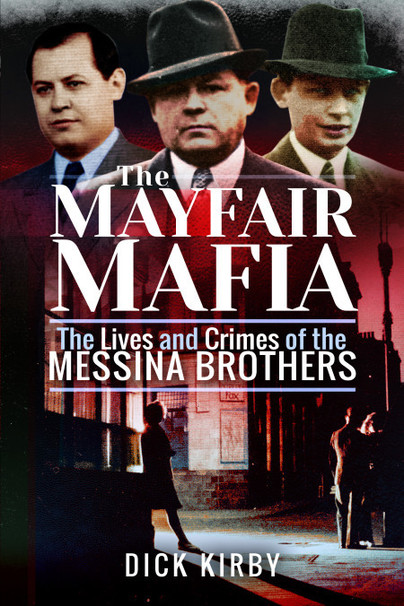
Review: The Mayfair Mafia, by Dick Kirby

The Mayfair Mafia
By Dick Kirby
Imprint: Pen & Sword True Crime
Pages: 198
Illustrations: 32
ISBN: 9781526742612
Published: 1st May 2019

It is a little known fact that one immigrant Italian family ran London’s thriving vice trade unchecked from the mid-1930s for some twenty years.

The five Messina brothers imported prostitutes from the Continent on an industrial scale, acquiring the women British citizenship by phoney marriages. Demanding 80% of earnings, the Messina became fabulously wealthy, purchasing expensive properties, cars and influence.

As this revealing and absorbing account describes, the brothers ruled with a ruthless combination of charm, blackmail and all too credible threats of disfigurement and death.

It took a sensational Sunday newspaper exposé to get the authorities to act. A series of dramatic arrests and trials followed and one by one the brothers were imprisoned and deported for crimes including immoral earnings, attempted bribery and firearms offences.

Such was their fortune that numerous potential beneficiaries came forward, most recently in 2012.

The author, a much published former Metropolitan police officer, has researched the remarkable criminal careers of the five Messina’s and the result is a riveting and shocking read.

Continue reading “Review: The Mayfair Mafia, by Dick Kirby”

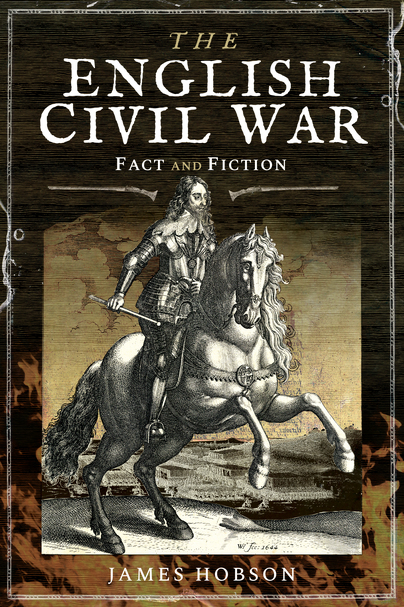
Review: The English Civil War: Fact and Fiction, by James Hobson

The English Civil War
By James Hobson
Imprint: Pen & Sword History
Pages: 135
Illustrations: 40
ISBN: 9781526734877
Published: 9th April 2019

Have you ever found yourself watching a show or reading a novel and wondering what life was really like in the Civil War? Did the war really split families? Was Charles I just too stupid to be King? Did Cromwell really hate the monarchy and did Parliament actually ban Christmas?

In The English Civil War: Fact and Fiction, you’ll find fast and fun answers to all your secret questions about this remarkable period of British history. Find out about people’s lives and how the Civil War affected them. Learn about the role of women and if they merely stayed at home and suffered, and if Cromwell really was always miserable.

James Hobson brings to life the tumultuous and unprecedented period of history that is known as the Civil War. An unfussy yet accurate history, each chapter presents a controversy in itself and sets about dispelling commonly held myths about the Civil War.

Continue reading “Review: The English Civil War: Fact and Fiction, by James Hobson”

Review: Feasible Planet, by Ken Kroes

Blurb

Are you concerned about the state of our planet and hope that governments and corporations will find a sustainable way for us to live? If you do not think about it too hard, that may work, but will it? Left on their own, with drivers of popularity and profits, I am not too convinced that it will.

This leads to the key question. Are we doing enough? I believe that the answer to this question is no and that our best hope is for each of us to vote smart, lobby hard, stay informed, and to act. This book primarily focuses on the last part, the actions that each of us can take.

While environmental aspects are key areas of concern, sustainability goes beyond controlling our consumption and pollution. There are key social, political, and economic areas that need to be addressed as well, and there are several steps that individuals can take to help in all of these areas.

For those of you who feel we could do more, this book is for you and is loaded with actionable activities, the reasons for doing them, and explores why we are not doing them already.

Continue reading “Review: Feasible Planet, by Ken Kroes”

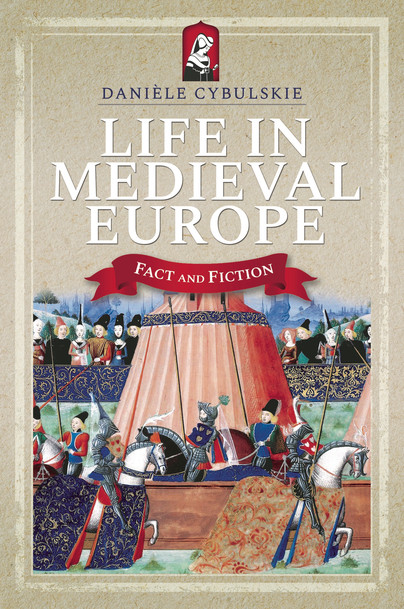
Pen & Sword Review: Life in Medieval Europe: Fact and Fiction, by Daniele Cybulskie

Life in Medieval Europe


Imprint: Pen & Sword History
ISBN: 9781526733450
Published: 30th September 2019

Price:£12.00 was £14.99

Have you ever found yourself watching a show or reading a novel and wondering what life was really like in the Middle Ages? What did people actually eat? Were they really filthy? And did they ever get to marry for love?

In Life in Medieval Europe: Fact and Fiction, you’ll find fast and fun answer to all your secret questions, from eating and drinking to sex and love. Find out whether people bathed, what they did when they got sick, and what actually happened to people accused of crimes. Learn about medieval table manners, tournaments, and toothpaste, and find out if people really did poop in the moat.

Continue reading “Pen & Sword Review: Life in Medieval Europe: Fact and Fiction, by Daniele Cybulskie”

Review: The Spanish Flu Epidemic and its Influence on History, by Jaime Breitnauer

ISBN: 9781526745170
Published: 20th November 2019
Price: £15.99

On the second Monday of March 1918, the world changed forever. What seemed like a harmless cold morphed into a global pandemic that would wipe out as many as a hundred-million people – ten times as many as the Great War. German troops faltered lending the allies the winning advantage, India turned its sights to independence while South Africa turned to God. In Western Samoa a quarter of the population died; in some parts of Alaska, whole villages were wiped out. Civil unrest sparked by influenza shaped nations and heralded a new era of public health where people were no longer blamed for contracting disease. Using real case histories, we take a journey through the world in 1918, and look at the impact of Spanish flu on populations from America, to France, to the Arctic, and the scientific legacy this deadly virus has left behind.

My Review

Thanks to Rosie at Pen & Sword for sending me this book. It’s much appreciated, given how much time it’s taking me to read and and review books she’s been sending me.

Took me less than four hours to read this book last night. I couldn’t sleep anyway. No, really, I’m coughing a bit. It’s probably just a cold or an allergy. Might change my bedding later and vacuum the carpet, just in case. I’ll let you know if it’s something worse.

Like the Spanish Flu.

Although I’d probably be dead by now if I had Spanish Flu. In the second wave it was so virulent that it killed people as they walked down the street to the doctors to get help. Whole families died. Thousands of children were left orphaned. Up to 100 million people died in less than two years. At the time it was a shocking event, but in the years that followed it was forgotten. The author speculates that the horrors of war, mass movement of people, malnutrition and then the pandemic was too much for people to cope with. They prefered to think that people died in combat not coughing up their own lungs and choking to death.

Colonialism helped spread the pandemic. Troops from the colonies were sent to the Western Front and then sent back. European troops had been sent to the Middle East, Chinese citizens were sent through Canada and across the Atlantic as part of the Chinese Labour Corp. Millions of people from all over the planet moving around, meeting up in closely packed, unhealthy conditions, malnourished and carrying seasonal infections, then going back out into the world.

People generally know about the effects of the Spanish Flu in Europe and North America, but the pandemic covered the whole globe. People who were of European decent were less likely to die compared to indigenous people in Africa, the Americas, Australia and the Pacific Islands. European and North America people of European descent are used to getting colds and flu, so they had some immunity. Indigenous people didn’t.

Viruses do this interesting thing where they can share their genetic material with each other if they meet in a cell. At some point in the years between 1916 and 1918 some nasty H1N1 flu strains met up, shared genetic material and produced the nastiest virus humans have ever dealt with. Reconstruction of the virus from Alaskan bodies buried in the permafrost in 1920 shows that any one of the eight segments would produce a nasty virus; together they made it leathal.

The arrival of the flu in 1918 helped end the Great War, because it’s really hard to keep up violence when your soldiers are dying from disease and your support lines are falling apart because everyone who should be moving supplies is dead, dying or sick. There were mass famines as the fields weren’t harvested or planted in 1919. In industrial areas, factories and mines shut down because too many people were ill.

It encouraged new and already existing independence movements in colonies in response to the poor treatment of indigenous people during the pandemic, and probably screwed up the post-war negotiations, since it killed or sickened many of the people at the table. The loss of moderate political voices lead to greater punitive measures against Germany, the loss of expertise about the Middle East resulted in the utter mess we still have today.

People are still not sure where it started. There were outbreaks of flu in 1916, 1917 and 1918 in China, the US and France before the first wave of the Spanish Flu. I have a hypothesis that there were some nasty strains going around, and the mass movement of people from across the world, carrying these different strains, as the ‘first wave’ and finally brought together in France, allowed the nastiest of them to meet up, shuffle around some genetics and then produce the virus we call Spanish Flu. I think this is the ‘second wave’, which was the truly awful one. The one that killed millions. The ‘third wave’, less virulent was possibly a version that had drifted a bit or one or the less nasty. Might be wrong, someone else has probably looked at it and ruled this idea out.

Honestly, this is a really good introduction to the Spanish Flu pandemic and its ongoing influence. I could tell the author has a history background and a journalism background too. She made the book very easy to read and the use of real people examples really brought the events of those years to life.