Publication date Thursday, January 18, 2024 Price £16.99 EAN\ISBN-13 9781804191354
Description
Every good hero needs a villain! Explore the hidden world of magnetic and mysterious villains, often cast aside and misunderstood in tales of mythology and folklore. Through the pages of Queer Villains of Myth and Legend, discover a diverse community of fascinating characters, ranging from seductive and cunning to powerful and awe-inspiring.
Experience the dark allure of Circe and Medusa through to David Bowie’s Jareth in Labyrinth and delve into their complex and multifaceted personalities and motivations. Take a deep dive into the intersection of queerness and villainy, re-examine some of our favourite characters, and discover why so many ‘bad’ characters are queer-coded.
From ancient mythology to contemporary pop culture, Queer Villains of Myth and Legend celebrates the fascinating stories of these often-overlooked characters. Join Dan Jones on a journey of discovery, as he explores the hidden depths of queer villainy and sheds light on the queer identities of these compelling figures. It’s a powerful celebration of queerness through the ages in all its legendary complexity.
Format: 208 pages, Paperback Published: September 20, 2023 by Pluto Press ISBN:9780745349015 (ISBN10: 0745349013)
Blurb
For decades, conservative evangelicals and Trans-Exclusionary Radical Feminists (TERFs) have worked hand-in-hand to oppose trans liberation. But how did this alliance come about? What makes it tick? And how can trans people and allies respond?
This book, written by a transfeminist who is also an evangelical Christian, is a history and genealogy of reactionary ideas. Gender Heretics traces how a shared belief in the essential unity of the mind and the body, together with a common fear of ‘dualist’ or ‘Gnostic’ philosophies, first brought these groups into contact in the 1970s.
Morgan explores how theological arguments snaked their way from anti-trans feminist tracts into the everyday practices of evangelical churches today. She offers a hopeful way forward, advocating for a full recalibration of evangelical thought on gender identity and trans activism.
My Review
I bought my copy of this book from Lighthouse Bookshop In Edinburgh in September and I’ve finally got around to reading it. I was intrigued by the title. Over the years I’ve had some run-ins with evangelicals and TER’F’s. Sorry, they ARE NOT FEMINISTS. There’s nothing feminist about hating people because they’re different from you and seeking to prevent people from living authentically, with bodily autonomy. Anyway, one of the things that really confused me was that evangelicals, especially the American ones, hate feminism, but they will align with people who are nominally feminists to spread trans fear, hate and misinformation, and to take away the bodily autonomy of others. They all seem to think the ‘born in the wrong body’ analogy is a universal trans experience and don’t realise it’s an analogy for those who can never understand what it means to have a gender that doesn’t match one’s assigned sex.
Quite often the answer to the puzzle is a simple: well they’re using each other. Possibly, but it’s deeper than that. The evangelicals are hung up on what they perceive as ‘gnostic’ tendencies, and the TERFs are struggling with what they perceive as a body/mind binary. These are essentially the same thing in different words and conceptual frameworks, if I’m reading this book correctly. The author is both an Evangelical Christian and a trans woman feminist academic. She has just the right background to explore the strange relationship between people who hate trans people for nominally feminist reasons, and people who hat trans people for nominally religious reasons. Her lived experience informs the academic exploration, and the quotes from other trans Christians that inform the text are often heart-breaking to read. I just want to hug them and turn into a dragon to breath fire at their attackers.
I’ve been asked if there’s some ‘gendered soul’ before, and been utterly confused, because I don’t believe in souls (I’m agnostic, mostly). So why would I think I have a differently gendered soul in a female body? Apart from anything else I’m genderfluid/agender. I don’t have a gender that I can discern, and what I can discern fluctuates regularly. My body is nominally female in that I have a vulva and uterus, but I’ve never had hormone levels checked, not my chromosomes. For all I know I might have an intersex condition, most people don’t know they’re intersex until they reach puberty or want children and find they have a fertility issue. I couldn’t get a clear answer from that person when I asked how they reached their conclusion about ‘gendered souls’ being a ‘belief of gender ideology’ (and honestly, I think they were repeating TERF talking points). I blocked them not long after because they constantly insulted and misgendered me. Should have barbecued Cassandra (yes, the delusional twit called herself Cassandra because she reckoned Autistic girls were being ‘transed’ and she was the only one warning about it *insert eye-roll here*).
Anyway.
I found this book really interesting and useful, even to those of us who are atheists or agnostics, or are deists of a different religion to the author, because it explains the complex interplay between the two groups leading the anti-trans campaigns that are infecting political, social and religious life in the UK and US at the moment. There is a certain level of knowledge of both evangelical and transphobe beliefs needed, but the author does her best to make things clear. The references to Biblical verses went over my head (I haven’t read the Bible for 25 years, at least) and while I have copies of the Bible floating around the library, I don’t have the energy to look up particular passages so I’m just taking Morgan’s word for it. This is quite niche specialism, but an important one, so I recommend this book to everyone interested in religion and transgender issues.
Format: 237 pages, Paperback Published: May 21, 2019 by Jessica Kingsley Publishers ISBN: 9781785924798 (ISBN10: 1785924796) Language: English
Description
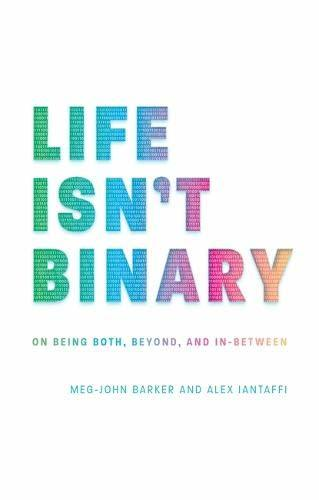
Challenging society’s rigid and binary ways of thinking, this original work shows the limitations that binary thinking has regarding our relationships, wellbeing, sense of identity, and more. Explaining how we can think and act in a less rigid manner, this fascinating book shows how life isn’t binary.
My Review
This book starts with the obvious understanding of ‘non-binary’ in discussing sexuality and gender, and then goes on to discuss non-binary approaches to relationships, bodies, emotions, and thinking. What this really means is that people tend to think in either/or ways, yes/no, black/white, etc. but the authors recommend more and/both thinking about life.
For someone who is non-binary it is an interesting, yet obvious concept. Although I’m autistic and we’re often accused of black and white thinking, I’ve always wanted to ask why? and my conception of conflict as the stories people tell themselves not meshing completely, already allows me to view reality in a way that includes what the authors refer to as ‘multiversal’. The authors use a therapist and Buddhist way of putting it, but it’s the same thing. Our stories are always changing, we’re always in the process of becoming, not completed, not finalised. And we have many stories, depending on who we’re interacting with.
I found this book fairly interesting. I got through the first four chapters in record time, but the last two chapters seemed to drag a bit. It was mostly the last chapter. I found it a bit woo heavy, especially the ‘make an alter to yourself’ reflection point. I understand the authors are interested in Buddhism, and work as therapists, so it’s understandable. It just doesn’t work for me.
It’s a good introduction to non-binary genders and unconventional relationships.
Format: Paperback ISBN: 978-1-5261-5155-1 Pages: 304 Price: £19.99 Published Date: June 2023 Published by Manchester University Press
DESCRIPTION
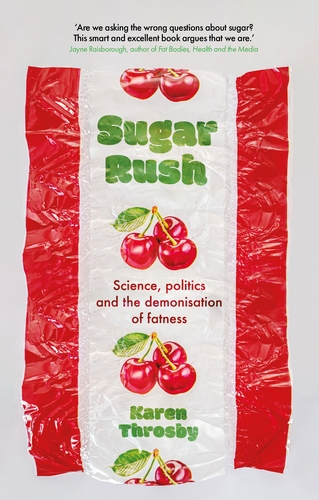
In the second decade of the twenty-first century, the crusade against sugar rose to prominence as an urgent societal problem about which something needed to be done. Sugar was transformed into the common enemy in a revived ‘war on obesity’ levelled at ‘unhealthy’ foods and the people who enjoy them. Are the evils of sugar based on purely scientific fact, or are other forces at play?
Sugar rush explores the social life of sugar in its rise to infamy. The book reveals how competing understandings of the ‘problem’ of sugar are smoothed over through appeals to science and the demonization of fatness, with politics and popular culture preying on our anxieties about what we eat. Drawing on journalism, government policy, public health campaigns, self-help books, autobiographies and documentaries, the book argues that this rush to blame sugar is a phenomenon of its time, finding fertile ground in the era of austerity and its attendant inequalities.
Inviting readers to resist the comforting certainties of the attack on sugar, Sugar Rush shows how this actually represents a politics of despair, entrenching rather than disrupting the inequality-riddled status quo.
My Review
Throsby uses a variety of sources from 2016 to 2019 to interrogate the focus on sugar are ‘the’ bad nutrient. She links this to pre-existing food hysterias, and austerity, with its focus on punishing the poor, the fat, the abject Other.
The structure of this book is that of an academic textbook, with an introduction, sources used, and chapter conclusions, while the writing is more like that one would find in a popular science book, easy to read and understand. The tone is one of enquiry and interest, rather than anger or scoffing at the writers of the source materials. The arguments and conclusions are supported strongly and are convincing, at least to this reader.
I highly recommend this to fat activists, disability rights activists, anyone interested in social equity, and dietitians. Really considering buying a copy to give my dietitian…
Format: 224 pages, Paperback Published: November 30, 2023 by Pluto Press ISBN: 9780745348667 (ISBN10: 0745348661) Language: English
Blurb
Neurodiversity is on the rise. Awareness and diagnoses have exploded in recent years, but we are still missing a wider understanding of how we got here and why. Beyond simplistic narratives of normativity and difference, this groundbreaking book exposes the very myth of the ‘normal’ brain as a product of intensified capitalism.
Exploring the rich histories of the neurodiversity and disability movements, Robert Chapman shows how the rise of capitalism created an ‘empire of normality’ that transformed our understanding of the body into that of a productivity machine. Neurodivergent liberation is possible – but only by challenging the deepest logics of capitalism. Empire of Normality is an essential guide to understanding the systems that shape our bodies, minds and deepest selves – and how we can undo them.
Robert Chapman is a neurodivergent philosopher who has taught at King’s College London and Bristol University. They are currently Assistant Professor in Critical Neurodiversity Studies at Durham University. They blog at Psychology Today and at Critical Neurodiversity .
My Review
Robert Chapman works with a couple of neurodivergent academics (Hi Louise and Anna 1 )I know, so I heard about this book months before it was published and pre-ordered it as soon as I could. There was a problem with the publisher’s computer system and my pre-order was lost so I had to re-order it. I did end up getting a discount because of that though, so I’m not complaining. I also ordered a few other books from Pluto Press, which I will get around to reading and reviewing. Eventually.
This book was an absolute joy to read. Chapman explores the history of neurodivergent people and the disability and neurodiversity rights movements. They explicate and critique anti-psychiatry, Freudianism and other areas of psychiatry, and confirming what I’ve said for years, capitalism is to blame for everything!
No, seriously, think about it.
Why do we have to be machines that happily work set shifts every day doing repetitive uncreative tasks? Capitalism.
Why do we have to fight for any form of social support? Capitalism.
Why are so many more people struggling with their mental health? Capitalism.
We live in a society where everything has a price and if you can’t produce you are a drain on society. The Tories have placed the blame and burden of austerity firmly on disabled people. Neolibralism, that monster set loose by Thatcher on our social and educational systems, pushes things further than ever before, and now we have fascism rearing its ugly head again. This is not hyperbole and if you think it is, you haven’t been listening to disability rights and neurodivergent rights activists, anyone who gives a damn about civil society or social equity.
I tried to say similar things to Chapman in my booklet about neurodivergent history, and couldn’t quite express myself the way I wanted to or get the message I wanted across. Part of that was lack of theoretical background (I am not a philosopher) and part was the funding source. Can’t write a socialist history or a manifesto for neurodivergent equality when you’re getting government funding and working for a non-partisan charity.
Yes, I liked this book because it agrees with my personal politics2, but that’s not the only reason. Chapman writes clearly, fluently, and makes convincing arguments for their position. They explain and explore history, making connections between different areas that might not be clear, although their examples show that other people have made those same connections in the past. By putting the neurodivergent experience in the context of capitalism, viewing the changing place of neurodivergent people through a Marxist lens, we can see the connections between the way capitalism has narrowed our lives and shaped the paradigm through which we are viewed by society, the medical and political system, and how they choose to treat us.
I have already recommended this book to several people and will be asking for a copy for our Little Neurodivergent Library at work.
Insert mad waving here. They’re all a part of the Medical Humanities Department at the University of Durham, my alma mater, not that Durham would admit that I ever went there. ↩︎
Burn it down, pull it out by the roots, start all over again with an equitable society from the beginning. ↩︎
Publication date Thursday, October 26, 2023 Price £14.99 EAN\ISBN-13 9781856755269
Blurb
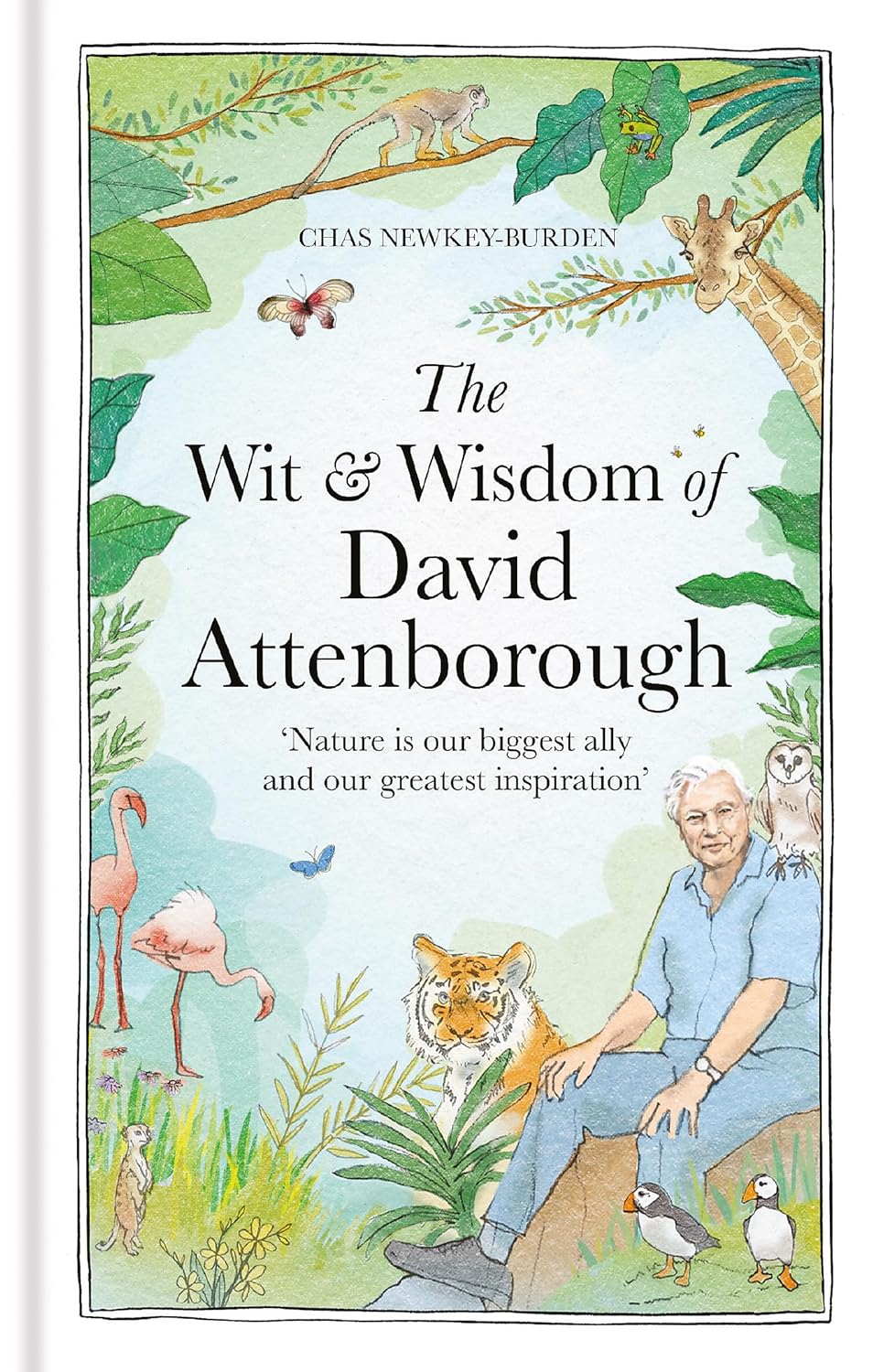
Description A fascinating and entertaining collection of facts, quotes and stories, celebrating Sir David Attenborough’s wicked sense of humour and astute wisdom. David Attenborough is a national treasure, known for his soothing voice, calming presence, passion for the natural world, and his humble, easy-going nature. Despite his incredible talent and influence, he tends to play it all down, one time stating that, ‘I can’t believe I’m still employed’.
So if he won’t celebrate himself, we’ll have to do it for him. Filled with facts, tributes and anecdotes, as well as beautiful illustrations, this enormously positive book celebrates Sir David, providing a fascinating insight into his life as well as showcasing his brilliant sense of humour. Running chronologically, this book begins with his early days, to his first job at the BBC, to eventually becoming the most esteemed naturalist on the planet, as he is today.
Such revelations include:
There are 18 plants and animals named after him
When asked by a reporter how many degrees he had, he said it would be ‘rude to count’*
The single thing that would improve his quality of life is ‘good, workable knees’. Blending his quips galore with his powerful messages on the environment and future of the planet, this timely book showcases everything we love about Sir David, making it the perfect gift for any fan.
3rd September 2023 Ages 9+ | £16.99 Hardback | 60 illus 160pp | 24.0 x 17.2cm
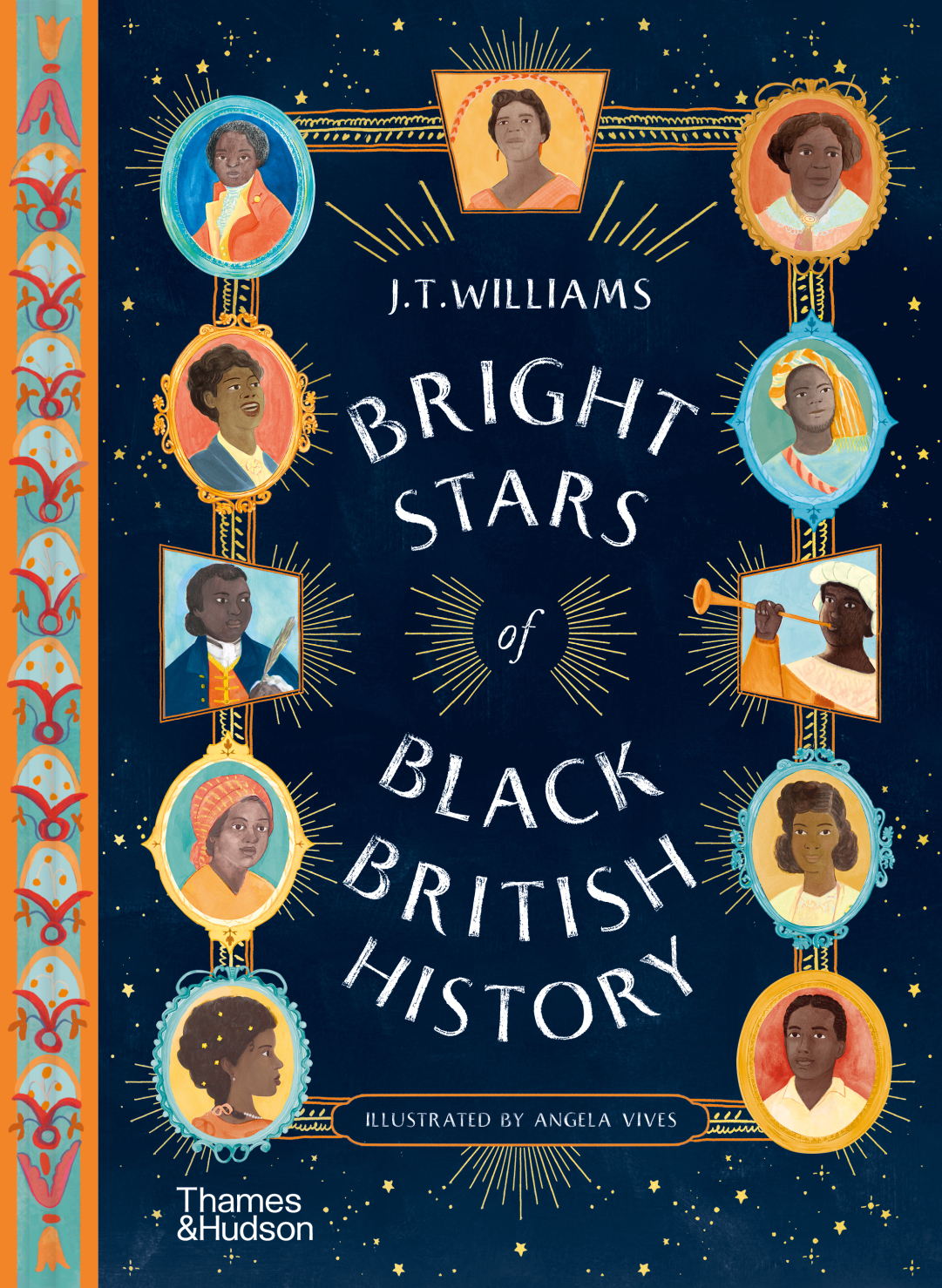
A dazzlingly illustrated collection presenting the extraordinary life stories of fourteen bright stars from Black British history, from Tudor England to modern Britain.
Brought to life through hand-painted illustrations by award-winning illustrator Angela Vives, this important and timely book from author and educator J. T. Williams brings the lives of fourteen shining stars from Black British History into the spotlight, celebrating their remarkable achievements and contributions to the arts, medicine, politics, sport and beyond.
Featuring a constellation of iconic individuals – including storytelling freedom fighter Mary Prince, football star and World War I soldier Walter Tull, and Notting Hill Carnival founder Claudia Jones – ‘Bright Stars of Black British History’ shines a light on the courage, resilience and talent of remarkable individuals who have left a lasting mark on our collective history.
By Amanda J Thomas Imprint: Pen & Sword History Pages: 280 ISBN: 9781473875678 Published: 23rd June 2020
Blurb
The Nonconformist Revolution explores the evolution of dissenting thought and how Nonconformity shaped the transformation of England from a rural to an urban, industrialised society.
The foundations for the Industrial Revolution were in place from the late Middle Ages when the early development of manufacturing processes and changes in the structure of rural communities began to provide opportunities for economic and social advancement. Successive waves of Huguenot migrants and the influence of Northern European religious ideology also played an important role in this process. The Civil Wars would provide a catalyst for the dissemination of new ideas and help shape the emergence of a new English Protestantism and divergent dissident sects. The persecution which followed strengthened the Nonconformist cause, and for the early Quakers it intensified their unity and resilience, qualities which would prove to be invaluable for business.
In the years following the Restoration, Nonconformist ideas fuelled enlightened thought creating an environment for enterprise but also a desire for more radical change. Reformers seized on the plight of a working poor alienated by innovation and frustrated by false promises. The vision which was at first the spark for innovation would ignite revolution.
My Review
I received this book in 2020 from the publisher in return for an honest review. It has taken me a long time to read it. I have been reading in in bursts, a chapter or two at a time around other reviewing commitments and work.
This review is all over the place. I have just finished the book. It took me 3.5 years to read the first ten chapters (140 pages) and less than a day to read the last five (68 pages); I’m a bit confuddled.
The book covers developments from the 1300s to the 1800s, in dissenting religious groups and industrial development, and makes the argument that without the unconventional thinking and organisational support Nonconformists and ‘heretics’ provided to each other, England would not have become the driver of Industrial revolution that it was in the early 18th to late 19th century that it was. The focus is on England, the interactions between England and Continental ideas and people, England and the North American colonies, England and France (because, 1066 and all that). It doesn’t look at technology developed in any of the colonies (usually derived from indigenous or enslaved peoples’ knowledge).
There are some interesting ideas in this book:
The author points out the complex family networks of the Midlands and northern Nonconformist families who supported each others’ business ventures and encouraged/funded new developments in ironworks, among other things. The relationships were longstanding and lucrative for many of the families. The connections went from the Tyne to the Severn, through Liverpool, Manchester, Sheffield, Birmingham and Bristol.
The literacy encouraged by Protestant beliefs – that people should be able to read the Bible in their own language – encouraged education in these families and that enabled people to question social structures and norms, as well as make scientific breakthroughs.
Every group looks back to a golden age of freedom and liberty – the Peasant’s Revolt (which was more of a middling sorts revolt with villainage cannon fodder) looked back to a pre-Norman England, the Nonconformists of the 18th century valourised the Puritanism of the Republic. They never were golden ages, there were always tyrants and inequality and war.
The author doesn’t mention much about the slave trade, although some of the Nonconformist families made their money from making guns and cannons, supporting the East India Company and the slave trade. At least one person mentioned, from the 1700s, was disowned by his Quaker congregation for inheriting a gun company and supporting the slave trade. It is safe to say that without the triangular trade a lot of people wouldn’t have had the funds to support the new products produced by Wedgwood, or fund the research of Priestley and the Lunar society (amongst others). The focus of the book is so narrow that the author can’t bring these considerations into the text. I don’t know if that is a good or bad thing. She does mention the above, but briefly, with no exploration. A wider exploration of the developing empire might have added context.
The final two chapter focus heavily on Thomas Paine, his adventures in North America and France, who he knew and what he wrote. Amanda J. Thomas explores the possible developments of his radical thought from his Quaker upbringing to his return to North America in 1800 after imprisonment in France. The author connects his activities to the rise and fall of radical organisations, especially those in Sheffield, demanding governmental reform. As we all should know, the government of the time, and for decades afterwards, was very opposed to any reform, cracking down heavily, violently against anything that would put the high church gentry and the aristocracy out of control. And yet, people kept dissenting…
There were times when the book felt disjointed, as though it were a collection of essays arranged chronologically, and at other times several chapters would naturally follow from each other. This may be an artifact of the development of the book?
The writing is decent and the story is really interesting. What I think slowed me down was all the family trees (tangled shrubs in some cases) that the author felt the need to write out and share with us in the main text. I don’t think it was always necessary to getting the ideas across clearly and could possibly have be left to an appendix, along with the visual representations of the family trees.
The book has a good bibliography and indexing, notes are clearly identified and information sourced. The author has relied heavily on some sources more than others, usually those about specific families or individuals, which gives a possibly partial impression of events, but also provides interesting nuggets of information about individuals and the social and cultural dynamics of their times. I did not know that Joseph Priestley knew Thomas Paine and Thomas Jefferson, for example, or that Benjamin Johnson was a member of the Royal Society at the same time. I knew Erasmus Darwin and Wedgwood knew each other, because of the weird family dynamics of Charles Darwin and his cousin-wife. In-bred the lot of them -the Wedgwoods, Darwins and Galtons.
So, final thoughts. Interesting ideas and social history that tries to illuminate the development of the co-occurring scientific, religious and political though that brought about the 18th and 19th century Industrial Revolution in England, and makes some attempt to put it into the wider North Atlantic context. Quite well written and extensively researched. Excellent bibliography. Could do with some editing.
Also, I noted some references that make it into Discworld.
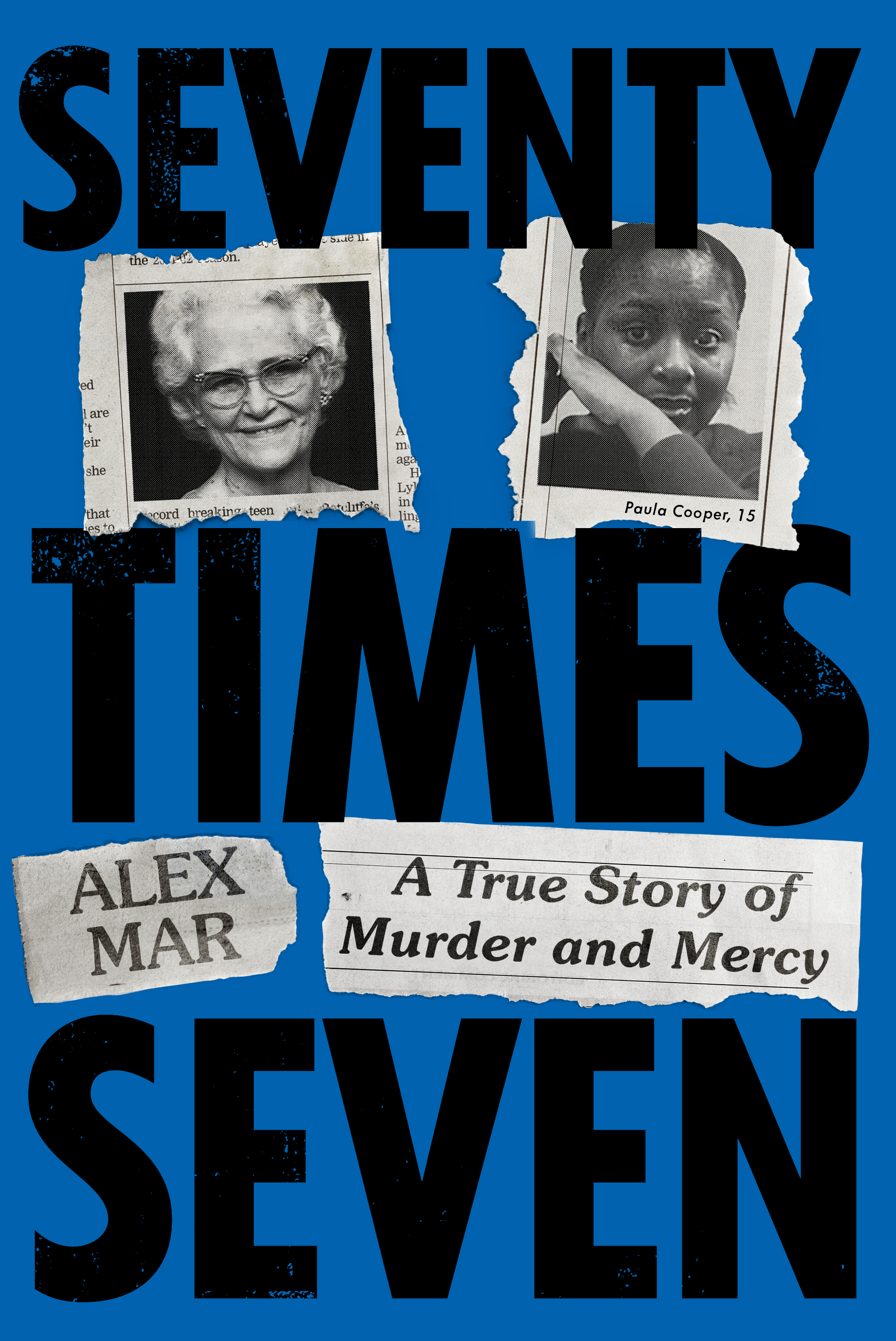
Bedford Square Publishers 09 November 2023 £20.00 978-1-9157-9896-1
A masterful, revelatory work of literary non-fiction about a teenage girl’s shocking crime — and its extraordinary aftermath.
On a spring afternoon in 1985 in Gary, Indiana, a fifteen-year-old black girl kills a white elderly bible teacher in a violent home invasion. In a city with a history of racial tension the press swoops in.
Paula is sentenced to death, no one decries the impending execution of a tenth grader. But the tide begins to shift when the victim’s grandson Bill forgives the girl, against the wishes of his family, and campaigns to spare her life. This tragedy in a midwestern steel town soon reverberates across the United States and around the world — reaching as far away as the Vatican — as newspapers cover the story on their front pages and millions sign petitions in support of Paula.
As Paula waits on death row, her fate sparks a debate that not only animates legal circles but raises vital questions about the value of human life. This story asks us to consider the nature of justice, and what radical acts of empathy we might be capable of.
In the tradition of Michael Pollan, Anthony Bourdain, and Mark Bittman, “a surprising, flavorsome tour of ancient cuisines” (Kirkus ★)—from Neolithic bread to ancient Roman fish sauce—and why reviving the foods of the past is the key to saving the future.
Many of us are worried (or at least we should be) about the impacts of globalization, pollution, and biotechnology on our diets. Whether it’s monoculture crops, hormone-fed beef, or high-fructose corn syrup, industrially-produced foods have troubling consequences for us and the planet. But as culinary diversity diminishes, many people are looking to a surprising place to safeguard the future: into the past.
The Lost Supper explores an idea that is quickly spreading among restaurateurs, food producers, scientists, and gastronomes around the world: that the key to healthy and sustainable eating lies not in looking forward, but in looking back to the foods that have sustained us through our half-million-year existence as a species.
Acclaimed author Taras Grescoe introduces readers to the surprising and forgotten flavors whose revival is captivating food-lovers around the world: ancient sourdough bread last baked by Egyptian pharaohs; raw-milk farmhouse cheese from critically endangered British dairy cattle; ham from Spanish pata negra pigs that have been foraging on acorns on a secluded island since before the United States was a nation; and olive oil from wild olive trees uniquely capable of resisting quickly evolving pests and modern pathogens.
From Ancient Roman fish sauce to Aztec caviar to the long-thought-extinct silphium, The Lost Supper is a deep dive into the latest frontier of global gastronomy—the archaeology of taste. Through vivid writing, history, and first-hand culinary experience, Grescoe sets out a provocative case: in order to save these foods, he argues, we’ve got to eat them.
Published in partnership with the David Suzuki Institute.