I have a pile of books from the library, and as I’m not doing any overtime this coming week I should be able to make some progress through them.
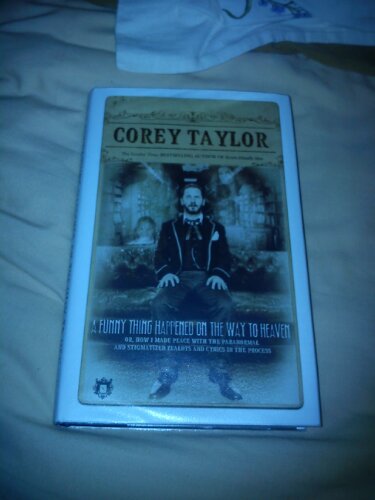
I’ve almost finished Corey Taylor’s new book and then I’ll be working my way through the following:
This is the second book in the ‘Wave Trilogy’; I read and reviewed the first book a couple of months ago and have been waiting patiently for it. In fact I’d forgotten I’d ordered it from the library until they rang me to say it had arrived. I’ve had a lot on, I forget things.
Next up (I’ve already started reading it) we see a fine example of my inner geek escaping.
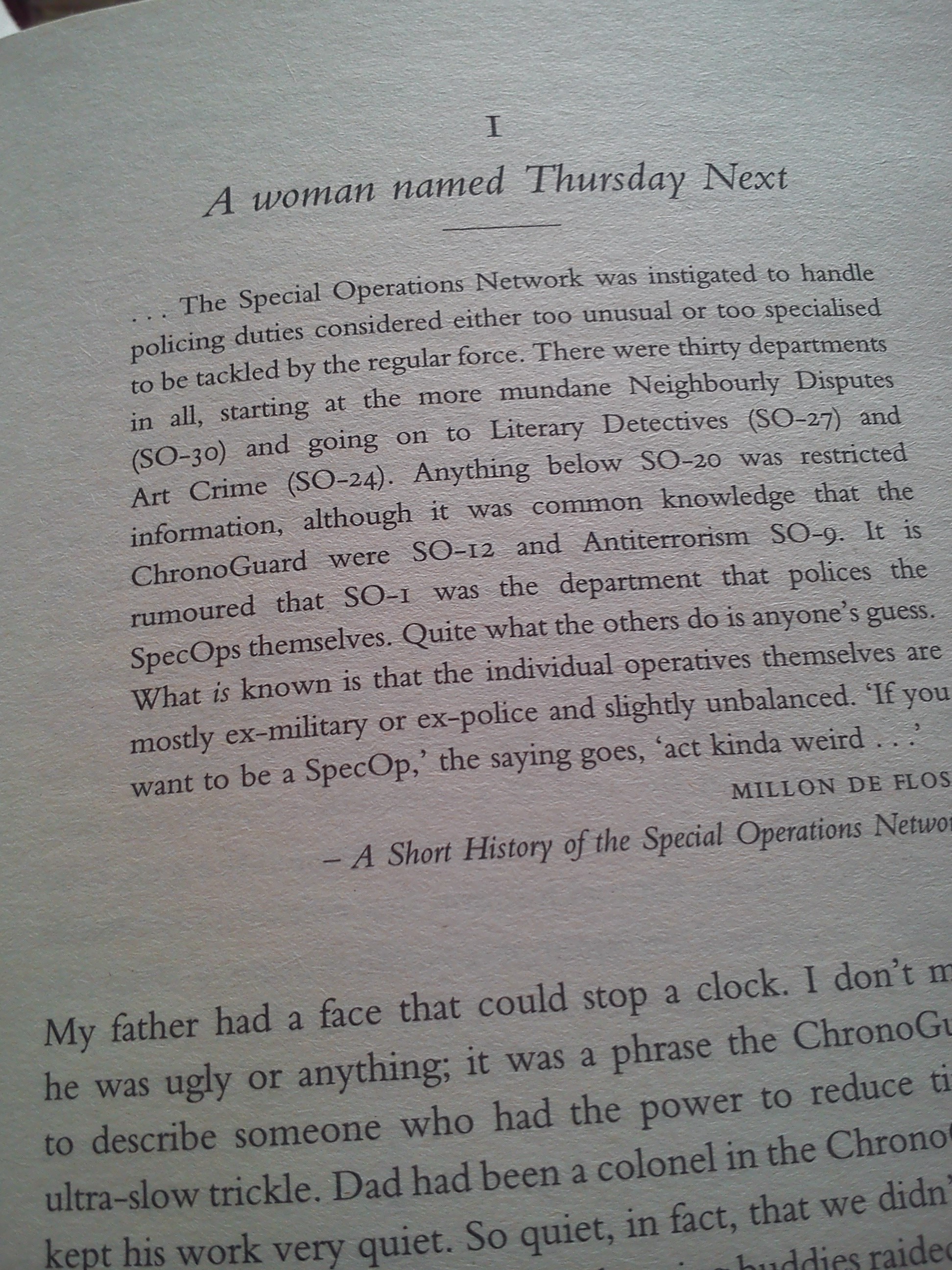
It’s really interesting; there’s so much I’ve forgotten but as I read things are coming back to me.
This is a collection of short stories called Darker Minds. I’ve read one at random so far; it haunts me. I’m going to try to read more.
New Neil Gaimen book. I may have to buy myself a copy.
And finally (this one actually belongs to me so no time limit in getting it read, it may be a while):
I loved ‘The Long Earth’ when I read it last year and so when I had the opportunity to get both of the books I did (birthday presents!). I might reread ‘The Long Earth’, now I think about it. I like the characters and the concept. Wouldn’t it be great to be able to cross to a world that was completely different, it would certainly give a new meaning to ‘getting away from it all’.
Although I’d probably go and not come back. So long as I had a power supply, internet access, notebooks, pens and a delivery of new books every week or so I’d probably be happy.
Time to settle down with a book, hope everyone has had a good weekend,
It’s 2004 and Thursday Next is in semi-retirement after a terrible accident which has left her unable to visit the BookWorld and means she has had to give up her Jurisfiction job. Her old mob SO-27 are back in business, but she’s not getting the job of leading them. Instead she becomes Wessex Chief Librarian.
Unfortunately, Swindon is due to be smote by a pillar of holy fire, unless Thursday’s daughter Tuesday can fin a way to get the anti-smiting shield to work. Then of course there is the additional problem that Friday Next is going to kill Tuesday’s boyfriend Gavin.
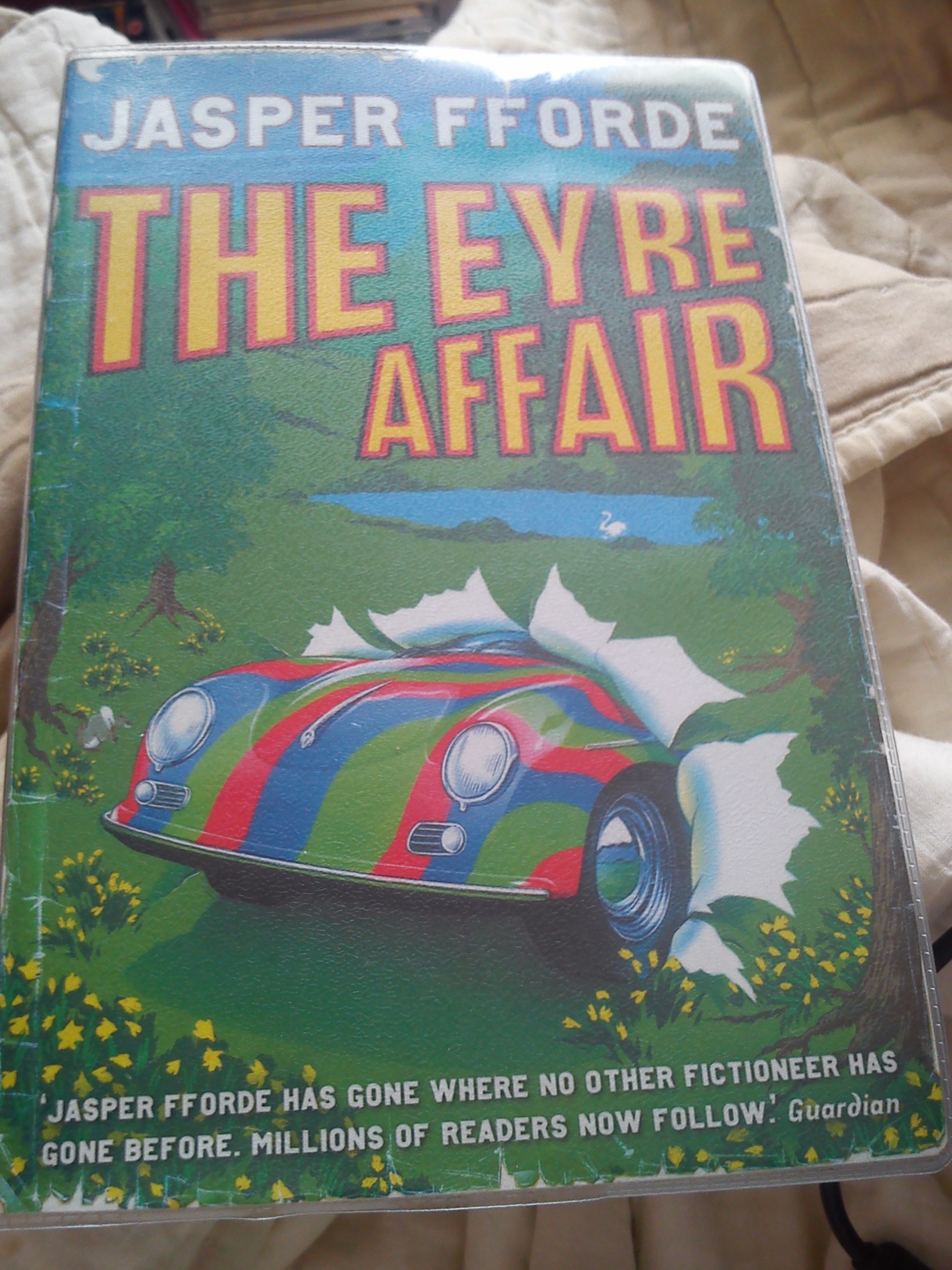
Jasper Fforde’s seventh Thursday Next novel is as surreal and entertaining as the first, with the additional bonus that it us internally consistent, so it makes marginally more sense, because I’ve been there before. Thursday as got older and wiser, the characters are developed further and the plot is as unique as ever.
Liz Jones is Fashion Editor at the Daily Mail and a columnist for the Mail on Sunday, having worked in the media for the last 30+ years.
Born in 1958 the youngest of seven children to an ex-army captain and a housewife, Liz Jones grew up in a variety of places around Essex wearing handmade and hand me down clothes, but dreaming of working for Vogue. She never quite managed it. Anorexic at 11 and still obsessed with food, having it all and losing it all because she never felt good enough, Ms Jones has considered herself a failure from a young age and has striven to be better.
I think I’ve occasionally read her column, for the simple reason that when I’m at my grandparents flat and I haven’t anything with me to read, it’s the only vaguely honest and interesting piece I can find in the paper. This autobiography is the same; the writing is fluid and moving. I read it in a single sitting.
One review described the book as ‘laugh out loud funny’. I disagree; it’s sad, with odd moments that are funny in hindsight, but must have been embarrassing or painful at the time. A vivid example of how a strong work ethic and success can mask low self-esteem, this is a powerful story.
This book was Jasper Fforde’s debut novel, and the first to feature Thursday Next as heroine. A surreal adventure set in a 1985 where literary theft has become a terrible problem, the Crimea is still being fought over by England and Russia, Wales is a secretive Socialist Republic, the mega-corporation Goliath bank roll the economy and the biggest controversy is who really wrote the plays of Shakespeare.
Thursday Next is a LiteraTec in Special Operations 27. Based in London, but originally from Swindon, a veteran of the Crimea and desperately seeking a way out of the Literary Detectives and into a more interesting Spec Op department, she takes a temporary assignment to Spec Op 5 and is thrown against an enemy more deadly than Russian Howitzers, Acheron Hades. Hades has stolen the original Martin Chuzzlewit manuscript but nobody can work out how.
Grievously injured in an operation that sees her losing all her colleagues, Thursday opts to take a job with Swindon’s LiteraTec department, on her own advice. Convinced that Hades is still alive despite everyone believing otherwise, Thursday is up against the Goliath Corporation and their representative Jack Schitt, who’s after a marvellous new weapon that will win the war in the Crimea, as well as Hades.
When Thursday’s eccentric but brilliant uncle Mycroft and her aunt Polly go missing, Hades is the first to be suspected. Thursday must rescue her aunt and uncle, defeat Hades, regain the Chuzzlewit and Jane Eyre manuscripts and outwit Jack Schitt. And all before her former-fiancé gets married at 3pm a week Saturday.
I’ve read one of the later Thursday Next books, and it definitely makes slightly more sense now. As much as anything makes sense in Jasper Fforde’s novels at least. This novel was highly praised when it was first published 12 years ago and it still stands as an excellent piece of literature; full of wit, bibliographic in-jokes, with unique characters and an incredibly inventive plot.
UlinkaRublack, Patrick Little, Christina Walkley, Lois Banner, Quentin Bell, Carol Dyhouse, Stella Mary Pearce and Eileen Ribeiro
£2.05 from Amazon.co.uk
This small e-book contains eight articles spanning 60 years of scholarship and publishing. They focus on fashion, not just what clothes were worn when, but attitudes to clothing, and the things they indicate about the wearer, and also how people viewed the clothing worn by their ancestors, and how it was depicted in art.
Ranging from the changing attitudes to the wearing of fur to how fourteenth century artists depicted classical subjects to the question of precisely how dull Cromwell’s clothes were, this is a fascinating collection of articles. There is nothing new here; in fact I recognised three of the articles as I’ve read History Today regularly for the past eight years. The older articles were interesting, though; sixty years is a long time in academia and the attitudes of the writers to their subject’s is as interesting as the subjects themselves.
I’ve never bought one of these collections before (although it would be more precise to say my oldest friend bought me it since I used the gift card she gave me for my birthday – thanks Fi!) but I think it’s well worth the price. They are great resources, containing the best articles History Today has published on a particular subject. I would have liked a new, original article to go with the collection though; I think it would have made a nice touch.
Described in the blurb as a ‘sweeping look at the changing world of the Jazz Age, as life below stairs vanished forever, loose morals ran riot, and new inventions made it seem anything was possible’, this book gives an entertaining glimpse in to the lives of the Bright Young People, the wealthy young Mayfair set who ran riot in London in the Nineteen Twenties. Presented in a gossipy tone, with first-hand accounts from those who were part of the group of friends dubbed the ‘Bright Young People’ by the popular press, and the generation of ‘Bright Young Things’ they led and inspired. The central cast of aristocrats and artists loom large in a playful narrative of all night dancing, freak parties, treasure hunts through London, immodest fashions and heavy drinking. The more staid members of their age group and class, the debs, and the attitudes of their parents to the antics of the hedonistic set are also covered.
The focus is primarily on London; however there is some reference to the United States and Paris. As Jazz was a large part of the lifestyle of the Bright Young Things, this isn’t surprising. The spread of this form of music from the southern United States across the Atlantic to London and the on into Europe is fascinating, although the author doesn’t go in to a great deal of detail.
Also covered in the book are references to changing sexual attitudes, and the growth of consumer ‘labour –saving’ goods as more people had access to electricity and servants became rarer.
While this book is subtitled ‘Life in the Roaring Twenties’ it doesn’t really give much of an insight in to life for those who weren’t wealthy and educated, and living in London. Bare mention is given to the lives and aspirations of working and lower middle class people, who presumably had ambitions and needs as well. It’s very gossipy in nature, relying on published diaries, letters and autobiographies/biographies for much of the detail. The ‘flapper’, her dress, attitudes and occupations are a recurring feature of the book.
I didn’t feel that the author really put meat on the bones of the subject, although the origin of certain terms originating in, or associated with, the decade are explained and there is a decent bibliography at the back. I’d say this was quite a good book for GCSE students wanting a bit more information about the Twenties, and those wanting an overview of the decade. At the very least it’ll get people started and then they can move on to more detailed studies of the decade.
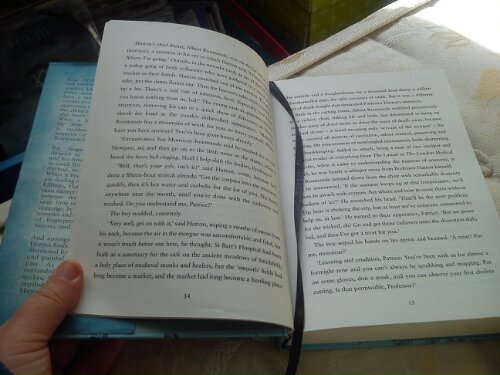
In July 1858 a cholera epidemic once again threatens an overheated London. Professor Hatton of St. Barts Hospital and his chief diener Albert Roumande spend their days cutting up cadavers in an effort to learn as much ad they can about the disease. At the same time they are also working in the new science of forensics and as London’s leading experts are called in to help when an Irish MP is murdered a few days before the anniversary of Drogheda, a green ribbon found in the dead man’s mouth.
A series of other murders follow. The victims all seemed to have known each other in Donegal, during the Potato Famine. What happened there and who would want revenge? As Hatton, and Inspector Grey of Scotland Yard, about whom Hatton has grave doubts, investigate they are interrupted by an explosion in a packed shopping arcade. The Inspector, and the widow of the first victim are seriously injured. Hatton has more questions than answers. Is the explosion connected to the murders or is one a cover tor the other? What has Donegal to do with it? Why does all the opium and fly papers keep disappearing? And is the mortuary budget really getting cut?
Using their new method of fingerprinting the Professor and his diener discover the murderers. Using torture Inspector Grey finds the bombers.
I do like a good murder mystery, and this is an excellent example. The characters are engaging even if the set up hasn’t been original since Conan Doyle wrote his Sherlock Holmes stories (skilled amateur investigators/useless professional policeman). The plot is strong, and conclusion unexpected and imaginative. Full of period detail which immerses the reader in the scenario without being overwhelming or too descriptive, and which adds to the plot. The premise, of an early forensic pathologist working in a world that doesn’t understand what he does, is interesting.
This is the second book in the series. I haven’t read the first but I probably will try to at done point. It isn’t necessary though as it is perfectly possible to read the novel as a stand alone story. Previous cases are hinted at throughout, drunken/drugged confessions about their pasts develop the characters, although some of the repeat characters need fleshing out a bit. How did they all end up in London? What secrets, because they all have secrets, do they hide, and why? Presumably we will find out in future novels although somethings can be guessed at.
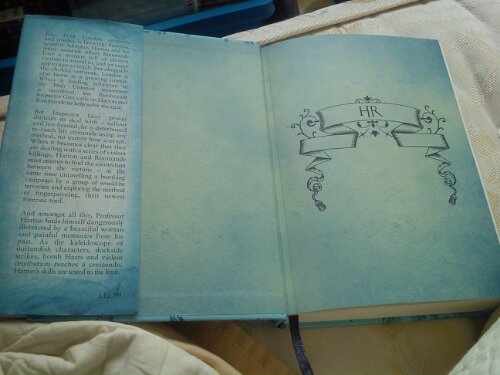
I really did like this book; the audio book is available soon. It is a beautifully bound and presented article.
I might be easily pleased but I like a well presented hardback book.
I noticed a small number of typos but nothing that took away from the story significantly.
Definitely a must read if you like historical mysteries.
Dare Heisenberg (adopted great-nephew of the great Heisenberg of Uncertainty Principle fame) is a drop-out living on the streets of Denver. A disappointment to his adopted-parents, his teachers and just about everyone he ever met, including himself, Dare doesn’t really see much of a future for himself. That is until one night he meets a blob named Bob. Bob has an offer for Dare that changes his existence. Dare can go on as he is or join the Keepers, who regulate time and space.
Naturally he accepts.
Dare is sent on his first mission, which goes horribly wrong and sets off a chain of events which results in Dare ending up on (and above) Mars with giant hamster aliens and an indestructible spider-creature. Oh, yes and four anti-matter bombs. Dare and his new friend Lauri must race against time to prevent the destruction of a species.
I was sent this e-book to review at the request of www.everythingbooksandauthors.com (thanks Toni); it’s been a while since I read much science fiction but I used to enjoy it so I thought I’d give this book a go.
Overall I’d say I enjoyed the novel, especially the final third, when it felt like the author had really got in to his storytelling stride, describing the scenes and action well. I grew to sympathise with Dare, a character whose self-centredness irritated until he started to develop.
The only significant negative point I could make is that the pacing is a little uneven. The first hundred pages were slow, but once the action started it sped up. The change in pace came at a point that, when I read it, felt disjointed; as though this were two separate stories that had been put together but the join wasn’t smooth. It also felt a little rushed towards the ending, with an element of deus ex machina. I also found some of the early descriptions of Dare’s family background and education repetitive and laboured.
These are minor quibbles and this is an enjoyable sci-fi novel, with an interesting premise; the author clearly has some understanding of current theories in physics. In addition, I especially liked the pahsahni (giant hamster aliens) and their back-story. It is a good introduction to Sci-Fi suitable for YA audience.
I’m hoping to do write a few more reviews for www.everythingbooksandauthors.com, Toni the Admin is really nice, she gets back to you quickly and doesn’t preasurise readers/reviewers. I’ve got a great long list of books I’m reveiwing at the minute, so expect a few more over the next week or so!
Originally published by Little, Brown and Company, 1999
This is one of the books I got from the library a couple if weeks ago. I’ve read a few of Tom Holt’s comic fantasy novels but I hadn’t known he’d also written historical novels. It was a pleasant surprise.
‘Alexander At The World’s End’ tells the tale of Euxenus son of Eutychides, who started life in Athens and ended up as governor if Alexandria-at-the-End-of-the-World, in Sogdiana (otherwise known as Iskander, 50 miles NE of Tashkent). When he was a youth his father arranged for him to be apprenticed to a philosopher so that he could learn a trade. Unfortunately he choose Diogenes, the Yapping Dog, the Cynic, the man who told Alexander the Great to get out of his light.
Under Diogenes’s tutelage Euxenus learnt Yapping Dog philosophy, and politics. He made a good living at it in Athens, the the assistance of an invisible snake in a jar. Unfortunately Phillip of Macedon is making a nuisance of himself, and Euxenus is one of the lucky, lucky ambassadors sent to Pella to discuss the matter. It went badly.
But not for Euxenus, who managed to make the acquaintence of young Prince Alexander while rounding up bees, gain Queen Olympias’s favour (her snake obsession came in handy for a change) and get a job tutoring the Prince and his Companions.
Completely ill equiped for such a position, Euxenus throws himself into his work with all his usual dedication until Philip decides to send Euxenus and a couple of thousand Illyrian mercenaries he no longer needs off to Olbia on the Black Sea to found a colony.
After many years and assorted adventures Euxenus returns to Athens and settles down on the old family farm. Time passes, Euxenus becoming the good farmer his family always assumed he’d never manage to be, until his once pupil, now king of the known world, sends a couple of soldiers for him.
Alexander needs a governor for his newest city, in Sogdiana, so Euxenus must once more go travelling, this time across Asia, because when Alexander wants something, Alexander gets. In his new home Euxenus once again tries to build the Perfect Society and write his History, which is very difficult for a man constantly looking the wrong way when important events are taking place.
Funny yet poignant, this novel explores the difference between who we really are, who we believe ourselves to be and how the world sees us. It’s really quite sadly beautiful. It’s also a grand history lesson and philosophy primer. Written with the deft touch of a great storyteller, gripping from first to last and full of detail, I would heartily recommend this novel.
Well, I’m back on-line and trying to write this review while watching the series ‘Hannibal’ and being sociable. Look at me multi-tasking!
I saw a few more bands on Saturday than Friday. I saw a range of bands, some I hadn’t thought to see, and I missed some of the bands I wanted to see, for various reasons.
The first band I saw was:
Katatonia on the Zippo Encore Stage
In my notebook I’ve summed them up as ‘loud Scandinavians with long hair. They’ve been around for a while’.
I really enjoyed watching them. They are quite heavy, which I like, but I couldn’t actually discern the words.
Next I watched Lit play, again on the Zippo Encore Stage
One of my friends used to really like them when we were kids, back in the 90’s/00’s. According to Shelley, at some point they dropped off the face of the Earth. Their appearance at Download therefore made Shelley quite happy. I don’t know what I thought to them, some of the songs I liked, most of the set I found a little insipid. I only recognised one song; I must have heard it at some point.
After Lit I went to the Main Stage to see
Alice In Chains
I was looking forward to seeing them but was in the event actually quite disappointed, though they seemed popular in the Arena.
Next up Motorhead
Oh, I was looking forward to seeing these legends.
They were really fun to watch, although it did drag slightly. The two drum solos, while incredibly good, made the set seem unnecessarily long.
Returning to the Zippo Encore Stage to see Jimmy Eat World
By this point in the day I was tired and hungry, so I probably wasn’t listening as closely as I should have done, which is not great when you’re writing about bands and their music. Anyway, eventually I did manage to raise a bit of enthusiasm for the set.
I staggered on through to QOTSA back on the Main Stage
They were okay, I couldn’t really hear what was being sung, but I liked the music.
I had planned to stay to see Iron Maiden but all the cigarette smoke set off my asthma, and it was too much for me. I ended up going back to my tent. Due to the acoustics of the site I could hear Iron Maiden anyway. I could hear the crowd’s reaction as well; they went down very well with the people who managed to make it through the second day of Download.
And on to Sunday
Sunday was great.
I started off the day right down the front of the main stage singing along to Sacred Mother Tongue. They happen to be one of my favourite bands, so I was in heaven, just a little bit.
I first saw them at the Halestorm concert I went to in Nottingham in March this year and only saw half their set. Since then I’ve kept an eye on this Northamptonshire group. I waited impatiently for their new album and reviewed it (see https://rosemariecawkwell.wordpress.com/2013/05/04/review-sacred-mother-tongue-out-of-the-darkness).
They lived up to my expectations entirely. It was so good to see them on a larger stage and in front of an appreciative crowd. Clearly people had made the effort to drag themselves out of their tents, probably with a hangover. And they appreciated the bands efforts as much as I did.
Next up, because my friends wanted to see them, Cancer Bats, still on the Main Stage
As good a front man as Liam Cormier is, I can’t say I particularly like this band. The band have a devoted following but their style of music doesn’t appeal to me. Again, I prefer singing to shouting. I just don’t like that sort of punk, though I know it’s quite a common genre these days.
Next, another band I really couldn’t wait to see, Stone Sour, played their set in the evening. We sat up on the hillside and watched. I could just about hear. The problem was that someone over in the Pepsi Max Stage were rather loud and it was irritating. They acoustic set, which I would love to have heard properly was practically drowned out.
It was still enjoyable, Corey Taylor is an excellent singer and can write a good song. The crowd certainly liked him.
After Stone Sour came Gaslight Anthem
They’re okay, I’ve never seen or heard their music before but I quite enjoyed the set. It was easier, marginally, to hear them than Stone Sour. Mainly because the racket from the Pepsi Max stage had ended.
30 Seconds to Mars
After Gaslight Anthem came Jared, Shannon and Tomo. The Echelon were very excited, and I had a few friends down their. When Jared started getting people on to the stage one of them was feet from getting up there. Then there was an accidental crowd surfer and they refused to let any more people onto the stage.
The new songs were definitely tighter in performance than the older songs; Jared seemed to get bored of singing then and got the audience to do the work instead. Shannon is still a talented drummer, and evem Tomo had a go at drumming at the start.
They announced their UK tour in November. I’m going to the Nottingham gig.
Jared’s voice isn’t as strong as I thought it would be. To be fair, we got distracted.; I’ll tell you why later.
In between 30STM and Rammstein we took a trip to the Zippo Encore Stage to see a bit of Limp Bizkit.
They played their ‘classic’ Rollin’ – it was practically a sing-a-long. After listening to a couple more songs we got distracted by the arrival on the Main Stage of
Rammstein
I only saw the first half-hour or so – I was tired again – but impressed by the pyrotechnics. I’m not sure what I think of their music though.
And now for the most entertaining part of the evening.
During 30 Seconds to Mars’s set a person got stuck on the zipline. They cot bottled while they waited to be rescued. The a bottle fight started. There are videos somewhere on you tube. I shall go and find one.
——————————–
Disappears to YouTube to find said video.———————————-
Returns from YouTube
——————————–
Thanks to whoever recorded that and put it on youtube.
Right, it’s getting late and I have to be up for work in the morning (I’m doing overtime this week – expect random sleep-deprived blog posts). Sorry that this post is a bit disjointed and not as detailed as I would like or expect, but it was a busy weekend and I was trying to take it all in. Problem with that is I didn’t write as much down as I should have.






 Everything Is Better With Dragons