Review: The Spanish Flu Epidemic and its Influence on History, by Jaime Breitnauer

ISBN: 9781526745170
Published: 20th November 2019
Price: £15.99

On the second Monday of March 1918, the world changed forever. What seemed like a harmless cold morphed into a global pandemic that would wipe out as many as a hundred-million people – ten times as many as the Great War. German troops faltered lending the allies the winning advantage, India turned its sights to independence while South Africa turned to God. In Western Samoa a quarter of the population died; in some parts of Alaska, whole villages were wiped out. Civil unrest sparked by influenza shaped nations and heralded a new era of public health where people were no longer blamed for contracting disease. Using real case histories, we take a journey through the world in 1918, and look at the impact of Spanish flu on populations from America, to France, to the Arctic, and the scientific legacy this deadly virus has left behind.

My Review

Thanks to Rosie at Pen & Sword for sending me this book. It’s much appreciated, given how much time it’s taking me to read and and review books she’s been sending me.

Took me less than four hours to read this book last night. I couldn’t sleep anyway. No, really, I’m coughing a bit. It’s probably just a cold or an allergy. Might change my bedding later and vacuum the carpet, just in case. I’ll let you know if it’s something worse.

Like the Spanish Flu.

Although I’d probably be dead by now if I had Spanish Flu. In the second wave it was so virulent that it killed people as they walked down the street to the doctors to get help. Whole families died. Thousands of children were left orphaned. Up to 100 million people died in less than two years. At the time it was a shocking event, but in the years that followed it was forgotten. The author speculates that the horrors of war, mass movement of people, malnutrition and then the pandemic was too much for people to cope with. They prefered to think that people died in combat not coughing up their own lungs and choking to death.

Colonialism helped spread the pandemic. Troops from the colonies were sent to the Western Front and then sent back. European troops had been sent to the Middle East, Chinese citizens were sent through Canada and across the Atlantic as part of the Chinese Labour Corp. Millions of people from all over the planet moving around, meeting up in closely packed, unhealthy conditions, malnourished and carrying seasonal infections, then going back out into the world.

People generally know about the effects of the Spanish Flu in Europe and North America, but the pandemic covered the whole globe. People who were of European decent were less likely to die compared to indigenous people in Africa, the Americas, Australia and the Pacific Islands. European and North America people of European descent are used to getting colds and flu, so they had some immunity. Indigenous people didn’t.

Viruses do this interesting thing where they can share their genetic material with each other if they meet in a cell. At some point in the years between 1916 and 1918 some nasty H1N1 flu strains met up, shared genetic material and produced the nastiest virus humans have ever dealt with. Reconstruction of the virus from Alaskan bodies buried in the permafrost in 1920 shows that any one of the eight segments would produce a nasty virus; together they made it leathal.

The arrival of the flu in 1918 helped end the Great War, because it’s really hard to keep up violence when your soldiers are dying from disease and your support lines are falling apart because everyone who should be moving supplies is dead, dying or sick. There were mass famines as the fields weren’t harvested or planted in 1919. In industrial areas, factories and mines shut down because too many people were ill.

It encouraged new and already existing independence movements in colonies in response to the poor treatment of indigenous people during the pandemic, and probably screwed up the post-war negotiations, since it killed or sickened many of the people at the table. The loss of moderate political voices lead to greater punitive measures against Germany, the loss of expertise about the Middle East resulted in the utter mess we still have today.

People are still not sure where it started. There were outbreaks of flu in 1916, 1917 and 1918 in China, the US and France before the first wave of the Spanish Flu. I have a hypothesis that there were some nasty strains going around, and the mass movement of people from across the world, carrying these different strains, as the ‘first wave’ and finally brought together in France, allowed the nastiest of them to meet up, shuffle around some genetics and then produce the virus we call Spanish Flu. I think this is the ‘second wave’, which was the truly awful one. The one that killed millions. The ‘third wave’, less virulent was possibly a version that had drifted a bit or one or the less nasty. Might be wrong, someone else has probably looked at it and ruled this idea out.

Honestly, this is a really good introduction to the Spanish Flu pandemic and its ongoing influence. I could tell the author has a history background and a journalism background too. She made the book very easy to read and the use of real people examples really brought the events of those years to life.

Cover Reveal: The Gossips’ Choice, by Sara Read

Blurb

“Call The Midwife for the 17th Century” 

Lucie Smith is a respected midwife who is married to Jacob, the town apothecary. They live happily together at the shop with the sign of the Three Doves. But sixteen-sixty-five proves a troublesome year for the couple. Lucie is called to a birth at the local Manor House and Jacob objects to her involvement with their former opponents in the English Civil Wars. Their only-surviving son Simon flees plague-ridden London for his country hometown, only to argue with his father. Lucie also has to manage her husband’s fury at the news of their loyal housemaid’s unplanned pregnancy and its repercussions.

The year draws to a close with the first-ever accusation of malpractice against Lucie, which could see her lose her midwifery licence, or even face ex-communication.

Continue reading “Cover Reveal: The Gossips’ Choice, by Sara Read”

Orenda Roadshow Southwell library 27th February 2020

Just got back, I had to walk off some of my giddiness. I had a wonderful time. I spoke to a few people, authors mostly, plus Anne Cater the fabulous blog tour organiser and Karen Sullivan, publisher. I bought 6 books, some from authors I’ve read before, like Matt Wesolowski and Antti Tuomainen, and some by authors I haven’t read but I liked the bits they read out, like Will Carver and Kjell Ola Dahl. I also got the Vanda Symon book I was missing, Ringmaster.

And it was 3 for 2 so I had a bit of a spree and supported a small independent bookshop, The Bookcase in Lowdham, Nottinghamshire. Indie publisher, indie bookshop, supported by a local library. It’s wonderful.

I really enjoyed meeting Johanna Gustawsson. I have all three of her books but I only brought Blood Song as it was the first one of hers that I read and I didn’t want to overwhelm her. We had a chat about realistic autistic representation.

I am slowly calming down, the walk through night time Southwell and then writing this has helped, but I’m still all bubbling with happiness. Going to journal for a bit to ground me again. I need to get some sleep tonight.

It was probably a mistake getting a room at a pub. I can hear conversations down in the bar.

Extract Post: Walking Back to Happiness, by Penelope Swithinbank

47358103

Blurb

Two vicars, their marriage in tatters with wounds reaching far back into the past, set out on a journey to find healing and restoration. Their route will take them from the Mediterranean to the Atlantic, but will it help them find their way home? Along the 320-mile route across rural France, burdened by backpacks and blisters, Kim and Penelope stumble across fresh truths, some ordinary, others extraordinary. But will they be defeated by the road ahead or triumph over the pain of the past? Is there a chance they’ll find themselves in France and walk back to happiness? In this simple but enchanting book, part travelogue and part pilgrimage, Penelope invites you to walk with her and her husband on their epic journey as they encounter new faces and new experiences, and reconnect with each other and with God. Every step of the way, you’ll discover more about yourself and what’s really important to you.

Continue reading “Extract Post: Walking Back to Happiness, by Penelope Swithinbank”

Review: The Base of Reflections, by AE Warren (Tomorrow’s Ancestors Book 2)

The Base of Reflections

What happens when the future abandons the past?

Elise and her companions have made it to the safety of Uracil but at a price. Desperate to secure her family’s passage, she makes a deal with Uracil’s Tri-Council. She’ll become their spy, jeopardising her own freedom in the process, in exchange for her family’s safe transfer. But first she has to help rescue the next Neanderthal, Twenty-Two.

Twenty-Two has never left the confines of the steel walls that keep her separated from the other exhibits. She has no contact with the outside world and no way of knowing why she has been abandoned. With diminishing deliveries of food and water, she has to start breaking the museum’s rules if she wants a second chance at living.

One belongs to the future and the other to the past, but both have to adapt—or neither will survive…

Purchase Linkhttp://mybook.to/TBOR

Continue reading “Review: The Base of Reflections, by AE Warren (Tomorrow’s Ancestors Book 2)”

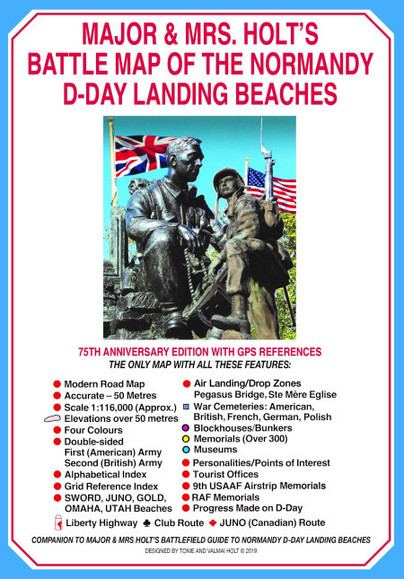
Map Review: Major & Mrs Holt’s Battle Map of the Normandy D-Day Landing Beaches

Major & Mrs Holt’s Battle Map of The Normandy D-Day Landing Beaches
An accompaniment to the best-selling guide to the area, now sold separately.

Showing the sea Assault formations for UTAH, OMAHA, GOLD, JUNO and SWORD Beaches and the air Assault Formations round Ste M Eglise and Pegasus Bridge; the D-Day Objectives and the Ground Gained on D-Day.
Imprint: Pen & Sword Military
ISBN: 9781526764942
Published: 28th October 2019
Price: £5.99

My Review

This map seems fairly detailed and would be useful for someone touring the D-Day Landing beaches if they’re searching for specific sites. No hotels, car parks etc. but the GPS references would make your tour to Normandy easier.

October to December 2019 Scheduled Reviews and Promo Posts

Since it’s almost October (what a thought!) I decided I’d better start being a bit more organised again and actually write one of my ‘scheduled reviews’ post so you know what’s coming up.

October

  • 7th
    • Review – Folklore
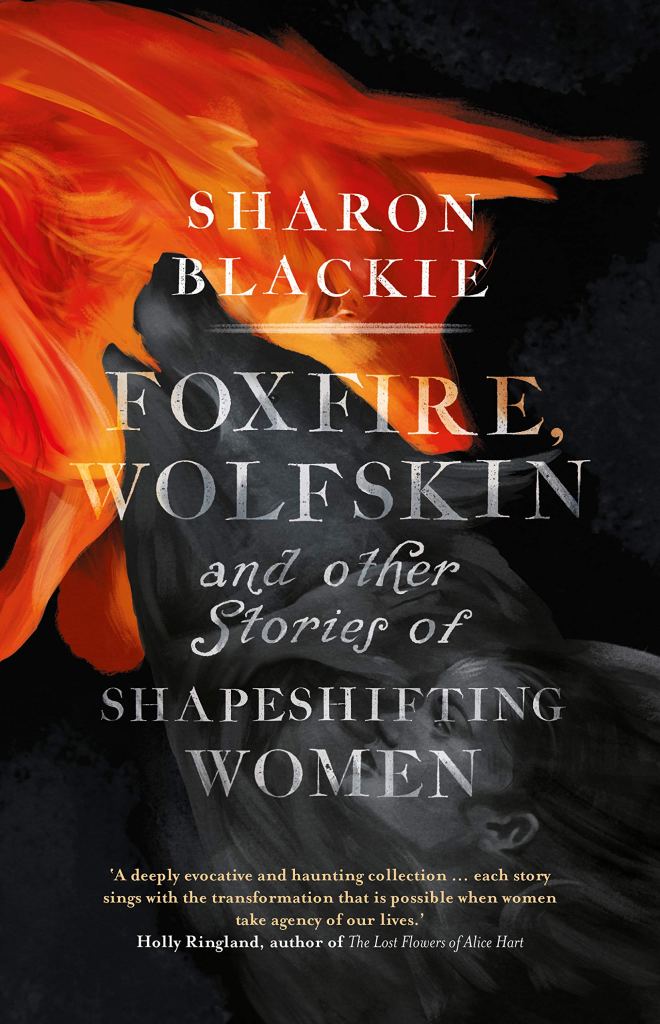
    • Foxfire, Wolfskin and Other Stories of Shapeshifting Women by Sharon Blackie
    • Organised by Random Things Tours
  • 10th
    • Review – Crime
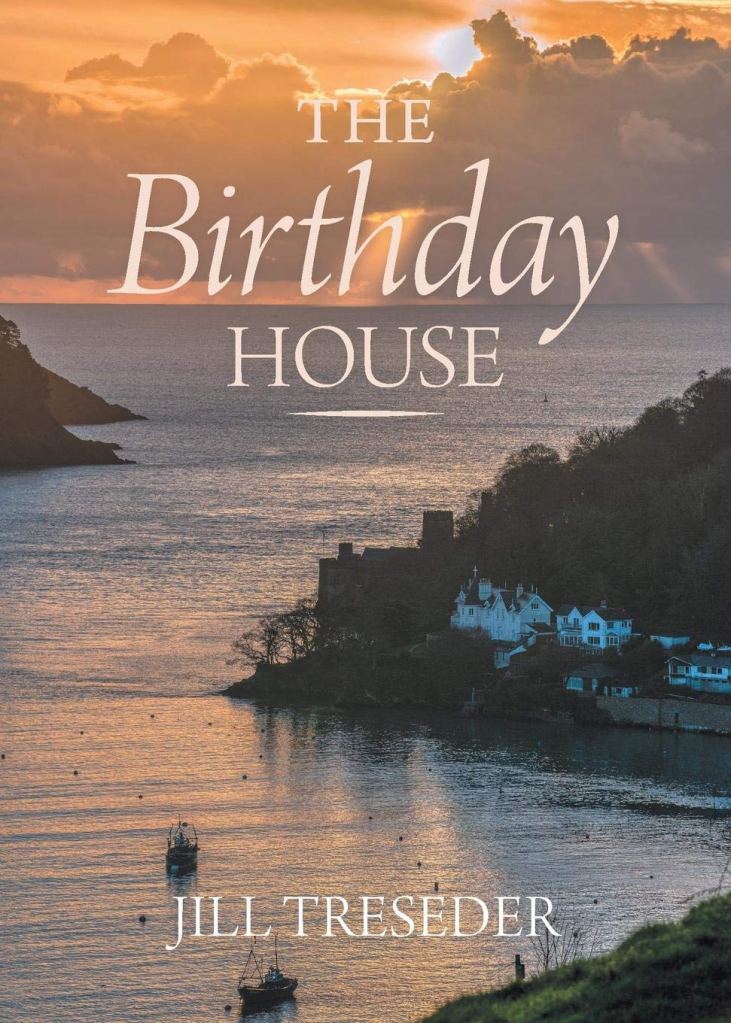
    • The Birthday House by Jill Treseder
    • Organised by Random Things Tours
  • 14th
    • Review – Crime
    • Sacrificing Starlight by David Pipe
    • Organised by Rachel’s Random Resources
  • 20th
    • ReviewCrime
    • Hallowed Ground by Paul Twivy
    • Organised by Rachel’s Random Resources
  • 22nd
    • Promo Post – Crime
    • The Wife’s Revenge by Deirdre Palmer
    • Organised by Rachel’s Random Resources
  • 23rd
    • Promo Post – YA
    • Darkest Hour by Rachel Churcher
    • Organised by Rachel’s Random Resources
  • 23rd
    • ReviewNon-Fiction
    • Charles and Ada: the computer’s most passionate partnership by James Essinger
    • Organised by Rachel’s Random Resources
  • 27th
    • ReviewCrime
    • Little Siberia by Antti Tuomainen
    • Organised by Orenda and Random Things Tours
  • 28th
    • Review – Children’s Picture Book
      • The Alphabet of Life by Fran Morris
      • Organised by Authoright

November

  • 2nd
    • Review – Non-Fiction
    • Stand Against Injustice by Michelle Diskin
    • Organised by Love Books Tours
  • 5th
    • Review – Crime
    • Demon’s Fire by Lee Cockburn
    • Organised by Authoright
  • 9th
    • Review – Crime/Sci Fi
    • Blue Gold by David Barker
    • Organised by Love Books Tours
  • 14th
    • Review – Non-Fiction
    • Frankie: the women who saved millions from thalidomide by James Essinger & Sandra Koutzenko
    • Organised by Rachel’s Random Resources
  • 18th
    • Excerpt –
    • The Devil’s Apprentice by Kenneth B Andersen
    • Organised by Love Books Tours
  • 23rd
    • Review – Crime
    • In the Wake by Helen Trevorrow
    • Organised by Love Books Tours
  • 26th
    • Review – Crime
    • Children of Fire by Paul CW Beatt
    • Organised by Rachel’s Random Resources

December

  • 1st
    • Review – Crime
    • Death Makes No Distinction: A Dan Foster Mystery by Lucienne Boyce
    • Organised by Rachel’s Random Resources
  • 4th
    • Promo Post – YA
    • Fighting Back by Rachel Churcher
    • Organised by Rachel’s Random Resources

As you can see October and November will be busy but I’m taking most of December and January off to read the 50+ books I’ve acquired over the summer for myself rather than doing blog tours. I also have a small mountain of books from Pen & Sword to review. At some point soon there will be a true crime review post. Maybe to tie in with Halloween. I don’t know. And now I must go, I’ve got three books to review next week, and I’m only partly through two of them and haven’t started the third. Plus I need to get some ideas written down for my fantasy novels. I’m making some pretty big edits to the already published books and will be changing the third book, but that’s another post altogether.

Review: ‘Magnificent Women and their revolutionary machines’, by Henrietta Heald #RandomThingsTours #Unbounders #MagnificentWomen

Blurb

‘Women have won their political independence. Now is the time for them to achieve their economic freedom too.’

This was the great rallying cry of the pioneers who, in 1919, created the Women’s Engineering Society. Spearheaded by Katharine and Rachel Parsons, a powerful mother and daughter duo, and Caroline Haslett, whose mission was to liberate women from domestic drudgery, it was the world’s first professional organisation dedicated to the campaign for women’s rights.

Magnificent Women and their Revolutionary Machines tells the stories of the women at the heart of this group – from their success in fanning the flames of a social revolution to their significant achievements in engineering and technology. It centres on the parallel but contrasting lives of the two main protagonists, Rachel Parsons and Caroline Haslett – one born to privilege and riches whose life ended in dramatic tragedy; the other who rose from humble roots to become the leading professional woman of her age and mistress of the thrilling new

Magnificent Women and their Revolutionary Machines tells the stories of the women at the heart of this group – from their success in fanning the flames of a social revolution to their significant achievements in engineering and technology. It centres on the parallel but contrasting lives of the two main protagonists, Rachel Parsons and Caroline Haslett – one born to privilege and riches whose life ended in dramatic tragedy; the other who rose from humble roots to become the leading professional woman of her age and mistress of the thrilling new power of the twentieth century: electricity.

In this fascinating book, acclaimed biographer Henrietta Heald also illuminates the era in which the society was founded. From the moment when women in Britain were allowed to vote for the first time, and to stand for Parliament, she charts the changing attitudes to women’s rights both in society and in the workplace.

Continue reading “Review: ‘Magnificent Women and their revolutionary machines’, by Henrietta Heald #RandomThingsTours #Unbounders #MagnificentWomen”

Review: ‘Lost Solace’, by Karl Drinkwater

Sometimes spaceships disappear with everyone on board – the Lost Ships. But sometimes they come back, strangely altered, derelict, and rumoured to be full of horrors.

Opal is on a mission. She’s been seeking something her whole life. Something she is willing to die for. And she thinks it might be on a Lost Ship.

Opal has stolen Clarissa, an experimental AI-controlled spaceship, from the military. Together they have tracked down a Lost Ship, in a lonely nebula far from colonised space.

The Lost Ship is falling into the gravity well of a neutron star, and will soon be truly lost … forever. Legends say the ships harbour death, but there’s no time for indecision.

Opal gears up to board it. She’s just one woman, entering an alien and lethal environment. But perhaps with the aid of Clarissa’s intelligence – and an armoured spacesuit – Opal may stand a chance.

Continue reading “Review: ‘Lost Solace’, by Karl Drinkwater”

Theakston’s Old Peculiar Crime Writing Festival, Harrogate: Day One

Entry 1: 14:45

After an early start, due to massive anxiety, I caught my first train. It was on time and everything. The TransPennine Express is reasonably comfortable, and from Grimsby to Scunthorpe I had 1st Class all to myself.

Yes, I travel first class when I can. I need the extra leg room and the quiet. TPExpress trains don’t have a quiet carriage and the standard class carriages can turn into a scrum on a bad day.

So, I got to Doncaster on time and made use of the LNER 1st class lounge to get a cuppa and water. I’ve never been in there before, and since I’m getting the Northern rattletrap on the return journey I won’t be again, at least not this time. It was very comfortable. The train was late and I had to go across to platform 8 but it’s a warm, muggy day so sitting outside wasn’t too horrendous. I drank my hot chocolate – I filled up my travel cup while I was in the 1st class lounge – and waited, wrote some Twitter poetry about being anxious and tried to read some more of The Quaker, but it just wasn’t doing anything for me (see review post).

The LNER train was comfortable, again 1st class. It was better than the TPExpress, more leg room and a free drink, but the carriage was bigger and there were more people. It was the London King’s Cross to Leeds train so I was joining it late. Definitely impressed, and should I make any trips to London. I’m going to try to book far enough in advance that I can afford to go first class. I had a decent chair and table to myself. Not a big table, but better than the ones on the TPExpress.

Having got to Leeds late I missed my connection to Harrogate, but another one was due at 1315. I got that one. Northern have definitely improved their carriages. It was much better than the almost a tram I’ve been on on that route before.

I got to Harrogate about 1420, and after a taxi ride to the Premier Inn, I got here at 1430. To find that the computer system had crashed and I couldn’t check in yet. I’m in the bar using my portable wifi to write this. I’ll update later.


Entry 2: 21:28

Well, I’m back at my hotel after my first foray to The Old Swan.

It was terrifying. I didn’t know anyone. there were crowds, it was noisy. I went to the reception tent for help. Got a programme so I can plan my weekend and because I mentioned getting PIP they gave me an access pass so I could get in first for events. It sort of helped, but I wandered around confused a lot and ended up in the short queue walking in tight little circles like I normally do when I’m heading into a meltdown.

I’ve come back to my hotel rather than network and drink with everyone else because I’m in pain. Can’t decide if it’s from too much walking or anxiety. I’m really not up to socialising tonight, maybe I’ll try again tomorrow?

But what happened at the awards, I hear you ask.

There were speeches from one of the organisers, I didn’t catch her name, from the sponsor’s representative, Simon Theakston, and from the award presenter Mark Lawson. They were all very funny.

Mr Lawson invited all the nominees up on to the stage one at a time to talk about their books. They were also amusing. Boris Johnson kept getting a mention.

Ian Rankin presented the award for outstanding contribution to crime writing to James Patterson. He was marvellously hilarious.

Then, Simon Theakston opened the golden envelope, and announced the winner.

The winner of the Theakston’s Old Peculiar Crime Novel of the Year 2019 went to Steven Cavenagh, for Thirteen.

Now, if you’ve read my reviews of the shortlist books, you’ll know I struggled with this one. Courtroom thrillers just aren’t my thing, but the judges liked it so who’m I to disagree. I’m only a little book blogger.

Oh and for people who are in Harrogate, I’m the big, fat woman who wears headphones all the time.