Last night I attended the BFS Awards, and thought I’d share the winners. I am sure there are already lists out there and the ceremony was live streamed.
The awards were hosted by Stew Hotston. The awards aren’t ready yet (supply chain issues) so the are replaced by framed prints and will be delivered eventually.
The first award was the BFS Short Story competition.
Presented by Stew Hotston
Catherine Rose Davis
P = f/A, by Hannah ?
Samuel, by Very Bruce
Art Competition
Presented by Jenni Coutts
Fungus Night, by ?
Night Witch, by Sophie Hill
Survival, by Tara Bush
Best Collection
Presented by Shona Bond
Jackel, Jackel: Tales if the Dark and Fantastic, by Tobi Ogundiran (Undertow Publications)
Best Novella
Presented by Nick Wells
The Last Dragoners of Bowbazar, by Indra Das (Subterranean Press)
Best Non-Fiction
Presented by Pete Sutton
Writing the Future, eds. Dan Coxon and Richard V Hirst (Dead Ink)
Best short fiction
Presented by Priya Sharma
The Brazen Head of Westinghouse, by Tim Major (IZ Digital)
Best Anthology
Presented by Robin Duncan
Out There Screaming: An Anthology of New Black Horror, ed. Jordan Peele (Picador)
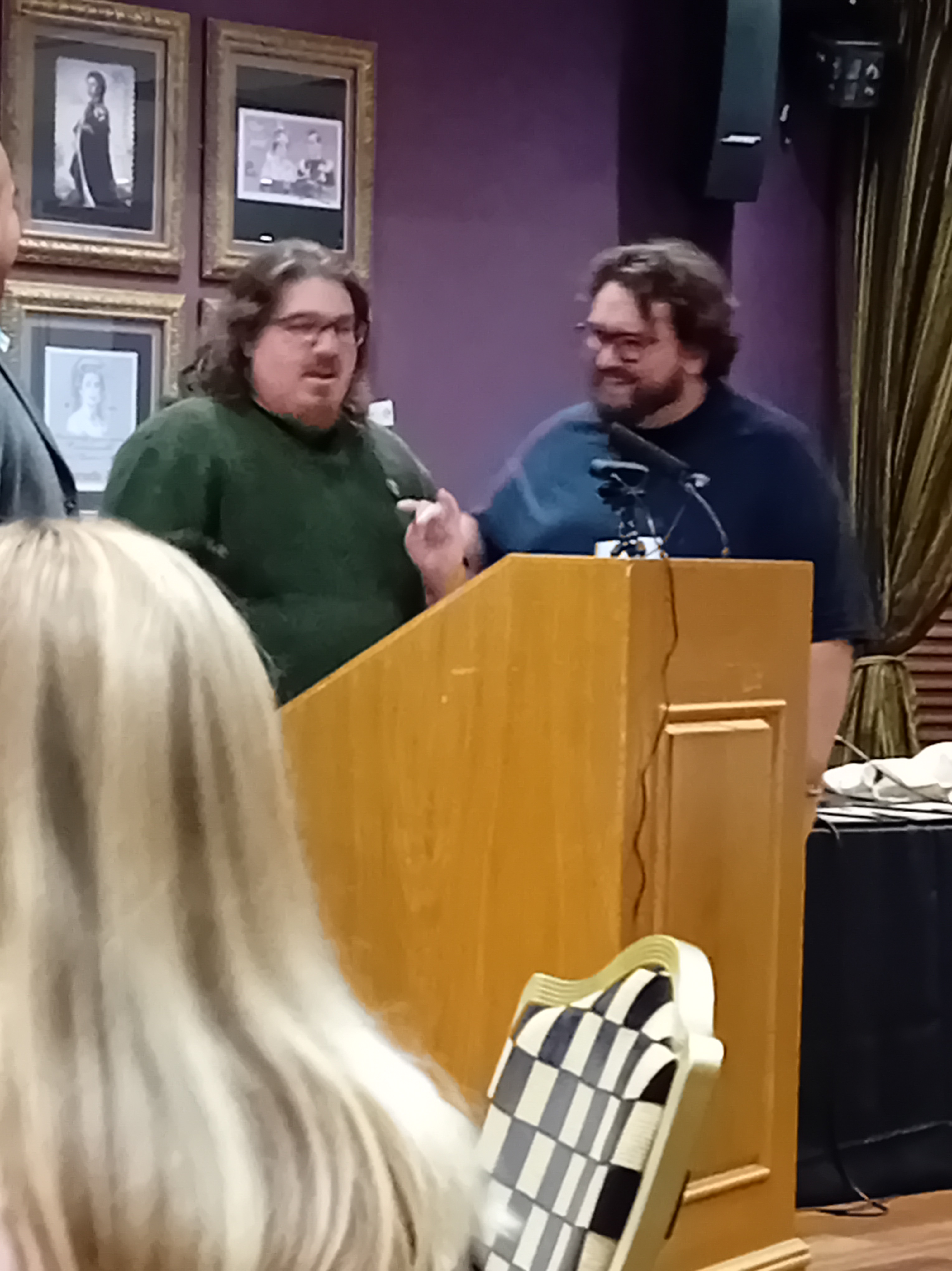
The Tiny Bookcase, by Nico Rogers and Ben Holroyd-Dell
(Nico’s speech was very funny!)
Best Independent Press
Presented by Bella Pagan
Flame Tree Press, collected by Nick Wells on behalf of everyone at Flame Tree
Sydney J Bounds Award for Best Newcomer
Presented by Anna Smith Spark
Teika Marija Smits, for “Umbiblical” (Newcon Press), and “Waterlore” (Black Shuck Books)
Best Magazine/Periodical
Presented by Jenni Coutts
Shoreline of Infinity
The August Derleth Award for Best Horror Novel
Presented by Ramsey Campbell
Don’t Fear the Reaper, by Stephen Graham Jones (Titan)
Robert Holdstock Award for Best Fantasy Novel
Presented by Stephan Aryan
Talonsister, by Jen Williams (Titan)
Charles Edward Wagner Award
Presented to Shona Kinsella
Ramsey Campbell
Legends of FantasyCon
Presented by Karen Fishwick
Debbie Bennett
You don’t have to, but if you want to, you can make a donation below. It keeps me in pens, books, and allows me to travel to events like FantasyCon. I’m currently saving to got to World Fantasy Convention 2025. It’s in Brighton, that place is expensive!
One-Time
Monthly
Yearly
Make a one-time donation – If you want. No pressure.
Make a monthly donation
Make a yearly donation
Choose an amount
£5.00
£15.00
£100.00
£5.00
£15.00
£100.00
£5.00
£15.00
£100.00
Or enter a custom amount
£
Your contribution is appreciated. I put a lot of effort into reading and reviewing books for readers.
It’s about half six on Sunday afternoon. The last panel ended almost three hours ago. I’ve had a nap and finally have some time to write about my experience of FantasyCon 2024.
Locus Recommended Reading List 2023 BSFA for Best Non-Fiction, Shortlist 2024 BFS for Best Non-Fiction, Shortlist 2024
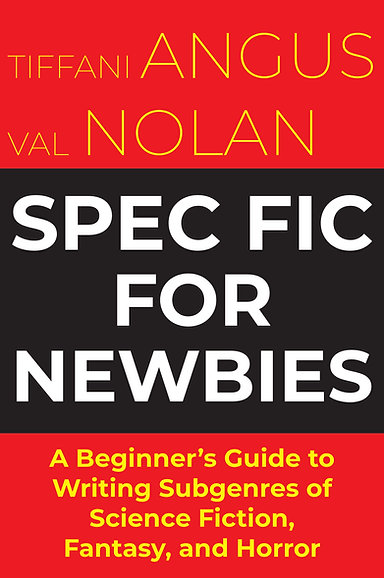
Spec Fic For Newbies: A Beginner's Guide to Writing Subgenres of Science Fiction, Fantasy, and Horror. Tiffani Angus (Ph.D.) and Val Nolan (Ph.D.) met at the 2009 Clarion Writers’ Workshop in California and since then have collaborated many times as fans and scholars on panels for SFF conventions and writing retreats.Working together on this book and combining their experience as SFF writers and as university lecturers in Creative Writing and Literature made perfect sense!
Every year they see new students who want to write SFF/Horror but have never tried the genres, have tried but found themselves floundering, or, worse, have been discouraged by those who tell them Science Fiction, Fantasy, and Horror are somehow not “real” literature.
This book is for all those future Science Fiction, Fantasy, and Horror writers. Tiffani and Val are approaching these three exciting fields by breaking them down into bite-sized subgenres with a fun, open, and contemporary approach.Each chapter contains 10 subgenres or tropes, with a quick and nerdy history of each derived from classroom teaching practices, along with a list of potential pitfalls, a description of why it’s fun to write in these subgenres, as well as activities for new writers to try out and to get them started!
My Review
I bought this book at FantasyCon 2023. I’ve got quite a collection of Academia Lunare books now, mostly genre stuff and Tolkien books. Look at the Luna Press Publishing website, under non-fiction and academic, to get a sense of the books I mean. Most of the are small, A6 size, usually with monographs on a uniting subject matter.
This book is different.
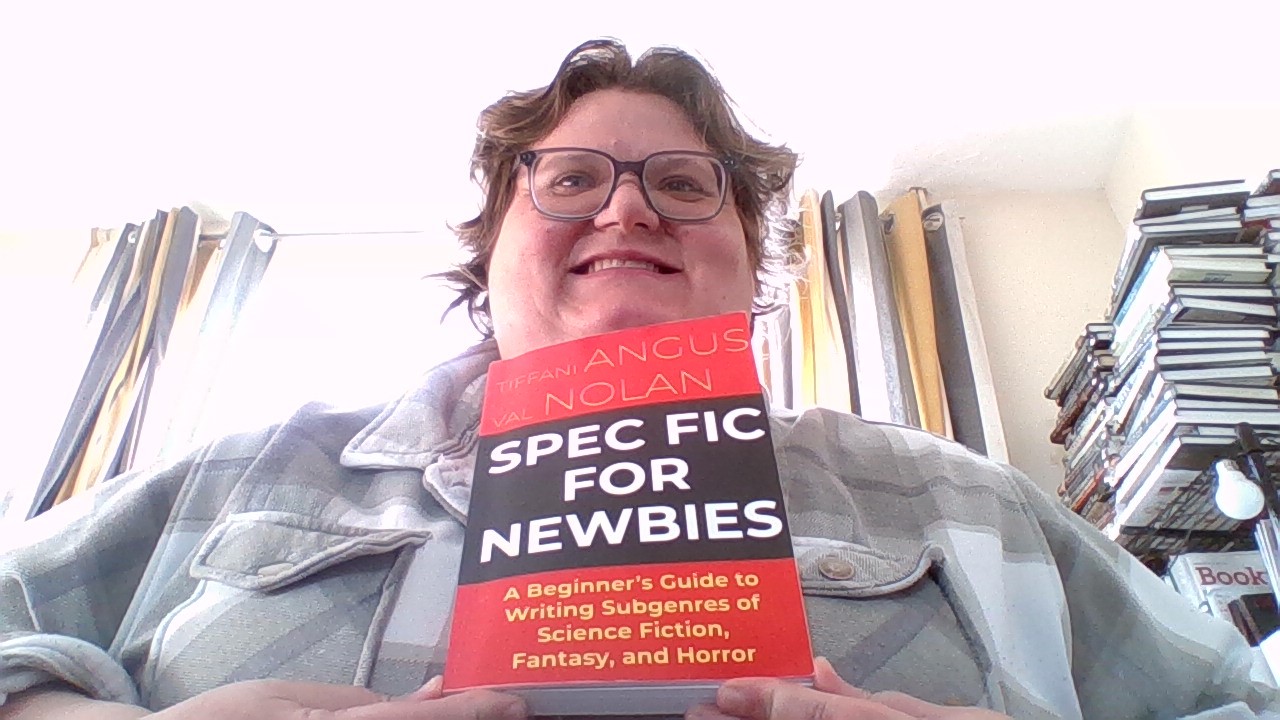
Yes, that’s me. I got the laptop camera to work properly. Yes, that’s the Pen & Sword TBR pile behind me.
It’s a guide to the sub-genres of SFFH, with two writing exercises for each sub-genre. I’m not exactly a ‘newbie’, but I don’t know all of the sub-genres, and it was interesting to read about the ones they included.
I enjoyed to quick tour and chatty writing style of this book, especially the genre and sub-genre histories. This book is informed by years of teaching by both authors, and it shows. They’ve clearly come across the same mistakes time and time again, but the enjoyment of both spec fic and teaching also really shines through. I could easily devour a volume on each sub-genre by these authors, but I’m weird like that. I like depth and breadth. I don’t think that’s a criticism of this book, but if you’re expecting in-depth discussions of the nuances of each sub-genre you’re not going to get that. The book provides broad overviews of each sub-genre with reference to specific tropes or movements within the sub-genre.
I enjoyed the tour of 30 sub-genres and the writing left me want more on some subject and no more about others (splatterpunk for example, is really not my thing). There’s enough to get you started on any sub-genre, and that’s what this book is for.
If you’re looking for something to read in a specific sub-genre, I think you could flip to the section in this book and find a place to start in a new sub-genre, because the authors provide lots of examples of works – both film and literary – that sit in a sub-genre.
There are also lots of references if you want to follow up on a particular statement or idea. I like references. More references and access to a database of papers, please. Because I don’t have enough to read…
I found the writing exercises prompted me to come up with new ideas and think it’ll be useful when I’m struggling to put an idea down on paper. I’ve got an idea about zombies and cruise ships, but it’s not going anywhere yet… Anyway, the activities make up a small section of each sub-genre entry, but the information packed in before them informs the activities. I think for a writer at any stage of their career, the activities will prompt the brain to try something new. If you’re a new writer they’ll give you a place to start, and for experienced writers they’re a reminder and refresher when your brain is fried. The writing advice found throughout the text is useful and explained well.
While I read this book from start to finish, I think it could be a good ‘dipping’ book, for those having a go at a new genre or sub-genre. There’s always something new to try – nobody could have written in all thirty of the sub-genres in this book – so dipping in and out as the mood takes you can give the writer practice in a variety of stories.
I have already recommended this book to a very new writer (my nibbling is doing creative writing as part of their OU Open Degree – I’m so proud!) and will be buying volume 2 at FantasyCon in three weeks – Francesca, make sure there’s a copy put aside for me, please!
I mentioned on my book Instagram that I was reading this book and Dr Angus kindly told me to contact her if I need any PhD advice, which I thought was lovely.
Tiffani Angus signed the book. It was signed when I bought it, so Tiffani must have been at FantasyCon last year.
By Debbie Blake Imprint: Pen & Sword History Pages: 232 Illustrations: 25 mono ISBN: 9781399094511 Published: 11th November 2022
Description
The Victorian belief that women were the ‘weaker sex’ who were expected to devote themselves entirely to family life, made it almost inconceivable that they could ever be capable of committing murder. What drove a woman to murder her husband, lover or even her own child? Were they tragic, mad or just plain evil?
Using various sources including court records, newspaper accounts and letters, this book explores some of the most notorious murder cases committed by seven women in nineteenth century Britain and America. It delves into each of the women’s lives, the circumstances that led to their crimes, their committal and trial and the various reasons why they resorted to murder: the fear of destitution led Mary Ann Brough to murder her own children; desperation to keep her job drove Sarah Drake to her crime. Money was the motive in the case of Mary Ann Cotton, who is believed to have poisoned as many as twenty-one people. Kate Bender lured her unsuspecting victims to their death in ‘The Slaughter Pen’ before stripping them of their valuables; Kate Webster’s temper got the better of her when she brutally murdered and decapitated her employer; nurse Jane Toppan admitted she derived sexual pleasure from watching her victims die slowly and Lizzie Borden was suspected of murdering her father and stepmother with an axe, so that she could live on the affluent area known as ‘the hill’ in Fall River, Massachusetts.
My Review
Thanks to Rosie Crofts at Pen & Sword for sending me this book almost two years ago now. I’ve been busy and I’ve finally got around to reading my Pen & Sword books. I still have a couple of hundred to work through, but I’ll get there eventually. My TBR pile continues to grow, as always.
This book covers the lives of seven well-known women who committed murder in the 19th century. I’ve heard of all of the women, and I’ve even written reviews of books about some of them.
The book is very competently written, covering the lives, murders and deaths of these women. There is little to no sensationalism and the writer draws on sources from the time, especially newspaper articles.
There is little exploration of the social rules and cultural beliefs surrounding each of the women. Why were some of the women found not guilty but socially punished, while some were found guilty and hanged? Why did some feel the need to kill their children? What prevented them from making other choices? Social class and cultural beliefs about a woman’s place and ‘natural character’ are barely mentioned and not explored.
This book is a good, basic introduction to these women and their crimes. You need to start somewhere, and this book has a good bibliography if you find yourself interested in one or other of the women and want to delve further.
About Debbie Blake
Debbie Blake is a freelance writer whose historical articles have been published in various publications in the UK, Ireland, Canada, and the United States. She has written articles for the internet and runs two blogs Women’s History Bites and The Wee History Blog. She is the author of Daughters of Ireland: Pioneering Irish Women and The Little Book of Tipperary, published by The History Press.
Format: 416 pages, Paperback Published: May 27, 2021 by Orion Publishing ISBN: 9781473231160 (ISBN10: 1473231167)
Kinch Na Shannack owes the Takers Guild a small fortune for his education as a thief, which includes (but is not limited to) lock-picking, knife-fighting, wall-scaling, fall-breaking, lie-weaving, trap-making, plus a few small magics. His debt has driven him to lie in wait by the old forest road, planning to rob the next traveler that crosses his path.
But today, Kinch Na Shannack has picked the wrong mark.
Galva is a knight, a survivor of the brutal goblin wars, and handmaiden of the goddess of death. She is searching for her queen, missing since a distant northern city fell to giants.
Unsuccessful in his robbery and lucky to escape with his life, Kinch now finds his fate entangled with Galva’s. Common enemies and uncommon dangers force thief and knight on an epic journey where goblins hunger for human flesh, krakens hunt in dark waters, and honor is a luxury few can afford.
My Review
I appear to be late to the party on this one. I only realised this book existed in June because The Broken Binding sent me an email about a special edition set they’re doing of The Blacktongue Thief and The Daughters’ War, the first book’s stand-alone prequal about Galva. I didn’t order them in the end because I’m trying to save money for FantasyCon in October, but I did like the sound of the books, so I ordered a paperback copy of this book, and I have a paperback of The Daughters’ War on pre-order. It’ll be out next March.
Kinch is a thief who owes his Guild money, so they send him on a mission. With a blind cat. Who has swallowed an assassin. Don’t ask, it makes sense in context. Galva is a veteran of the goblin wars and is heading west to find her king’s niece, heir to the throne, lost in the giant-ravaged capital of her husband’s kingdom. Galva needs help, and Kinch has no choice, so off they go. Along the way they pick up a witchlet, who turns out to be more than anyone expected; an old neighbour of Kinch’s who resents Kinch for going to be a thief instead of a soldier; and Galva’s old sword master, who is faster than lightning.
They also fight a kraken, goblins, and giants, meet the powerful magician who created the war ravens that won the goblin wars, (and who might be Kinch’s father), after which Kinch may or may not have lost a bet with a criminal boss that resulted in him going to bed with said criminal boss in the city of Hrava (Kinch isn’t into men, but needs must when a queen needs rescuing).
In the mountains they find their answers, and more questions, before Galva and her queen leads an army riding the only stallion in the world, and Kinch heads further west, running from his Guild with the weapons that could potentially defeat them for good.
Other stuff happens, but I’ve summarised the salient points. Hopefully, I haven’t given away too much.
I enjoyed this book, Kinch is a funny narrator, and as the story is told from his perspective he has to be to keep things interesting. First -person limited and be quite a difficult point of view, but Buehlman does it well. the story is told in chronological order, but Kinch gives us the important bits of his memories and his reactions, missing the dull days of traveling where nothing happens. He includes the odd ballad or piece of history to locate us in the world he’s traveling through and add depth.
Kinch falls in love with Norrigal, a witchlet, great niece of Deadlegs, a famous witch who has to cut off the legs of the dead because her own have died. The relationship is short but intense and I was quite lost at the end of the book. I want to know what happens to them, even changed as they are. Norrigal utterly entrances Kinch and his falling in love is described delightfully, although not graphically.
The other characters, seen from Kinch’s perspective, aren’t as solid, but then that’s one of the difficulties of writing 1st person limited. We don’t get the interiority of other characters, only what they do and say in the view of the narrator and the narrator’s thoughts about them. Kinch develops a lot of respect for Galva and his shock at certain aspects of her character and physicality helps flesh her out. I definitely want to know what happens next for Galva, and also how she came to be a warrior of the Death Goddess. So, I need to read The Daughters’ War, and hopefully there will be a follow up, with events after The Blacktongue Thief as well.
I hope the giants find out they were tricked by the Takers too, and help bring down the Guild. We only really get to know one giant, Misfa, at the end, who tells the humans what happened, and helps them defeat the assassin in the cat (again, it makes sense in context) but Kinch hints, when he first encounters giants in the city of Hrava, that he knows more about giants at the time he’s writing his narrative than he did at that time, so presumably, at a later date, after the narrative in the novel, he spends time around Misfa’s people and learns about their culture? I want to know what they do with all those horses tattooed on to her.
The magical systems were really well thought out, clearly drawing on folk traditions, like the power of iron to break a spell, or with rules found in ttrpg (like you can only use a spell once and it only lasts a certain amount of time) but were also original enough to be entertaining. The hand tattooed on Kinch’s cheek which can only be seen in firelight, but allows someone to slap him without retaliation in return for an alcoholic drink, made me laugh. Especially when Norrigal made some alterations of her own.
The descriptions of places and people are very memorable, from the upside down tower of Deadlegs, to the cities they travel through and the creatures they meet, to the fights with other humans, goblins and giants. They’re all very vivid.
The underlying conspiracy is slowly revealed, with some dropped hints and interesting consequences, and sets the main characters on their future paths. It leaves the story open ended, the author could leave the novel where it is, as a stand-alone work, but I hope he doesn’t. I want to see how Kinch and Deadlegs reveal the conspiracy to the world and the fall out for everyone, what the giants do after conquering Oustrim, and how Galva and her queen fight the false king in Ispanthia.
This is clearly a world based on a pseudo-Renaissance Europe, and written by someone who’s played a bit of D&D or other fantasy table-top role-playing games (ttrpg). It has the structure you’d expect, with magical artifacts appearing that might or might not be useful later, random unexpected events that throw off the expected narrative, and traps everywhere.
Criticisms: The pseudo-Irish got a bit much at times, almost parodying Irish accents and turns of phrase. The same with Galva and the Spanth – they’re patterned on the people of the Italian or Greek regions of the Mediterranean – black hair, fanatic cleanliness, wine, olive oil, and garlic. I get that the author is using real world inspirations to people his secondary world, but it was a bit much. Felt like he was taking the piss, at times, honestly, or was working from caricatures rather than reality.
A fun bit of fantasy and an enjoyable world I’d happily come back to for more adventures.
Format: 176 pages, Hardcover Published: May 28, 2024 by Tordotcom ISBN: 9781250290311 (ISBN10: 1250290317) Language: English
Description
Kill the dragon. Find the blade. Reclaim her honour.
It’s that, or end up like countless knights before her, as a puddle of gore and molten armor.
Maddileh is a knight. There aren’t many women in her line of work, and it often feels like the sneering and contempt from her peers is harder to stomach than the actual dragon slaying. But she’s a knight, and made of sterner stuff.
A minor infraction forces her to redeem her honor in the most dramatic way possible, she must retrieve the fabled Fireborne Blade from its keeper, legendary dragon the White Lady, or die trying. If history tells us anything, it’s that “die trying” is where to wager your coin.
Maddileh’s tale contains a rich history of dragons, ill-fated knights, scheming squires, and sapphic love, with deceptions and double-crosses that will keep you guessing right up to its dramatic conclusion. Ultimately, The Fireborne Blade is about the roles we refuse to accept, and of the place we make for ourselves in the world.
My Review
Bond builds a world in very few words, with dragons that possess unique abilities and melt on death. It’s a traditional knights killing dragons story with a few twists and horror elements.
The characters come to life in a few words and the twist is unexpected. The ending is quite dramatic and leads into the next novella. The use of extracts from archives of other dragon slaying and magical adventures flesh out the world with extra details, so that the reader discovers the social structure of the world and Maddileh’s place in it. Through her interactions with mages we understand the internal conflicts of both Maddileh herself and the magical order.
There are hints of a wider world and the future that suggests more novellas will follow and I look forward to reading them.
Bit of back story. A group of authors in Northern England and Scotland got sick of all the literary events being in London and decided to organise their own it Leeds. They arranged it with Waterstones and called the event ‘It’s Strange Up North’. 18 authors agreed to attend and the notifications went out.
I happen to be on the British Fantasy Society discord and heard about it, since one of the organisers was in the Yorkshire & Humber channel on the BFS Discord. I bought my ticket ASAP and waited. I had planned to go to Leeds for the entire weekend, but hotels are ridiculously expensive. It is my birthday weekend, or at least it’s the weekend closest to my birthday, so theoretically I could have had a whole weekend away but the cat didn’t agree.
Yesterday, I travelled to Leeds by train, went to Hold Fast Books after a ride on the water taxi, then meandered around the Armouries shop, and bought a dragon, got another water taxi back to the Granary Dock and made my way through the station and up Albion Street, stopping in for a pizza and pavlova at The New Conservatory in Albion Place, before heading just a bit further up Albion Street, to Waterstones.
It was packed! They sold out the event! It was catered. Or more precisely, the organisers had gone out and bought party food and told everyone to eat up because they didn’t want it to go to waste. I struggled, honestly. I wasn’t too fussed by the food, and there were too many people corralled into too small an area until the shop shut at 6.30pm. Once it shut, we spread out and took over all three floors.
I met Laura Lam, author of Dragonfall, Goldilocks, and several other books. I bought the paperback of Dragonfall and Laura signed it for me. We had a chat about random things, like epidermoid cysts, and the publishing industry.
I met Sunyi Dean, and her dog. She signed a paperback copy of The Bookeaters for me.
I met Stephan Aryan and got an early copy of The Blood Dimmed Tide. He signed it for me. Stephan Aryan is very tall. I got the first book in this duology, The Judas Blossom, last year at FantasyCon, and he signed that one there. I’m actually going to read both of them at some point.
I bought a copy of The Bone Ships, by R.J. Barker. He was supposed to be there but couldn’t, so sent signed book plates.
I met Charlotte Bond and got a copy of her debut novella, The Fireborne Blade. She was handing out sweets and bookmarks, so I’m not complaining. I read the book on my way home last night and a review will follow shortly.
I met Sarah Brooks, who signed a copy of The Cautions Traveller’s Guide to the Wastelands, her debut. It isn’t supposed to be out yet.
I picked up a copy of Ascension from Nicholas Binge. I think it’s the only sci-fi I bought.
And finally, Snowblooded, by Emma Sterner-Radley, a fantasy set in 19th century Sweden.
I have book marks for some of them, and in the goody bag I received an ARC of We Are All Ghosts In The Forest, by Lorraine Wilson and a pin badge for Snowblooded.
There are pictures on my Instagram.
P.S. Did you know the Royal Armouries shop has dragons!?
I bought a Suki brand dragon called Thunder. He is cute and has joined the dragons of my dragon shelf.
Genre – fantasy > mythology > magical realism ● ISBN paperback – 978-1-78758-908-7 ● ISBN ebook – 978-1-78758-910-0 ● Pricing [USD] $16.95 (PB) / $4.99 (EB) ● Pricing [GBP] £12.95 (PB) / £4.95 (EB) ● Releases 14 May 2024 ● Published by Flame Tree Press ● Distributed by Hachette UK
SYNOPSIS
A world where petals are currency and flowers are magic.
A man battling a curse of eternal old age. A girl who can be his boon. But it’s not all tulips and roses. There are also nettles and thorns. Where Delights persist, Sorrow must follow.
In the city of Sirvassa, where petals are currency and flowers are magic, the Caretaker tends to the Garden of Delights. He imparts temporary magical abilities to the citizens of Sirvassa, while battling a curse of eternal old age.
No Delight could uplift his curse, and so he must seek out a mythical figure. A god.
When a Delight allows a young girl the ability to change reality, the Caretaker believes he’s at the end of his search. But soon a magical rot takes root in his Garden, and the Caretaker must join forces with the girl and stop it from spreading.
My Review
Thanks to the publisher for sending me a copy of this book and to Anne Cater for organising this blog tour.
The blurb doesn’t do this book justice. Also, the Caretaker doesn’t realise what Iyena could do, and who she was, until after she cures the rot and dies.
Okay, that’s a bit of a spoiler. Iyena dies and is reborn, and it’s magnificent!
We start with an epic battle between a Florral and a Champion, the semi-divine magicians of the Inishtis and Abhadis, two tribes of humans who have been fighting forever. The Inishtis use floral technology; the Abhadis use metal technology. In the centuries that follow the epic battle, two cities rise: Sirvassa, home to floral technology, a stronghold of the Inishtis, a city of flowers and petal rains, and the Garden of Delights, overseen by the Caretaker, one of the few remaining Florrals; and Alderra, industrial capital of the Three Realms, the Abhadis stronghold, a place of flying machines and railways, a place where the Champions still have a home, a city they protect.
The Caretaker, protector of the Garden of Delights, and Sirvassa in general. He gives Delights made from the flowers in his Garden to the people of Sirvassa, giving them a temporary taste of the magic Florrals used at will. He is worried about developments in the city, something is going on, especially after Ministry officers from Alderra arrive and the Mayor of Sirvassa becomes weak. The Caretaker is dealing with his own problems. His experiments in curing the curse have made things worse.
Meanwhile, a girl, 15, arrives in Sirvassa, with her father. Iyena is the daughter of an Abhadi father and and Inishti mother, and born in Alderra. Separated, Iyena has no idea where her mother is or why she left her with her father, but immediately feels at home in Sirvassa, her mother’s home city. Her father is a stern, distant man, who works for the Ministry of Miscellany in Alderra, has brought them to stay with Maani-Ba, her mother’s sister, ostensibly to see about trading agreements between Sivassa and Alderra.
Iyena goes to school, and is enchanted by everything, from learning from books rather than oral learning, to the beasts that pull the carriages, to the fluttering ribbons that cross the city above the roofs, to a boy named Trehan. Making friends and learning about this new society, her maternal inheritance, brings her joy. She learns about the Garden of Delights after Trehan shows off his current Delight. With some forgery, she gets permission to visit the Garden and receives a Delight.
After that it all gets a bit political; there are explosions, sudden changes to the school curriculum and teaching, a fancy dinner at the mayor’s bungalow, fights between the Caretaker and Champions, death and rebirth, freedom and battles to maintain the cultural diversity of the Three Realms.
I was enchanted by this novel. I was about two thirds through it when I got a sense of terrible dread, that Sirvassa would be destroyed by the Minister’s plots; I had to put the book down because I couldn’t face the thought. After a couple of days I went back to the book, because I had to know what happened next. I think I struggled because the sneaky colonialism of Sirvassa by the Alderrans reminded me too much of events in the real world. The wholesale changing of school curricula, the re-writing of history, trying to co-opt Sirvassan cultural traditions, and the ‘if we can’t have it, destroy it’ attitude, remind me of historical colonialism and current colonial states. We’re bearing witness to several such colonial events right now, with all the attendant propaganda, murder and re-writing of history. Anyone with empathy would feel dread at reading it in fiction, when we’re already bearing witness in the real world.
The novel has a much happier ending than the consequences of historical colonialism and the realistic consequences of current colonial efforts. Any Florrals around who can save the world?
The writing is quite lyrical, and compelling reading. The descriptions are beautiful and colourful.
The relationship between the Caretaker and Trulio is paternal, and the way it ends is devastating. The confusing relationship Iyena has with her parents, her distant but present father, and absent but close in memory mother, especially after she meets her aunts, prompt many of Iyena’s actions. She’s pushed from one to the other, by the actions of her father and his friends. I particularly found the relationship between Iyena and Maani-Ba touching. There’s a lot of love and care between them, and secrets. Maani-Ba stands by Iyena when she goes through her change of state, and is instrumental in the rebellion after Iyena becomes afraid of her own abilities. The character development of the main characters is gentle but present.
The touches of Indian culture and inspired mythology, the contrast between the industrial Alderra and the floral Sivassa, the hints of a greater world beyond, really bring the world building to life.
Highly recommended.
ABOUT THE AUTHOR
Amal Singh is a writer of science fiction and fantasy from Mumbai, India. He has numerous short story publications to his credit, in venues such as Clarkesworld, F&SF, Apex, Fantasy, among others. His story What is Mercy?, published in Fantasy Magazine, was longlisted for the BSFA Award in 2021. While he has held jobs of IT Analyst, Database Administration, and SOP consultancy in the past, he is now fortunate enough to do something that involves full-time writing. By day, he juggles screenwriting, audio-writing, and Creative Production, working on web-shows and movies. In his spare time, he enjoys cooking and running. amalsingh.substack.com / X: @Jerun_ont
FLAME TREE PRESS is the imprint of long-standing independent Flame Tree Publishing dedicated to full-length original fiction in the horror and suspense, science fiction & fantasy, and crime / mystery / thriller categories. The list brings together fantastic new authors and the more established; the award winners, and exciting, original voices. Learn more about Flame Tree Press at http://www.flametreepress.com and connect on social media @FlameTreePress
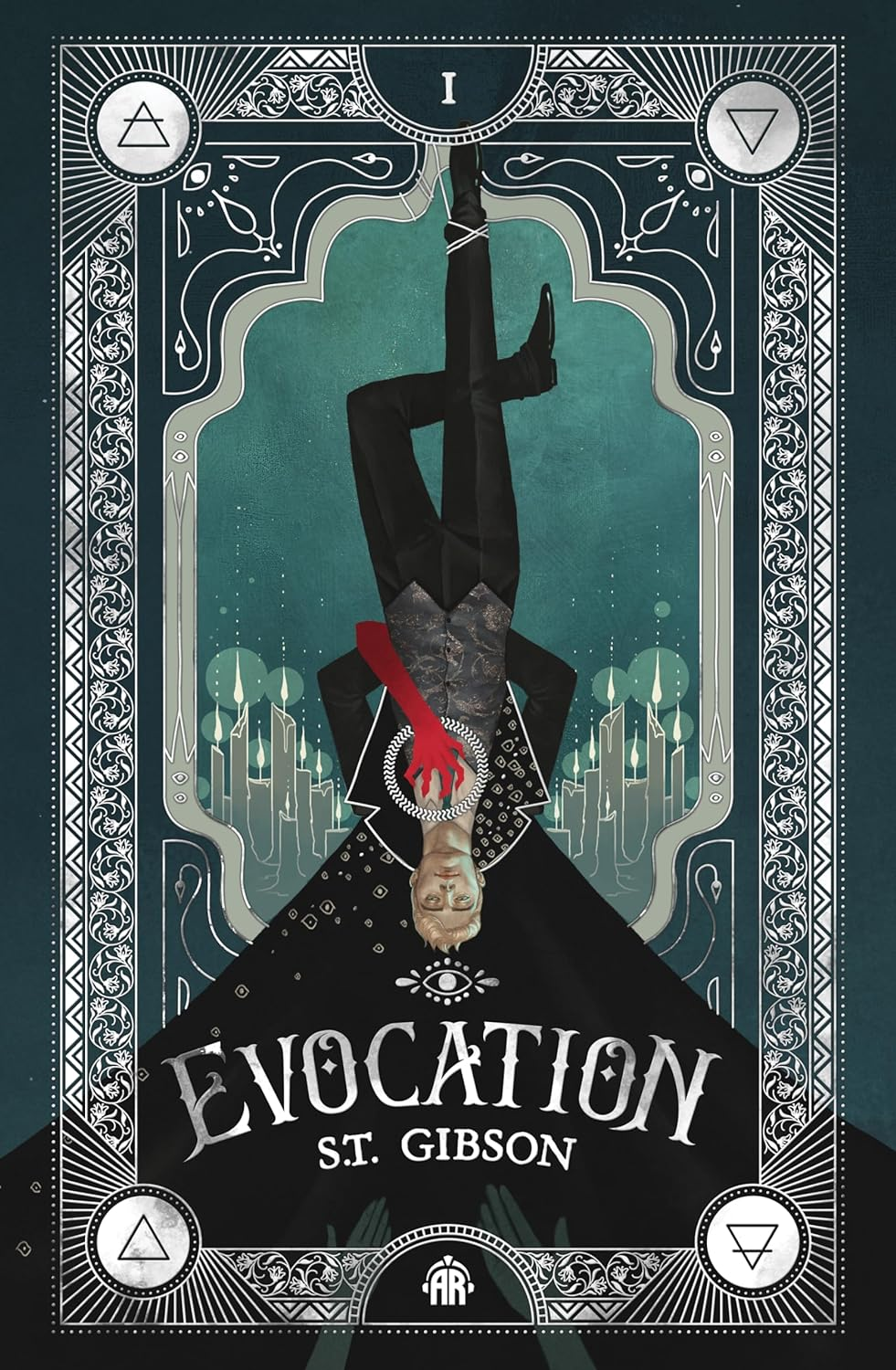
Format: 400 pages, Hardcover Expected publication: May 28, 2024 by Angry Robot Books ISBN: 9781915202680 (ISBN10: 191520268X) Language: English
Description
The Devil knows your name, David Aristarkhov.
As a teen, David Aristarkhov was a psychic prodigy, operating under the shadow of his oppressive occultist father. Now, years after his father’s death and rapidly approaching his thirtieth birthday, he is content with the high-powered life he’s curated as a Boston attorney, moonlighting as a powerful medium for his secret society.
But with power comes a price, and the Devil has come to collect on an ancestral deal. David’s days are numbered, and death looms at his door.
Reluctantly, he reaches out to the only person he’s ever trusted, his ex-boyfriend and secret Society rival Rhys, for help. However, the only way to get to Rhys is through his wife, Moira. Thrust into each other’s care, emotions once buried deep resurface, and the trio race to figure out their feelings for one another before the Devil steals David away for good…
The first book in a spellbinding and vibrant new series from The Sunday Times bestselling author of A Dowry of Blood.
My Review
I have a limited edition proof copy of this book, sent by the publisher in December last year. I started reading it in January, but then life and blog tours got in the way, so I managed one chapter before I had to put it down. Last night, I read it all. In about five hours. I think the cover of my edition is way cooler that the standard edition. And I got a mini chocolate bar with my book.
From reading the first chapter I didn’t know if I’d enjoy the book. David is not a likeable character at the start. However, as the story progresses and the reader meets Rhys and Moira, and then other people in their circle, we learn something of them all. David, particularly, makes major character changes over the course of the novel as he becomes sick and is forced to confront his dead father, and a demon. Rhys and Moira are both antagonistic to him at the start, which we learn is due to David misdiagnosing the cause of a haunting in their house and blaming Moira. This is apparently the plot of the novella that precedes this novel. I haven’t read the novella, but picked up some of the story from mentions in this novel.
Rhys has ambitions of becoming important, while Moira suppresses her ambitions under the rules her mother taught her, and David has the insouciance and confidence of old money. They clash, because they all need therapy. David is driven by the fear of failure, of perfectionism, beaten into him by his abusive father. He’s a sober alcoholic, who copes with his stress by obsessively working both as a medium and a lawyer, while maintaining a punishing food and exercise regimen (he’s clearly struggling with orthorexia). Rhys has a load of Catholic guilt about being bisexual, about being an occultist, about having ambition. Moira needs to learn to put herself first sometimes, and to accept her own power.
Moira is the first one to realise, with the help of her friend Kitty, also a powerful magic worker, and wife of one of David and Rhys’ friends at the Society, that there is more than one way to do relationships. Moira at times acts as the hinge that keeps the two men from killing each other, holding them together when they’re falling apart, fighting demons or dying. As the story develops, and they all confront their feelings and trauma, they realise they can form a family that works for them.
It feels a bit like Moira is the one who is doing a lot of the work, of parenting two men in their late twenties who clearly didn’t get the parenting they needed as children. It’s unfortunate that this dynamic is one often found in heterosexual relationships (a woman becoming wife and surrogate mother to a man), and I found criticism of S.T. Gibson in other reviews of this book for that dynamic, but it’s what relationships are often like, and in a book that has demons and magic, the reality is grounding. I enjoyed the character growth they all go through and the resolution is satisfying.
S.T. Gibson is a really talented writer who knows enough about a variety of occult, magic and religious traditions to write convincingly about the many traditions that make an appearance in this book. It was fun playing ‘spot the tradition or folklore reference’ as I read the book. I want more of these books, more adventures for David, Rhys and Moira. And Leda, David’s half sister – who is utterly cool. I reckon if Kitty, Moira and Leda decided to, they could take over the Society, although Lorena would still be more powerful.
Recommended for fans of urban fantasy. Not much sex, for those who aren’t into it, but lots of angst and romance.
Format: 208 pages, Paperback Published: March 20, 2023 by Pluto Press ISBN: 9780745345161 (ISBN10: 0745345166) Language: English
Description
An impassioned discussion about the alternative ways to form relationships and resist capitalism.
Capitalist ideology wants us to believe that there is an optimal way to live. ‘Making connections’ means networking for work. Our emotional needs are to be fulfilled by a single romantic partner, and self-care equates to taking personal responsibility for our suffering. We must be productive and heterosexual, we must have babies and buy a house. But the kicker is most people cannot and do not want to achieve all, or any of these life goals. Instead we are left feeling atomised, exhausted and disempowered.
Radical Intimacy shows that it doesn’t need to be this way. A punchy and impassioned account of inspiring ideas about alternative ways to live, Sophie K Rosa demands we use our radical imagination to discover a new form of intimacy and to transform our personal lives and in turn society as a whole.
Including critiques of the ‘wellness’ industry that ignores rising poverty rates, the mental health crisis and racist and misogynist state violence; transcending love and sex under capitalism to move towards feminist, decolonial and queer thinking; asking whether we should abolish the family; interrogating the framing of ageing and death and much more, Radical Intimacy is the compassionate antidote to a callous society.
My Review
I have the Left Book Club edition of this book; the standard cover is plain yellow with black writing. All of the Left Book Club contemporary library have the same cover. I have several of them, this might be the first one I’ve had time to read. I started reading it on Wednesday, and almost finished it, but I had to go to bed, so I finished it off yesterday afternoon.
I thoroughly enjoyed reading this book. It was a thoughtful introduction to some of the ideas presented, and well referenced. I generally agree with the direction of the argument, the capitalist, atomised society we live in, focused on the nuclear family, doesn’t support humans in a healthy way. I think read in conjunction with other books, such as Empire of Normality, by Robert Chapman, which I’ve reviewed in the past, and other books from Pluto Press (which I have, but haven’t had a chance to read yet), this book could be a good base from which to work. The writing style was engaging although slightly shallow at times, with arguments not developed as fully as perhaps some would like. Sex is barely mentioned, because intimacy and sex are not synonymous.










 Everything Is Better With Dragons