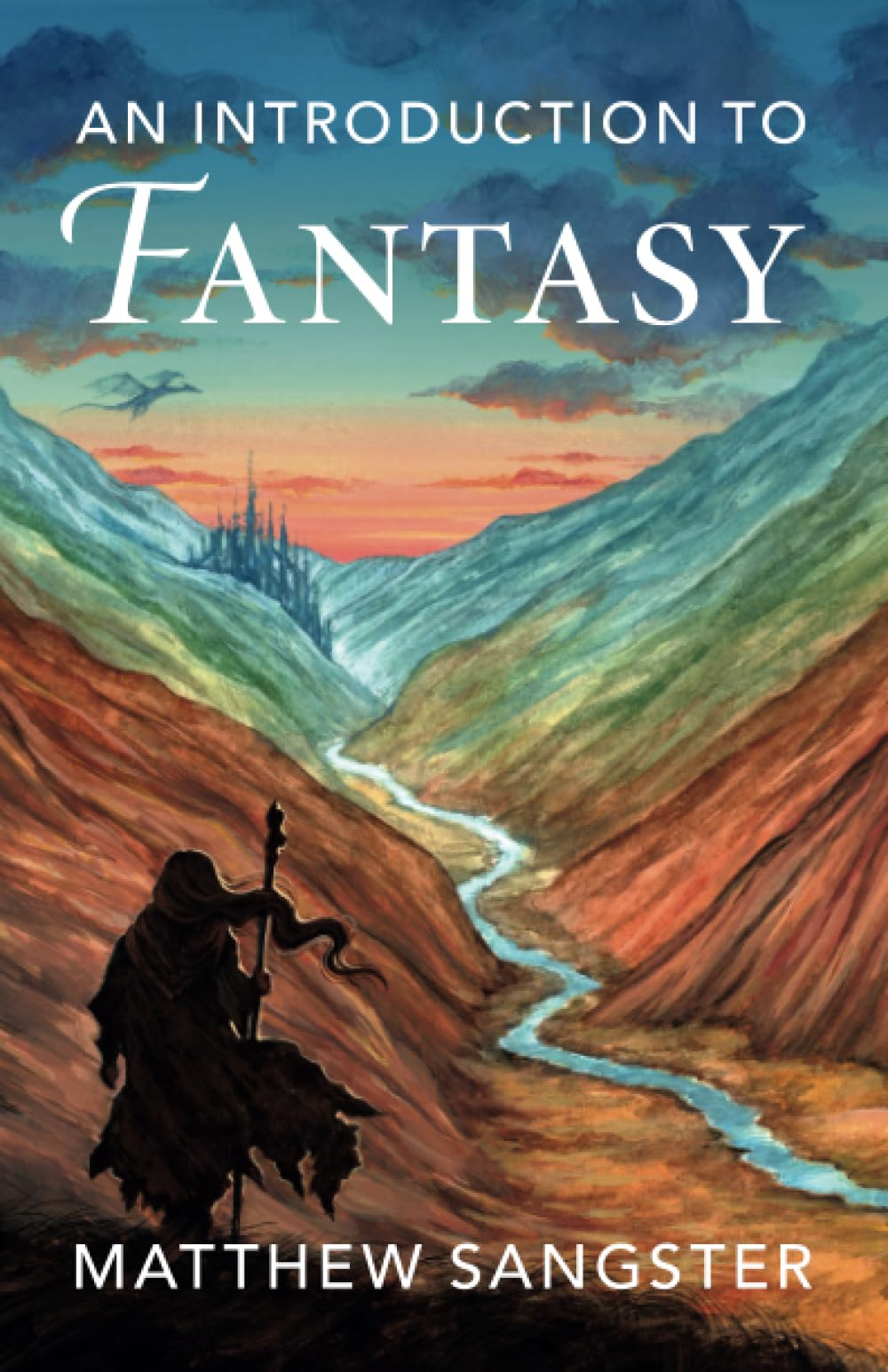
Review: An Introduction to Fantasy, by Matthew Sangster

Format: 469 pages, Paperback
Published: September 7, 2023 by Cambridge University Press
ISBN: 9781009429948 

Providing an engaging and accessible introduction to the Fantasy genre in literature, media and culture, this incisive volume explores why Fantasy matters in the context of its unique affordances, its disparate pasts and its extraordinary current flourishing. It pays especial attention to Fantasy’s engagements with histories and traditions, its manifestations across media and its dynamic communities.

Matthew Sangster covers works ancient and modern; well-known and obscure; and ranging in scale from brief poems and stories to sprawling transmedia franchises. Chapters explore the roles Fantasy plays in negotiating the beliefs we live by; the iterative processes through which fantasies build, develop and question; the root traditions that inform and underpin modern Fantasy; how Fantasy interrogates the preconceptions of realism and Enlightenment totalisations; the practices, politics and aesthetics of world-building; and the importance of Fantasy communities for maintaining the field as a diverse and ever-changing commons.

Literary awards:

Mythopoeic Scholarship Award for Myth and Fantasy Studies (2024)


My Review

I’ve been working my way through this book since last October, around blog tours, getting slightly too obsessed with YouTube , and a lot of crochet. I finished the last 40 pages this evening and now I need to tell you all about it. Matthew Sangster is a product of Glasgow University’s Centre for Fantasy and the Fantastic, and the access to many fantasy novels and academic works show in the text. Sangster mentions works by some of the most well-known in fantasy, such as Le Guin and Tolkein, and some more unexpected authors, especially those from earlier centuries. He draws out six important points about fantasy, over the chapters of this books and they form his core arguments:

  • Fantasy arises from figurative language
  • Iteration is a defining technique – new stories build on old in new ways
  • Contemporary fantasy builds on some of the oldest forms
  • Fantasy exists in conversation with realism
  • Worldbuilding is both the prevailing metaphor of modern fantasy and used to develop plots and characters
  • Fantasy is a form practised in community rather than one by unique geniuses.

I had to read the ‘Envoi’ chapter to get that. Sangster helpfully lists these points for the reader. It certainly helps with the summary. He does try to be accessible throughout the book, and uses a lot of examples to make his points, referencing very well-known authors, TTRPG series, video games, and film franchises in the process. It was heavy going at times, but that might be my lack of formal education in Literature at University Level. My M.A. is in Creative Writing, not Literature, after all.

Sangster raises some good points, especially about the tendency of ‘literary’ culture to consider ‘genre’ fiction as lesser, as the mode of storytelling is not ‘realistic’ and therefore can’t possibly impact readers. Fantasy, Sangster argues, explores the real world using the fantastical as a foil, a universalising storytelling mode that draws on cultural language. Fantasy can tell stories in ways that resonate with people far more effectively than straight up realism. It digs down into the root, builds on older foundations and finds new ways to explore ancient concerns.

I certainly find fantasy a useful vehicle for understanding the world, particularly in the work of Terry Pratchett. Fantasy communities, whether specific fandoms, organisations for writers, or online groups (such as the BFS Discord – Join the BFS, and come to our Discord, we have quiz nights and shadow daddies!), work in dialogue with the stories and their creators. New worlds spin off from the original, and people have a shared language to communicate with, across time and culture (see: Vimes’ Boots Theory of Economics).

I found Sangster’s work thoughtful and interesting, although it is very much an academic text so possibly not something a casual reader might go for. Useful for those interested in SFFH in an academic setting e.g., if you’re doing your M.A. in Fantasy and Sci-Fi literature or as a basis for a Doctorate in the field. Yes, those do exist, and yes, they’re a bit serious. (Again, see Glasgow University).
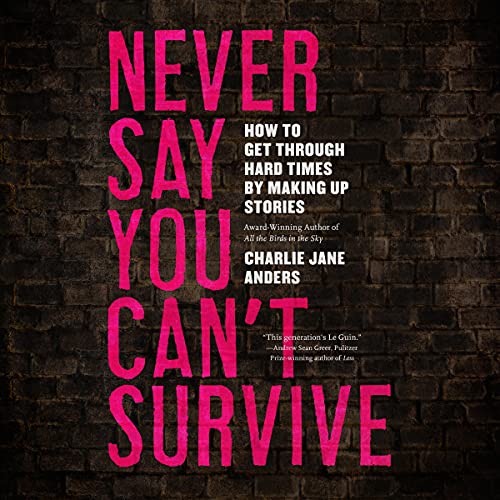
TBL Audiobook Review: Never Say You Can’t Survive, by Charlie Jane Anders

Format: Audiobook
Published: August 17, 2021 by Macmillan Audio
ISBN: 9781250830777 (ISBN10: 125083077X)
Language: English

Description

Things are scary right now. We’re all being swept along by a tidal wave of history, and it’s easy to feel helpless. But we’re not helpless: we have minds, and imaginations, and the ability to visualize other worlds and valiant struggles. And writing can be an act of resistance that reminds us that other futures and other ways of living are possible.

Full of memoir, personal anecdote, and insight about how to flourish during the present emergency, Never Say You Can’t Survive is the perfect manual for creativity in unprecedented times.

My Review

I listened to this book last week and I’ve been digesting it ever since. I am also reading another writing advice book at the moment, so I needed time to separate the two.

In this collection of essays written for tor.com during the pandemic, Anders covers memoir, dealing with catastrophic life events, the utility of positive writing, and writing advice. I enjoy Charlie Jane Anders’ podcast Our Opinions Are Correct, so I’m familiar with her audio work. I don’t generally read YA or comics so I haven’t read any of her books, and this was an opportunity to learn more about her writing style and techniques, as well as receive a bit of a pep talk.

Before I continue, I would like to point out that I cried, a lot, listening to this book. Walking down the street. At the wellbeing centre. On the bus. Seriously, I don’t think I’ve ever had a writing craft book make me cry before! Both the essays that cover her own story and the essays that explore purpose of positive writing in bad times hit me right in the emotions. I probably needed the cry, to be honest.

I have been struggling with my writing recently, for a variety of reasons – work stress, financial anxiety, another ear infection, not being able to get to the pool, just the usual stuff. I’m torn between working on the sci-fantasy star dragons, autistic human and a mysterious disappearance in space story I’ve been sharing monthly with paid subscribers, and working on the fantasy novel I want to write for my PhD (it will contain dragons, autistic people, and shapeshifting. Also murder. But not a murder mystery. The murderer is known, revenge is plotted.) but getting started on the PhD is taking longer than planned, what with me not yet submitting my application and struggling with writing the proposal and writing samples.

Last Friday, after listening to this book for several hours, I sat down and write outlines and a couple of scenes from the end of the novel. I just have to work out how to get back from there to the beginning… There will definitely be murder, pirates, and dragons, that you can be certain of. I was writing for so long I had to reheat my tea! And I’ve had ideas for the space dragon mystery story too, so I’m going to work on that next week. I also made progress on my PhD proposal, so thanks Charlie Jane, I appreciate the kick up the bum.

The author narrates this audiobook, and does rather a good job of it. You can tell she’s been presenting a podcast for a while now. Very smooth, clear diction.

I would say this is one of the best writing guides I’ve read/listened to. There are a lot of writing books out there, but I’ve recommended this one to people already, so I think that’s a positive sign.

TBR Pile Review: Who’s Afraid of Gender, by Judith Butler

Format: 320 pages, Hardcover
Published: March 19, 2024 by Allen Lane
ISBN: 9780241595824 (ISBN10: 0241595827)

Description

Judith Butler, the ground-breaking philosopher whose influential work has redefined how we think about gender and sexuality, confronts the attacks on gender that have become central to right-wing movements today. Global networks have formed “anti-gender ideology movements” dedicated to circulating a fantasy that gender is a dangerous threat to families, local cultures, civilization –and even “man” himself. Inflamed by the rhetoric of public figures, this movement has sought to abolish reproductive justice, undermine protections against violence, and strip trans and queer people of their rights. But what, exactly, is so scary about gender?

In this vital, courageous book, Butler carefully examines how “gender” has become a phantasm for emerging authoritarian regimes, fascist formations, and trans-exclusionary feminists. They illuminate the concrete ways that this phantasm displaces anxieties and fears of destruction. Operating in tandem with deceptive accounts of critical race theory and xenophobic panics about migration, the anti-gender movement demonizes struggles for equality, fuels aggressive nationalism, and leaves millions of people vulnerable to subjugation.

An essential intervention into one of the most fraught issues of our moment, Who’s Afraid of Gender? is a bold call to make a broad coalition with all those whose struggle for equality is linked with fighting injustice. Imagining new possibilities for both freedom and solidarity, Butler offers us an essentially hopeful work that is both timely and timeless.

My Review

Interesting, definitely one to re-read and digest. I struggled with parts of the text – it was a bit dense.

The author challenges the phantasm of ‘gender ideology’, pushed by those with a stake in maintaining the cis-heteronormative, patriarchal status quo as part of religious and Right wing ideology. The author takes the reader through the various talking points, and explains how those opposed to equal rights for gender and sexual minorities elide between talking points without logical argument. They assume ‘allowing trans people to live their lives’ automatically means ‘anyone will identify as anything in order to attack children’. There’s no logical way to get from one to the other. This is a way to displace the fear of living in late-stage capitalism, with the attendant global warming and population displacement that comes with it. Instead of focusing our anger and fear on the causes of the world becoming unliveable, humans are distracted by false ghosts, phantasms, bundled under the word ‘gender’.

The book seems to be aimed at a non-academic audience, covering what should be fairly obvious arguments, if you’ve kept up with the whole anti-trans movement. However, it does become very academic and falls into philosophy-speak at times. I did enjoy reading this book, but sometimes, I wish they’d written it in plain English.

It’s late, I’ll write more when I’ve had a think about it.

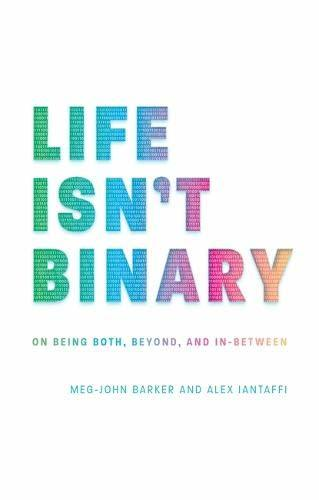
TBR Pile Review: Life Isn’t Binary, by Meg-John Barker and Alex Iantaffi

Format: 237 pages, Paperback
Published: May 21, 2019 by Jessica Kingsley Publishers
ISBN: 9781785924798 (ISBN10: 1785924796)
Language: English

Description

Challenging society’s rigid and binary ways of thinking, this original work shows the limitations that binary thinking has regarding our relationships, wellbeing, sense of identity, and more. Explaining how we can think and act in a less rigid manner, this fascinating book shows how life isn’t binary.

My Review

This book starts with the obvious understanding of ‘non-binary’ in discussing sexuality and gender, and then goes on to discuss non-binary approaches to relationships, bodies, emotions, and thinking. What this really means is that people tend to think in either/or ways, yes/no, black/white, etc. but the authors recommend more and/both thinking about life.

For someone who is non-binary it is an interesting, yet obvious concept. Although I’m autistic and we’re often accused of black and white thinking, I’ve always wanted to ask why? and my conception of conflict as the stories people tell themselves not meshing completely, already allows me to view reality in a way that includes what the authors refer to as ‘multiversal’. The authors use a therapist and Buddhist way of putting it, but it’s the same thing. Our stories are always changing, we’re always in the process of becoming, not completed, not finalised. And we have many stories, depending on who we’re interacting with.

I found this book fairly interesting. I got through the first four chapters in record time, but the last two chapters seemed to drag a bit. It was mostly the last chapter. I found it a bit woo heavy, especially the ‘make an alter to yourself’ reflection point. I understand the authors are interested in Buddhism, and work as therapists, so it’s understandable. It just doesn’t work for me.

It’s a good introduction to non-binary genders and unconventional relationships.

Review: Cultish – The Language of Fanaticism, by Amanda Montell

55338982
Hardcover, 320 pages
Published June 15th 2021 by Harper Wave
ISBN: 0062993151 (ISBN13: 9780062993151)

Blurb

The author of the widely praised Wordslut analyses the social science of cult influence: how cultish groups from Jonestown and Scientology to SoulCycle and social media gurus use language as the ultimate form of power.

What makes “cults” so intriguing and frightening? What makes them powerful? The reason why so many of us binge Manson documentaries by the dozen and fall down rabbit holes researching suburban moms gone QAnon is because we’re looking for a satisfying explanation for what causes people to join—and more importantly, stay in—extreme groups. We secretly want to know: could it happen to me? Amanda Montell’s argument is that, on some level, it already has . . .

Our culture tends to provide pretty flimsy answers to questions of cult influence, mostly having to do with vague talk of “brainwashing.” But the true answer has nothing to do with freaky mind-control wizardry or Kool-Aid. In Cultish, Montell argues that the key to manufacturing intense ideology, community, and us/them attitudes all comes down to language. In both positive ways and shadowy ones, cultish language is something we hear—and are influenced by—every single day.

Through juicy storytelling and cutting original research, Montell exposes the verbal elements that make a wide spectrum of communities “cultish,” revealing how they affect followers of groups as notorious as Heaven’s Gate, but also how they pervade our modern start-ups, Peloton leaderboards, and Instagram feeds. Incisive and darkly funny, this enrapturing take on the curious social science of power and belief will make you hear the fanatical language of “cultish” everywhere.

Continue reading “Review: Cultish – The Language of Fanaticism, by Amanda Montell”

TBR Review: A Fatal Thing Happened On The Way To The Forum: Murder In Ancient Rome, by Emma Southon

51630983. sy475
Hardcover, 320 pages
Published September 17th 2020 by
Oneworld Publications
ISBN:1786078376 (ISBN13: 9781786078377)

In Ancient Rome all the best stories have one thing in common – murder. Romulus killed Remus to found the city; Caesar was assassinated to save the Republic. Caligula was butchered in the theatre, Claudius was poisoned at dinner and Galba was beheaded in the forum. In one fifty-year period, twenty-six emperors were murdered.

But what did killing mean in a city where gladiators fought to the death to sate a crowd? Emma Southon examines real-life homicides from Roman history to explore how perpetrator, victim and the act itself were regarded by ordinary people. Inside Ancient Rome’s unique culture of crime and punishment, we see how the Romans viewed life, death, and what it means to be human.

Continue reading “TBR Review: A Fatal Thing Happened On The Way To The Forum: Murder In Ancient Rome, by Emma Southon”

Queer TBR Pile Review: They/Them/Their: A Guide to Nonbinary & Genderqueer Identities, by Eris Young

I’ve decided to add a new subsection to my TBR Pile reviews: Queer books. I’m Queer, myself, as well as Autistic, so I choose to use those words to describe myself and my way of categorising books. Don’t like it? Leave.

Or you could stay and learn something?

Anyway, on to the review.

Mum, Dad, don’t read if you don’t want to know some stuff about me.

44428763. sy475
Paperback, 288 pages
Published September 19th 2019
by Jessica Kingsley Publishers
ISBN: 1785924834 (ISBN13: 9781785924835)

In this insightful and long-overdue book, Eris Young explores what it’s like to live outside of the gender binary and how it can impact on one’s relationships, sense of identity, use of language and more.

Drawing on the author’s own experiences as a nonbinary person, as well as interviews and research, it shares common experiences and challenges faced by those who are nonbinary, and what friends, family and other cisgender people can do to support them. Breaking down misconceptions and providing definitions, the history of nonbinary identities and gender-neutral language, and information on healthcare, this much-needed guide is for anyone wanting to fully understand nonbinary and genderqueer identities.

Continue reading “Queer TBR Pile Review: They/Them/Their: A Guide to Nonbinary & Genderqueer Identities, by Eris Young”

Review: The Dark Side of the Mind, by Kerry Daynes


BLURB
Welcome to the world of the forensic psychologist, where the people you meet are wildly unpredictable and often frightening.

The job: to delve into the psyche of convicted men and women to try to understand what lies behind their often brutal actions.

Follow in the footsteps of Kerry Daynes, one of the most sought-after forensic psychologists in the business and consultant on major police investigations.

Kerry’s job has taken her to the cells of maximum-security prisons, police interview rooms, the wards of secure hospitals and the witness box of the court room.

Her work has helped solve a cold case, convict the guilty and prevent a vicious attack.

Spending every moment of your life staring into the darker side of life comes with a price. Kerry’s frank memoir gives an unforgettable insight into the personal and professional dangers in store for a female psychologist working with some of the most disturbing men and women.

·        Paperback: 304 pages
·        Publisher: Endeavour; 01 edition (20 Feb. 2020)
·        Language: English
·        ISBN-10: 1788402170
·        ISBN-13: 978-1788402170
 
Amazon: https://www.amazon.co.uk/Dark-Side-Mind-Forensic-Psychologist/dp/1788402170
 
Continue reading “Review: The Dark Side of the Mind, by Kerry Daynes”

Review: ‘Charles and Ada’, by James Essinger #BlogTour #Rachel’sRandomResources #ConradPress #OneDayBlogBlitz

Charles and Ada: the computer’s most passionate partnership

The partnership of Charles Babbage and Ada Lovelace was one that would change science forever.

They were an unlikely pair – one the professor son of a banker, the other the only child of an acclaimed poet and a social-reforming mathematician – but perhaps that is why their work is so revolutionary.

They were the pioneers of computer science, creating plans for what could have been the first computer. They each saw things the other did not; it may have been Charles who designed the machines, but it was Ada who could see their potential.

But what were they like? And how did they work together? Using previously unpublished correspondence between them , Charles and Ada explores the relationship between two remarkable people who shared dreams far ahead of their time.

Purchase Links

UK – https://www.amazon.co.uk/Charles-Ada-Computers-Passionate-Partnership/dp/0750990953

 US – https://www.amazon.com/Charles-Ada-Computers-Passionate-Partnership/dp/0750990953

Continue reading “Review: ‘Charles and Ada’, by James Essinger #BlogTour #Rachel’sRandomResources #ConradPress #OneDayBlogBlitz”

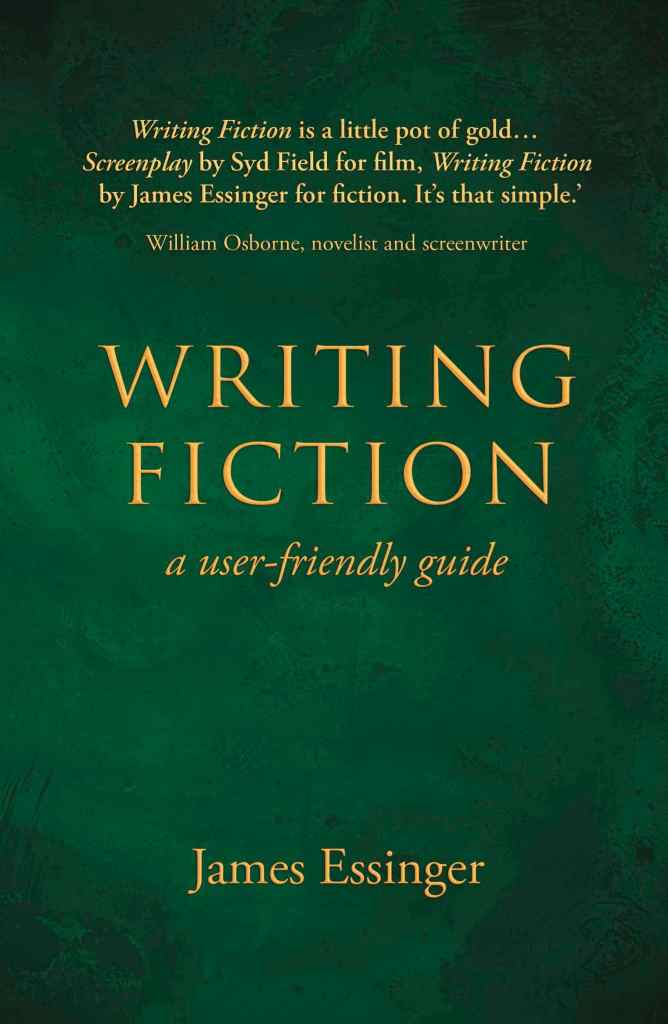
Review: ‘Writing Fiction: a user-friendly guide’, by James Essinger

Writing Fiction – a user-friendly guide

‘Writing Fiction is a little pot of gold… Screenplay by Syd Field for film, Writing Fiction by James Essinger for fiction. It’s that simple.’

William Osborne, novelist and screenwriter

Writing Fiction – a user-friendly guide is a must-read if you want to write stories to a professional standard.

It draws on the author’s more than thirty years of experience as a professional writer, and on the work and ideas of writers including:

  • Anthony Burgess
  • Joseph Conrad
  • George Eliot
  • Ken Follett
  • Frederick Forsyth
  • Dan Harmon
  • Ernest Hemingway
  • David Lodge
  • Norman Mailer
  • John Milton
  • Ben Parker
  • J.K. Rowling
  • William Shakespeare
  • Martin Cruz Smith
  • J.R.R. Tolkien

The twenty-four chapters cover every important matter you need to know about, including: devising a compelling story, creating and developing characters, plotting, ‘plants’, backstory, suspense, dialogue, ‘show’ and ‘tell’, and how to make your novel more real than reality.

Also featuring special guest advice from legendary screenwriter Bob Gale, who wrote the three immortal Back to the Future movies (1985, 1989 and 1990), and novelist and screenwriter William Osborne, whose many screen credits include the co-writing of the blockbuster  Twins (1988), this highly entertaining book gives you all the advice and practical guidance you need to make your dream of becoming a published fiction writer come true.

Purchase Links

Continue reading “Review: ‘Writing Fiction: a user-friendly guide’, by James Essinger”