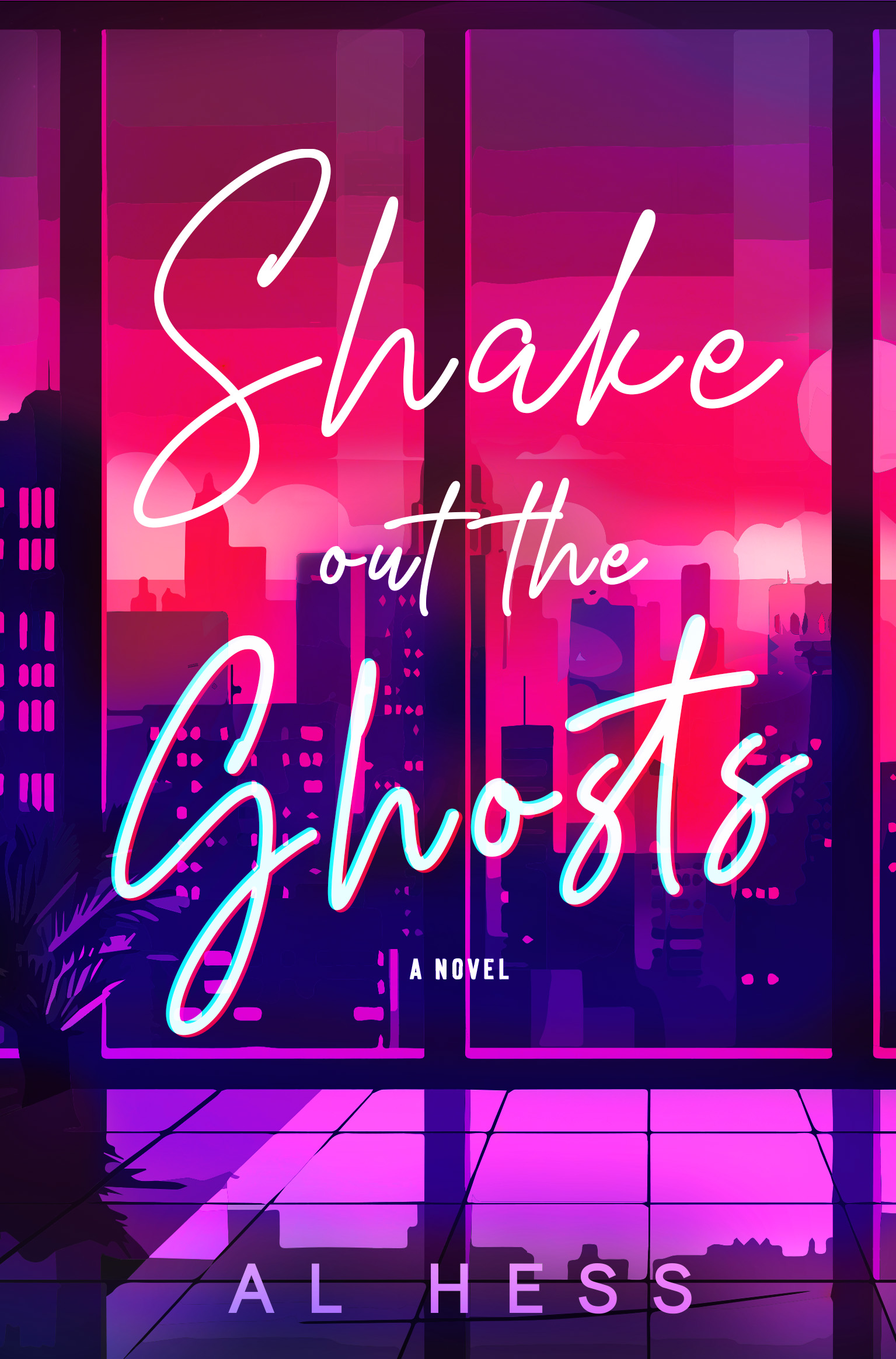
A brutal assault nine months ago left eccentric portrait artist Micah with facial scars and PTSD. He’s struggled to leave his apartment ever since, and he can’t let anyone in. Then his only sanctuary is disrupted by signs of a haunting.
Between the 80s synth pop and motivation messages scrawled on his bathroom mirror, Micah finds himself more charmed than frightened by who he believes to be Cosmo, the deceased previous resident of his apartment. But when Cosmo’s ghostly visits suddenly stop, Micah is determined to lure him back.
Meanwhile, sculpture artist Cosmo – dramatic, unconventional, and very much alive – is mourning his old self. His boyfriend’s a serial cheater, he’s continually passed over for a promotion at work, and he’s lost contact with his best friend. To make matters worse, his apartment is being haunted by the ghost of a bespectacled man with an eye socket of scars. It’s his last straw, and seeking a new start, Cosmo moves out.
In a chance meeting, Cosmo and Micah’s paths cross again, and tentative sparks fly. But the phantoms of their pasts still linger. In order to find a future where they can both be happy together, Micah and Cosmo need to confront their trauma once and for all.
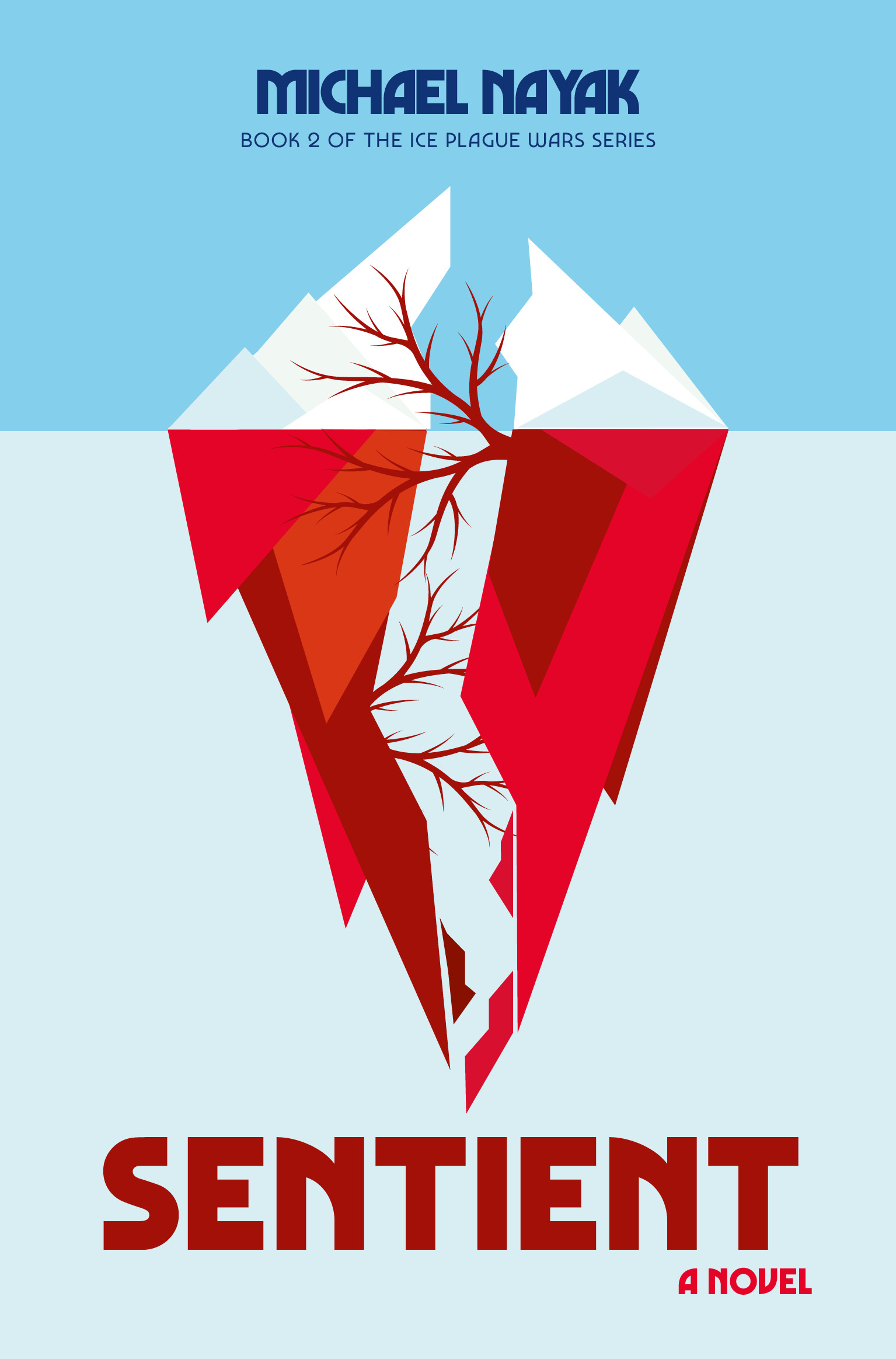
Extinction Horizon meets Contagion in this sequel to 2025’s sci-fi thriller Symbiote, where the biological threat has escaped the South Pole and is now wreaking havoc upon Antarctica.
The survivors of the South Pole massacre will find that getting off the Antarctic continent may cost them their lives…
Months after the events of Symbiote, sunrise has come to the ice continent, bringing with it the beginning of the annual tourist season. where 1,500 summer visitors will soon call the coastal McMurdo Station home. With them are the architects of the classified CIA program that unleashed the deadly microbes, who are determined to uncover what happened with their experiment and harvest samples of the mutation to turn into a biological weapon.
However, when Ben Jacobs returns from an impossible journey to the Pole and is reunited with Penny – an asymptomatic carrier of the symbiotic microbes – all hell breaks loose. When the sea ice surrounding the station becomes a fertile breeding ground for a new and more dangerous infestation, Rajan Chariya and his friends will have to join forces with the CIA to fight the onslaught of infected “sea people” roving the streets. With tensions high and stakes even higher, the question becomes when will the group stop being useful, and start becoming targets who know too much?
Worse, there may be more than one asymptomatic carrier….
With a heart-stopping pace and twists that will leave readers breathless, Sentient is a thrilling sequel that brilliantly combines all the best horror tropes with real world scenarios.
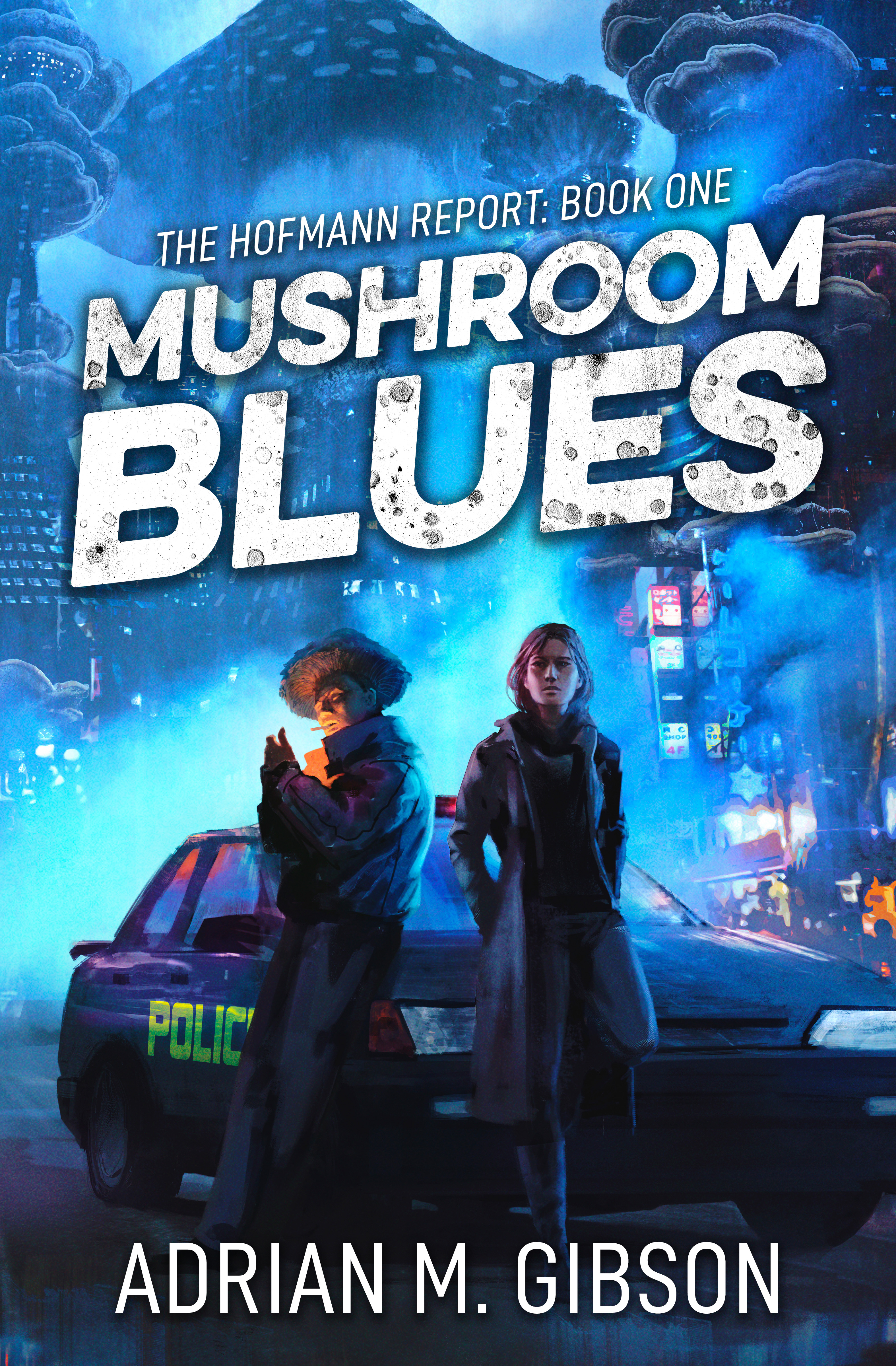
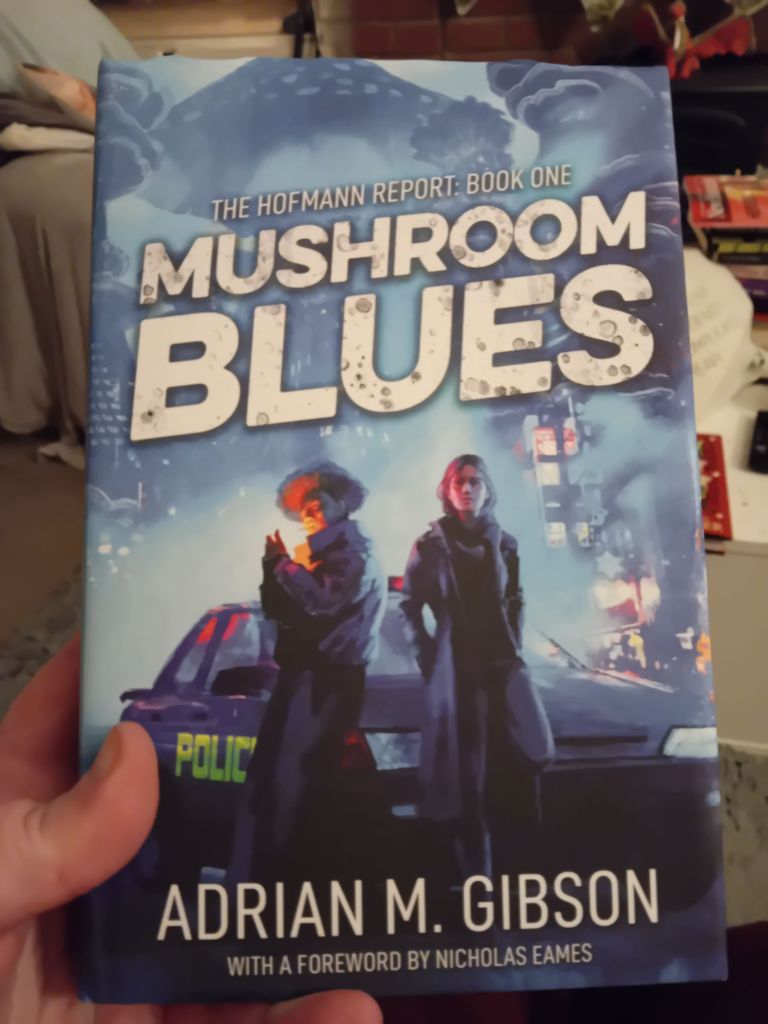
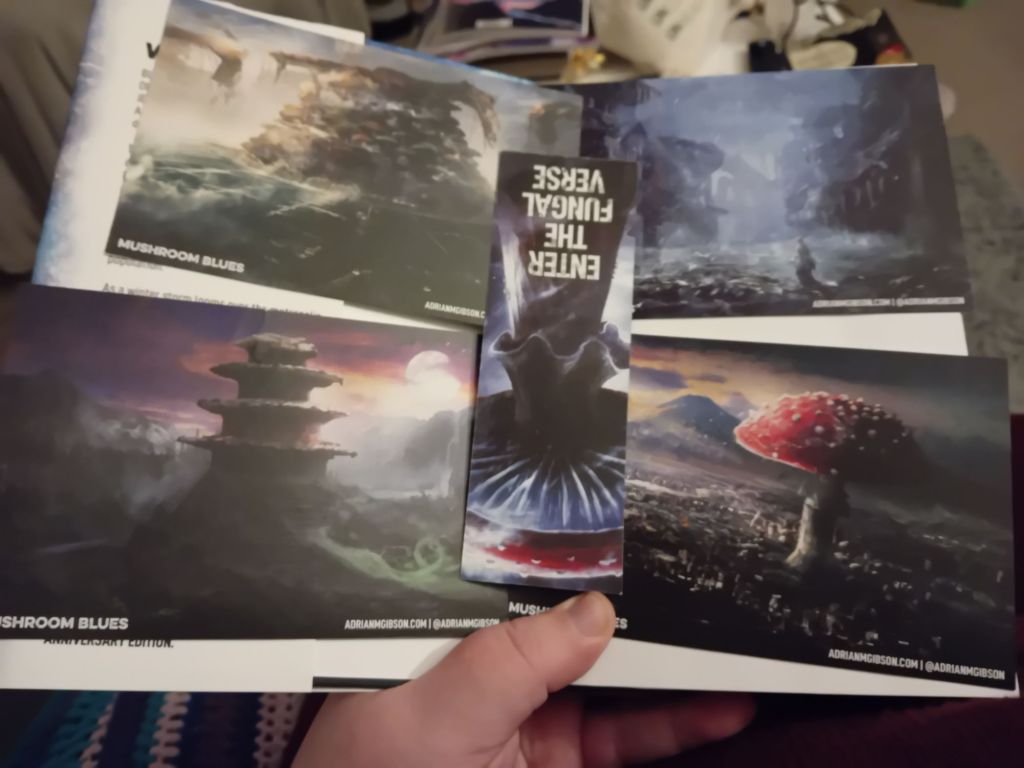
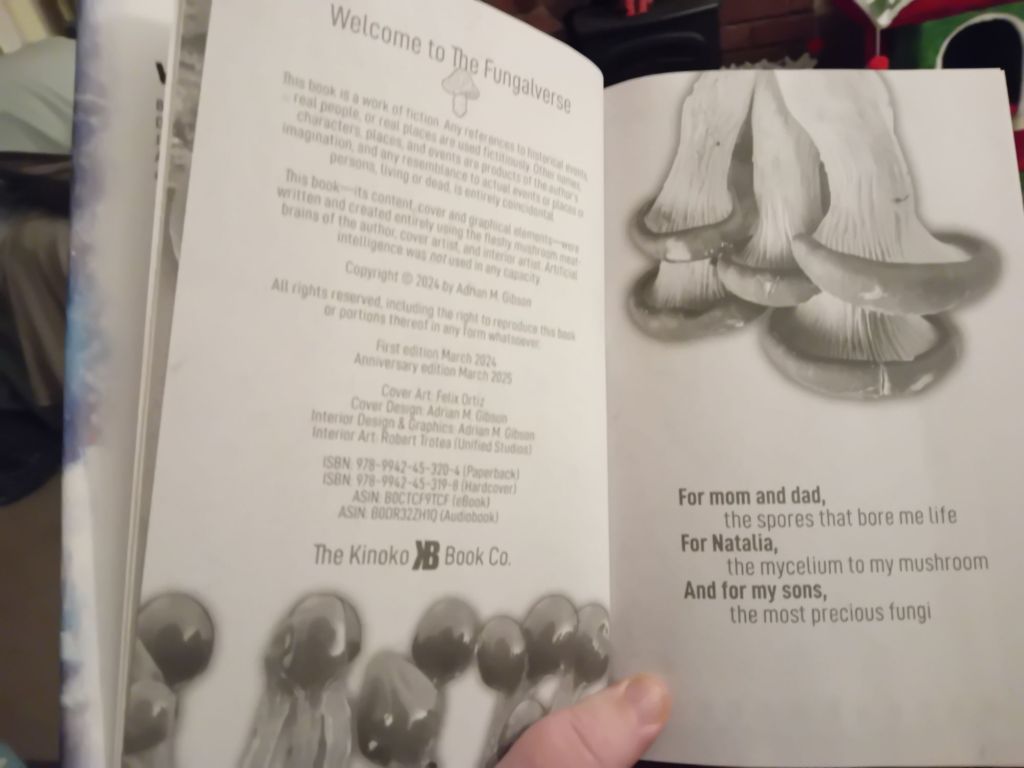
ENTER THE FUNGALVERSE. Blade Runner, True Detective, and District 9 meld with the weird worlds of Jeff VanderMeer, Philip K. Dick, and China Miéville in Adrian M. Gibson’s award-winning fungalpunk noir debut, now with a foreword from acclaimed author Nicholas Eames and six pieces of original interior artwork.
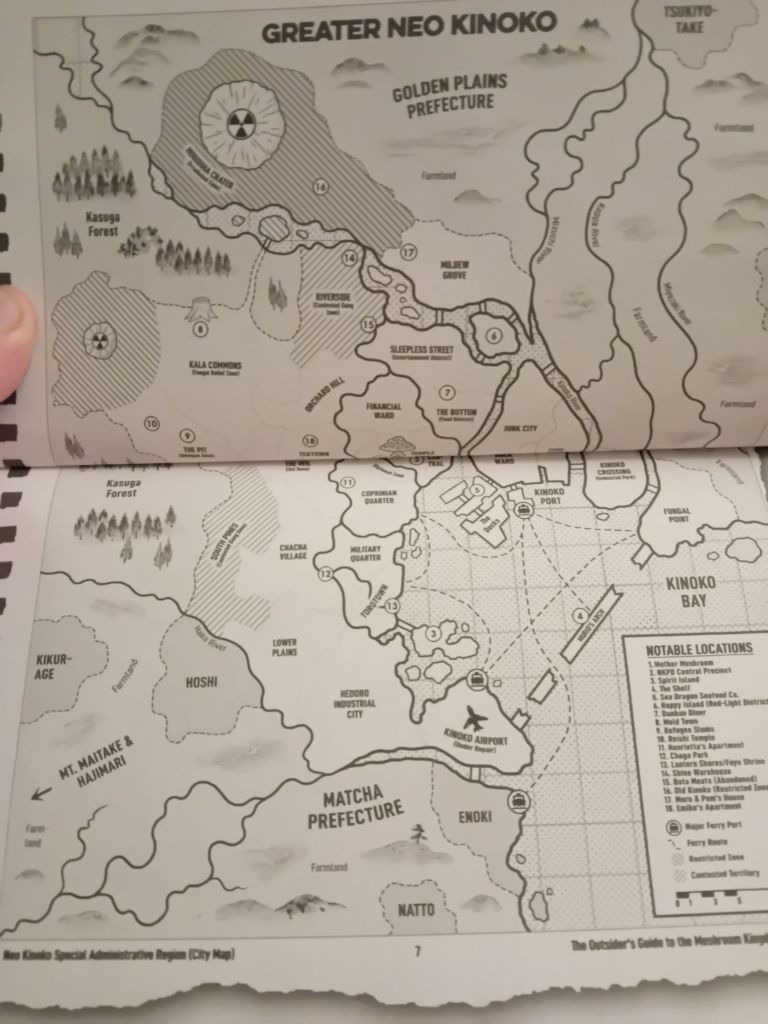
Two years after a devastating defeat in the decade-long Spore War, the island nation of Hōppon and its capital city of Neo Kinoko are occupied by invading Coprinian forces. Its fungal citizens are in dire straits, wracked by food shortages, poverty, and an influx of war refugees. Even worse, the corrupt occupiers exploit their power, hounding the native population.
As a winter storm looms over the metropolis, NKPD homicide detective Henrietta Hofmann begrudgingly partners up with mushroom-headed patrol officer Koji Nameko to investigate the mysterious murders of fungal and half-breed children. Their investigation drags them deep into the seedy underbelly of a war-torn city, one brimming with colonizers, criminal gangs, racial division, and moral decay.
In order to solve the case and unravel the truth, Hofmann must challenge her past and embrace fungal ways. What she and Nameko uncover in the midst of this frigid wasteland will chill them to the core, but will they make it through the storm alive?
SPFBO X 2nd place. Shortlisted for the British Fantasy Award for Best Newcomer. Winner of the FanFiAddict Award for Best Indie Debut, the Literary Titan Gold Book Award, and the Next Generation Indie Book Award.
My Review
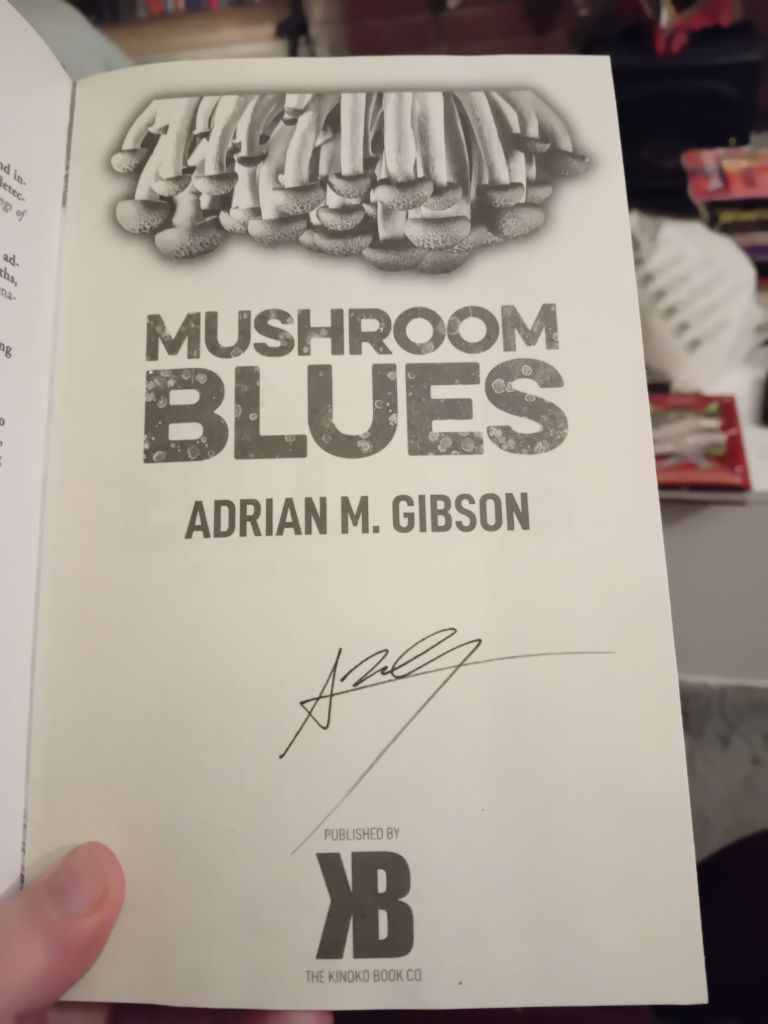
I picked this book up at World Fantasy Convention 2025 in Brighton, from the Broken Binding table in the dealers room. I got a lovely signed and illustrated hardback edition. Usually I’m uncomfortable with mushrooms – I saw that episode of Hannibal where a killer was using bodies to grow mushrooms and one of the victims was alive and sprouting, and I’ve had an issue ever since. It’s weird, anything with parasites also upsets me, but I managed to read Alien Clay, so I can manage to read Mushroom Blues.
This novel was originally self-published in 2024 and did well in a variety of awards. The edition produced with The Broken Binding is a hardback, signed and illustrated. It’s published by Kinoko Book Co. which is hard to find anything about, so I’m assuming it’s the name the author has chosen for his self-publishing venture. Gibson is, according to his bio, “an award-winning Canadian SFF author, podcaster, illustrator, and tattoo artist. He is the creator of the SFF Addicts podcast, which he co-hosts with fellow authors M.J. Kuhn and Greta Kelly. The three host in-depth interviews with an array of science fiction and fantasy authors, as well as writing masterclasses.”
This is his debut novel. And it’s really quite enjoyable. We follow Hofmann, a detective sent from the homeland to work for the NKPD, and she’s struggling. In a world of men, she’s a divorced older woman in recovery from alcoholism – caused by the job, worsened by the death of her daughter in a car crash Hofmann caused. She hates mushrooms. Not just the people of Hoppon, but mushrooms in general – she can’t see them or eat them without feeling sick. And she’s stuck in a place where humans are a minority, and the majority are fungal people who live in fungal architecture. It’s her worst nightmare. She’s been fed a load of manure in the form of propaganda and holds all sorts of prejudices about the Hopponese.
Children are going missing. Hipponese and ‘half-breeds’ – mixed human and Hipponese children. An Elder finds the dismembered body of one of the children on a sacred island. The NKPD assign the job to Hofmann, and the force’s only Hopponese officer, Koji Nameko, since he was the one to first arrive and to speak to the elder who found the body.
They uncover the fates of the missing children and race to prevent a disaster that involves Nameko’s own family at a major midwinter festival.
As the pair investigate, Hofmann finds herself overcoming her prejudices and learning to appreciate the culture of the people her own are occupying. She even eats mushrooms and doesn’t vomit, at one point.
It’s obviously based, in part at least, on conditions in Japan between 1945 and 1970. After the bombing of Nagasaki and Hiroshima, the yanks imposed a military occupation on Japan. Japan had been the aggressors, attacking China and Russia from the 1930s, before joining the Axis Powers (Germany, Italy, Japan) and attacking Hawaii in 1940. There are still people alive who were children at the time and had relatives who fought with British, Commonwealth/Imperial forces in the Pacific, and who have inherited hate for Japanese people. Australian forces were expecting a Japanese invasion, British colonies around the Pacific were invaded and occupied. We’ve all heard about the horrors of Singapore and the POW camps that murdered thousands.
After the war, the USian Americans felt particularly aggrieved, as though they were the only ones to lose people in horrible ways, to be traumatised. And they took it out on the ordinary people of Japan during their occupation. Soldiers and civilian occupiers had been fed a diet of dehumanising propaganda for years and as a result treated everyone as though they were personally responsible for the actions of prison camp guards and commanders.
No one gets out of this looking good, by the way. There were massacres of people protesting for equal treatment in their own home, soldiers killed with impunity, the General in charge was a nutter. Japanese survivors of the hydrogen bombs were stigmatised because of fears of mutations and genetic damage and the institution of the Japanese Emperor got out of everything without a stain. Blame bad advisors, for the throne is divine and can do no wrong. Where have we heard that before?
Anyway, I recommend learning a little post-war Japanese history, after reading this novel, because the context adds depth.
Of course, this book is about an imaginary world, an imaginary war, and imaginary species, an imaginary occupation…
The mystery is well-paced throughout and the climactic race to stop the murder of children and incite a riot at a temple is exciting and balanced by the post action resolution. The description of the city is a blend of cyberpunk futurism and early 20th century detective noir, gritty and flashy, destruction and growth. The main characters develop as people and we learn about their back grounds as they move through the story. It was a quick read, although it’s not a short book, and I really couldn’t put it down.
Format: 126 pages, Hardcover Published: October 14, 2025 by Head of Zeus — an AdAstra Book ISBN 9781035911448 Format: Audible Audio Published: October 14, 2025 by Head of Zeus — an AdAstra Book
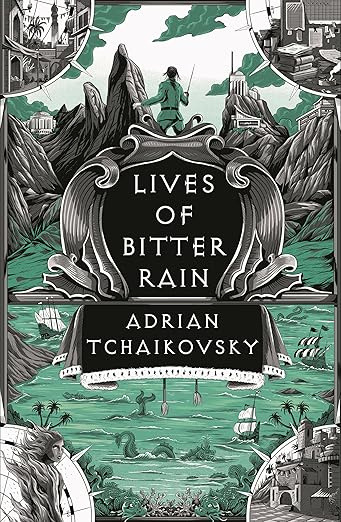
City-by-city, kingdom-by-kingdom, the Palleseen have sworn to bring ‘Perfection’ and ‘Correctness’ to an imperfect world. But before these ruthless Tyrant Philosophers send in their legions, they despatch Outreach – the rain before the storm.
Outreach is that part of the Pal machine responsible for diplomacy — converting enemies into friends, achieving through words what an army of five thousand could not, urging the oppressed to overthrow the bloody-handed priests, evil necromancers and greedy despots that subjugate them.
Angilly, twelve-years-old, a child of Pal soldiers stationed in occupied Jarokir, does not know it yet, but a sequence of accidents and questionable life choices will lead her to Outreach. As she travels from Jarrokir to Bracinta, Cazarkand, Lemas, The Holy Regalate of Stouk and finally, Usmai, she’ll learn that the price of her nation’s success is paid in compromise and lost chances, and that the falling rain will always be bitter.
LIVES OF BITTER RAIN is a novella in Adrian Tchaikovsky’s award-winning Tyrant Philosopher series. It is a prequel to the third novel in the sequence, DAYS OF SHATTERED FAITH.
My Review
I’ve listened to all of the books in this series, and have them all in hardback, so obviously I had to get this novella.
We follow the life of Angilly from the time her parents die in Jarokir to the day she fights a duel in Usmai. Each important moment of her life as she rises to the rank of Resident is catalogued.
If you’ve read Days of Shattered Faith this will give you some insight into the actions and character of Angilly and extra background to the events in that novel. If you haven’t, you should, and this novella will give you a taste of the style of writing and the worldbuilding.
The narration is excellent as ever and it is easy to listen to. At just over 4 hours, this novella can keep you company for half a work shift if you can’t get away with reading at work.
Epilogue – A month (I.G.A.S.S. Standard) later, on Ascend
Maria flopped on to xyr settee, drained from spending all day on a video call giving evidence in the trial of the former human governor of Aurox. For a week xe’d been giving depositions against the regime on Aurox and their crimes, including the harassment Maria and Sahrai had received from Josh Dalton, the senior security officer. It had upset xyr when evidence of the abuse of the bovids had been presented and the testimony of human prisoners forced to labour on Rocky Horror.
Although a geologist by trade, Suah had been on enough new planets to have picked up basic skills in cultural analysis. Observing the Auroxians had been a distraction from the horror of events since arriving on Aurox. She shuddered, remembering the day the research party had been attacked.
From sci-fi visionary and acclaimed author Annalee Newitz comes Automatic Noodle, a cosy near-future novella about a crew of abandoned food service bots opening their very own restaurant.
While San Francisco rebuilds from the chaos of war, a group of food service bots in an abandoned ghost kitchen take over their own delivery app account. They rebrand as a neighborhood lunch spot and start producing some of the tastiest hand-pulled noodles in the city. But there’s just one problem. Someone―or something―is review bombing the restaurant’s feedback page with fake “bad service” reports. Can the bots find the culprit before their ratings plummet and destroy everything they created?
My Review
It’s 2064. California has fought a war of Independence from the United States, and has freed robots above a certain level of intelligence. Well, not really free, they can’t own property, reproduce, or have bank accounts. Their licenses can be bought and sold, tying them to contracts and companies that can take them apart for scrap or sell them on saddled with debt. So not free at all.
Staybehind is an ex-military robot, free from contract and working wherever it wants. It happened to be working as manager of a terrible fast food franchise when it was shut down. Hands, the chef bot, Sweetie the front desk bot, and Cayenne, a former search and rescue octobot turned gastronome who likes to taste and smell food, slowly wake up after Staybehind is alerted to an emergency – their store is flooding. Once they work out what’s going on, the group make the decision to run the store for themselves, if they can find a way around the laws. Cayenne is on that.
Together with a human called Robles and an automatic minivan called Sloan, the robots go into business for themselves selling noodles. After a great review they get very busy, but then another review outs them as robots and starts review bombing the food delivery app everyone uses. While Staybehind searches for the culprit and discovers they have an artistic streak, Cayenne and Sweetie come up with other plans.
It’s a novella. I’ve read it in less than 3 hours this afternoon. I’d planned to go swimming but my lungs decided otherwise, so I’ve spent the afternoon on the sofa reading. I’m going back to bed as soon as I’ve written this because I’m sick once again!
I’ve read Annalee Newitz’s books in the past and enjoyed them; the author always seems to find the right tone for the subject and the right themes for the times. This is the case with Automatic Noodle too, with themes of found family, community resilience, and post-war rebuilding. The robots are stand-ins for the groups currently demonised by the right in the U.S. (and the U.K. honestly) – trans people, migrants, minority groups. There’s even a nod to the way African Americans were treated for the century between the end of the U.S. Civil War and the Civil Rights Act, in the way HEEI robots, and all robots, are treated.
The characters of Staybehind, Hands, Cayenne and Sweetie are all rounded, with backstories shared in vignettes. Reading them as they grow as people, and develop a community around them, facing their fears and the past, was sweet.
I think this is the sort of story we need right now. Things are going bad in the U.S., the U.K. government keeps pandering to the Right instead of telling them to go fuck themselves, and it’s scary for a lot of people. Me included. This novella is a story of hope – in community and community building, we can survive and thrive. I would read an expanded version of this novella or a sequel.
Format: 449 pages, Paperback Published: August 4, 2015 by Orbit ISBN: 9780316229296
Blurb
This is the way the world ends. Again.
Three terrible things happen in a single day. Essun, a woman living an ordinary life in a small town, comes home to find that her husband has brutally murdered their son and kidnapped their daughter. Meanwhile, mighty Sanze — the world-spanning empire whose innovations have been civilization’s bedrock for a thousand years — collapses as most of its citizens are murdered to serve a madman’s vengeance. And worst of all, across the heart of the vast continent known as the Stillness, a great red rift has been torn into the heart of the earth, spewing ash enough to darken the sky for years. Or centuries.
Now Essun must pursue the wreckage of her family through a deadly, dying land. Without sunlight, clean water, or arable land, and with limited stockpiles of supplies, there will be war all across the Stillness: a battle royale of nations not for power or territory, but simply for the basic resources necessary to get through the long dark night. Essun does not care if the world falls apart around her. She’ll break it herself, if she must, to save her daughter.
My Review
This book and the other two in the series have been on my TBR pile for several years, but one of the GoodReads challenges for the summer had this book on the list and I decided that was as good a way to decide what next to read from my TBR Pile as any.
My TBR pile is disturbingly huge…
My currently reading piles is disturbingly huge…
Anyway.
I picked up The Fifth Season the other day to read in bed while I was feeling ill, managed 130 pages then fell asleep. I read the rest yesterday – 319 pages. I think I’m feeling better today but I can never tell until I test my lungs during a walk or swimming. I’ve managed to get a bit of reading done while I’ve been ill. Two more books off the TBR Pile and on to the shelves. Obviously, next late month I’ll be buying more books at World Fantasycon, so I should probably prepare more shelf space.
Back to the book. The narrative follows a character who goes by multiple names over her lifetime as she confronts first her status as an orogene – someone who can move the earth with her mind – in a world where people with orogeny are either murdered as children or sent to a training camp in the capital city of Yumenes, where they are abused slaves, trained to hate themselves and do as they’re told by Guardians.
We see the main character through the eyes of a narrator, who turns out to be a stone-eater called Hoa, who has been following the main character through her life, and from the 3rd person POV of the main character. It’s an interesting structure, and took me a while to adjust to. Nonetheless, I really enjoyed it, seeing the story from the outside eyes of Hoa and the internal narrative of the main character. Look, she can’t decide who she is, so I’m not going to use her name.
Each name is associated with a time in the main character’s life. She has the name her parents gave her as a child, Damaya, which she carries until she passes her first ‘ring test’ at the Fulcrum, and chooses another name. She calls herself Syenite. She carries that name through meeting her mentor-friend-partner-father of her first child, Alabaster, living on an island with pirates, and having a child, then the ending of that period. After that she spends ten years living with a husband in a small town and teaching children, with another name, Essen. This triple name situation gives her some difficulty with her identity by the end of the novel when people she knew at different point in her life also end up in the same place as she does.
The impetus for events is two-fold. Firstly, Essun finds her son dead and her daughter missing. Her husband is the culprit. Essun sets off to look for her husband and daughter to get revenge. Essun’s son is murdered because he is an orogene, a talent inherited from Essun. Nassun, Essun’s daughter is also an orogene. Essun has a lot to process and blames herself. She is a little mad, and her journey south, picking up first Hoa and then Tonkee, a scientist, on the way, helps her to regain some sense.
At the same time, Alabaster decided it’s time to destroy Yumenes, and the Fulcrum, the city and training centre that enslaves and abuses orogenes, and opens a giant rift from east to west on the Stillness. Alabaster is an incredibly powerful orogene, but under the control of the Fulcrum he has been abused and raped to produce children strong enough to be used in ‘nodes’. When he finds a safe place on the island of Moev, and a tripartite relationship with Syenite, and the deputy leader of the community, Innon (yay! Bi and gay rep), he starts to feel safe. They have a child, Coru, who is more powerful than Alabaster. Then the Fulcrum comes for them. Innon and the baby die in the battle, Alabaster is taken to safety by his stone-eater Antimony, and Syenite goes mad and disappears into the wilderness for 12 years. During this time Alabaster has been slowly devoured by Antimony and they’ve sought ways to destroy the people enslaving orogenes.
Damaya-Syenite-Essun and Alabaster have different motives for their actions, but the results are the same – the end of the system that has controlled the continent of The Stillness for thousands of years.
The planet is fascinating.
The continent that makes up The Stillness is two plates, the Maximal and the Minimal. There are plate boundaries that run through it and around it, but they use orogenes to dissipate earthquakes and volcanic eruptions. Now, that’s not a sensible thing to do, in the long run. Continents move, that’s just how these things work; messing about with that would cause no end of trouble. Volcanic eruptions can destroy large numbers; they can, if big enough, block out the sun for years; but they also provide essential nutrients to the soil and recycle minerals and water through the system. Some of the most fertile soil is volcanic. Underwater volcanoes provide unique ecosystems and drive evolution. We didn’t think life could exist with photosynthesis until we discovered the chemosynthetic life of the deep ocean volcanic vents.
Earthquakes are terrifying. They trigger tsunamis and rock slides, they destroy homes and open fissures in the land. They also show that the rock recycling system of plate tectonics is working properly. When mountains are pushed up, or oceanic plates are subsumed beneath a continental plate, new land is made, old land is recycled, water is pulled into the crust and circulates through the system to come out in volcanoes.
Any planet that has a metal core – solid and liquid – and a liquid layer of rock will also have a magnetosphere, protecting the planet from cosmic radiation and solar flares. Life exists on earth because we have a living tectonic system. And a moon. It’s helpful to have a moon. The planet of The Stillness doesn’t have a moon, although Alabaster introduces the idea to Essun at the end of The Fifth Season, so at some point it must have had one.
The society in this novel is complex and well-developed. People think the earth hates life because humans caused damage thousands of years before and there was a massive eruption, and the first of the Fifth Seasons. Using orogenes to control the planet’s movements is supposed to protect life, but also makes people terrified of orogenes, who are so powerful that they can fight Father Earth. One aspect of the culture is disdain for the past that isn’t part of the Sanzed culture.
Former civilisations, ‘deadcivs’, are considered failures with nothing useful to provided the current civilization. This means archaeological remains are destroyed or covered up, pre-Sanzed knowledge is forgotten or corrupted to fit the ideological needs of the current civilization. They are an ossified civilisation, living by ancient lore written on stone tablets. Equally, scientists who don’t focus entirely on the earth and preparing for Fifth Seasons are considered to be practising pseudoscience – archaeologists and astronomers particularly. Contrasting the closeminded attitudes of most people are the independent community of Moev and later the community at Castrima, which is not only entirely different in attitude to orogenes but is also an artifact of a dead civilisation. The reader feels these contrasts through Syen-Essen’s confusion and fear.
This book was so good! Complex and beautifully written. I can see why it won a Hugo. I’ve already started reading book 2. If you haven’t read it yet, and enjoy sci-fi and fantasy, you need to read this book.
Format: 208 pages, Paperback Published: July 31, 2025 by Penguin ISBN: 9781804950647
A dying universe.
When the Home worlds finally achieved the technology to venture out into the stars, they found a graveyard of dead civilizations, a sea of lifeless gray planets and their ruins. What befell them is unknown. All Home knows is that they are the last civilization left in the universe, and whatever came for the others will come for them next.
A search for answers.
Scout is an Archivist tasked with scouring the dead worlds of the cosmos for their last gifts: interesting technology, cultural rituals—anything left behind that might be useful to the Home worlds and their survival. During an excavation on a lifeless planet, Scout unearths something unbelievable: a surviving message from an alien who witnessed the world-ending entity thousands of years ago.
A past unraveled.
Blyreena was once a friend, a soul mate, and a respected leader of her people, the Stelhari. At the end of her world, she was the last one left. She survived to give one last message, one final hope to the future: instructions on how to save the universe.
An adventure at the end of a trillion lifetimes.
With the fate of everything at stake, Scout must overcome the dangers of the Stelhari’s ruined civilization while following Blyreena’s leads to collect its artifacts. If Scout can’t deliver these ground-breaking discoveries back to the Archivists, Home might not only be the last civilization to exist, but the last to finally fall.


 Everything Is Better With Dragons