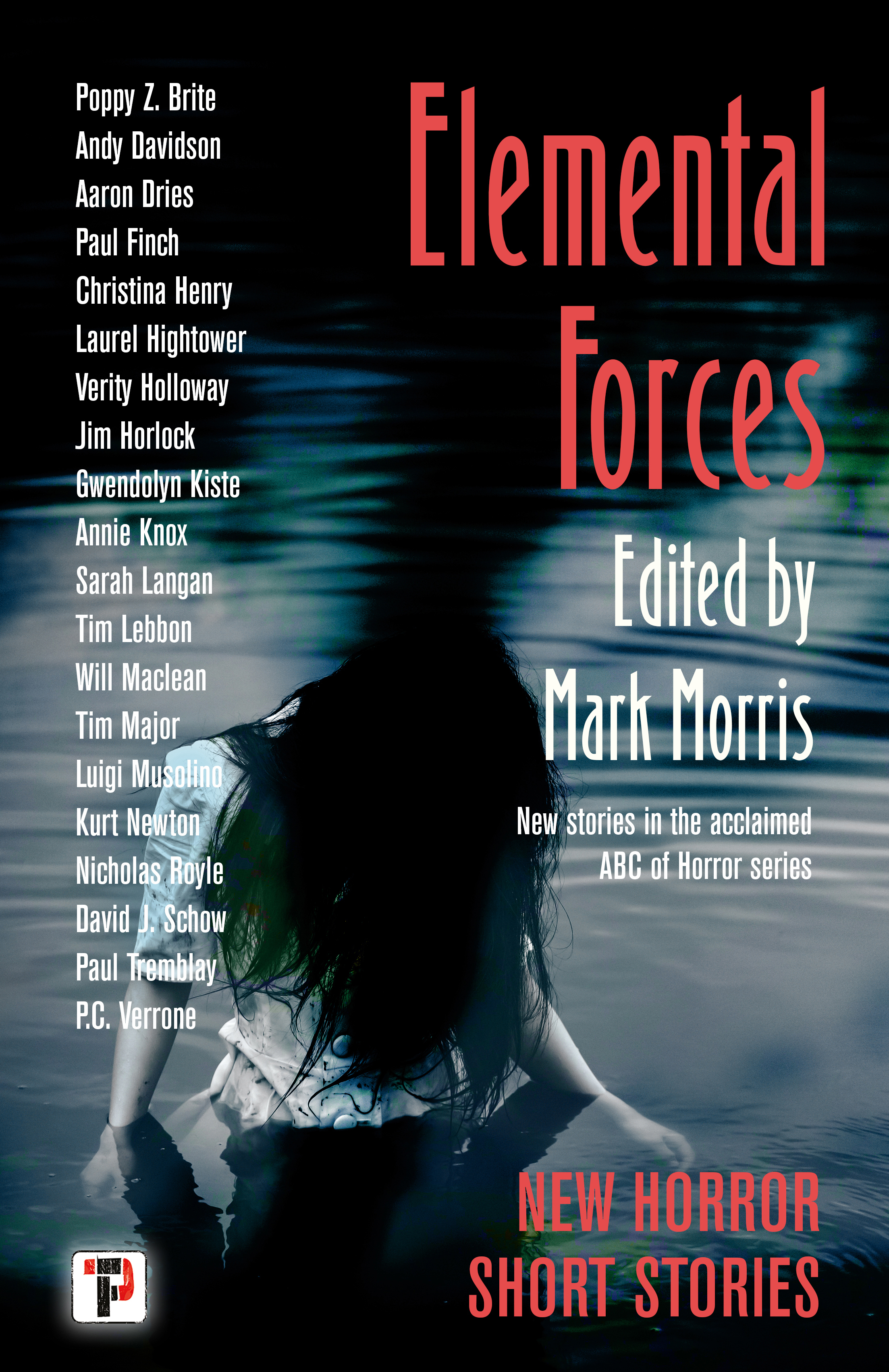
Elemental Forces is the fifth volume in the non-themed horror series of original stories, showcasing the very best short fiction that the genre has to offer, and edited by Mark Morris.
This new anthology contains 20 original horror stories, 16 of which have been commissioned from some of the top names in horror, and 4 selected from the 100s of stories sent to Flame Tree during a short open submissions window. A delicious feast of the familiar and the new, the established and the emerging.
Previous titles in the series, all still in print, are: After Sundown, Beyond the Veil, Close to Midnight and Darkness Beckons.
Release Date: 2024-09-24 Formats: Ebook, Paperback EBook ISBN 24th September 2024 | 9781915998019 | epub | £4.99/$6.99/$7.99 Paperback ISBN 24th September 2024 | 9781915998002 | epub | £9.99/$18.99/$23.99
Description
On the heels of the terrorist attacks on the planet Nova’s capital, the Special Projects Team finds itself targeted by the ambitious new head of the Commonwealth Intelligence Directorate, Aidan Kester. When Kovalic and General Adaj are arrested on charges of treason, Tapper, Brody, Sayers, and Taylor are forced to go on the run. While Kovalic and the general attempt to uncover an Illyrican mole within the Commonwealth’s intelligence apparatus, it’s up to the rest of the team to clear their friends’ names, even if that means making a deal with an old enemy to carry out a daring heist that might just get them all killed.
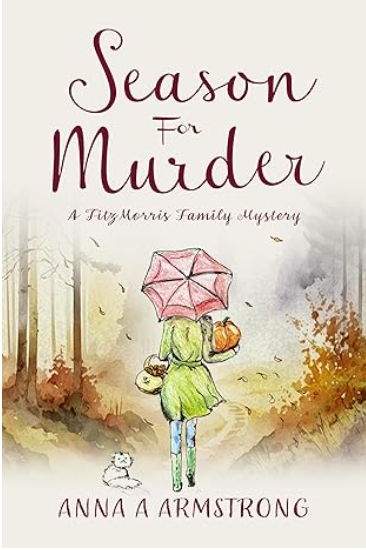
Enjoy a visit to the idyllic Cotswolds where the blackberry jam is delicious, the pumpkins are ripe and a killer is plotting death.
Vivian Plover is an unlikely murderer but needs must. If her bumbling husband is ever going to reach the exalted office of Lord-Lieutenant, Vivian, in sensible shoes, twin set and pearls has some murderous work to do. She is beset by challenges, from her godson’s fake fiancée to Dee’s meddling.
With the worthies of Little Warthing falling foul of accidents, can Dee FitzMorris thwart her scheme or will she find herself yet another victim?
Rarely has murder been so amusing.
Indulge in this quirky and humorous cosy crime novel that will keep you entertained from start to finish. Set in modern-day England, amidst the charming British Cotswold countryside, “Season for Murder” delivers a captivating blend of mystery and comedy. With its light-hearted atmosphere and engaging whodunit plot, this British detective series is a must-read for fans of cosy crime murder mysteries.
My Review
I was supposed to review this book for the blog tour but I couldn’t write a positive review. I was feeling very unhappy with this book, but I’ve decided to try to write a constructive review and post it now that the tour is over. I’m also not going to tag the author, because I don’t want to upset anyone.
So, here are my problems:
It’s all tell, no show.
The characters are caricatures. I don’t need to read all their inane thoughts.
There’s no mystery, the murderer tells the reader when, how, and why they did it.
The main character isn’t really made clear until a few chapters in.
The author keeps jumping from head-to-head.
It feels like the author read about NPD and decided to make their murderer a caricature of someone with NPD and loudly signal it with one of the minor characters studying narcissistic personality disorder for university.
I got bored, but pushed through in the hopes it’d improve. It didn’t
The thing is, if it was better written, it’d be a really good mystery. People in a Cotswolds village mysteriously almost dying, clearly murder attempts, but unsuccessful.
I had so many questions:
Who is the main character meant to be?
Is it the older woman who does taekwondo and is involved in her community. She, her daughter, and her granddaughter could have been the main investigators, helped by two admiring police officers, but they aren’t.
Or is it the young couple in a ‘fake couple becomes a real couple through surviving overbearing relatives and murder attempts’ narrative, but they aren’t.
Or it could even have been told exclusively from the villain’s perspective, but it isn’t.
It could have been a sensitive exploration of childhood trauma, the changing nature of wealth and country life, and village pettiness. But it’s heavy-handed, unsubtle, and not funny. I think it’s supposed to be funny, but I could be wrong.
I do feel sorry for the murderer’s husband, but he needed bringing into the story more, and some of the side characters have an outsized position in the plot, but their scenes barely add to the narrative. There are clearly difficulties in the marriage of one couple, but it doesn’t seem important to the plot, for example.
I tried to find something positive, but even the complicated relationship between Emily and Tristan, which could have been a driving force for emotion and comedy in the plot, isn’t engaging. The inclusion of an Italian family, a disabled side character and a gay couple in a long-term relationship feel shoved in for ‘diversity’, rather than being a solid part of the plot. The author treats their ‘differences’ from the majority of the characters as something that needs to be mentioned repeatedly, rather than just a thing that is.
It’s like the author wrote down the village gossip and threw in a murdering posh woman and gave her NPD as the cause, to produce a cosy mystery novel. And it doesn’t work like that in fiction!
I know there will be readers who love the POV shifting and seeing the day to day lives and thoughts of the characters, but my head is loud enough without adding fictional characters thoughts to the jumble, and it slows down the story and confuses the plot.
Okay, I failed at writing a constructive review. I tried. It’s up to you though, if you enjoy cosy crime/slice of village life fiction, borrow a copy from the library and see how you feel. I understand there are two other books in the series.
Talking of libraries, when you borrow a book from the library the author gets a small payment. Twice a year, the ALCS collects and distributes payments to authors, writers, and, journalists. I get about £100 a year from ALCS payments; it’s a life saver. Support your local library – they’re one of the few third spaces left where you can just go and hang out, use a computer, read a book, get help. They also support authors.
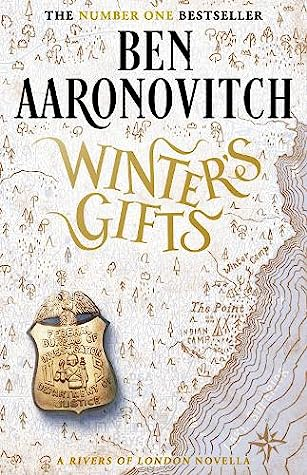
Series: Rivers of London (#9.5) Characters: Kimberley Reynolds Format: 211 pages, Hardcover Published: June 8, 2023 by Orion ISBN: 9781473224377 (ISBN10: 1473224373)
Description
When retired FBI Agent Patrick Henderson calls in an ‘X-Ray Sierra India’ incident, the operator doesn’t understand. He tells them to pass it up the chain till someone does.
That person is FBI Special Agent Kimberley Reynolds. Leaving Quantico for snowbound Northern Wisconsin, she finds that a tornado has flattened half the town – and there’s no sign of Henderson.
Things soon go from weird to worse, as neighbours report unsettling sightings, key evidence goes missing, and the snow keeps rising – cutting off the town, with no way in or out…
Something terrible is awakening. As the clues lead to the coldest of cold cases – a cursed expedition into the frozen wilderness – Reynolds follows a trail from the start of the American nightmare, to the horror that still lives on today…
My Review
A novella from last year that’s been sat on my TBR pile for a while! I’ve been prompted to read it by the arrival of the latest Rivers of London novella. I thought I’d better get up to date.
Kimberley Reynolds is sent to the Great Lakes in the middle of winter to deal with an incident with unusual characteristics, and is snowed in almost immediately. Stuck without back-up, and her contact missing, she must discover what’s going on, what it has to do with an exhibition by the Virginia Gentlemen in 1848 and where Henderson in. Unfortunately, she’s not the only one looking into things, and it gets complicated when the local meteorologist takes her out to the site of the 1848 winter camp. Malevolent forces are at work, a teenage genius loci comes to the rescue, and Kimberly falls in love.
Kimberley Reynolds is a character that pops up in some of the novels but to be honest, she never struck me as a interesting character, or one I’d taken much note of. However, this novella gives the reader more information about her background and develops her character. I enjoy these novellas because they allow Aaronovitch to explore characters and locations without a full novel focused on Peter. He does make an appearance, over the phone and in her head, but it’s mainly about Kimberley and her slowly blossoming romance with William, while investigating both modern and historical crimes.
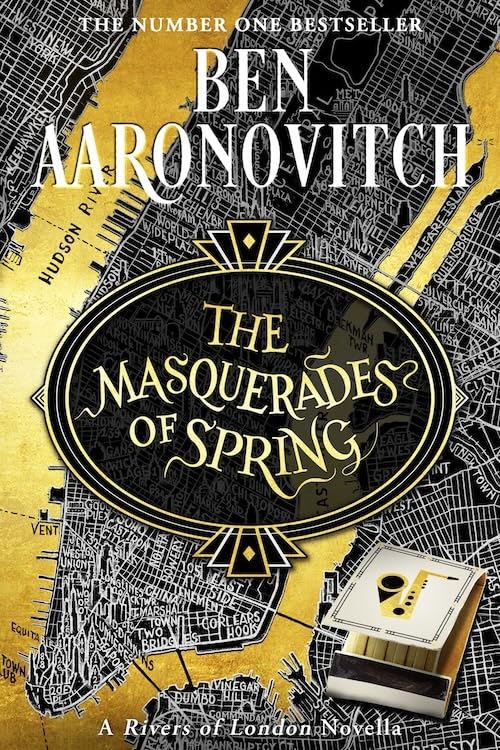
Format: 182 pages, Hardcover Published: September 5, 2024 by Orion Publishing Co ISBN: 9781398723887 (ISBN10: 1398723886)
Description
New York City, New York.
Meet Augustus Berrycloth-Young – fop, flaneur, and Englishman abroad – as he chronicles the Jazz Age from his perch atop the city that never sleeps.
That is, until his old friend Thomas Nightingale arrives, pursuing a rather mysterious affair concerning an old saxophone – which will take Gussie from his warm bed, to the cold shores of Long Island, and down to the jazz clubs where music, magic, and madness haunt the shadows…
My Review
A fun novella set in jazz-age New York, with a queer cast and inter-racial love. Nightingale turns up unexpectedly, and Gussie must help him rescue a fae. Interrupting things in the US, and upsetting lots of politicians, businessmen and mobsters, and people of a magical persuasion, events culminate at a drag ball, with policemen amusingly debagged, and explosions on lonely roads.
Aaronovitch conjures the air of excitement and danger that pervades New York in the 1920s and 30s, as jazz clubs and bathtub gin fill the need for escape after the horrors of war, and chronicle a forgotten period of cultural explosion, particularly exemplified by the Harlem Renaissance, in which Black culture and Queer culture flourished, before being appropriated and repressed after the second world war. He also captures the culture of corruption in the city, from police shakedowns for personal gain to gang violence. I loved the inclusion of the drag ball. I’ve heard about them, and how popular they were, but I don’t think they’re particularly well known outside of people interested in Queer history.
Gussie and Lucy are adorable, and I was sure Beauregard is some species of fae, although he might just be a practitioner with connections. I hope Lucy, Gussie and the gang all have long and fun lives, although I think they’d be old before their relationship becomes legal.
I enjoyed the ‘Jeeves and Wooster’ tone of the narrative, and Gussie is a funny narrator. He’s self-deprecating and observant, and astute enough to know when and when not to be himself, even if he has a low opinion of his own intelligence. The references to golden age crime fiction made me laugh – especially when Gussie decides to be a detective for a minute.
Enjoyable novella that introduces new aspects of the Rivers of London universe. Highly recommended.
PUBLICATION DATE: 15th AUGUST 2024 PAPERBACK ORIGINAL | £ 9. 99 | ORENDA BOOKS
On her first day back from maternity leave, Detective Sam Shephard is thrown straight into a cold-case investigation – the unsolved murder of a highly respected Anglican Priest in Dunedin.
The case has been a thorn in the side of the Police hierarchy, and for her boss it’s personal. With all the witness testimony painting a picture of a dedicated church and family man, what possible motive could there have been for his murder?
But when Sam starts digging deeper into the case, it becomes apparent that someone wants the sins of the past to remain hidden. And when a new potential witness to the crime is found brutally murdered, there is pressure from all quarters to solve the case before anyone else falls prey.
Format: 384 pages, Hardcover Published: June 20, 2024 by W&N ISBN: 9781399607537
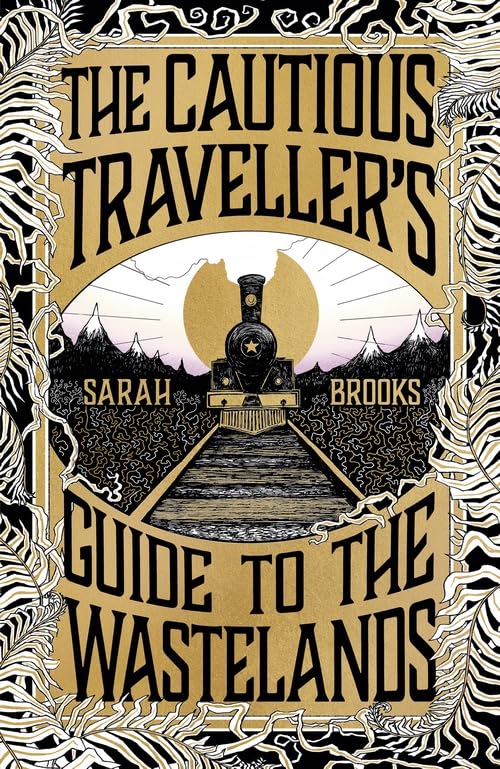
It is said there is a price that every passenger must pay. A price beyond the cost of a ticket.
It is the end of the 19th Century and the world is awash with marvels. But there is nothing so marvellous as the Wastelands: a terrain of terrible miracles that lies between Beijing and Moscow.
Nothing touches this abandoned wilderness except the Great Trans-Siberian Express: an impenetrable train built to carry cargo across continents, but which now transports anyone who dares to cross the shadowy Wastelands.
On to the platform steps a curious cast of characters: a grieving woman with a borrowed name, a famous child born on the train and a disgraced naturalist, all heading for the Great Exhibition in Moscow.
But the old rules are changing, and there are whispers that the train isn’t safe. As secrets and stories begin to unravel the passengers and crew must survive their journey through the Wastelands together, even as something uncontrollable seems to be breaking in . . .
My Review
I picked this book up at the ‘It’s Strange Up North’ event in June. Sarah Brooks is delightful, and signed this book for me. Actually, I think the books sold at that event were officially sold before publication date.
We have here a tale of a train that runs through the Siberian landscape from Beijing to Moscow, but a landscape transformed by some magical power. The land is utterly strange and bizarre creatures live there. It’s dangerous for humans to travel across the ‘Wasteland’, but trade demands that they must, so ‘the Company’ built a railway track and sends one train back and forth across it.
But the landscape is changing, it’s mimicking the the world that is intruding on it and eventually things go very wrong.
In this novel, set in 1899, we follow Marya, a young woman grieving the deaths of her parents, out to find the truth of the last crossing, and Weiwei, the child of the train – born on the train and raised by the crew – who also wants to know what happened. In the process of their separate investigations, they rouse the suspicions of the Company consultants, known as ‘Crows’.
As they seek answers they are changed, and the choices they, and their allies make – the Wasteland Girl, Elena, Alexei the engineer, Suzuki the Cartographer, and The Professor – bring changes to the whole world.
The action builds up as the train travels, there’s tension as they struggle with water shortages and mad English naturalists running off to get samples, while a Russian priest screams about blasphemy, and French aristocrats laze about. Someone has clearly been reading Agatha Christie.
This was something like Murder On The Orient Express, in that there’s a mystery to be solved – what happened on the last crossing? It’s also a historical fantasy of the late nineteenth century, with luxury carriages for the wealthy, crowded third class accommodation, steam trains, fantastical technology, and a landscape that is utterly strange but entrancing. The transformation of the train from a mechanical wonder to another kind of wonder, a terrifying, moving forest, luxuriant and free, a travelling Eden, is the central narrative, around which everything else is built, everything else is just the humans trying to understand it, understand their places in this new reality, and decide if they want to be a part of it or not.
It reminds me a bit of the magic used by Priya in Tasha Suri’s The Burning Kingdoms series. Except the magic isn’t controlled by anyone, the train and the landscape decides where it’s going.
The train and the landscape are intertwined, and the people realise they are intertwined with the landscape too, and the Walls are false promises of strength holding up ultimately weak Empires and greedy corporations.
How lovely! What a wonderous thought, a wonderous world it would be, if the old empires fell because a magical forest rose, rather than because we started murdering each other by the millions.
‘The Company’ is clearly modelled after the East India Companies of the 17th to 19th centuries (Dutch and British – both equally greedy and murderous, with their own armies), with a Victorian railway company thrown into the mix. If the East India Company hadn’t fallen apart by the 1850s, they might have got into trans-continental railways, I suppose, and the trans-Siberian train route has been around for about 100 years. It’s actually three or four connected routes, that started when the Russian Empire decided it would quite like to get to it’s furthest eastern reaches, near China, more easily. You can travel all the way from Moscow to Beijing, which would be fun, if you didn’t have to go to multiple dictatorships to do so. The train network made it easy for Russian troops to support China during the Japanese invasion in the 1940s, but also meant the Chinese and Russians could kill each other easily over bits of territory they both claimed in the 1910s.
I would call them silly buggers, but come on, we didn’t do much better. Empires are bad for everyone.
Anyway, I was quite enthralled by this book. I loved the lavish descriptions of the Wastelands and the way the train transformed. I found Marya and Weiwei, two very different people, to be sympathetic and engaging characters, and the narrative tightly constructed.
Enjoyable historical fantasy. Especially if you like trains. And magical, murderous landscapes.
Release Date 2024-08-13 Formats Ebook, Paperback EBook ISBN 13th August 2024 | 9781915998132 | epub & mobi | £4.99/$7.99/$8.99 Paperback ISBN 13th August 2024 | 9781915998125 | Paperback | £9.99/$17.99/$23.99
Blurb
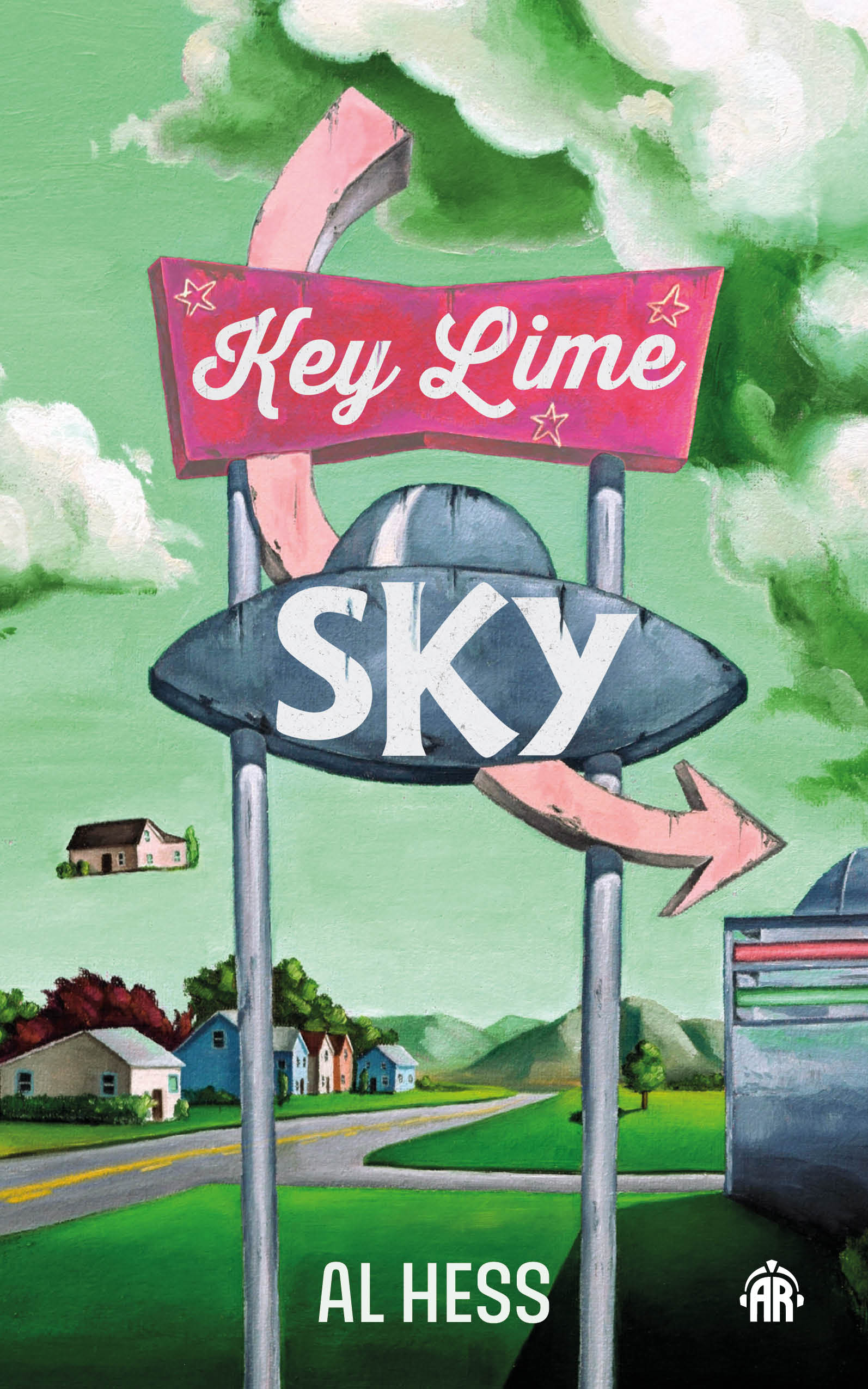
An alien invasion hits the town of Muddy Gap, but a disgruntled pie aficionado is the only one who seems to remember it…
Denver Bryant’s passion for pie has sent him across Wyoming in search of the best slices. Though he dutifully posts reviews on his blog, he’s never been able to recreate his brief moment of viral popularity, and its trickling income isn’t enough to pay his rent next month.
Driving home from a roadside diner, Denver witnesses a UFO explode directly over his tiny town of Muddy Gap. When he questions his neighbors, it appears that Denver is the only person to have seen anything – or to care that the residents’ strange behavior, as well as a shower of seashell hail, might be evidence of something extraterrestrial. Being both non-binary and autistic, he’s convinced his reputation as the town eccentric is impeding his quest for answers. Frustrated, he documents the bizarre incidents on his failing pie blog, and his online popularity skyrockets. His readers want the truth, spurring him to get to the bottom of things.
The only person in town who takes him seriously is handsome bartender, Ezra. As the two investigate over pie and the possibility of romance, the alien presence does more than change the weather. People start disappearing. When Denver and Ezra make a run for it, the town refuses to let them leave. Reality is folding in on itself. It’s suddenly a race against time to find the extraterrestrial source and destroy it before it consumes not only Muddy Gap but everything beyond. Denver’s always been more outsider than hero, but he’s determined to ensure that a world with Ezra – and with pie – still exists tomorrow.
Key Lime Sky is the second book from AL Hess at Angry Robot – check out his previous work, World Running Down.
When Varg Veum reads the newspaper headline ‘YOUNG MAN MISSING’, he realises he’s seen the youth just a few days earlier – at a crossroads in the countryside, with his two friends. It turns out that the three were on their way to a demonstration against a commercial fish-farming facility in the tiny village of Solvik, north of Bergen.
Varg heads to Solvik, initially out of curiosity, but when he chances upon a dead body in the sea, he’s pulled into a dark and complex web of secrets, feuds and jealousies.
Is the body he’s found connected to the death of a journalist who was digging into the fish farm’s operations two years earlier? And does either incident have something to do with the competition between the two powerful families that dominate Solvik’s salmon-farming industry? Or are the deaths the actions of the ‘Village Beast’ – the brutal small-town justice meted out by rural communities in this part of the world.
Shocking, timely and full of breath-taking twists and turns, Pursued by Death reaffirms Gunnar Staalesen as one of the world’s greatest crime writers.






 Everything Is Better With Dragons