Sex and Sexuality in Medieval England allows the reader a peek beneath the bedsheets of our medieval ancestors, in an informative and fascinating look at sex and sexuality in England from 1250 to 1450. It examines the prevailing attitudes towards male and female sexual behaviour, and the ways in which these attitudes were often determined by those in positions of power and authority. It also explores our ancestors’ ingenious, surprising, bizarre and often entertaining solutions to the challenges associated with maintaining a healthy sex life. This book will look at marriage, pre-marital sex, adultery and fornication, pregnancy and fertility, illegitimacy, prostitution, consent, same-sex relationships, gender roles and much more, to shed new light on the private lives of our medieval predecessors.
My Review
Meh. Felt like more of a gazetteer of examples rather than an exploration of “marriage, pre-marital sex, adultery and fornication, pregnancy and fertility, illegitimacy, prostitution, consent, same-sex relationships, gender roles”.
The author covers sex and sexuality across the whole medieval period. This is a thousand years. Most of the examples are from the latter half of the period, as that’s what survives, and the author draws on academic work by modern researchers. While there are some interesting snippets of information, you can probably learn more from the ‘Betwixt the Sheets’ podcast.
I have books on similar subjects from Pen & Sword, that are either really well organised and explore the subject in detail, or they are more of the gazetteer type with a bit of discussion around lists of people who did things or got arrested for things. It’s repetitive and unhelpful. This is what really frustrates me about Pen & Sword books, they’re either really quite amateur or really professional, with very little in between.
Format: 342 pages, Paperback Published: March 21, 2019 by Two Roads ISBN: 9781473661233 (ISBN10: 1473661234)
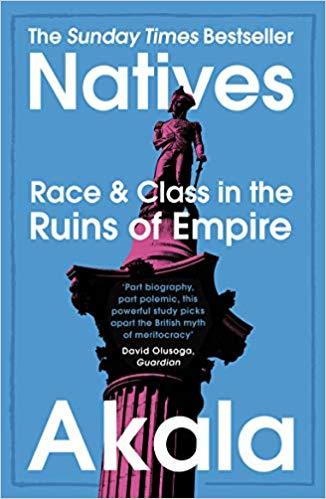
From the first time he was stopped and searched as a child, to the day he realised his mum was white, to his first encounters with racist teachers – race and class have shaped Akala’s life and outlook. In this unique book he takes his own experiences and widens them out to look at the social, historical and political factors that have left us where we are today.
Covering everything from the police, education and identity to politics, sexual objectification and the far right, Nativesspeaks directly to British denial and squeamishness when it comes to confronting issues of race and class that are at the heart of the legacy of Britain’s racialised empire.
Natives is the searing modern polemic and Sunday Times bestseller from the BAFTA and MOBO award-winning musician and political commentator, Akala.
Bedford Square Publishers 05 June 2025 £18.99 978-1-8350-1071-6 Hardback
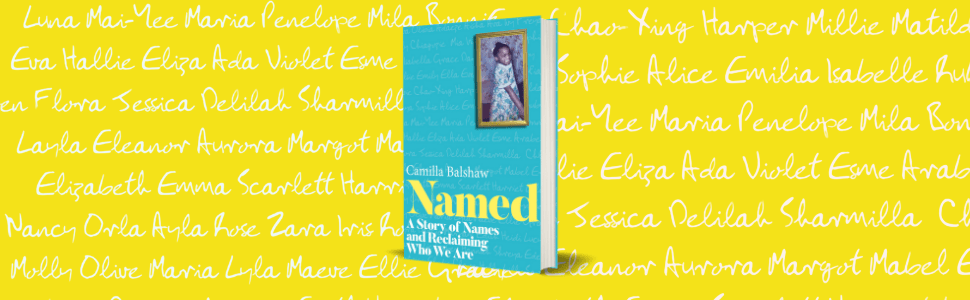
The book Our names are a shadow we carry around with us. They are part of who we are. Our names are a marker of our self-identity and our sense of self. Our names have the power to shock. They have the power to heal, and they have the power to trigger conversations around race, class, social mobility and belonging. But what is a name? What do our names tell us about ourselves? And why do they matter?
Named is a fascinating exploration of names, global naming conventions and identity politics woven into a moving, personal narrative about the finding of family and self. At the intersection of memoir and social and cultural history it is a truly fascinating book about the seemingly ordinary and every day.
The author’s own narrative about her estrangement from her Nigerian father, the grapples with her Jamaican mother and her journey towards identity is woven through the chapters making it an engaging and intimate investigation of what makes us who we are.
Format: 469 pages, Paperback Published: September 7, 2023 by Cambridge University Press ISBN: 9781009429948
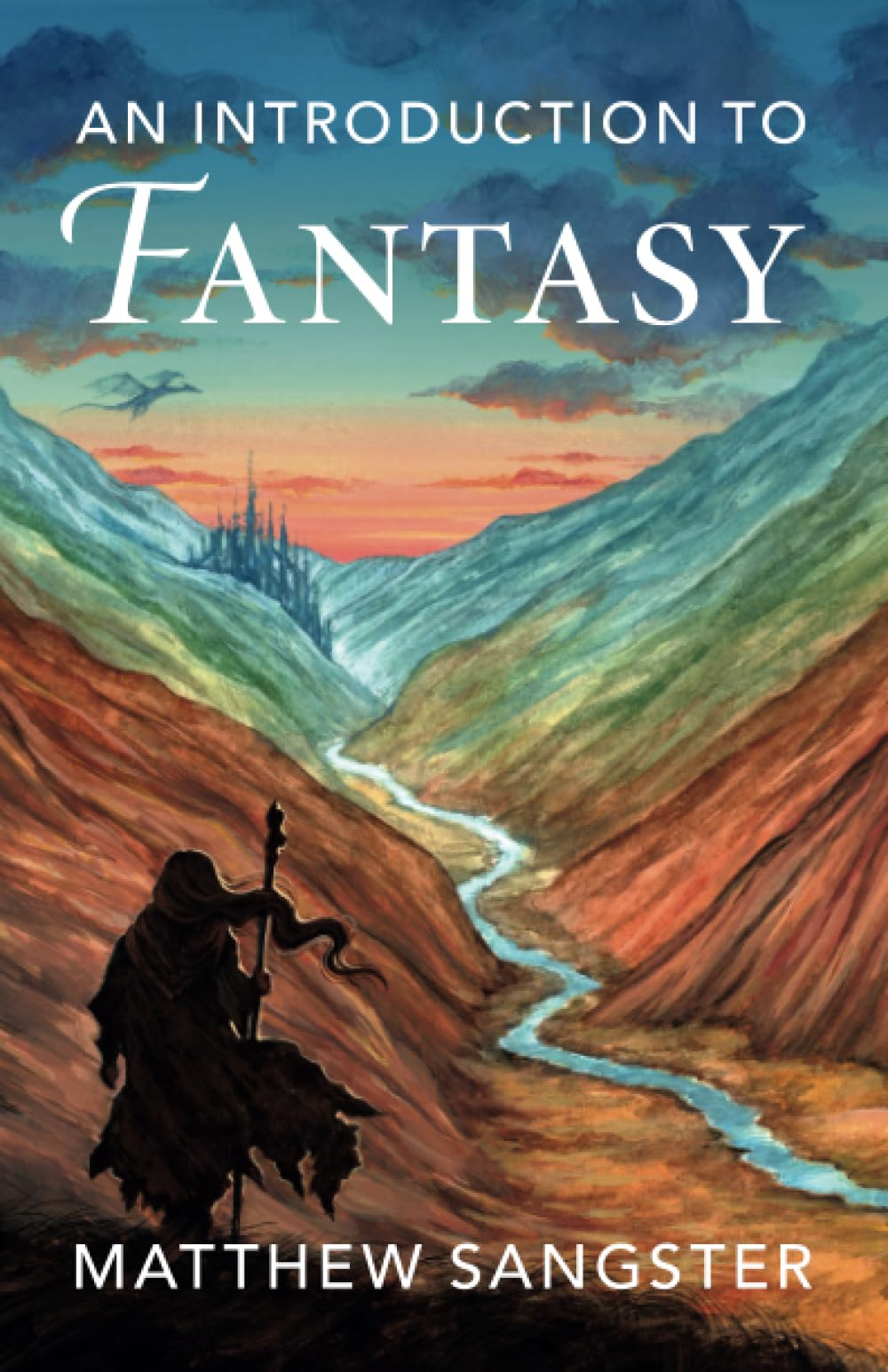
Providing an engaging and accessible introduction to the Fantasy genre in literature, media and culture, this incisive volume explores why Fantasy matters in the context of its unique affordances, its disparate pasts and its extraordinary current flourishing. It pays especial attention to Fantasy’s engagements with histories and traditions, its manifestations across media and its dynamic communities.
Matthew Sangster covers works ancient and modern; well-known and obscure; and ranging in scale from brief poems and stories to sprawling transmedia franchises. Chapters explore the roles Fantasy plays in negotiating the beliefs we live by; the iterative processes through which fantasies build, develop and question; the root traditions that inform and underpin modern Fantasy; how Fantasy interrogates the preconceptions of realism and Enlightenment totalisations; the practices, politics and aesthetics of world-building; and the importance of Fantasy communities for maintaining the field as a diverse and ever-changing commons.
Literary awards:
Mythopoeic Scholarship Award for Myth and Fantasy Studies (2024)
My Review
I’ve been working my way through this book since last October, around blog tours, getting slightly too obsessed with YouTube , and a lot of crochet. I finished the last 40 pages this evening and now I need to tell you all about it. Matthew Sangster is a product of Glasgow University’s Centre for Fantasy and the Fantastic, and the access to many fantasy novels and academic works show in the text. Sangster mentions works by some of the most well-known in fantasy, such as Le Guin and Tolkein, and some more unexpected authors, especially those from earlier centuries. He draws out six important points about fantasy, over the chapters of this books and they form his core arguments:
Fantasy arises from figurative language
Iteration is a defining technique – new stories build on old in new ways
Contemporary fantasy builds on some of the oldest forms
Fantasy exists in conversation with realism
Worldbuilding is both the prevailing metaphor of modern fantasy and used to develop plots and characters
Fantasy is a form practised in community rather than one by unique geniuses.
I had to read the ‘Envoi’ chapter to get that. Sangster helpfully lists these points for the reader. It certainly helps with the summary. He does try to be accessible throughout the book, and uses a lot of examples to make his points, referencing very well-known authors, TTRPG series, video games, and film franchises in the process. It was heavy going at times, but that might be my lack of formal education in Literature at University Level. My M.A. is in Creative Writing, not Literature, after all.
Sangster raises some good points, especially about the tendency of ‘literary’ culture to consider ‘genre’ fiction as lesser, as the mode of storytelling is not ‘realistic’ and therefore can’t possibly impact readers. Fantasy, Sangster argues, explores the real world using the fantastical as a foil, a universalising storytelling mode that draws on cultural language. Fantasy can tell stories in ways that resonate with people far more effectively than straight up realism. It digs down into the root, builds on older foundations and finds new ways to explore ancient concerns.
I certainly find fantasy a useful vehicle for understanding the world, particularly in the work of Terry Pratchett. Fantasy communities, whether specific fandoms, organisations for writers, or online groups (such as the BFS Discord – Join the BFS, and come to our Discord, we have quiz nights and shadow daddies!), work in dialogue with the stories and their creators. New worlds spin off from the original, and people have a shared language to communicate with, across time and culture (see: Vimes’ Boots Theory of Economics).
I found Sangster’s work thoughtful and interesting, although it is very much an academic text so possibly not something a casual reader might go for. Useful for those interested in SFFH in an academic setting e.g., if you’re doing your M.A. in Fantasy and Sci-Fi literature or as a basis for a Doctorate in the field. Yes, those do exist, and yes, they’re a bit serious. (Again, see Glasgow University).
Format: 120 pages, Paperback Published: July 28, 2022 by 404 Ink ISBN: 9781912489602 (ISBN10: 1912489600)
Description
Since its inception decades ago, the tabletop roleplaying game Dungeons & Dragons has offered an escape from the real world, the chance to enter distant realms, walk in new shoes, and be part of immersive, imaginative tales as they unfold. More so, in Thom James Carter’s opinion, it’s a perfect vessel for queer exploration and joy.
Journey on, adventurer, as Dungeon Master Thom invites readers into the game’s exciting queer, utopian possibilities, traversing its history and contemporary evolution, the queer potential resting within gameplay, the homebrewers making it their own, stories from fellow players, and the power to explore and examine identity and how people want to lead their lives in real and imagined worlds alike.
Grab a sword and get your dice at the ready, this queer adventure is about to begin.
My Review
This was an interesting little book about D&D and Queer culture, exploring the background and history of D&D, and the use of D&D by Queer people to explore their identities. It’s an interesting essay and the structure is fun. It is a introduction to the game and TTRPGs generally, but if you’re already in the fandom, you might not find much useful in it.
One-Time
Monthly
Yearly
Make a one-time donation – If you want. No pressure.
Make a monthly donation
Make a yearly donation
Choose an amount
£5.00
£15.00
£100.00
£5.00
£15.00
£100.00
£5.00
£15.00
£100.00
Or enter a custom amount
£
Your contribution is appreciated. I put a lot of effort into reading and reviewing books for readers.
Format: 320 pages, Hardcover Published: March 19, 2024 by Allen Lane ISBN: 9780241595824 (ISBN10: 0241595827)
Description
Judith Butler, the ground-breaking philosopher whose influential work has redefined how we think about gender and sexuality, confronts the attacks on gender that have become central to right-wing movements today. Global networks have formed “anti-gender ideology movements” dedicated to circulating a fantasy that gender is a dangerous threat to families, local cultures, civilization –and even “man” himself. Inflamed by the rhetoric of public figures, this movement has sought to abolish reproductive justice, undermine protections against violence, and strip trans and queer people of their rights. But what, exactly, is so scary about gender?
In this vital, courageous book, Butler carefully examines how “gender” has become a phantasm for emerging authoritarian regimes, fascist formations, and trans-exclusionary feminists. They illuminate the concrete ways that this phantasm displaces anxieties and fears of destruction. Operating in tandem with deceptive accounts of critical race theory and xenophobic panics about migration, the anti-gender movement demonizes struggles for equality, fuels aggressive nationalism, and leaves millions of people vulnerable to subjugation.
An essential intervention into one of the most fraught issues of our moment, Who’s Afraid of Gender? is a bold call to make a broad coalition with all those whose struggle for equality is linked with fighting injustice. Imagining new possibilities for both freedom and solidarity, Butler offers us an essentially hopeful work that is both timely and timeless.
My Review
Interesting, definitely one to re-read and digest. I struggled with parts of the text – it was a bit dense.
The author challenges the phantasm of ‘gender ideology’, pushed by those with a stake in maintaining the cis-heteronormative, patriarchal status quo as part of religious and Right wing ideology. The author takes the reader through the various talking points, and explains how those opposed to equal rights for gender and sexual minorities elide between talking points without logical argument. They assume ‘allowing trans people to live their lives’ automatically means ‘anyone will identify as anything in order to attack children’. There’s no logical way to get from one to the other. This is a way to displace the fear of living in late-stage capitalism, with the attendant global warming and population displacement that comes with it. Instead of focusing our anger and fear on the causes of the world becoming unliveable, humans are distracted by false ghosts, phantasms, bundled under the word ‘gender’.
The book seems to be aimed at a non-academic audience, covering what should be fairly obvious arguments, if you’ve kept up with the whole anti-trans movement. However, it does become very academic and falls into philosophy-speak at times. I did enjoy reading this book, but sometimes, I wish they’d written it in plain English.
It’s late, I’ll write more when I’ve had a think about it.
By Julie Cook Imprint: Pen & Sword History Pages: 184 Illustrations: 32 black and white illustrations ISBN: 9781399003414 Published: 10th October 2022 £14.00
Description
A History of Girl Guides and Girl Scouts: Brownies, Rainbows and WAGGGS charts the evolution of the Girl Guides and Girl Scouts from its early days as a movement started before WW1 right through to the modern day. With real life interviews with Girl Guides and Girl Scouts from their 90s down to young children, this book looks at what being a Girl Guide has meant through the ages up to the present day. With dramatic and often emotional stories of what it was like to be an evacuated Brownie in the Second World War, a disabled Girl Guide and with tales of girls’ heroism throughout the two great wars both in the UK and the United States, this book extols the Guiding and Scouting movement as one that has evolved with women and girls’ rights and its hopes for the future.
My Review
Thanks to Rosie Crofts at Pen & Sword for sending me a copy of this book, way back in 2022. I was sent it in return for an honest review.
I wanted to review this book because I was in Brownies and Guides, and have some really good memories of being part of the Guiding movement. I got me through most of my teens and gave me something to do on a Wednesday evening for 7 years, and trips away. I still see my Brownie leader. I was also her Young Leader in a different Guide group when I was 17/18 after I left my original Guide group just before I turned 16. I managed a whole year out of Guides. When I went to university, I joined the Guides and Scouts association there, but didn’t do anything with them. There were so many people and they were not as welcoming as you would expect.
Reading this book brought back memories. I’d completely forgotten about the toadstool and mirror we used as a pool in Brownies to do our Promise. I can’t remember what Six I was in, but I think my sister made it to Seconder in her Six. I must have joined in 1990, or 1991, because I had the ‘new uniform’, a pair of trousers and a jumper, while my sister had the old brown dress and she joined a year before me. You had to wait until there was space before you could join. The leaders, Brownie Owl and Tawny Owl, were school teachers at my cousins’ primary school. We used to play games and make things. My best friend also went to that Brownies, but didn’t stay long because a lot of our games were floor based and she couldn’t take part, and I can’t remember her from then; we met in secondary school in 1994 and we’ve been friends ever since she talked at me until I finally responded. I did a few badges, mostly the walking and camping related ones. I think I tired to do some of the more domestic ones, but I wasn’t very good at the.
I went up to Guides in 1993 when I turned 10. My Guide leader was the vicar’s wife and a Marie Curie nurse. Our Guides, and the Brownies, were attached to the local C of E church. We did a lot of stuff in and around the church and the vicarage, because they had a huge garden, and knew a lot of people. We went camping, to adventure centres, did flower arranging, candle making and jam making, we went to The Body Shop for a special visit about make-up for beauty related stuff, followed by a trip to McDonalds, we went ice skating and to Cleethorpes swimming pool for a special treat. We went to Poacher 96, a big international camp help every four years at Lincolnshire Show Ground. We learnt about child safety and care. I got badges in walking, camping and other random stuff. We got new neckers around 1998, in Royal Stuart Tartan. Before that, I can’t remember what colour we had, or if we even had one.
There was one camp where I wanted to try climbing and abseiling, but I only just managed to climb the climbing wall and had to be helped down the internal stairs of the climbing tower, because I was too scared to abseil once I got to the top. I wet the sleeping bag every night of that camp. I was still bed wetting at that point. Luckily I was sleeping in my own tent, although I shared it with one other Guide who was as anxious as I was. I’d have preferred to have my own tent to myself. That was the camp where the leader went to buy ‘Seventeen’ magazine for a group of fifteen year old Guides (so I must have been 12 or 13) and was scandalised when she realised what was in Seventeen magazine. Some of those girls seemed impossibly more mature and sophisticated than me, even though they weren’t much older really.
At another camp, we stayed in dorms (I had adult nappies for this occasion) at an adventure centre and I fell in a river while canoeing. I don’t mind falling in rivers, that’s fun. We also went climbing on that trip too. I got sunburnt and hid under a rock after doing the easiest climb and abseil.
On one weekend trip to a local water sports centre, my sister and I had a dome tent and we played ‘how many guides can you get in a 2-person dome tent’.
The answer is 12. Twelve teenage Guides full of sugar, who’d just spent the day canoeing around an old clay pit.
I’m sure my experience in a Guide group in the 1990s in a small town in northern Lincolnshire will be different from a Guide in 1990s London or a coastal town in Cornwall.
This book isn’t a deep archival research based book, it outlines the story of Girl Guiding and Girl Scouting in Britain and the US in 1910, and shares the stories of Guides, Scouts, and Brownies from the last 80 years. It was written during the pandemic lockdowns, so the interviews were performed over video calls. Some of the quotes come from previously published memoirs to illustrate the experiences of other Guides.
The book shows there’s a rich social history to be found in the stories of Guides and Girl Scouts, ready to be mined. There are bits and pieces of information in this book that every Guide and Girl Scout should know – like who founded them (Agnes Baden-Powell in the UK, Juliette Gordon-Low in the US) and when, the origins of the names and uniforms, that sort of thing. It also looks to the future and the current needs of girls. GirlGuiding UK regularly surveys members in about the things that are currently important to them and has found some disturbing things about the way girls feel about their bodies and abilities.
Guides and Girl Scouts did consider opening to boys when I was a member, just after Scouting UK and Boy Scouts of American opened up to girls, but they decided that girls need a place away from boys, to develop their identities away from the influence of social expectations of the way children and teenagers of different genders should interact. The GirlGuiding UK website makes it clear that men can volunteer to help units in some capacities, but it is a girls-only organisation and the leaders are all women, for instance, had my grandad still been alive while I was a Guide, he could have taught us knots for a badge and been a tester, but he couldn’t have been a leader, although he’d been a Scout Leader in South Shields while my Dad and Uncle were in the Cub Scouts.
This book was fascinating and reminded me of the fun and adventures I had in my Guiding days. A great addition to any Guide’s library.
Title and subtitle: Unashamed: Why do people pay for sex? Author: Elizabeth G. Publisher: Whitefox Formats: Hardback, paperback, ebook, audiobook Page count: 272 pages Recommended Retail Price (RRP) (£): Hardback – £19.99, Kindle – £7.99, Audiobook – £0.99 (with Audible membership) or £16 Genre(s): Memoir, Female empowerment, human sexuality, the sex industry, self-help. Publication status: Published on 28th March 2024 Amazon link: https://www.amazon.co.uk/dp/1915635799
Unashamed: Why do people pay for sex? BLURB
Elizabeth G. was twenty-two years old and travelling around Australia when she came across a job opportunity at an erotic massage parlour in Sydney. Fast forward eighteen years and she had built up a trusted list of regular clientele working as a high-end London escort and was frequenting some of the city’s most exclusive hotels.
This is an inspirational story of resilience and self-belief in the face of adversity. It gives a fascinating insight into what it’s like to work week in and week out as a sex worker and how it feels to hide who you are from your friends and family. It’s about understanding why a person would pay for sex in the first place. It’s about the positive effects of sex work. It’s about love, connection, nurture and healing. It’s about change. It’s about acceptance. It’s about hitting rock bottom and picking yourself back up, time and time again. It’s about growth, embracing the struggles and learning from your mistakes. And, above all, it’s about breaking through the barriers of shame, and staying true to yourself no matter what.
In shedding a spotlight on the sex industry, Elizabeth hopes to challenge the misconceptions and shame surrounding sex work, and to help provide better protection for those who are forced into the industry as a result. Unashamed is a no-holds-barred, taboo-busting account of the life of a sex worker, and what it’s like to build a highly successful career in a multimillion-pound industry that exists largely in the shadows. If you want to feel inspired and embrace yourself as a sex worker, or develop an understanding of the profession, or you simply want to eradicate shame in any aspect of your personal life, then look no further.
Publication date Thursday, May 23, 2024 Price £16.99 ISBN-13 9781800961982
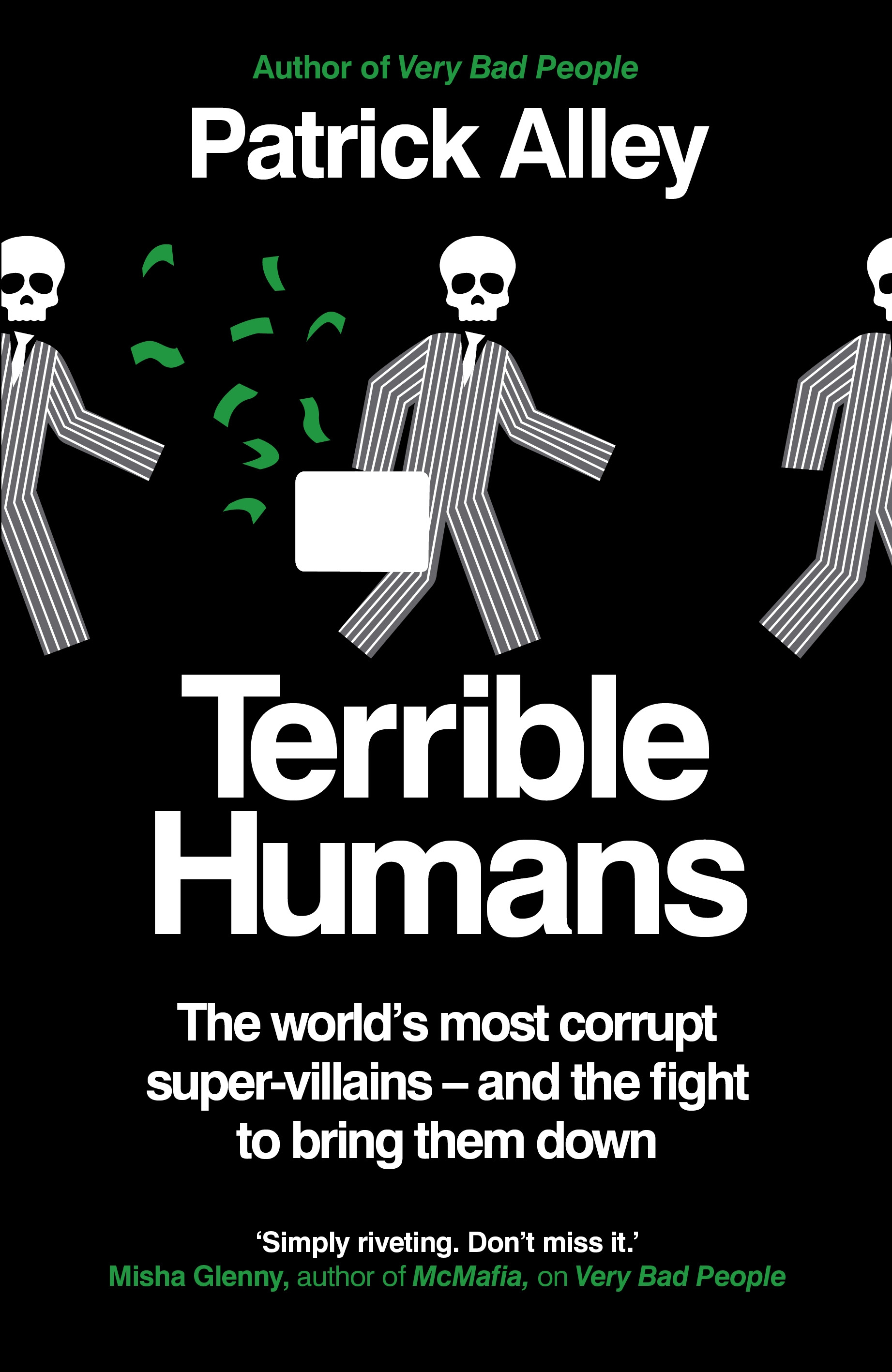
Description A small number of people, motivated by an insatiable greed for power and wealth, and backed by a pinstripe army of enablers (and sometimes real armies too), have driven the world to the brink of destruction. They are the super-villains of corruption and war, some with a power greater than nation state and the capacity to derail the world order. Propping up their opulent lifestyles is a mess of crime, violence and deception on a monumental scale. But there is a fightback: small but fearless groups of brilliant undercover sleuths closing in on them, one step at a time.
In Terrible Humans, Patrick Alley, co-founder of Global Witness and the author of Very Bad People, introduces us to some of the world’s worst warlords, grifters and kleptocrats who can be found everywhere from presidential palaces to the board rooms of some of the world’s best known companies. Pitted against them, the book also follows the people unravelling the deals, tracking the money and going undercover at great risk. From the oligarch charged with ordering the killing of an investigative journalist to the mercenary army seizing the natural resources of an entire African country, this is a whirlwind tour of the dark underbelly of the world’s super powerful and wickedly wealthy, and the daring investigators dragging them into the light.
Format: 208 pages, Paperback Published: March 20, 2023 by Pluto Press ISBN: 9780745345161 (ISBN10: 0745345166) Language: English
Description
An impassioned discussion about the alternative ways to form relationships and resist capitalism.
Capitalist ideology wants us to believe that there is an optimal way to live. ‘Making connections’ means networking for work. Our emotional needs are to be fulfilled by a single romantic partner, and self-care equates to taking personal responsibility for our suffering. We must be productive and heterosexual, we must have babies and buy a house. But the kicker is most people cannot and do not want to achieve all, or any of these life goals. Instead we are left feeling atomised, exhausted and disempowered.
Radical Intimacy shows that it doesn’t need to be this way. A punchy and impassioned account of inspiring ideas about alternative ways to live, Sophie K Rosa demands we use our radical imagination to discover a new form of intimacy and to transform our personal lives and in turn society as a whole.
Including critiques of the ‘wellness’ industry that ignores rising poverty rates, the mental health crisis and racist and misogynist state violence; transcending love and sex under capitalism to move towards feminist, decolonial and queer thinking; asking whether we should abolish the family; interrogating the framing of ageing and death and much more, Radical Intimacy is the compassionate antidote to a callous society.
My Review
I have the Left Book Club edition of this book; the standard cover is plain yellow with black writing. All of the Left Book Club contemporary library have the same cover. I have several of them, this might be the first one I’ve had time to read. I started reading it on Wednesday, and almost finished it, but I had to go to bed, so I finished it off yesterday afternoon.
I thoroughly enjoyed reading this book. It was a thoughtful introduction to some of the ideas presented, and well referenced. I generally agree with the direction of the argument, the capitalist, atomised society we live in, focused on the nuclear family, doesn’t support humans in a healthy way. I think read in conjunction with other books, such as Empire of Normality, by Robert Chapman, which I’ve reviewed in the past, and other books from Pluto Press (which I have, but haven’t had a chance to read yet), this book could be a good base from which to work. The writing style was engaging although slightly shallow at times, with arguments not developed as fully as perhaps some would like. Sex is barely mentioned, because intimacy and sex are not synonymous.







 Everything Is Better With Dragons