
Wes Streeting can go fuck himself with a rusty spade.
Category Archives: Uncategorized
Angry Robot Blog Tour/ARC Review: Symbiote, by Michael Nayak

£9.99/$18.99 |
Also available in ebook and audio |
Sci-Fi | Alien Contact | Military
ABOUT THE BOOK
As World War III rages, the scientists in Antarctica are thankful for the isolation– until a group of Chinese scientists arrive at the American research base. In their truck is a dead body, the first murder in Antarctica. The potential for a geopolitical firestorm is great, and, with no clear jurisdiction, the Americans don’t know what to do. But they soon realize the Chinese scientists have brought far more with them than the body…
Within seventy-two hours, thirteen others lie dead in the snow, murdered in acts of madness and superhuman strength. An extremophile parasite from the truck, triggered by severe cold, is spreading by touch. It is learning
from them. Evolving. It triggers violent tendencies in the winter crew, and, more insidiously, the beginnings of a strange symbiotic telepathy.
Exhausted by suspicion and fear, with rescue impossible for months, the desperate crewmembers turn on each other. A small group of survivors try to resist the siren call of the growing hive mind and stay alive long
enough to solve the mystery of the symbiotic microbe’s origins. But the symbiote is more than a disease– it is a biological weapon that can change the balance of power in a time of war.
The survivors cannot let anyone infected make it to the summer season, when planes will arrive to take them and potentially the symbiote– back to civilization…
THEMES: Isolation and its effect on the human psyche; the cold of Antarctica as a character; uncontrolled bacterial evolution as a pacing threat; cramped, claustrophobic confines leading to intense interpersonal
fireworks; the Antarctic Treaty, and how that is defined in a time of war
ARC TBR Pile Review: The House of Frost and Feathers, by Lauren Wiesebron
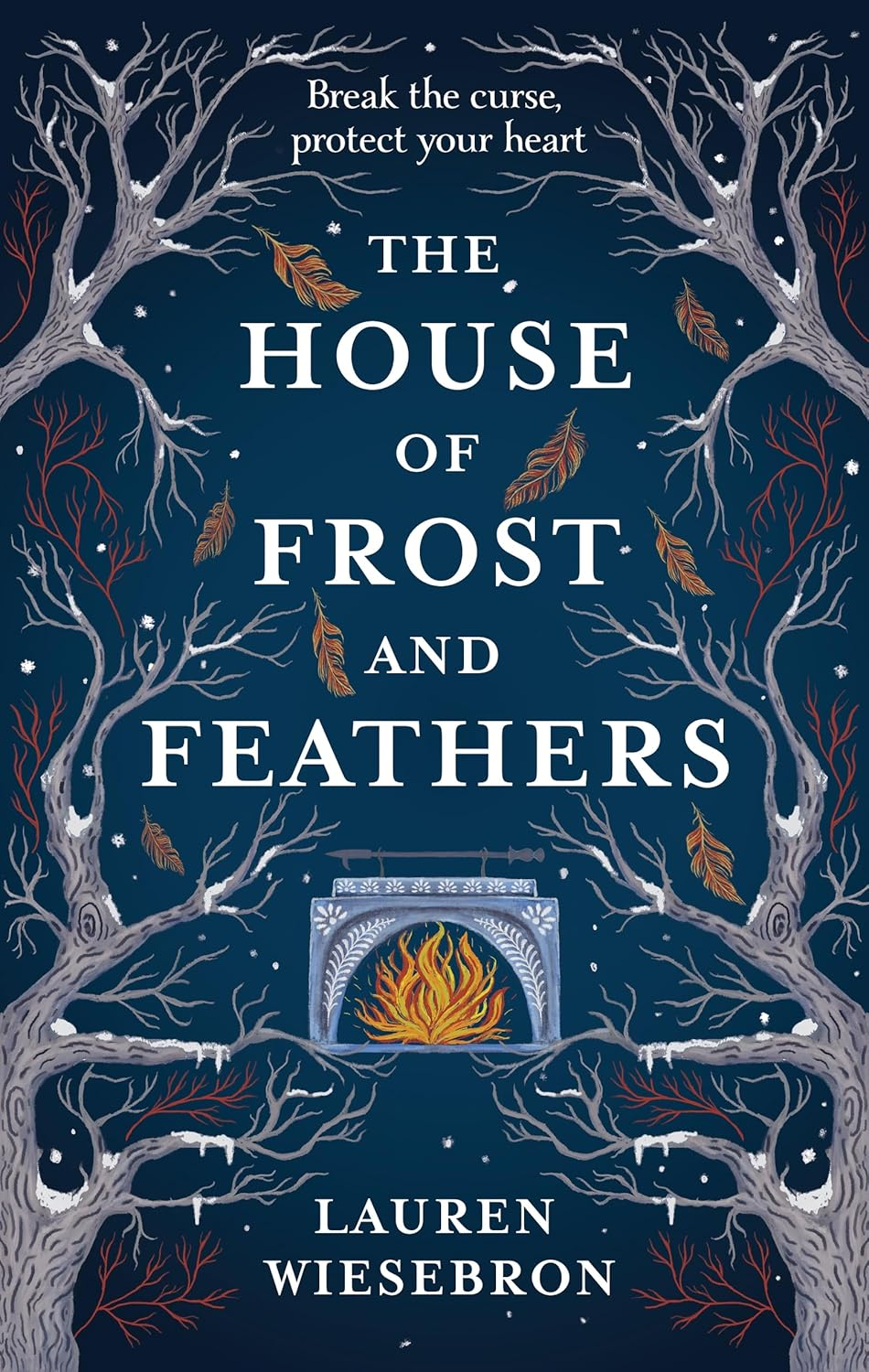
Published: January 16, 2025 by Hodderscape
ISBN: 9781399723176 (ISBN10: 1399723170)
Language: English
Description
Marisha’s life is not going as she expected. With the sleeping plague only a few months away, she’s as desperate for money as she is to escape her aunt’s torturous marriage prospects. Leaving all that she’s known behind, Marisha accepts a job working with the notorious koldunya, Baba Zima in her house that glides on chicken feet through the snow.
But Baba Zima is renowned for being both clever and cruel. And most difficult of all is her current apprentice, Olena, who wants nothing to do with Marisha. Despite her fears and Olena’s cold demeanour, Marisha finds herself drawn into the magical world of koldunry and delves further into Olena’s research – a cure for the sleeping plague.
Accompanying Olena on an increasingly dangerous, seemingly impossible search for a cure, she finds hidden connections between the sleeping plague, her own family’s history, and her bizarre, recurring dreams: dreams of a masked ball where the deep sleepers are trapped endlessly dancing – and a monstrous beaked man haunts her every step . . .
My Review
I found an ARC of this book at FantasyCon, one of the Hodderscape team must have left it lying around after a book launch event. It has a matching bookmark. Essentially I have paperback version of the hardback now available. The book was published 16th of this month. The paperback from HarperVoyager will be published in June. It has a different cover, so I might get it. This book is the February BFS Book Club book, and since I had it and felt like reading something different yesterday evening, I started reading it.
When I went to bed I was over 220 pages in and only stopped reading because my eyes were stinging with tiredness. I planned to go swimming this afternoon, but decided to stay home and finish the story instead. I’m going swimming tomorrow instead.
Marisha is cursed. Her mother, then her father, succumb to the sleeping plague, ten years apart. Her brother loses their fortune and she is, after finishing school, thrown on the mercies of her wealthy maternal aunts. Who pity and hate her, fearing she’ll bring the curse to them next time the sleeping plague strikes. Determined to get away from her aunts and the prospect of marriage to a man twice her age with evil eyes, she applies to be a koldunya’s assistant.
She’s too old.
She doesn’t believe in magic or curses.
She doesn’t have koldunya quality.
Her parents are victims of the sleeping plague and her brother has disappeared.
She is stubborn, logical, and hardworking. She knows how to scrub pans, read Old Slavonic, and the house didn’t squash her immediately.
Baba Zima takes her on for a year.
But she’s assistant to Olena, Baba Zima’s apprentice, who is stubborn, spiky, doesn’t let people in, and really doesn’t want an assistant.
The household is completed by two other young assistance, Dunya and Anka-ny, and they are later joined by Baba Zima’s son Valdim
For three months the household travels across the land, dispensing advice, cures, and spirit work to supplicants. Marisha develops a complicated relationship with Olena, especially after they kidnap a victim of the sleeping plague from a sanitorium and Marisha starts having terrifying dreams of a masked ball in the other world. When not hiding their kidnappee in a linen closet, Marisha helps Olena by reading a mountain of books and finding hints about the plague, while picking up the skills of a koldunya, although she doesn’t want to be one.
Olena has complicated feelings about Valdim, Marisha, and Baba Zima, while she struggles with finding a cure for the plague. Her plans seem to work then go awry, Baba Zima tests her loyalty frequently, and abuses her trust as often.
Baba Zima is suspicious; an old rival, Anatoli, is rumoured to have found a way to cure the plague, and has been making overtures to Olena. She doesn’t trust Olena not to betray her, so she distracts her by asking for help with the demonstration they will perform for other koldunya.
As winter comes to an end, the house on chicken legs takes the household to a clearing in the forest, to a gathering of koldunya, the krug. Here, events become tangled further, as Olena is tempted by her mentor’s rival, and Marisha is ‘helped’ by a kolduni who seems familiar, Pan Volya.
The actions of Marisha’s parents, Baba Zima, Anatoli, and their presumed dead matron, Baba Fima, and Pan Volya, before Marisha was born, bears fruit in the present, as Marisha, Dima (her brother), Olena, and Voldam, face the consequences and fight to save the entire world from the sleeping plague.
An imaginative fantasy of redemption, drawing heavily from Slavic mythology and folklore. Witches and wizards (to use English equivalents) flying around in giant mortars, or living in houses that walk about of chicken legs; the waters of life and death, that can heal the body and the spirit if applied appropriately, but which are hidden; deep dark forests, and poor villages, where disabled children are considered cursed, a punishment for the sins of their parents.
The name of the country, Chernozemlya, seems to be a reference to black earth. The black soil of Slavic regions of Europe are incredibly fertile and produce vast amounts of grains. It’s one of the reasons the Russian Empire, then the USSR, and the current Russian Republic, fought, killed, murdered, starved and displaced so many people. Can’t claim the soil if your own people aren’t living there. No really, it partially explains the current Russian war in Ukraine. Apart from control of the Black Sea, and Putin’s delusions of Tzarship.
The story turns on the relationships of the main characters, as they learn to work together and develop friendships or at least respect for each other. I didn’t like Baba Zima very much, she’s intentionally cruel, but as I read the last chapters, which showed her relationship with her own matron, Baba Fima, it’s clear she’s acting from fear, guilt, and a bad example of how a matron koldunya should treat her apprentices and assistants.
Olena’s history of being abused by her family and then manipulated by Zima make her reluctant to trust anyone, even the boy she grew up with, Valdim, and certainly not her assistant Marisha. She finds Marisha useful when she can be bothered to ask for her assistance, and Valdim confusing. Zima plays the three off against each other, so that until the Baba leaves unexpectedly, that make little progress. Every two steps forward in relationship building is met with a little trick by Zima, that forces them each back one step. Her removal gives them space to realise what’s been happening, and they still decide to rescue her. I found her stubbornness frustrating but understandable. She’s visibly disabled in a world that hates disability, she’s been badly treated by the people who are supposed to love her, and she feels guilt at accidentally hurting her brother. Her defence mechanism to hide from the pain is to view everything through a lens of attack, to build a wall around herself and drive people away.
Marisha seems a bit of a dolt at times; she’s blinded by her prejudices against the ‘irrational’, afraid that she’ll be the next victim of the sleeping plague, and she won’t ask for help when nightmares stop her sleeping! It’s obvious that she’s dream walking, at least it is to the reader, once we discover who is helping her. Between Marisha and Olena they have all the clues to the cure that they need, but they don’t talk to each other! I wanted to bash their heads together.
It felt like a realistic depiction of two very different and traumatised people trying to work through their differences and find new perspectives on events. Some real people never get to a point where their trauma is manageable and doesn’t colour everything in negativity, so it’s almost refreshing when fictional people do.
I enjoyed the depiction of Valdim’s sensory sensitivities and synaesthesia, and the way Olena’s foreshortened arm was still a functioning arm. Valdim’s ‘invisible’ disability makes him an over sensitive weirdo, who might see people’s souls, while Olena’s highly visible arm and birthmark are a punishment for her mother’s transgressions and a sign she is cursed. It suggests the author is aware of and sensitive to different forms of disability and the way disabled people and their families/friends make adjustments, even in cultures and societies that don’t recognise some disabilities or that treat disabled people badly.
Yay for sensitive disability representation!
I enjoyed the use of Slavic mythology and folklore in the story, it gave it a richness and depth that was immersive. There’s a rich and deep vein of story to draw on, that few English-language fantasy writers have tapped, and there are probably a lot of good fantasy novels not yet published in English that we’re missing out on.
This book left me feeling melancholy but satisfied. There’s a sense that everything has changed, and the characters are still catching up with themselves and their hopes for the future.
I do want to know what happens next for the trio. Do Olena and Valdim make a go of things? Does Kiril finally remember who Marisha is? What happened when Marisha visits her parents and brother? Do Dunya and Anka-by return to the house of chicken’s legs and continue with their training? Will Baba Zima catch up with Baba Fima? What will Anatoli and Pan Volya do next? Has the bird-faced man been defeated? How does Chernozemlya react to the sudden awakening of all the Sleeping Plague victims?
So many questions! I a bit invested in this world, aren’t I? I wonder if there will be a sequel?
I hope so, because Wiesebron’s writing is evocative, her characters grab attention, and the story was engrossing.
Dead Sweet, by Katrín Júlíusdóttir – PAPERBACK – BLOG TOUR
Last year I shared an extract from this novel and to help with the paperback tour I’m sharing it again.
TBL Pile Review: House of Open Wounds, by Adrian Tchaikovsky

City-by-city, kingdom-by-kingdom, the Palleseen have sworn to bring Perfection and Correctness to an imperfect world. As their legions scour the world of superstition with the bright flame of reason, so they deliver a mountain of ragged, holed and scorched flesh to the field hospital tents just behind the frontline.
Which is where Yasnic, one-time priest, healer and rebel, finds himself. Reprieved from the gallows and sent to war clutching a box of orphan Gods, he has been sequestered to a particularity unorthodox medical unit.
Led by ‘the Butcher’, an ogre of a man who’s a dab hand with a bone-saw and an alchemical tincture, the unit’s motley crew of conscripts, healers and orderlies are no strangers to the horrors of war. Their’s is an unspeakable trade: elbow-deep in gore they have a first-hand view of the suffering caused by flesh-rending monsters, arcane magical weaponry and embittered enemy soldiers.
Entrusted – for now – with saving lives deemed otherwise un-saveable, the field hospital’s crew face a precarious existence. Their work with unapproved magic, necromancy, demonology and Yansic’s thoroughly illicit Gods could lead to the unit being disbanded, arrested or worse.
Beset by enemies within and without, the last thing anyone needs is a miracle.
My Review
I immediately started listening to House of Open Wounds after finishing City of Last Chances, and am now impatiently awaiting the release of Days of Shattered Faith. Where book one does and industrial fantasy take on the revolts and rebellions of the Industrial Revolution and the Enlightenment, book two takes us to the battlefield hospital, a la M.A.S.H., with outlaw priests and tortured souls performing miracles to save the lives of their conquerors.
We follow Yasnic who has become a smuggler of gods and his punishment for rebellion against perfection is to work in a field hospital, patching up Pall soldiers along with a crew of outcasts, led by a poisoner and a necromancer. It’s a bit bewildering for the priest, who is and isn’t a priest. He’s in an on and off relationship with his god. He falls in love with a daemon and discovers one of his colleagues is a king. It’s quite harrowing, especially when his god starts healing soldiers.
Who can no longer fight. This sedition spreads through the army as people discover that actually they quite like not dying horribly in battle. It causes a bit of a stir.
Other stuff happens, but you’ll have to read the book for yourself.
I enjoyed the development of Yasnic’s character and his relationship with his god. It’s complicated and he goes through a lot of emotions as he trues to break away. Like anyone, or any society, moving away from religious belief, he realises he depended on his god for companionship and that the relationship is abusive and co-dependant, and finally breaks free, although longing for the simplicity of his previous life. It’s subtly done and though provoking.
The language is evocative and highly descriptive. I love the change of perspective between characters, seeing events from different sides, although we mainly follow Yasnic. We get a glimpse of the complex histories and societies of the world, and the inherent hypocrisy of ‘perfection’ and imperialism is cleverly explored. The lies of imperialism are skewered nicely.
The magico-scientific basis of religion and technology is consistent, although different cultures and traditions manipulate the same forces in their own ways, and have their own explanations. I quite enjoyed the way Tchaikovsky uses the use and abuse of Divinati magic to point out the complications of trying to force one system into working within another, and the loss of context and safe guards that go with it. It is particularly resonant as I was also listening to a book about indigeneity in North America and the cultural of indigenous practices and their co-option by non-indigenous Americans. If you take the practices of of their context, then the power of the practice is removed or even corrupted (think wellness wankers using sweat lodges and killing people).
Tchaikovsky always has a point to his work, or at least I can always glean a theme and lessons in reading his books. That may just be a me thing, but even so, I end up thinking.
This book is the second in the series and I think it could happily stand alone, as you get enough background for the characters and the world in reading it, but reading in order helps to put some events in context and in the wider world.
Excellent narration. Love the accents.
Another fantastic book from Adrian, highly recommended.
British Fantasy Awards 2024
Last night I attended the BFS Awards, and thought I’d share the winners. I am sure there are already lists out there and the ceremony was live streamed.
The awards were hosted by Stew Hotston. The awards aren’t ready yet (supply chain issues) so the are replaced by framed prints and will be delivered eventually.

The first award was the BFS Short Story competition.
Presented by Stew Hotston
- Catherine Rose Davis
- P = f/A, by Hannah ?
- Samuel, by Very Bruce
Art Competition
Presented by Jenni Coutts
- Fungus Night, by ?
- Night Witch, by Sophie Hill
- Survival, by Tara Bush
Best Collection
Presented by Shona Bond
Jackel, Jackel: Tales if the Dark and Fantastic, by Tobi Ogundiran (Undertow Publications)
Best Novella
Presented by Nick Wells
The Last Dragoners of Bowbazar, by Indra Das (Subterranean Press)
Best Non-Fiction
Presented by Pete Sutton
Writing the Future, eds. Dan Coxon and Richard V Hirst (Dead Ink)
Best short fiction

Presented by Priya Sharma
The Brazen Head of Westinghouse, by Tim Major (IZ Digital)
Best Anthology
Presented by Robin Duncan
Out There Screaming: An Anthology of New Black Horror, ed. Jordan Peele (Picador)
Best Artist
Presented by David Moore
Best Audio
Presented by Neil Bond
The Tiny Bookcase, by Nico Rogers and Ben Holroyd-Dell
(Nico’s speech was very funny!)
Best Independent Press

Presented by Bella Pagan
Flame Tree Press, collected by Nick Wells on behalf of everyone at Flame Tree
Sydney J Bounds Award for Best Newcomer
Presented by Anna Smith Spark

Teika Marija Smits, for “Umbiblical” (Newcon Press), and “Waterlore” (Black Shuck Books)
Best Magazine/Periodical
Presented by Jenni Coutts
Shoreline of Infinity
The August Derleth Award for Best Horror Novel
Presented by Ramsey Campbell
Don’t Fear the Reaper, by Stephen Graham Jones (Titan)
Robert Holdstock Award for Best Fantasy Novel
Presented by Stephan Aryan

Talonsister, by Jen Williams (Titan)
Charles Edward Wagner Award
Presented to Shona Kinsella

Ramsey Campbell
Legends of FantasyCon
Presented by Karen Fishwick
Debbie Bennett
You don’t have to, but if you want to, you can make a donation below. It keeps me in pens, books, and allows me to travel to events like FantasyCon. I’m currently saving to got to World Fantasy Convention 2025. It’s in Brighton, that place is expensive!
One-Time
Monthly
Yearly
Make a one-time donation – If you want. No pressure.
Make a monthly donation
Make a yearly donation
Choose an amount
£5.00
£15.00
£100.00
£5.00
£15.00
£100.00
£5.00
£15.00
£100.00
Or enter a custom amount
£
Your contribution is appreciated. I put a lot of effort into reading and reviewing books for readers.
Your contribution is appreciated.
Your contribution is appreciated.
DonateDonate monthlyDonate yearlyAngry Robot Blog Tour Review: The Armageddon Protocol, by Dan Moren

Formats: Ebook, Paperback
EBook ISBN
24th September 2024 | 9781915998019 | epub | £4.99/$6.99/$7.99
Paperback ISBN
24th September 2024 | 9781915998002 | epub | £9.99/$18.99/$23.99
Description
On the heels of the terrorist attacks on the planet Nova’s capital, the Special Projects Team finds itself targeted by the ambitious new head of the Commonwealth Intelligence Directorate, Aidan Kester. When Kovalic and General Adaj are arrested on charges of treason, Tapper, Brody, Sayers, and Taylor are forced to go on the run. While Kovalic and the general attempt to uncover an Illyrican mole within the Commonwealth’s intelligence apparatus, it’s up to the rest of the team to clear their friends’ names, even if that means making a deal with an old enemy to carry out a daring heist that might just get them all killed.
Continue reading “Angry Robot Blog Tour Review: The Armageddon Protocol, by Dan Moren”Review: Pursued By Death, by Gunnar Staalesen, translated by Don Bartlett

Description
When Varg Veum reads the newspaper headline ‘YOUNG MAN MISSING’, he realises he’s seen the youth just a few days earlier – at a crossroads in the countryside, with his two friends. It turns out that the three were on their way to a demonstration against a commercial fish-farming facility in the tiny village of Solvik, north of Bergen.
Varg heads to Solvik, initially out of curiosity, but when he chances upon a dead body in the sea, he’s pulled into a dark and complex web of secrets, feuds and jealousies.
Is the body he’s found connected to the death of a journalist who was digging into the fish farm’s operations two years earlier? And does either incident have something to do with the competition between the two powerful families that dominate Solvik’s salmon-farming industry?
Or are the deaths the actions of the ‘Village Beast’ – the brutal small-town justice meted out by rural communities in this part of the world.
Shocking, timely and full of breath-taking twists and turns, Pursued by Death reaffirms Gunnar Staalesen as one of the world’s greatest crime writers.
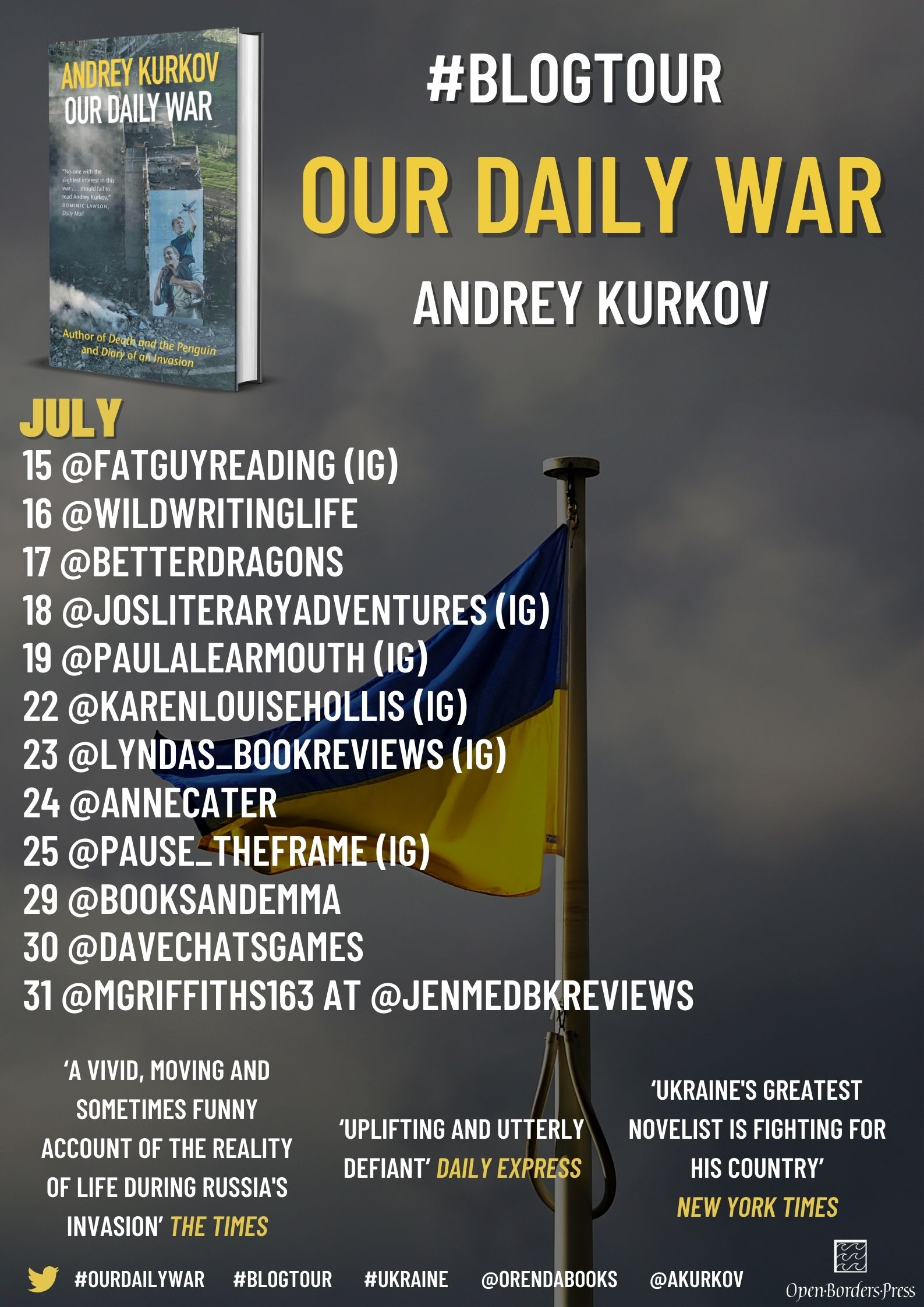
Continue reading “Review: Pursued By Death, by Gunnar Staalesen, translated by Don Bartlett”Blog tour calendar: Our Daily War, by Andrey Kurkov
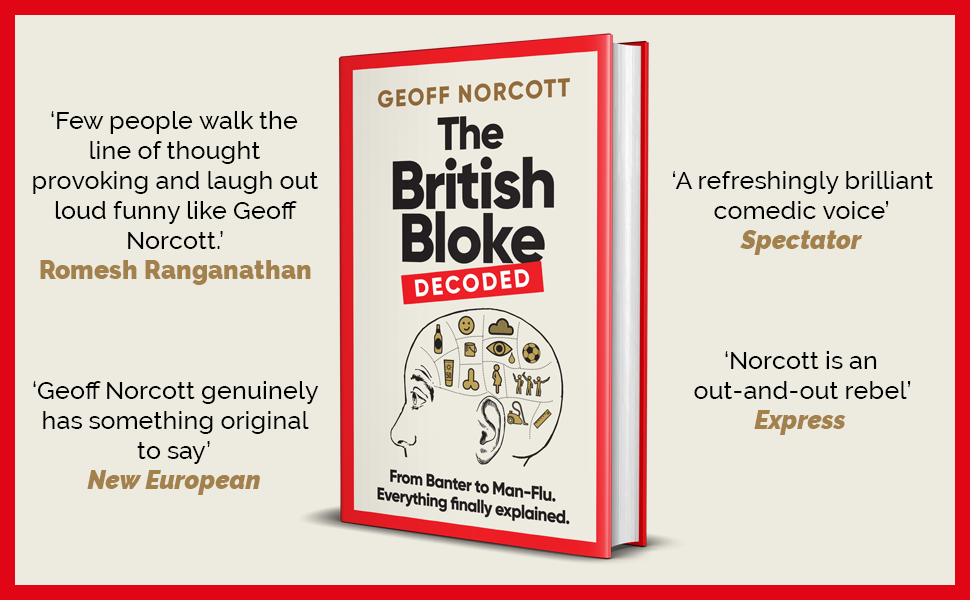
Book Review: The British Bloke Decoded, by Geoff Norcott
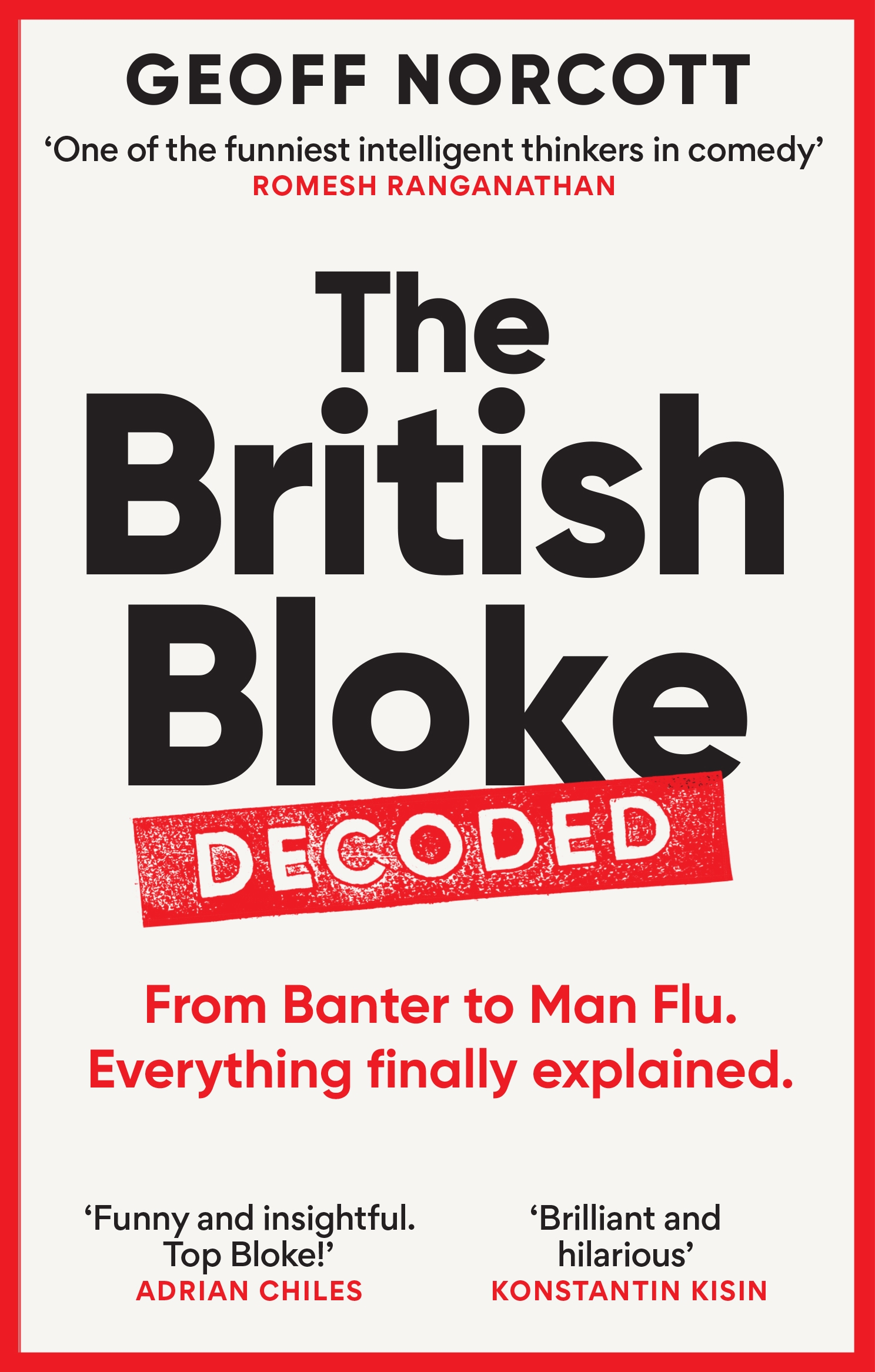
2024
Price £10.99
EAN\ISBN-13 9781800961302
BIC 2.1 Humour (WH) Popular culture (JFCA) United Kingdom, Great Britain (1DBK) Jokes & riddles (WHJ) Literary essays
Description
If you see a man drinking a pint in an airport pub alone, that’s a bloke.
If you see a man driving to the tip on a Saturday morning with a smile on his face, that’s a bloke.
And if you see a man heading back from the tip and on the way to the pub,
that’s a very happy bloke.
The British Bloke appears simple and straightforward. He loves football, cricket, beer and sheds. But beneath that simple exterior lies a mysterious and complex being…
In The British Bloke Decoded, writer, comedian and regular bloke, Geoff Norcott, peels back the layers of blokedom, revealing the truth behind the behaviour of Britain’s husbands, dads, brothers and friends. He dives into the value of banter, the roots of mansplaining, the near impossibility of getting blokes to send birthday cards, and whether there could be a medal system for vacuuming.
Based on 46 years of intensive field research and semi-scientific insights, this book is a celebration of the simple British bloke in all his splendour.
 Everything Is Better With Dragons