NEW FROM THE BESTSELLING AUTHOR OF I DON’T TALK TO DEAD BODIESWhat if your biggest challenge became your greatest adventure?
One day, Dr Rhona Morrison was a respected forensic psychiatrist planning for retirement. The next, on her birthday, she became a widow, stepping into an uncertain and unplanned future alone. But as Rhona soon discovered, an ending can also be a beginning – if you grasp the opportunities life presents.
In this warm, witty, and inspiring memoir, Rhona shares how she navigated the twists and turns of her loss and subsequent reinvention, transforming her grief into opportunity. From launching an art business and writing her first book, I Don’t Talk to Dead Bodies, to becoming a cruise ship lecturer and embarking on global adventures, she tackled each step with an open heart. Along the way, she discovered unexpected joys, new passions, and a renewed sense of purpose.
From Crime Scenes to Cruise Ships is an uplifting story of resilience, reinvention and embracing the unknown. Whether you’re facing loss, retirement, or a major life shift, Rhona’s journey is a reminder that even when life feels uncertain, you still have the power to shape your future. It may not look like you once imagined, but it can still be rich with meaning, adventure and possibility.
Your story isn’t over; the next chapter is waiting. So, let’s turn the page and step into what comes next – together.
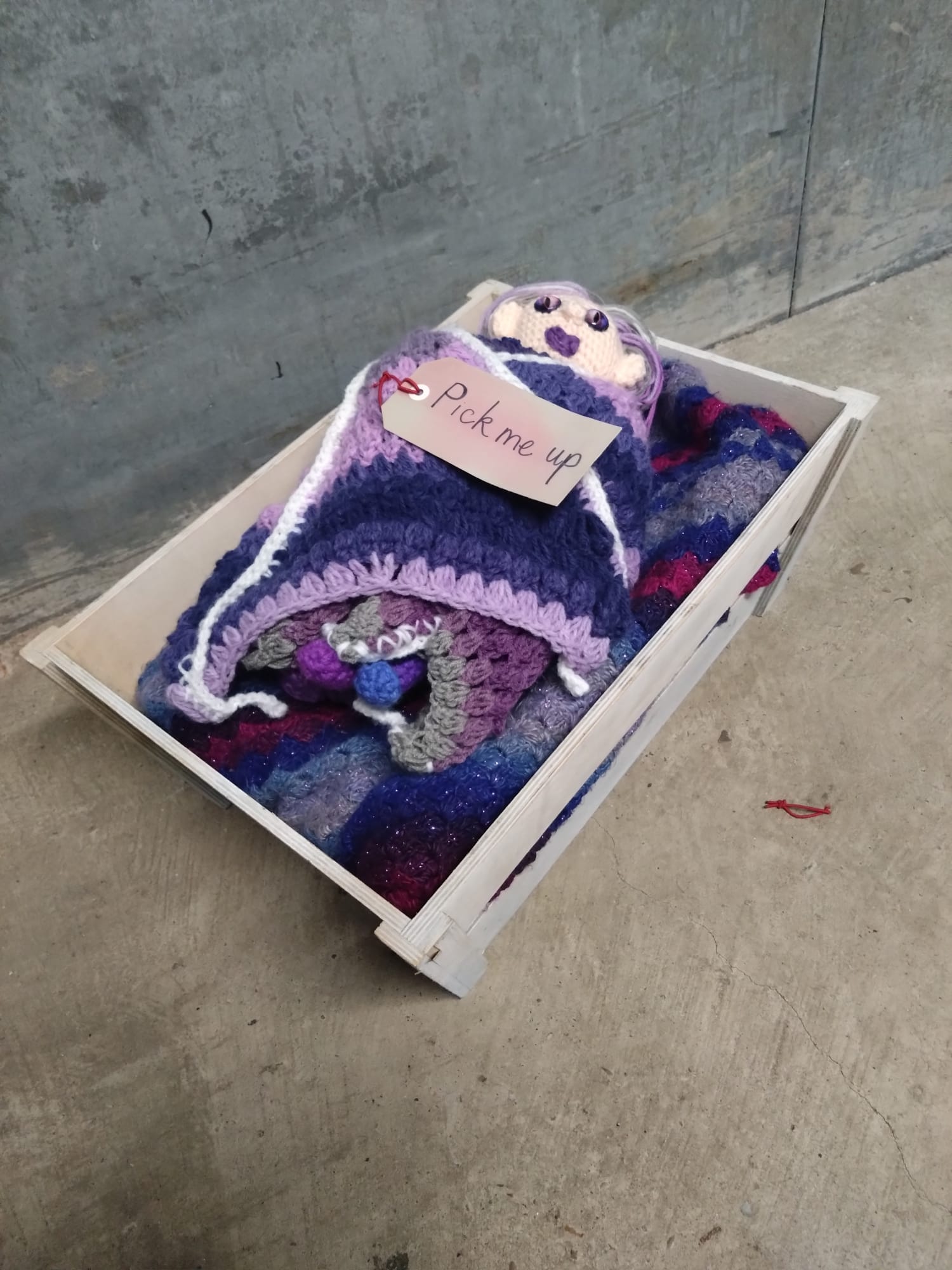
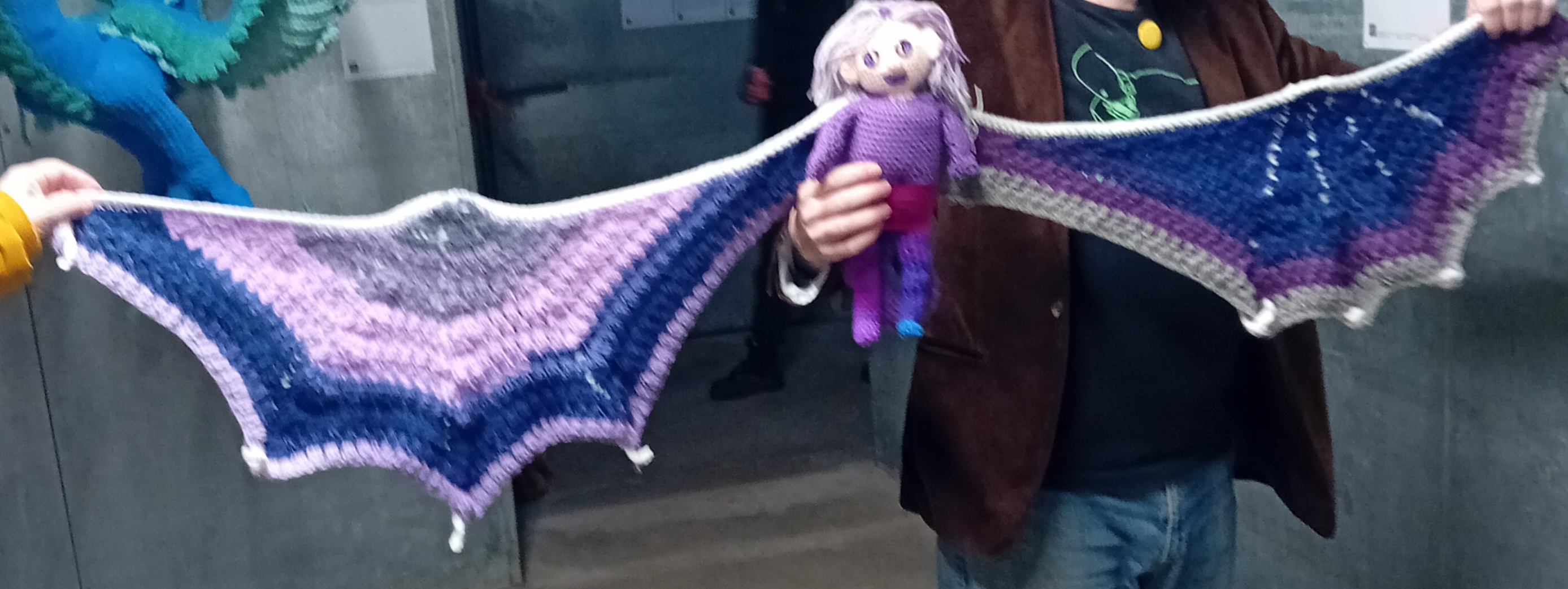
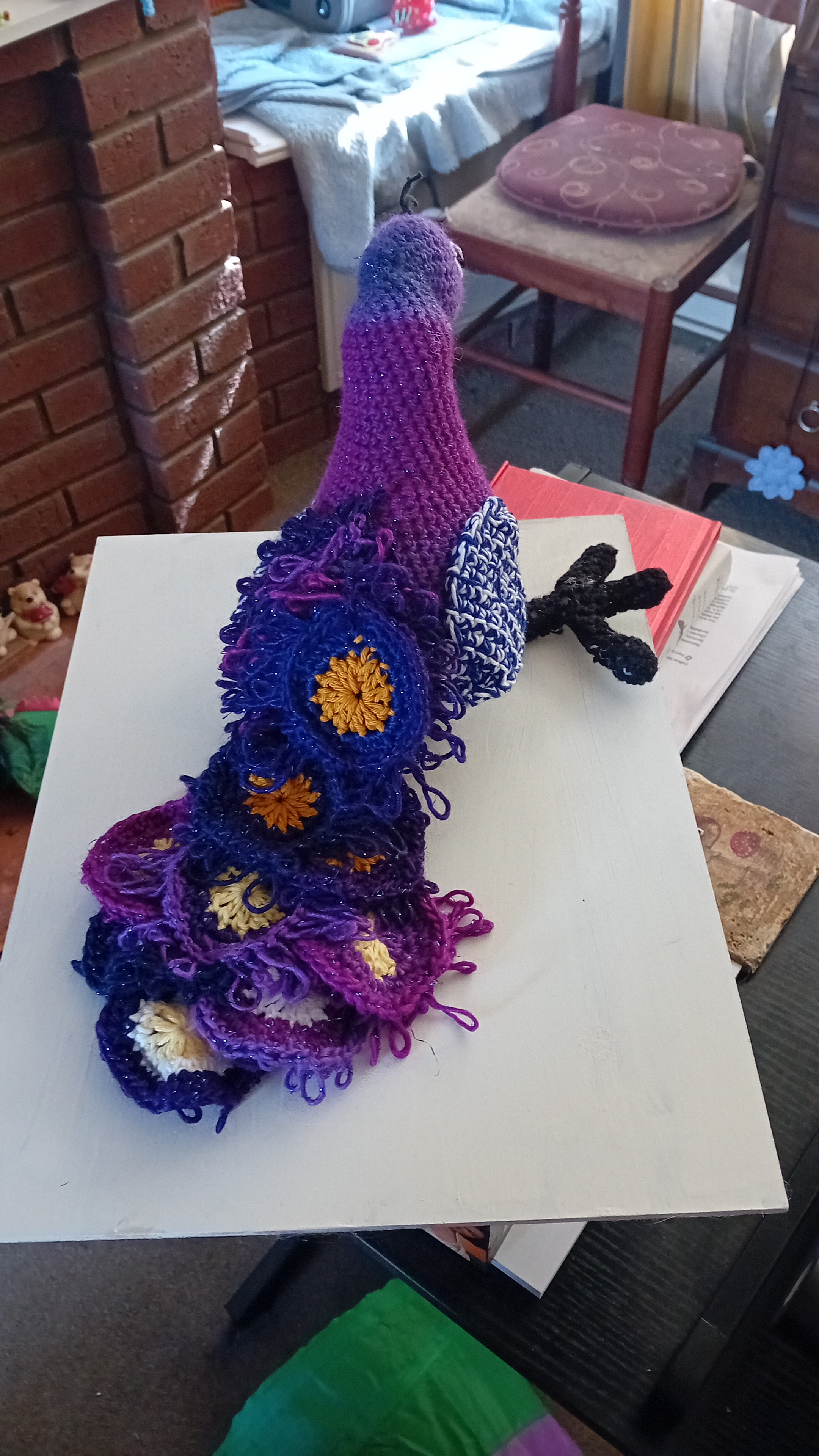
August was a busy month, with four blog tours and going to Autscape at the beginning of the month for work. I also needed to finish a crochet project for an exhibition at TT88 on 30th August, and a short story that I needed to finish and submit to Humber SFF by today.
I’ve also been reading books for the BFS Awards. I’m a judge for the Best Collection award. My fellow judges and I decided to have a deadline of 1st September, so I’ve been fitting them in around my tours. I also needed to read a book for a tour tomorrow.
The last week of August was very successful. I completed the crochet project, finished reading three books, and the short story.
I have other news, quite big news.
I work for an organisation that supports autistic adults, and have done for 5 years, but I’ve been involved with an arts organisation for several years as well. First the gallery, Turntable, hosted my Neurodivergent History project, and then my friend started Lucy’s Art Club, and it’s gone from there. I’m now a Director of a new organisation, Purple Peacock CIC, helping disadvantaged creatives in our region. At the end of the year I’m giving up my salaried job to take on self-employed work, both independently and with Purple Peacock CIC. I want to focus on my writing and creative work. I told my employer two weeks ago and it has been a weight lifted.
I feel like I’m able to access the creative part of me that was gradually locked up by my job taking all my focus.
I’ve also made contact with the editor at Spondylux Press about doing some proof reading and editing work for them. If you’re ND and want to find a publisher, I recommend Spondylux, I met the editor at Autscape and I will be reviewing two of the books I bought at a later date. Nema (the editor) is lovely.
In addition, I am going to build on the editing I’ve done with my current employer, for a couple of projects. I’ve edited short stories for authors and an anthology of art, poetry, memoir and short stories by Autistic authors. I have decided that I’m open for business self-employed as an editor and proof reader. See here for details.
Some of my projects with Purple Peacock CIC will be managing a reference library of poetry books we inherited, running a writing café, presenting writing and editing workshops for Lucy’s Art Club, and eventually, in several years, starting a small press for local disadvantaged authors.
There’s a novel I’m working on that’s only a few chapters in on the first draft. I’m planning to use up all of my annual leave in December, so I’ll have a whole, free month to write! Ahhh, it’ll be blissful!
I’ve got loads of crochet projects to do too, but they’re personal projects. However, if you want a monster crocheting, let me know and I’ll cost it for you.
Format: 208 pages, Paperback Published: July 31, 2025 by Penguin ISBN: 9781804950647
A dying universe.
When the Home worlds finally achieved the technology to venture out into the stars, they found a graveyard of dead civilizations, a sea of lifeless gray planets and their ruins. What befell them is unknown. All Home knows is that they are the last civilization left in the universe, and whatever came for the others will come for them next.
A search for answers.
Scout is an Archivist tasked with scouring the dead worlds of the cosmos for their last gifts: interesting technology, cultural rituals—anything left behind that might be useful to the Home worlds and their survival. During an excavation on a lifeless planet, Scout unearths something unbelievable: a surviving message from an alien who witnessed the world-ending entity thousands of years ago.
A past unraveled.
Blyreena was once a friend, a soul mate, and a respected leader of her people, the Stelhari. At the end of her world, she was the last one left. She survived to give one last message, one final hope to the future: instructions on how to save the universe.
An adventure at the end of a trillion lifetimes.
With the fate of everything at stake, Scout must overcome the dangers of the Stelhari’s ruined civilization while following Blyreena’s leads to collect its artifacts. If Scout can’t deliver these ground-breaking discoveries back to the Archivists, Home might not only be the last civilization to exist, but the last to finally fall.
Sorry it’s taken so long for me to update the story, but I’ve been struggling with my brain weasels for months and I have been struggling to write. I’m back now! I’ve almost finished writing the first draft of this novella and I’ve started writing a novel and a short story. I’ve had some work accepted by a local LGBTQIA+ zine, and I’ve submitted a short story to a competition. I will try to update with part two in the next few days.
Chapter 15 – Maria and Sahrai meet the local sentient aliens
“Now then, McClintock, been a while. Not going up top this time ‘round?”
The man, Joshua Dalton, accosted Maria and Sahrai as the track towards the crossroads, several days after their adventures in the flyer. He stood in the road, blocking their path.
“Dalton.” Sahrai nodded sharply at the man and ushered Maria around the man.
Dalton joined them, uninvited, walking beside Sahrai, grinning at thev discomfort of his companions.
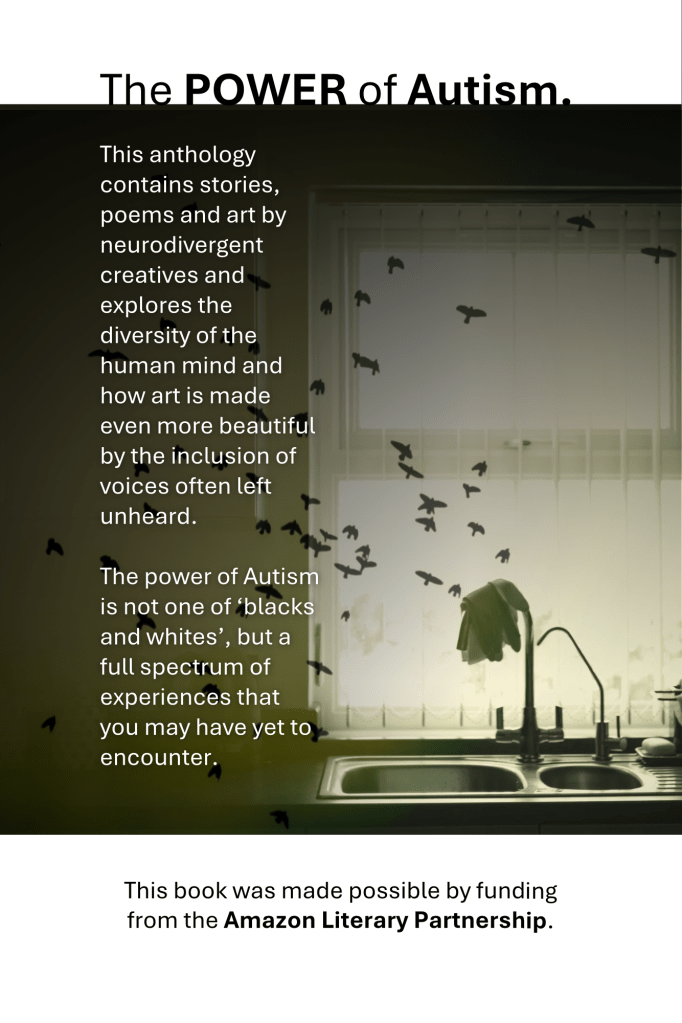
Yes, that’s me. I edited an anthology of work by Autistic people for my employer, Faraway, and now it’s ready for sale. We received funding through the Amazon Literary Partnership, and worked with Matthew’s Hub over in Hull to run creative writing groups.
Blurb: This anthology contains stories, poems and art by neurodivergent creatives and explores the diversity of the human mind and how art is made even more beautiful by the inclusion of voices often left unheard. The power of Autism is not one of ‘blacks and whites’, but a full spectrum of experiences that you may have yet to encounter.
The book is available as a paperback, it is currently available for pre-order with 20th July being publication day.
I have a sci-fi story in there. There are poems and art. There is a piece of memoir and several fantasy stories. I got to read a wide variety of work to as part of my editing process, and the choices were difficult to make. I decided any work by Faraway members would go in automatically, to encourage them to keep writing their stories and poetry, and creating their art.
Plus, they’re really enjoyable works.
There were one or two stories that I had to do a lot of editing on, mainly spelling and grammar. Autistic people can have idiosyncratic approaches to words and sentence structure, and I’ve tried to keep those idiosyncrasies where they make sense. Sometimes I’ve had to correct a systematic misunderstanding of sentence structure that detracts from the work but otherwise not changed anything.
I have a lot of respect for professional editors!
We’re planning to send copies to contributors and sell some copies from our office, so people in the area can buy a copy direct from Faraway. The funds raised will be used to support our work supporting Autistic adults. I’m hoping we make enough for me to restart our creative writing group.
Books can change lives. Magic books can change everything.
In a tiny, miserable farm on the edge of the tiny, miserable village of East Grasby, Isabella Nagg is trying to get on with her equally tiny and miserable existence. Dividing her time between enduring her feckless husband, inadequately caring for the farm’s strange collection of animals, cooking up ‘scrunge’, and crooning over her treasured pot of basil, Isabella can’t help but think that there might be something more to life. So, while she’s initially aghast when Mr. Nagg comes home with a spell book purloined from the local wizard, she soon starts to think: what harm could a little magic do?
As Isabella embarks on a journey of self-discovery with a grouchy cat-like companion, Darkshire’s imagination runs wild, plunging readers into a delightfully deranged world full of enchantment, folklore, and an entrepreneurial villain running a magical Ponzi scheme.
My Review
I found out about this book on Saturday from the Hodderscape Instagram feed and ordered it straight away from the local Waterstones. I picked it up after I went to The Festival of the Sea, got home, and read it in a single sitting.
I was promised Pratchettian humour.
There were footnotes. The footnotes were funny. There was a lot of folklore drawn on as well as invented. Which does smell of Discworld, but doesn’t quite scratch the itch. I did not get my Pratchettian story.
The story is of Isabella Nagg realising she doesn’t have to be a farmer’s wife after reading a magic book (stolen from the local wizard by her useless husband), fighting goblins and grifters, and dealing with past events as they come home to roost. There is a mysteriously disappearing wizard and a mysteriously appearing pony, a talking donkey, a grifter looking to set up a ‘new goblin market’ and the eponymous pot of basil.
It was quite, quite silly and I enjoyed the story immensely, even if it did at first feel contrived. Once I got into it, I could see the charm in this cosy fantasy. The social commentary and observations of life in small rural villages was pointed and entertaining, while the criticisms of unequal marriages was sharp.
‘Times like these you wish you had something to pray to’
Idolfire is an epic sapphic fantasy inspired by the fall of Rome from the author of the Frontier and Floating Hotel.
ON ONE SIDE OF THE WORLD, Aleya Ana-Ulai is desperate for a chance. Her family have written her off as a mistake, but she’s determined to prove every last one of them wrong.
ON THE OTHER, Kirby of Wall’s End is searching for redemption. An ancient curse tore her life apart, but to fix it, she’ll have to leave everything behind.
Fate sets them both on the path to Nivela, a city once poised to conquer the world with the power of a thousand stolen gods. Now the gates are closed and the old magic slumbers. Dead—or waiting for a spark to light it anew . . .
My Review
I listened to this over several days, usually while walking to the pool and back. I’ve also got an special edition of the hardback on the shelves. I have all of Grace Curtis’ books and I’ve noticed a theme running through them. All of them contain people on a journey who learn about themselves in the process of completing their journey.
In this book we find Kirby who discovers that the world is bigger than she thought it was, and that there are more options than marrying a local boy. Aleya discovers an internal source of strength to make the changes she knows her city of Ash needs. Nylo learns to stop being a bigoted prat, just before he dies in battle.
The world building draws heavily on the ancient world and the author’s note does explain their inspiration. Kirby feels like she’s from the north east of England (helped by the accent the narrator has), while Nylo screams of Sparta, and Aleya is from somewhere in Mesopotamia. The landscape is vividly described, as the group sail and walk across the world from their various homes to Nivela as they try to complete their individual quests. The land and seascapes are an important part of the plot, which adds to the tension (especially that undersea tunnel and the wastelands around Nivela!) in what is a pretty standard quest story.
The magical system, idolfire, is powered by worship and limited in scope. It drains the power source and can harm the person using it. Magic without limits is a deus ex machina. Aleya’s inability to use the idolfire at difficult moments brings tension to the plot. It also provides the odd last desperate attempt to survive.
I enjoyed the characters of Kirby and Aleya, while Nylo got on my nerves. He’s a tit, who’s perspective is egregiously clouded by his prejudices. Both Kirby and Aleya have their prejudices, but it doesn’t cloud their perspective as much as his does. There were other minor characters that I found entertaining, like the little seer who takes Kirby to see a sheep’s skull after calling Aleya a liar.
Overall, a good quest story set in a vaguely familiar world that isn’t pseudo-medieval north western Europe.
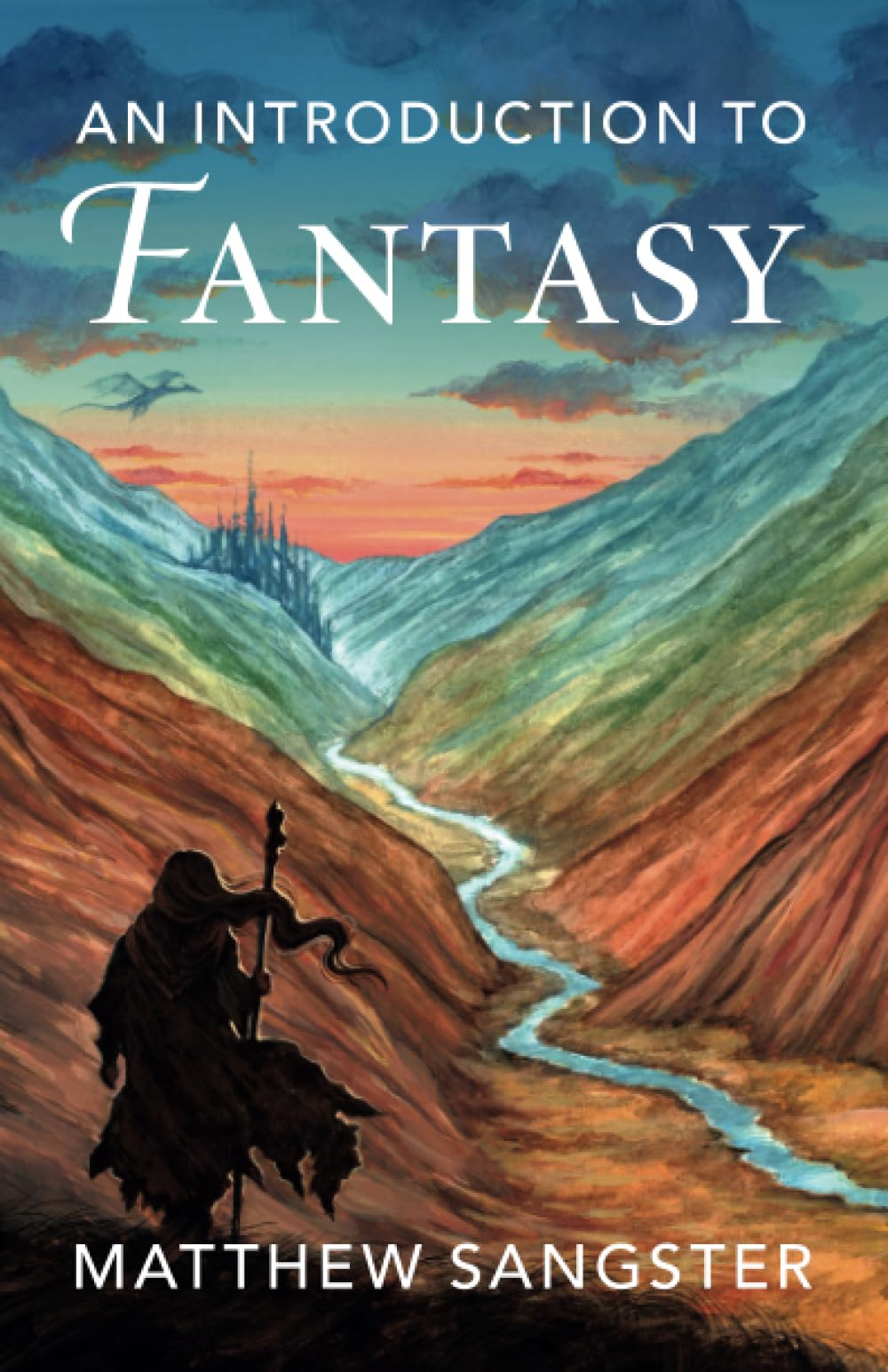
Format: 469 pages, Paperback Published: September 7, 2023 by Cambridge University Press ISBN: 9781009429948
Providing an engaging and accessible introduction to the Fantasy genre in literature, media and culture, this incisive volume explores why Fantasy matters in the context of its unique affordances, its disparate pasts and its extraordinary current flourishing. It pays especial attention to Fantasy’s engagements with histories and traditions, its manifestations across media and its dynamic communities.
Matthew Sangster covers works ancient and modern; well-known and obscure; and ranging in scale from brief poems and stories to sprawling transmedia franchises. Chapters explore the roles Fantasy plays in negotiating the beliefs we live by; the iterative processes through which fantasies build, develop and question; the root traditions that inform and underpin modern Fantasy; how Fantasy interrogates the preconceptions of realism and Enlightenment totalisations; the practices, politics and aesthetics of world-building; and the importance of Fantasy communities for maintaining the field as a diverse and ever-changing commons.
Literary awards:
Mythopoeic Scholarship Award for Myth and Fantasy Studies (2024)
My Review
I’ve been working my way through this book since last October, around blog tours, getting slightly too obsessed with YouTube , and a lot of crochet. I finished the last 40 pages this evening and now I need to tell you all about it. Matthew Sangster is a product of Glasgow University’s Centre for Fantasy and the Fantastic, and the access to many fantasy novels and academic works show in the text. Sangster mentions works by some of the most well-known in fantasy, such as Le Guin and Tolkein, and some more unexpected authors, especially those from earlier centuries. He draws out six important points about fantasy, over the chapters of this books and they form his core arguments:
Fantasy arises from figurative language
Iteration is a defining technique – new stories build on old in new ways
Contemporary fantasy builds on some of the oldest forms
Fantasy exists in conversation with realism
Worldbuilding is both the prevailing metaphor of modern fantasy and used to develop plots and characters
Fantasy is a form practised in community rather than one by unique geniuses.
I had to read the ‘Envoi’ chapter to get that. Sangster helpfully lists these points for the reader. It certainly helps with the summary. He does try to be accessible throughout the book, and uses a lot of examples to make his points, referencing very well-known authors, TTRPG series, video games, and film franchises in the process. It was heavy going at times, but that might be my lack of formal education in Literature at University Level. My M.A. is in Creative Writing, not Literature, after all.
Sangster raises some good points, especially about the tendency of ‘literary’ culture to consider ‘genre’ fiction as lesser, as the mode of storytelling is not ‘realistic’ and therefore can’t possibly impact readers. Fantasy, Sangster argues, explores the real world using the fantastical as a foil, a universalising storytelling mode that draws on cultural language. Fantasy can tell stories in ways that resonate with people far more effectively than straight up realism. It digs down into the root, builds on older foundations and finds new ways to explore ancient concerns.
I certainly find fantasy a useful vehicle for understanding the world, particularly in the work of Terry Pratchett. Fantasy communities, whether specific fandoms, organisations for writers, or online groups (such as the BFS Discord – Join the BFS, and come to our Discord, we have quiz nights and shadow daddies!), work in dialogue with the stories and their creators. New worlds spin off from the original, and people have a shared language to communicate with, across time and culture (see: Vimes’ Boots Theory of Economics).
I found Sangster’s work thoughtful and interesting, although it is very much an academic text so possibly not something a casual reader might go for. Useful for those interested in SFFH in an academic setting e.g., if you’re doing your M.A. in Fantasy and Sci-Fi literature or as a basis for a Doctorate in the field. Yes, those do exist, and yes, they’re a bit serious. (Again, see Glasgow University).
Format: 136 pages, Paperback Published: February 8, 2025 by Organic Apocalypse ISBN: 9781911278436
Humans designed artificial intelligences, but the AIs no longer need us. They are gods, and can create – or even recreate – themselves.
The two most advanced AIs in the universe need to rescue a friend from the clutches of their powerful enemies. Their method is to create millions of restricted, cut-down versions of themselves, to fulfil specific tasks such as generating ideas. The offshoots can be deleted once they’ve fulfilled their role.
No one gives a second’s thought to software. It’s just a tool.
Now it’s time to see inside the process.
Lost Tales of Solace are short side-stories set in the Lost Solace universe.








 Everything Is Better With Dragons