Despatches from World Fantasy Conference 2025: Day 3 – Saturday 1st November 2025

I woke up feeling off so I had a steady morning and made my appearance at the con hotel in time for my second panel – Queer in Fantasy at noon. It was supposed to be streamed but staffing changes prevented it. Sian took another picture of me. I’m pointing at the book on the table, it’s I Want That Twink Obliterated from Bona Books. I was expressing my excitement.

Chris McCartney, Katie Bruce, and Christopher Caldwell were also on the panel, which was moderated by Burdock Broughton, who writes as April Steenburgh. I was beginning to feel unwell so I didn’t have much helpful to add. I mainly listened to everyone else and asked for a list of the books they’d all recommended. People have said that I made good comments but I have my doubts. I was overwhelmed and had brain fog for most of it.

After this panel I went to the quieter area and did some embroidery. I also made a quick visit to the dealer’s room to buy a book from AK Faulkner, Blind Man’s Wolf, and then planned to head to the ‘Creative Lives’ panel, but I got into the room and the bright lights were too painful, so I sat in the dark corridor, ate my sandwich and read Blind Man’s Wolf.

I attending the only reading I’ve been to this con, by Stephen Cox and AK Faulkner. Stephen Cox read from his Sapphic Victorian murder mystery, The Crooked Medium’s Guide to Murder, while AK read from Jack of Thorns and Blind Man’s Wolf.

After that I attended the ‘The Role of Reviewers’ panel in the same room. As a reviewer I was interested in how others saw their role, and also I didn’t need to more from the sofa I’d taken up residence on. Then I moved on to the Academic Hour, and listened to early career researchers talk about their research. The talk about Romanian folklore in fantasy was particularly interesting.

At six in the evening my throat started to feel scratchy, and I coughed my way through the ‘Editing and Editors’ panel. Luckily I was at the back and out of the way so I don’t think I bothered anyone. It was interesting, but by this point I was not able to take a lot in. I learnt that editors generally want the best for the writers and there is tension when they work for publishers because they have to balance the demands of publishing as an industry with the needs of the writers they work with.

At 7 p.m. it was the charity raffle. This is a Fantasycon tradition and stalwart Red Cloaks Babs and Marleen came through once again. They announced the ‘big prizes’ and were drawing the smaller prizes afterwards. I didn’t win anything.

Finally, at 7.30p.m. I made it up to the main room for the British Fantasy Awards. The awards were streamed although there were some technical difficulties.

The Aldiss AwardThe Dance of Shadows, by Rogba Payne

This is a new award, organised in partnership with the BFS, BSFA, and UKIE to recognise excellence in World Building in Speculative Fiction, whether in books or games. It was presented by Brian Aldiss’ son, Tim.

The BFS awards were compared by Joanne Harris after Tim and Allen finished talking. I’m going to share the results, which are now available on the BFS website.

Best AnthologyBury Your Gays – An Anthology of Tragic Queer Horror, Sofia Ajram, Ghoulish Books

Presented by Joanne Harris, and collected on their behalf by same.

Best Artist – Kelly Chong

Presented by Vincent Chong, five time winner of the award and Guest of Honour, who also read out Kelly Chong’s acceptance speech.

Best AudioBreaking the Glass Slipper

Presented by BFS Secretary David Green, and collected by Lucy and Charlotte. Megan is in Italy.

Best CollectionElephants in Bloom by Cecile Cristofari – Newcon Press

I judged this one so I already knew the winner. It was actually the first award to be presented after the Aldiss Award, but I’m working through a pre-printed list. The award was presented by Anne Landmann and collected by the author.

Best Fantasy Novel (The Robert Holdstock Award) – Masquerade, by O.O. Sangoyomi – Forge Books/Solaris

This award was presented by the venerable Suniti Namjoshi, a Guest of Honour at the Convention. It was collected by someone I vaguely recognise but I don’t know their name.

Best Horror Novel (The August Derleth Award) My Darling Dreadful Thing, by Johanna van Veen – Poisoned Pen Press

This award was presented by Lee Murrey and accepted by the author.

Best Independent PressFlame Tree Press

Award presented by BFS Deputy Chair (and my friend) Sian O’Hara. Award accepted by the ever delightful and eloquent Nick Wells.

Best Magazine/PeriodicalParSec

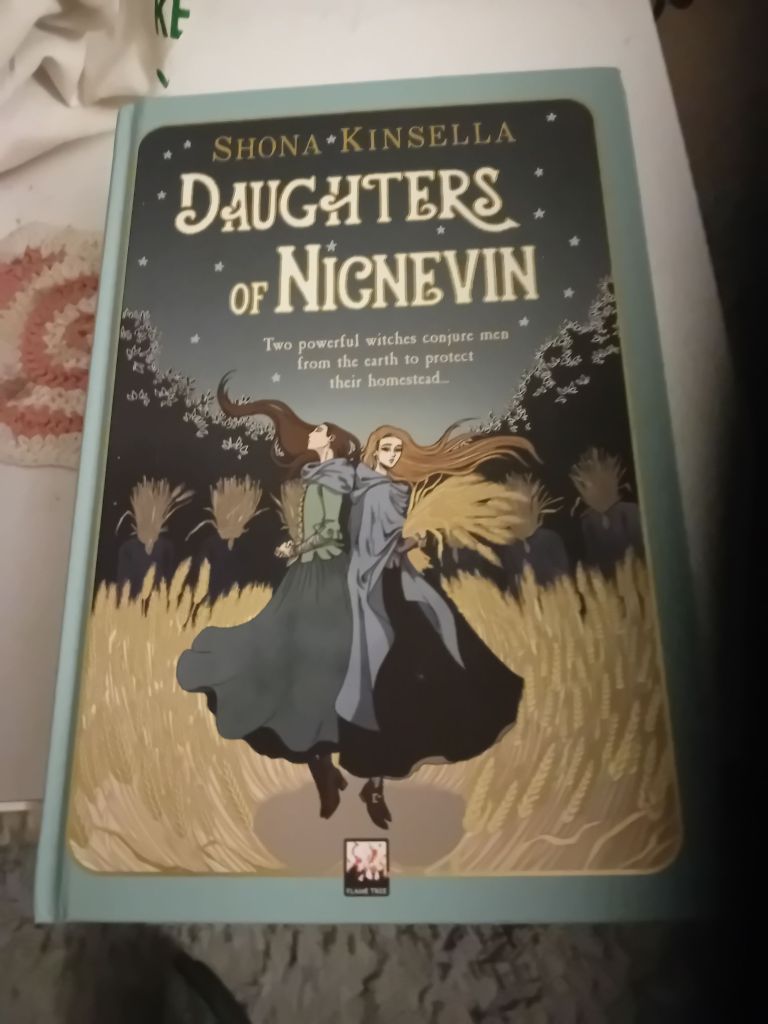
Presented by BFS Chair and excellent author, who’s new book I will be reviewing 6th December, Shona Kinsella. Award collected by editor, Ian Whates.

Best Newcomer – Frances White – Voyage of the Damned – Penguin Michael Joseph

Award presented by Taika Bellamy and collected by the author. I reviewed Voyage of the Damned and enjoyed it, but after listening to the Christophers at the Queer in Fantasy panel I’m wondering about the validity of m/m romance written by women. Who is the target audience?

Best non-FictionQueer as Folklore: The Hidden Queer History of Myths and Monsters – Sacha Coward – originally Unbound, now Manchester University Press

This award was presented by the formidable Farah Mendelsohn, and accepted by a stunned Sacha Coward, who swore quite a bit.

Best NovellaThe Last To Drown, by Lorraine Wilson – Luna Press Publishing

I’m not entirely certain who presented this one, but it was collected by the author.

Best Short Story – Loneliness Universe, by Eugenia Triantafyllou – Uncanny Magazine

This was presented by Ian Whates and collected by a representative.

BFS Art Competition

  1. Sophie Jonas Will – Snicket and the Fireflies
  2. Madelina Gaubelonga – The Long Wait
  3. Carlie AF – Lonely Spire

The announcement was made by Jenni Coutts and the artists will have their work printed in the Autumn 2026 issue of Horizons, the BFS periodical.

BFS Short Story Competition

  1. Mull, by J.W. Anderson
  2. The Sphinx, by Marian Gordon
  3. Iterate, by Nathaniel Spain

The announcement was made by Stephen Poore and the winners will have their stories published in BFS Horizons.

The Karl E Wagner Award – Rosemary Pardoe

This award is presented for outstanding contributions to the genre, and this year’s winner was a founder member of the BFS. Shona Kinsella made the announcement.

Legends of Fantasycon – Marlene and Babs the Red Cloaks.

This award is presented to people who make Fantasycon what it is – a joyous celebration of Fantasy. The award was announced by Karen Fishwick and eventually accepted by Babs and Marlene after they’d got a pint at the bar.

After the awards I had a drink with a group of friends and headed back to my hotel because I felt unwell.

Despatches from World Fantasy Con 2025: day 2 Friday 31st October 2025

Today I was on my first panel, The Way We’re Wired, about neurodivergence in fantasy.  The moderator was David Green, and the other two panellists were Janet Forbes from World Anvil and indie writer Roxan Burley.

I was supported by a few people I know, and my friend Sian, deputy chair of the BFS, took a picture for me to commemorate my first panel.

Before this panel, I attended another panel, Mapping in Fantasy. The moderator was Adrian M Gibson and the panellists were Alicia Wanstall-Burke, James Logan, and Joy Sanchez-Taylor.

Joy Sanchez-Taylor is an academic from CUNY, James Logan is trad published, and Alicia Wanstall-Burke is indie published.

I have James Logan’s book The Silverblood Promise and I’ve bought all three of Alicia’s books based on the description of the maps. I really want one of Joy Sanchez-Taylor’s books, but academic books are expensive.

I made extensive notes on the conversation, so this is a bit of a summary.

The panel discussed their relationships to maps, expressing childhood memories of travelling with paper maps and learning to read them. For Alicia, maps also help her to write as they allow her to visualise a space and the way it effects the story. They discussed how the choices made on the presentation of a map can tell the reader something about the world. Joy Sanchez-Taylor especially emphasized the way reorientating the world can express and explore new ways of thinking.

The panel went on to discuss whether or not a fantasy needs a map. James Logan expressed that although he has maps of his world they aren’t included in his books because he likes to keep things malleable, so that he can move cities around if he needs to, giving him more options for the future. Alicia Wanstall-Burke brought up the question of who owns the map? A map might be a symbol of power or it might be a tool to navigate a territory and be subject to change as the land changes. James Logan, from his perspective as an editor in a major publishing house, expressed that it can be expensive to commission an artist and a cartographer, so changing the map for the next book in a series is not going to happen. Joy Sanchez-Taylor mentioned the importance of maps for visual learners and discussed the pressure on authors to have a defined map, but that they can have known and unknown areas so that the story world can expand.

Next, the discussion moved on to how the layout of the world affects the story. Alicia Wanstall-Burke discussed how the world can provide barriers to technology, information, and culture, and when cultures separated by the physical barriers meet, there can be conflict, and that can drive the story. James Logan likes to keep the world fresh for himself and for readers, so he sets each story in a different city, providing a sense of scale. They went on to discuss the way maps change perspective and the commissioning process.

I also attended the ‘Here be Dragons in Fantasy Fiction’ panel, (moderator: Charlotte Bond; panellists: Aliette de Bodard, Michael R Miller, Andrew Knighton). It was fun listening to other people who love dragons as much as I do, and I’ve got two of Aliette de Bodard’s books in my Amazon basket now, because Dragons and their murder husbands…

I attended Stewart Hotston’s book launch, and got myself a signed copy of Project Hanuman.

In the evening I attended the Disability in SFF panel, moderated by Annie Summerlee, with panellists Lizzie Alderdice, Susie Williamson, Katie Bruce and Kit Whitfield. I know Katie Bruce and Kit Whitfield and wanted to support them, as well as being interested in what they had to say. The panel was streamed and is on the member’s area of the WFC 2025 website if you didn’t get to see it.

After that, I attended the Flame Tree book launch. We got a lovely speech from Lee Murrey, a hilarious one from Ramsey Campbell,  and an amazing reading from Anna Smith Spark.  I treated myself to a stack of books from Flame Tree yesterday, but I was tempted buy more today.

After the launch I spent several hours chatting and drinking with friends and new acquaintances, until we got chucked out of the con bar and went down to the hotel bar, until I left at 1 a.m. We’ve overwhelmed the hotel slightly, I don’t think they realised how much SFFH people like to drink.

World Fantasy Con 2025: Day 1

I have registered,  I have my goodie bag, and I have been to the dealers room.

https://worldfantasy2025.co.uk/

I wasn’t planning to buy anything today, but I gave in and spent lots of pennies visiting the FlameTree Press table, the Wizard’s Tower table, and the Portal Bookshop table, as well as a couple of indie author tables

I have pretty much spent half my book budget and may need to reduce it further to get a suitcase to take them home in.

I’ve treated myself to three notebooks from FlameTree, some teas from the Bird & Blend shop, and a pocket watch from a jewellery maker.

I definitely need a waistcoat now.

I’m having a break in hotel room. I’ll go back to the con about half four for the 5pm workshop I’ve signed up for. Until then I’m resting amd writing.

Review: Fantasy Fiction – A Writer’s Guide and Anthology, by Jennifer Pullen

About the book

The first fantasy-writing textbook to combine a historical genre overview with an anthology and comprehensive craft guide, this book explores the blue prints of one of the most popular forms of genre fiction. The first section will acquaint readers with the vast canon of existing fantasy fiction and outline the many sub-genres encompassed within it before examining the important relationship between fantasy and creative writing, the academy and publishing. A craft guide follows which equips students with the key concepts of storytelling as they are impacted by writing through a fantastical lens. These

– Character and dialogue
– Point of view
– Plot and structure
– Worldbuilding settings, ideologies and cultures
– Style and revision

The third section guides students through the spectrum of styles as they are classified in fantasy fiction from Epic and high fantasy, through Lovecraftian and Weird fiction, to magical realism and hybrid fantasy. An accompanying anthology will provide students with a greater awareness of the range of possibilities open to them as fantasy writers and will feature such writers as Ursula Le Guin, China Miéville, Theodora Goss, Emrys Donaldson, Ken Liu, C.S.E. Cooney, Vandana Singh, Sofia Samatar, Rebecca Roanhorse, Jessie Ulmer, Yxta Maya Murray, and Rachael K. Jones. With writing exercises, prompts, additional online resources and cues for further reading throughout, this is an essential resource for anyone wanting to write fantastical fiction.

Format 344 pages, Paperback
Published January 11, 2024 by Bloomsbury Academic
ISBN 978135016692

Continue reading “Review: Fantasy Fiction – A Writer’s Guide and Anthology, by Jennifer Pullen”

Review: The Raven Scholar, by Antonia Hodgson

About the book


From an electrifying new voice in epic fantasy comes The Raven Scholar, a masterfully woven and playfully inventive tale of imperial intrigue, cutthroat competition, and one scholar’s quest to uncover the truth.

Let us fly now to the empire of Orrun, where after twenty-four years of peace, Bersun the Brusque must end his reign. In the dizzying heat of mid-summer, seven contenders compete to replace him. They are exceptional warriors, thinkers, strategists—the best of the best.

Then one of them is murdered.

It falls to Neema Kraa, the emperor’s brilliant, idiosyncratic High Scholar, to find the killer before the trials end. To do so, she must untangle a web of deadly secrets that stretches back generations, all while competing against six warriors with their own dark histories and fierce ambitions. Neema believes she is alone. But we are here to help; all she has to do is let us in.

If she succeeds, she will win the throne. If she fails, death awaits her. But we won’t let that happen.

We are the Raven, and we are magnificent.

Format 672 pages, Paperback
Published April 15, 2025 by Orbit
ISBN 9780316577229

Continue reading “Review: The Raven Scholar, by Antonia Hodgson”

Review: Terms of Service, by Ciel Pierlot

Release Date: 2025-09-23
Formats: Ebook, Paperback
EBook ISBN: 23rd September 2025 | 9781915998712 | epub | £4.99/$6.99/$7.99
Paperback ISBN: 23rd September 2025 | 9781915998309 | Trade paperback | £9.99/$18.99/$24.99

https://angryrobotbooks.com/books/terms-of-service/

Blurb

When her cousin gets kidnapped by a dastardly trickster, Luzia is forced to sell herself in servitude to the Eoi in exchange for his life. But the terms of the deal turn out to be much more complicated than she ever imagined…

Luzia N.E. Drainway never really thought too much about the Astrosi. They lurk above and below Bastion City – a giant multileveled megalopolis she calls her home – and they tend to keep to themselves. On the rare occasions they use their magics to meddle with human affairs, most people with an ounce of sense steer clear of whichever unfortunate soul happens to be their victim. Luzia is far too dedicated to repairing and maintaining the frequently-damaged Bastion to pay them much attention, and prefers to ignore the Astrosi just like everyone else.

That disregard gets blown out of the water when a rogue Astrosi and nefarious trickster named Carrion kidnaps her nephew and sells him to the Eoi, one of the Astrosi courts.

With no other options to save her nephew, Luzia trades her life for his and finds herself in service to the Eoi. Unfortunately for her, Astrosi logic is acrobatic in ways even the most devious human mind can barely comprehend. It’s not until the deal is struck that she realizes she’s trapped in the most abstruse verbal contract imaginable. She is essentially conscripted into their ranks, and her devotion to her city becomes stretched to breaking point by her new masters’ orders.

As she struggles under this weight, she begins to uncover the secrets of the Astrosi people – the internal battles for power between the two kingdoms, the never-ending conflict between them, the trickster Carrion who somehow bridges that gap, and the very nature of the Bastion itself.

Continue reading “Review: Terms of Service, by Ciel Pierlot”

Promo Post: Magic, Maps And Mischief, by David Green

Publication date ‏ : ‎ 24 Oct. 2025

Publisher ‏ : ‎ Wise Owl Publishing

https://mybook.to/magicmapsandmischief


What Would You Do To Discover Your Heart’s Desire?

Greton of Willow is in a spot of bother. Caught in the act while escorting a family of elves to safety, Greton flees for greener pastures with only his scant magic and brilliant mind to his name.

And a question. The question.

‘What is your heart’s desire?’

A life-long outsider, Greton sets out to uncover what lies at the centre of his heart. Is it adopting a tawny owl? Owning his very own map shop? Forging a found family with others as similarly scorned as himself? The possibilities are endless. Determined to put his marvellous mind to the task, Greton discovers a way to reveal anyone’s heart’s desire, but not everyone’s longings are as pure as his…

Something odd is occurring in Greton’s new home of Barrow’s Hill, and, before long, the old man in search of a comfortable new life finds himself swept up in danger and mischief.

A heart-felt, cozy, neurodivergent adventure filled with found family and an elderly autistic hero searching for his place in the world, ‘Magic, Maps, and Mischief’ is a story built on love, friendship and acceptance, perfect for readers of ‘Legends and Lattes’, ‘The Teller of Small Fortunes’ and ‘Under The Whispering Door’.


I have an advanced copy of this book (from the author), and so far, I love it. Greton is delightful! Elderly, autistic, and asexual, he makes friends with elves, disabled owls, and sea captains as he searches for his hearts desire. I will be reviewing after publication, and I will be buying an official copy.

I hope David publishes a paperback copy eventually. It’s available on Kindle Unlimited from publication date, but you can also buy it for £2.99. For more about David, see his website. I have two different editions of his In Solitude’s Shadow, and will also be reviewing the latest edition as soon as I get a chance.

The cover design is gorgeous – Liz Delton is so talented! I’m going to have to talk to her about a cover design when I get my space dragon story finished.

Final word: GO PRE-ORDER THIS BOOK

TBR Review: A Memory Called Empire, by Arkady Martine

Format: 448 pages, Paperback
Published: March 26, 2019 by Tor
ISBN: 9781529001587

Ambassador Mahit Dzmare arrives in the center of the multi-system Teixcalaanli Empire only to discover that her predecessor, the previous ambassador from their small but fiercely independent mining Station, has died. But no one will admit that his death wasn’t an accident—or that Mahit might be next to die, during a time of political instability in the highest echelons of the imperial court.

Now, Mahit must discover who is behind the murder, rescue herself, and save her Station from Teixcalaan’s unceasing expansion—all while navigating an alien culture that is all too seductive, engaging in intrigues of her own, and hiding a deadly technological secret—one that might spell the end of her Station and her way of life—or rescue it from annihilation.


My Review

This is another one from my TBR Pile that I’ve been meaning to read for years. I finally sat down and read it a week or so ago.

Mahit is a 26 year old Stationer, sent to the imperial capital of Teixcalaan as Ambassador. There, she finds her predecessor has been murdered and then her implant with his memory on it breaks, leaving her flailing around without help. Her only ally is her cultural attaché, Seagrass. They are blown up, held prisoner by a friend of the old ambassador, and have to get help from rebels, as the Emperor weakens and several successors fight for the throne. Eventually, Mahit hears from a possible ally on her Station that aliens are attacking human space, and this is enough for the Emperor to bring a halt to the fighting at home by focusing forces on the alien threat, and away from Stationer space.

Mahit and Seagrass go through some terrifying events but the writing is so good that every emotional turn is understandable. Her immersion in a culture that she previously thought she knew so well when she was studying it, but finds so confusing in person, really captures the dislocation of immersion in a new culture. Without her imago to guide her, Mahit doesn’t have the local knowledge that she’d need to fit it, and she is made to feel alien and not quite human because she is not Teicalaanlitzlim. She is an amusing barbarian to her hosts. Mahit does use this to her advantage, and sometimes disadvantage, in the complex court of the Emperor.

I enjoyed the narrative, structure, and tone of this novel. It explores empire from the perspective of an outsider, showing the hypocrisy of imperial states. The descriptions of the city and the people are rich and detailed. There is a hint of both the Byzantine and the Aztec empires in the descriptions of the clothes, culture and architecture, but the living conditions in the out regions of the city feel more Victorian London. The author has clearly drawn on many sources but it feels cohesive and inspired by those sources, rather than direct copying.

I enjoyed this book, and I can see why it’s so lauded. I’ve started book two, so expect a review of A Desolation Called Peace at some point.

TBR Review: The Fifth Season, by N.K. Jemison

Format: 449 pages, Paperback
Published: August 4, 2015 by Orbit
ISBN: 9780316229296 

Blurb

This is the way the world ends. Again.

Three terrible things happen in a single day. Essun, a woman living an ordinary life in a small town, comes home to find that her husband has brutally murdered their son and kidnapped their daughter. Meanwhile, mighty Sanze — the world-spanning empire whose innovations have been civilization’s bedrock for a thousand years — collapses as most of its citizens are murdered to serve a madman’s vengeance. And worst of all, across the heart of the vast continent known as the Stillness, a great red rift has been torn into the heart of the earth, spewing ash enough to darken the sky for years. Or centuries.

Now Essun must pursue the wreckage of her family through a deadly, dying land. Without sunlight, clean water, or arable land, and with limited stockpiles of supplies, there will be war all across the Stillness: a battle royale of nations not for power or territory, but simply for the basic resources necessary to get through the long dark night. Essun does not care if the world falls apart around her. She’ll break it herself, if she must, to save her daughter.


My Review

This book and the other two in the series have been on my TBR pile for several years, but one of the GoodReads challenges for the summer had this book on the list and I decided that was as good a way to decide what next to read from my TBR Pile as any.

My TBR pile is disturbingly huge…

My currently reading piles is disturbingly huge…

Anyway.

I picked up The Fifth Season the other day to read in bed while I was feeling ill, managed 130 pages then fell asleep. I read the rest yesterday – 319 pages. I think I’m feeling better today but I can never tell until I test my lungs during a walk or swimming. I’ve managed to get a bit of reading done while I’ve been ill. Two more books off the TBR Pile and on to the shelves. Obviously, next late month I’ll be buying more books at World Fantasycon, so I should probably prepare more shelf space.

Back to the book. The narrative follows a character who goes by multiple names over her lifetime as she confronts first her status as an orogene – someone who can move the earth with her mind – in a world where people with orogeny are either murdered as children or sent to a training camp in the capital city of Yumenes, where they are abused slaves, trained to hate themselves and do as they’re told by Guardians.

We see the main character through the eyes of a narrator, who turns out to be a stone-eater called Hoa, who has been following the main character through her life, and from the 3rd person POV of the main character. It’s an interesting structure, and took me a while to adjust to. Nonetheless, I really enjoyed it, seeing the story from the outside eyes of Hoa and the internal narrative of the main character. Look, she can’t decide who she is, so I’m not going to use her name.

Each name is associated with a time in the main character’s life. She has the name her parents gave her as a child, Damaya, which she carries until she passes her first ‘ring test’ at the Fulcrum, and chooses another name. She calls herself Syenite. She carries that name through meeting her mentor-friend-partner-father of her first child, Alabaster, living on an island with pirates, and having a child, then the ending of that period. After that she spends ten years living with a husband in a small town and teaching children, with another name, Essen. This triple name situation gives her some difficulty with her identity by the end of the novel when people she knew at different point in her life also end up in the same place as she does.

The impetus for events is two-fold. Firstly, Essun finds her son dead and her daughter missing. Her husband is the culprit. Essun sets off to look for her husband and daughter to get revenge. Essun’s son is murdered because he is an orogene, a talent inherited from Essun. Nassun, Essun’s daughter is also an orogene. Essun has a lot to process and blames herself. She is a little mad, and her journey south, picking up first Hoa and then Tonkee, a scientist, on the way, helps her to regain some sense.

At the same time, Alabaster decided it’s time to destroy Yumenes, and the Fulcrum, the city and training centre that enslaves and abuses orogenes, and opens a giant rift from east to west on the Stillness. Alabaster is an incredibly powerful orogene, but under the control of the Fulcrum he has been abused and raped to produce children strong enough to be used in ‘nodes’. When he finds a safe place on the island of Moev, and a tripartite relationship with Syenite, and the deputy leader of the community, Innon (yay! Bi and gay rep), he starts to feel safe. They have a child, Coru, who is more powerful than Alabaster. Then the Fulcrum comes for them. Innon and the baby die in the battle, Alabaster is taken to safety by his stone-eater Antimony, and Syenite goes mad and disappears into the wilderness for 12 years. During this time Alabaster has been slowly devoured by Antimony and they’ve sought ways to destroy the people enslaving orogenes.

Damaya-Syenite-Essun and Alabaster have different motives for their actions, but the results are the same – the end of the system that has controlled the continent of The Stillness for thousands of years.

The planet is fascinating.

The continent that makes up The Stillness is two plates, the Maximal and the Minimal. There are plate boundaries that run through it and around it, but they use orogenes to dissipate earthquakes and volcanic eruptions. Now, that’s not a sensible thing to do, in the long run. Continents move, that’s just how these things work; messing about with that would cause no end of trouble. Volcanic eruptions can destroy large numbers; they can, if big enough, block out the sun for years; but they also provide essential nutrients to the soil and recycle minerals and water through the system. Some of the most fertile soil is volcanic. Underwater volcanoes provide unique ecosystems and drive evolution. We didn’t think life could exist with photosynthesis until we discovered the chemosynthetic life of the deep ocean volcanic vents.

Earthquakes are terrifying. They trigger tsunamis and rock slides, they destroy homes and open fissures in the land. They also show that the rock recycling system of plate tectonics is working properly. When mountains are pushed up, or oceanic plates are subsumed beneath a continental plate, new land is made, old land is recycled, water is pulled into the crust and circulates through the system to come out in volcanoes.

Any planet that has a metal core – solid and liquid – and a liquid layer of rock will also have a magnetosphere, protecting the planet from cosmic radiation and solar flares. Life exists on earth because we have a living tectonic system. And a moon. It’s helpful to have a moon. The planet of The Stillness doesn’t have a moon, although Alabaster introduces the idea to Essun at the end of The Fifth Season, so at some point it must have had one.

The society in this novel is complex and well-developed. People think the earth hates life because humans caused damage thousands of years before and there was a massive eruption, and the first of the Fifth Seasons. Using orogenes to control the planet’s movements is supposed to protect life, but also makes people terrified of orogenes, who are so powerful that they can fight Father Earth. One aspect of the culture is disdain for the past that isn’t part of the Sanzed culture.

Former civilisations, ‘deadcivs’, are considered failures with nothing useful to provided the current civilization. This means archaeological remains are destroyed or covered up, pre-Sanzed knowledge is forgotten or corrupted to fit the ideological needs of the current civilization. They are an ossified civilisation, living by ancient lore written on stone tablets. Equally, scientists who don’t focus entirely on the earth and preparing for Fifth Seasons are considered to be practising pseudoscience – archaeologists and astronomers particularly. Contrasting the closeminded attitudes of most people are the independent community of Moev and later the community at Castrima, which is not only entirely different in attitude to orogenes but is also an artifact of a dead civilisation. The reader feels these contrasts through Syen-Essen’s confusion and fear.

This book was so good! Complex and beautifully written. I can see why it won a Hugo. I’ve already started reading book 2. If you haven’t read it yet, and enjoy sci-fi and fantasy, you need to read this book.

Promo post: The Damned King by Justin Lee Anderson

Release Date: 19 August 2025

Book Launch: Topping & Co, Edinburgh, 19 August

Book Links: US: Bookshop.org UK: Bookshop.org

Linktree: justinleeandersonauthor

Blurb:

The revolution continues in the thrilling third novel of Justin Lee Anderson’s epic Eidyn Saga, perfect for fans of Anthony Ryan and David Gemmell.

The eternal light keeping demons at bay has been extinguished and Eidyn’s last bastion is under brutal siege. Aranok and his allies draw the final battle lines as the war for the kingdom nears its end. With death threatening from every shadow and truth itself at stake, Eidyn’s defenders must put aside their grudges and come together. But is it possible to save everyone when some prefer the lie?

Short bio:

Justin was a professional writer and editor for 15 years before his debut novel, Carpet Diem, was published, going on to win the 2018 Audie award for Humour. His second novel, The Lost War, won the 2020 SPFBO award, leading to a four-book deal with Orbit for The Eidyn Saga. The Damned King is book three in the series.

More information:

Justin was born in Edinburgh, Scotland, but grew up in the US for 11 years, following his dad, Ian Anderson’s football career, through Tampa, Houston, Cleveland, New Jersey, St Louis and Wichita, moving back to Edinburgh when he was 14. He has an Honours degree in English from the University of Dundee and also spent three years living in the South of France.

Two short animations Justin scripted and produced were shortlisted for Scottish Creative awards, and he also writes TV and film scripts with his wife, Juliet. Their children’s audio story, The Great Bumpkin King, was produced by BBC Scotland in 2019. Justin and Juliet live with their family in East Lothian, near Justin’s hometown of Edinburgh, where Justin is an active member of the Scottish Green Party.