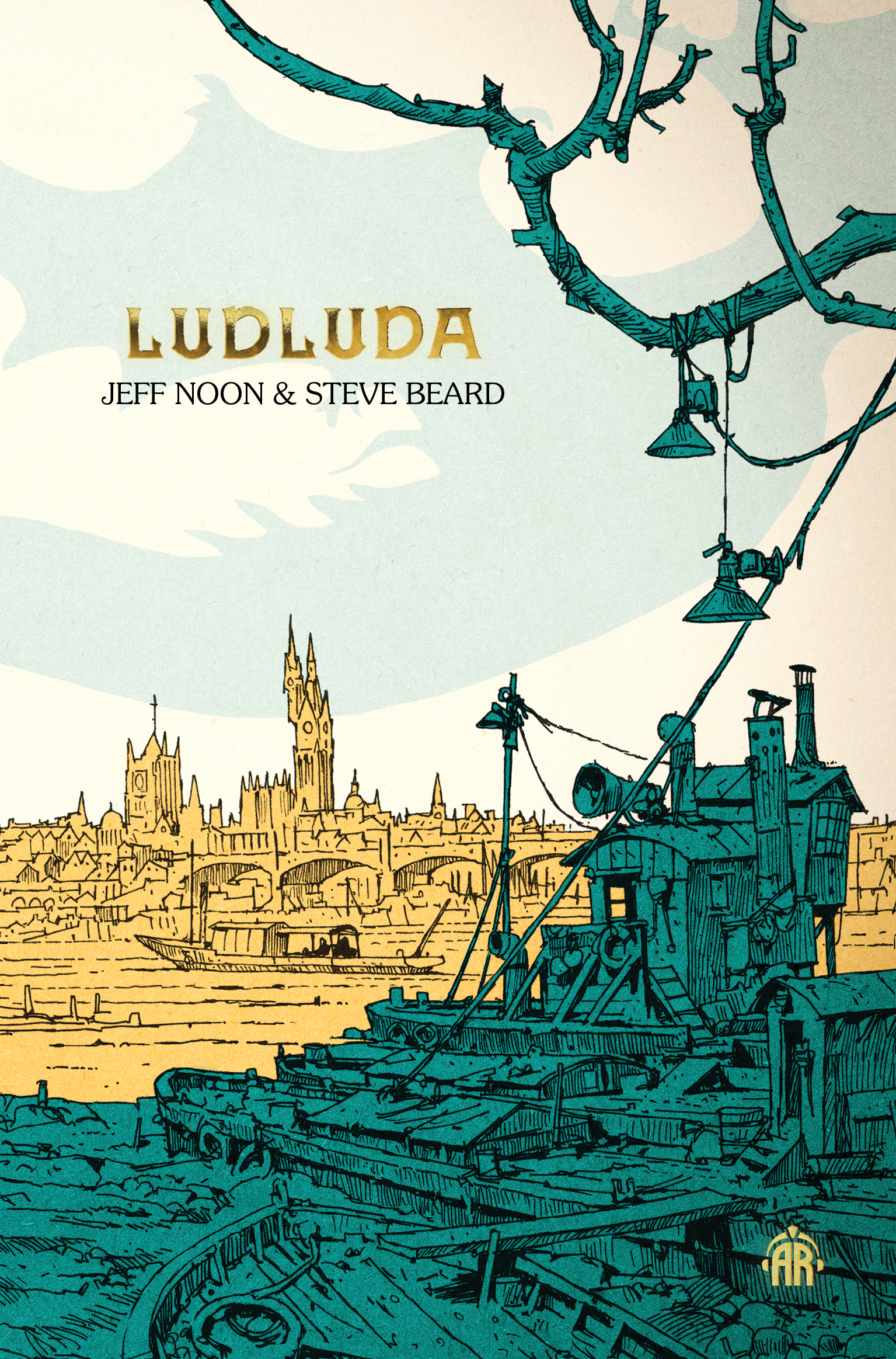
Ludluda, the sequel to Gogmagog, takes us on a haunting and delightfully witty adventure in a fantasy world which defies genre.
Luluda tells the story of a journey through a strange modern city whose power is sourced from the ghost of a dragon. Ludwich may no longer be at war with its great political rival overseas, but veteran sailor Cady Meade, survivor of many battles, suspects that the hard-won peace is about to break. She promises to deliver a preternatural ten-year old girl to a coming-of-age festival in the heart of Ludwich. But she has been warned by the prophets that dangers lie ahead.
Cady suspects that the young girl’s fate is entwined with that of the city. When the girl disappears, the old sailor must hunt her down, accompanied by a know-it-all mechanical man whose circuits are slowly grinding to dust. But Cady’s mission has always been to guard Ludwich from enemies both known and occult, and she will never give up.
Following the course of the River Nysis through the city, and beyond, Cady must uncover the final mysteries of the great dragon Haakenur’s life and death and afterlife. Her greatest battle is about to begin.
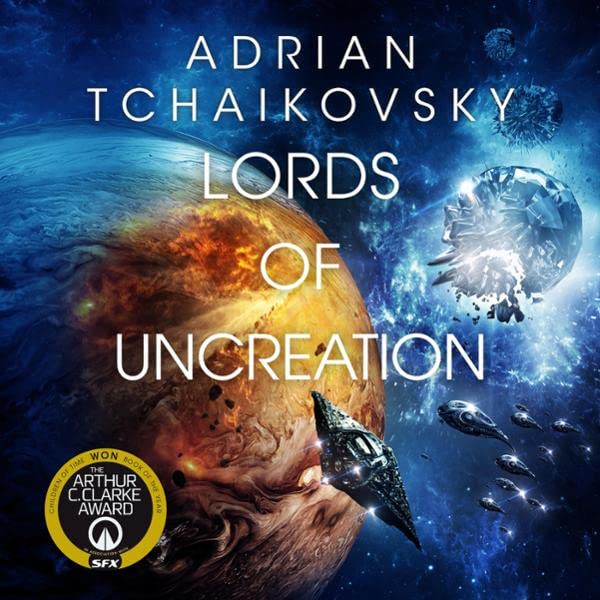
City-by-city, kingdom-by-kingdom, the Palleseen have sworn to bring Perfection and Correctness to an imperfect world. As their legions scour the world of superstition with the bright flame of reason, so they deliver a mountain of ragged, holed and scorched flesh to the field hospital tents just behind the frontline.
Which is where Yasnic, one-time priest, healer and rebel, finds himself. Reprieved from the gallows and sent to war clutching a box of orphan Gods, he has been sequestered to a particularity unorthodox medical unit.
Led by ‘the Butcher’, an ogre of a man who’s a dab hand with a bone-saw and an alchemical tincture, the unit’s motley crew of conscripts, healers and orderlies are no strangers to the horrors of war. Their’s is an unspeakable trade: elbow-deep in gore they have a first-hand view of the suffering caused by flesh-rending monsters, arcane magical weaponry and embittered enemy soldiers.
Entrusted – for now – with saving lives deemed otherwise un-saveable, the field hospital’s crew face a precarious existence. Their work with unapproved magic, necromancy, demonology and Yansic’s thoroughly illicit Gods could lead to the unit being disbanded, arrested or worse.
Beset by enemies within and without, the last thing anyone needs is a miracle.
My Review
I immediately started listening to House of Open Wounds after finishing City of Last Chances, and am now impatiently awaiting the release of Days of Shattered Faith. Where book one does and industrial fantasy take on the revolts and rebellions of the Industrial Revolution and the Enlightenment, book two takes us to the battlefield hospital, a la M.A.S.H., with outlaw priests and tortured souls performing miracles to save the lives of their conquerors.
We follow Yasnic who has become a smuggler of gods and his punishment for rebellion against perfection is to work in a field hospital, patching up Pall soldiers along with a crew of outcasts, led by a poisoner and a necromancer. It’s a bit bewildering for the priest, who is and isn’t a priest. He’s in an on and off relationship with his god. He falls in love with a daemon and discovers one of his colleagues is a king. It’s quite harrowing, especially when his god starts healing soldiers.
Who can no longer fight. This sedition spreads through the army as people discover that actually they quite like not dying horribly in battle. It causes a bit of a stir.
Other stuff happens, but you’ll have to read the book for yourself.
I enjoyed the development of Yasnic’s character and his relationship with his god. It’s complicated and he goes through a lot of emotions as he trues to break away. Like anyone, or any society, moving away from religious belief, he realises he depended on his god for companionship and that the relationship is abusive and co-dependant, and finally breaks free, although longing for the simplicity of his previous life. It’s subtly done and though provoking.
The language is evocative and highly descriptive. I love the change of perspective between characters, seeing events from different sides, although we mainly follow Yasnic. We get a glimpse of the complex histories and societies of the world, and the inherent hypocrisy of ‘perfection’ and imperialism is cleverly explored. The lies of imperialism are skewered nicely.
The magico-scientific basis of religion and technology is consistent, although different cultures and traditions manipulate the same forces in their own ways, and have their own explanations. I quite enjoyed the way Tchaikovsky uses the use and abuse of Divinati magic to point out the complications of trying to force one system into working within another, and the loss of context and safe guards that go with it. It is particularly resonant as I was also listening to a book about indigeneity in North America and the cultural of indigenous practices and their co-option by non-indigenous Americans. If you take the practices of of their context, then the power of the practice is removed or even corrupted (think wellness wankers using sweat lodges and killing people).
Tchaikovsky always has a point to his work, or at least I can always glean a theme and lessons in reading his books. That may just be a me thing, but even so, I end up thinking.
This book is the second in the series and I think it could happily stand alone, as you get enough background for the characters and the world in reading it, but reading in order helps to put some events in context and in the wider world.
Excellent narration. Love the accents.
Another fantastic book from Adrian, highly recommended.
Category: Fantasy, Historical Fantasy ISBN: 9781399734783 Publication date: October 17, 2024 Format: Hardback RRP: £20.00 Publisher: Hodderscape
Book Description
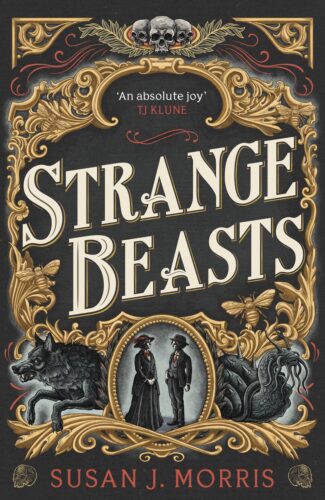
When the Gendarmes ask the Royal Society for the Study of Abnormal Phenomena for help, they don’t expect them to send Samantha Harker.
She’s a researcher, more used to papercuts than knife fights. Sam is also the daughter of Dracula’s killer and can see into the minds of monsters. It’s a perilous power, one that could help her crack this case ─ or have her thrown into an asylum.
Dr Helena Moriarty is Sam’s reluctant partner, the Society’s finest agent who has forged a formidable path in her notorious father’s shadow. Professor Moriarty is in hiding, but he still makes his presence known: Hel’s partners have a way of dying in mysterious circumstances.
From Paris’ glittering opera house to its darkest catacombs, the investigation pits Sam and Hel against magic, monsters, and men. And beneath their tenuous partnership, something else is growing . . .
But is trusting Hel the key to solving the murders? Or is Sam just another pawn in a Moriarty game?
With characters drawn from the worlds of Dracula and Sherlock Holmes, Strange Beasts is a twisty puzzle box of a historical fantasy ─ perfect for fans of Genevieve Cogman, Theodora Goss, Freya Marske, T. Kingfisher, and Gail Carriger.
About the author
Susan J. Morris is a fantasy author and editor, best known for a writing advice column featured on Amazon’s Omnivoracious blog and her work editing Forgotten Realms novels. Susan delights in running workshops for Clarion West and in moderating panels for writing symposiums. When not writing or reading, Susan indulges in playing video games, training in Pilates, and experimenting with new plant-based food recipes. She lives in Sammamish, Washington with her partner, two cats, and entirely too many plants.
Susan had that pink hair at FantasyCon in October. It’s very distinctive and eye-catching…and distracting.
I read this book for the British Fantasy Society book club meeting on Sunday afternoon. I got an Audible code from the book club organiser because my Goldsboro Books special edition of Strange Beasts hasn’t arrived yet. It was the October SFF Fellowship book, but I had to cancel my subscription because funds are a bit tight. I ordered it impulsively after chatting to Susan a few times at FantasyCon.
Conversations in the courtyard are responsible for a number of books I’ve bought in the last month…
Anyway, I also ordered a copy of the standard hardback from bookshop.org when I found out it would be the first BFS Book Club book and before Dave sent me an Audible code. So, once again, I have multiple copies of a book.
Totally worth it!
The main characters of Sam Harker and Dr Helena Moriarty are well-rounded, complex characters, each working through their own problems and dealing with their own secrets. They’re officially investigating the Beast attacks, but they both have their own secret missions and they’re being manipulated by multiple parties. They struggle to trust, because they’ve been taught by other people that they can’t trust anyone and can’t trust themselves. Their growth as people and the tentative nature of their relationship from start to finish is realistic.
Sam is the view point character, so we read her thoughts and see events from her perspective, and see her fears and confusion as she deals with the things the mission throws at her.
They’re also really fun characters.
Jacob Van Helsing is not a fun character. He’s an absolute dickhead. Sam’s memories of him as a loving child contrast with the adult man poisoned by his father – the Van Helsing who helped kill Dracul – into hating and fearing her as a Channel. His comeuppance is well-deserved, although I don’t like that he got credit for Sam and Hel’s work. I suspect even if he hadn’t chosen to take credit, Mr Wright would have given him the credit, because the Society, and society in general, is incredibly misogynistic.
I did not work out who the killer was until quite late on; there are a lot of red herrings. Even the identity of the alchemist was a red herring really, when you think about it, another piece on the chess board, but not the player moving the pieces around.
I felt the mix of science and magic was really well done – a delicate balance of folklore and early 20th century science was found and use consistently. The details of Paris in 1903 feel realistic, although I’ve only been to Paris once and didn’t get to go into the catacombs, but I can imagine them being full of mythical beasts and human criminals. The descriptions were very vivid and events tightly plotted. There are characters I’d like to know more about but they don’t come back into the narrative, and other characters that the reader learns about slowly. Each character has their own backstory and personal history.
Also, chemistry is magic, and fun to play with. So long as you don’t accidentally gas people or blow things up.
The plot starts with a bang and doesn’t stop. Well, actually it starts with a threat, then a few bangs, and then a monster attack in a carriage…you get the picture. You’re just taking a breath when the next thing happens. It’s fun, but I had to take a day between reading/listening to a few chapters at a time.
I have listened to the first 14 chapters as audio and read from chapter 15 to the end. The audiobook was really well read, with multiple accents! I would not have been able to pronounce most of the French and German names without hearing them first. It’s been a lot of years since I sturdied French and I wasn’t very good at it even then, and my German is non-existent. I could not understand the French phrases. I’m just going to assume they’re all in good French, make sense, and not question it.
If you enjoyed Gail Carriger’s books, I highly recommend this historical fantasy of Bell Époque Paris. It’s darker and the focus is on the developing friendship/potential romantic relationship rather than a ‘destined partners’ type narrative. I love it.
One-Time
Monthly
Yearly
Make a one-time donation – If you want. No pressure.
Make a monthly donation
Make a yearly donation
Choose an amount
£5.00
£15.00
£100.00
£5.00
£15.00
£100.00
£5.00
£15.00
£100.00
Or enter a custom amount
£
Your contribution is appreciated. I put a lot of effort into reading and reviewing books for readers.
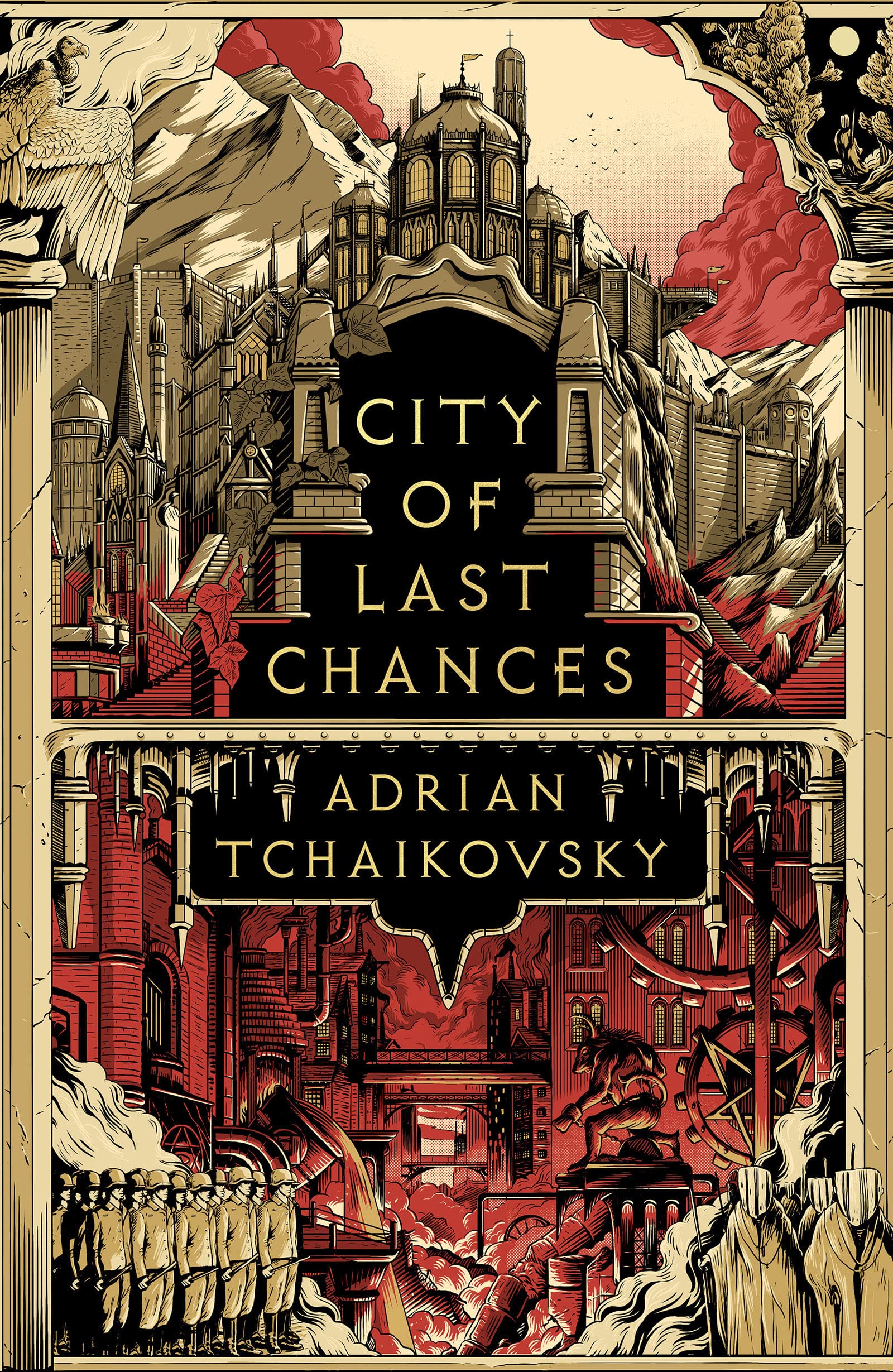
Format: 496 pages, Paperback Published: May 2, 2023 by Head of Zeus — an AdAstra Book ISBN: 9781801108430 (ISBN10: 1801108439)
Description
Arthur C. Clarke winner and Sunday Times bestseller Adrian Tchaikovsky’s triumphant return to fantasy with a darkly inventive portrait of a city under occupation and on the verge of revolution.
There has always been a darkness to Ilmar, but never more so than now. The city chafes under the heavy hand of the Palleseen occupation, the choke-hold of its criminal underworld, the boot of its factory owners, the weight of its wretched poor and the burden of its ancient curse.
What will be the spark that lights the conflagration?
Despite the city’s refugees, wanderers, murderers, madmen, fanatics and thieves, the catalyst, as always, will be the Anchorwood – that dark grove of trees, that primeval remnant, that portal, when the moon is full, to strange and distant shores.
Ilmar, some say, is the worst place in the world and the gateway to a thousand worse places.
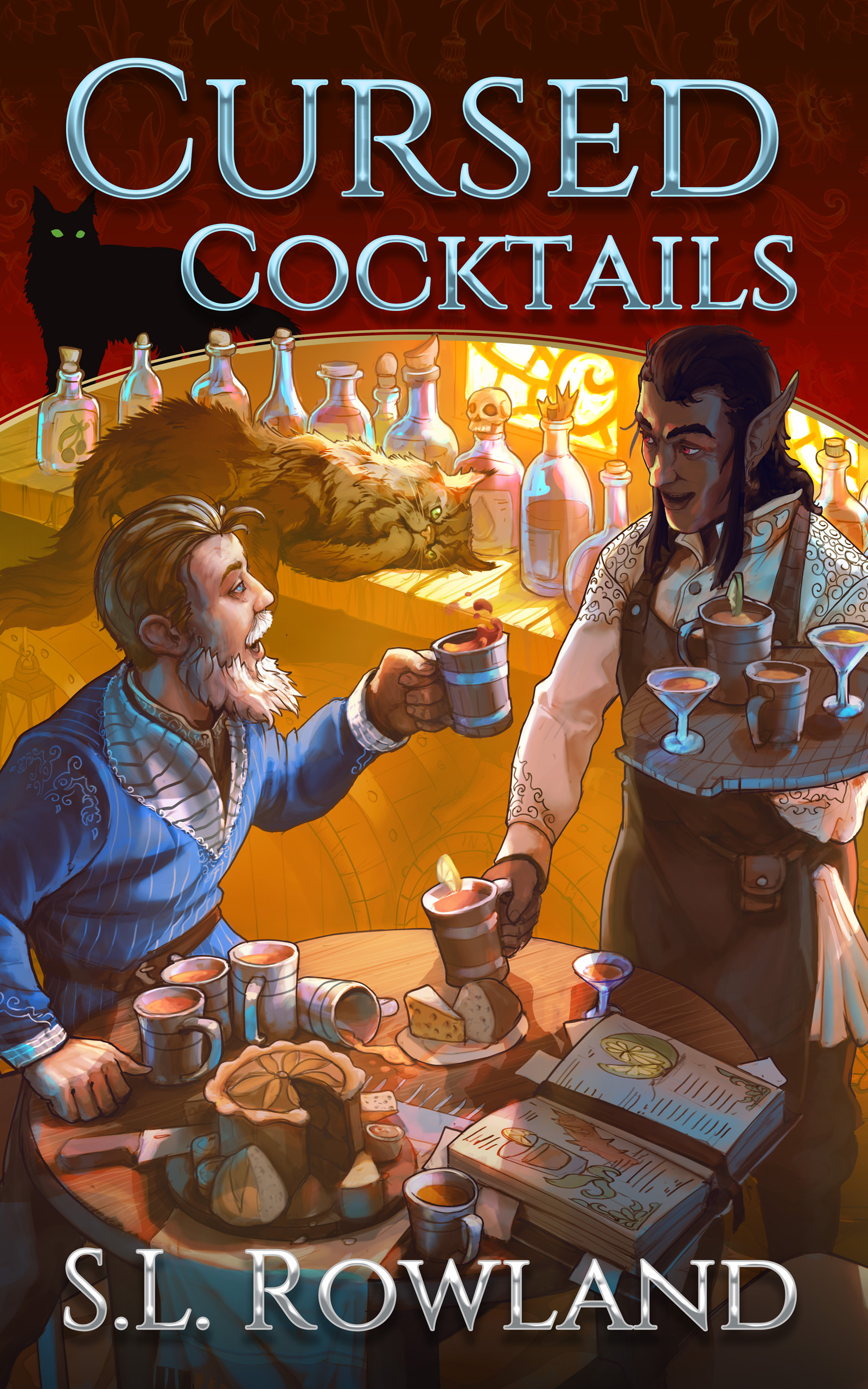
Format: 280 pages, Paperback Published: February 18, 2023 by Aethervale Publishing ISBN: 9798987850206
Description
When life gives you lemons, squeeze them into a stiff drink and stir.
After twenty years defending the frozen north against some of the most dangerous threats in the nine kingdoms, Rhoren “Bloodbane” has finally earned his retirement. While the blood mage’s service to the realm may have ended, burning veins and aching joints remain, and Rhoren soon learns that a warmer climate offers relief from his chronic pain.
And a chance at a fresh start.
In the warm and relaxing atmosphere of Eastborne, the umbral elf finds a new purpose and a sense of belonging. He may have left the frozen north behind, but he brings with him the skills and strength gained from a lifetime of defending the realm. Along with his most prized possession—a book of drink recipes inherited from his father.
Spilled cocktails may not carry the same weight as spilled blood, but opening a tavern brings a unique brand of challenges. With the right friends and a little bit of luck, he might just have a recipe for success.
Last night I attended the BFS Awards, and thought I’d share the winners. I am sure there are already lists out there and the ceremony was live streamed.
The awards were hosted by Stew Hotston. The awards aren’t ready yet (supply chain issues) so the are replaced by framed prints and will be delivered eventually.
The first award was the BFS Short Story competition.
Presented by Stew Hotston
Catherine Rose Davis
P = f/A, by Hannah ?
Samuel, by Very Bruce
Art Competition
Presented by Jenni Coutts
Fungus Night, by ?
Night Witch, by Sophie Hill
Survival, by Tara Bush
Best Collection
Presented by Shona Bond
Jackel, Jackel: Tales if the Dark and Fantastic, by Tobi Ogundiran (Undertow Publications)
Best Novella
Presented by Nick Wells
The Last Dragoners of Bowbazar, by Indra Das (Subterranean Press)
Best Non-Fiction
Presented by Pete Sutton
Writing the Future, eds. Dan Coxon and Richard V Hirst (Dead Ink)
Best short fiction
Presented by Priya Sharma
The Brazen Head of Westinghouse, by Tim Major (IZ Digital)
Best Anthology
Presented by Robin Duncan
Out There Screaming: An Anthology of New Black Horror, ed. Jordan Peele (Picador)
The Tiny Bookcase, by Nico Rogers and Ben Holroyd-Dell
(Nico’s speech was very funny!)
Best Independent Press
Presented by Bella Pagan
Flame Tree Press, collected by Nick Wells on behalf of everyone at Flame Tree
Sydney J Bounds Award for Best Newcomer
Presented by Anna Smith Spark
Teika Marija Smits, for “Umbiblical” (Newcon Press), and “Waterlore” (Black Shuck Books)
Best Magazine/Periodical
Presented by Jenni Coutts
Shoreline of Infinity
The August Derleth Award for Best Horror Novel
Presented by Ramsey Campbell
Don’t Fear the Reaper, by Stephen Graham Jones (Titan)
Robert Holdstock Award for Best Fantasy Novel
Presented by Stephan Aryan
Talonsister, by Jen Williams (Titan)
Charles Edward Wagner Award
Presented to Shona Kinsella
Ramsey Campbell
Legends of FantasyCon
Presented by Karen Fishwick
Debbie Bennett
You don’t have to, but if you want to, you can make a donation below. It keeps me in pens, books, and allows me to travel to events like FantasyCon. I’m currently saving to got to World Fantasy Convention 2025. It’s in Brighton, that place is expensive!
One-Time
Monthly
Yearly
Make a one-time donation – If you want. No pressure.
Make a monthly donation
Make a yearly donation
Choose an amount
£5.00
£15.00
£100.00
£5.00
£15.00
£100.00
£5.00
£15.00
£100.00
Or enter a custom amount
£
Your contribution is appreciated. I put a lot of effort into reading and reviewing books for readers.
It’s about half six on Sunday afternoon. The last panel ended almost three hours ago. I’ve had a nap and finally have some time to write about my experience of FantasyCon 2024.
Locus Recommended Reading List 2023 BSFA for Best Non-Fiction, Shortlist 2024 BFS for Best Non-Fiction, Shortlist 2024
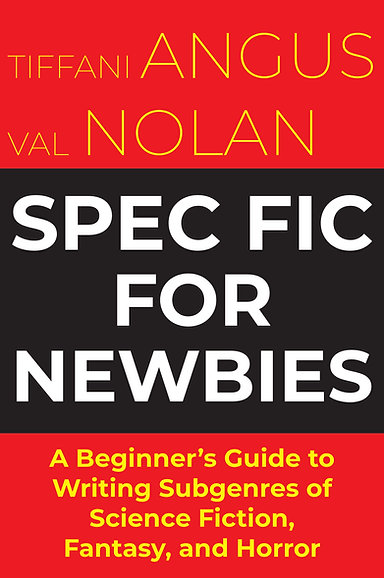
Spec Fic For Newbies: A Beginner's Guide to Writing Subgenres of Science Fiction, Fantasy, and Horror. Tiffani Angus (Ph.D.) and Val Nolan (Ph.D.) met at the 2009 Clarion Writers’ Workshop in California and since then have collaborated many times as fans and scholars on panels for SFF conventions and writing retreats.Working together on this book and combining their experience as SFF writers and as university lecturers in Creative Writing and Literature made perfect sense!
Every year they see new students who want to write SFF/Horror but have never tried the genres, have tried but found themselves floundering, or, worse, have been discouraged by those who tell them Science Fiction, Fantasy, and Horror are somehow not “real” literature.
This book is for all those future Science Fiction, Fantasy, and Horror writers. Tiffani and Val are approaching these three exciting fields by breaking them down into bite-sized subgenres with a fun, open, and contemporary approach.Each chapter contains 10 subgenres or tropes, with a quick and nerdy history of each derived from classroom teaching practices, along with a list of potential pitfalls, a description of why it’s fun to write in these subgenres, as well as activities for new writers to try out and to get them started!
My Review
I bought this book at FantasyCon 2023. I’ve got quite a collection of Academia Lunare books now, mostly genre stuff and Tolkien books. Look at the Luna Press Publishing website, under non-fiction and academic, to get a sense of the books I mean. Most of the are small, A6 size, usually with monographs on a uniting subject matter.
This book is different.
Yes, that’s me. I got the laptop camera to work properly. Yes, that’s the Pen & Sword TBR pile behind me.
It’s a guide to the sub-genres of SFFH, with two writing exercises for each sub-genre. I’m not exactly a ‘newbie’, but I don’t know all of the sub-genres, and it was interesting to read about the ones they included.
I enjoyed to quick tour and chatty writing style of this book, especially the genre and sub-genre histories. This book is informed by years of teaching by both authors, and it shows. They’ve clearly come across the same mistakes time and time again, but the enjoyment of both spec fic and teaching also really shines through. I could easily devour a volume on each sub-genre by these authors, but I’m weird like that. I like depth and breadth. I don’t think that’s a criticism of this book, but if you’re expecting in-depth discussions of the nuances of each sub-genre you’re not going to get that. The book provides broad overviews of each sub-genre with reference to specific tropes or movements within the sub-genre.
I enjoyed the tour of 30 sub-genres and the writing left me want more on some subject and no more about others (splatterpunk for example, is really not my thing). There’s enough to get you started on any sub-genre, and that’s what this book is for.
If you’re looking for something to read in a specific sub-genre, I think you could flip to the section in this book and find a place to start in a new sub-genre, because the authors provide lots of examples of works – both film and literary – that sit in a sub-genre.
There are also lots of references if you want to follow up on a particular statement or idea. I like references. More references and access to a database of papers, please. Because I don’t have enough to read…
I found the writing exercises prompted me to come up with new ideas and think it’ll be useful when I’m struggling to put an idea down on paper. I’ve got an idea about zombies and cruise ships, but it’s not going anywhere yet… Anyway, the activities make up a small section of each sub-genre entry, but the information packed in before them informs the activities. I think for a writer at any stage of their career, the activities will prompt the brain to try something new. If you’re a new writer they’ll give you a place to start, and for experienced writers they’re a reminder and refresher when your brain is fried. The writing advice found throughout the text is useful and explained well.
While I read this book from start to finish, I think it could be a good ‘dipping’ book, for those having a go at a new genre or sub-genre. There’s always something new to try – nobody could have written in all thirty of the sub-genres in this book – so dipping in and out as the mood takes you can give the writer practice in a variety of stories.
I have already recommended this book to a very new writer (my nibbling is doing creative writing as part of their OU Open Degree – I’m so proud!) and will be buying volume 2 at FantasyCon in three weeks – Francesca, make sure there’s a copy put aside for me, please!
I mentioned on my book Instagram that I was reading this book and Dr Angus kindly told me to contact her if I need any PhD advice, which I thought was lovely.
Tiffani Angus signed the book. It was signed when I bought it, so Tiffani must have been at FantasyCon last year.
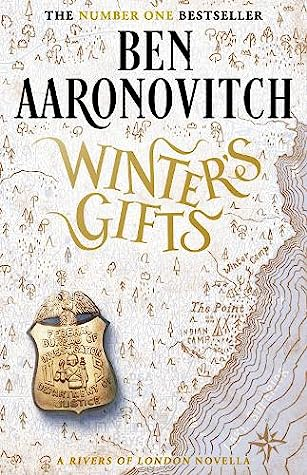
Series: Rivers of London (#9.5) Characters: Kimberley Reynolds Format: 211 pages, Hardcover Published: June 8, 2023 by Orion ISBN: 9781473224377 (ISBN10: 1473224373)
Description
When retired FBI Agent Patrick Henderson calls in an ‘X-Ray Sierra India’ incident, the operator doesn’t understand. He tells them to pass it up the chain till someone does.
That person is FBI Special Agent Kimberley Reynolds. Leaving Quantico for snowbound Northern Wisconsin, she finds that a tornado has flattened half the town – and there’s no sign of Henderson.
Things soon go from weird to worse, as neighbours report unsettling sightings, key evidence goes missing, and the snow keeps rising – cutting off the town, with no way in or out…
Something terrible is awakening. As the clues lead to the coldest of cold cases – a cursed expedition into the frozen wilderness – Reynolds follows a trail from the start of the American nightmare, to the horror that still lives on today…
My Review
A novella from last year that’s been sat on my TBR pile for a while! I’ve been prompted to read it by the arrival of the latest Rivers of London novella. I thought I’d better get up to date.
Kimberley Reynolds is sent to the Great Lakes in the middle of winter to deal with an incident with unusual characteristics, and is snowed in almost immediately. Stuck without back-up, and her contact missing, she must discover what’s going on, what it has to do with an exhibition by the Virginia Gentlemen in 1848 and where Henderson in. Unfortunately, she’s not the only one looking into things, and it gets complicated when the local meteorologist takes her out to the site of the 1848 winter camp. Malevolent forces are at work, a teenage genius loci comes to the rescue, and Kimberly falls in love.
Kimberley Reynolds is a character that pops up in some of the novels but to be honest, she never struck me as a interesting character, or one I’d taken much note of. However, this novella gives the reader more information about her background and develops her character. I enjoy these novellas because they allow Aaronovitch to explore characters and locations without a full novel focused on Peter. He does make an appearance, over the phone and in her head, but it’s mainly about Kimberley and her slowly blossoming romance with William, while investigating both modern and historical crimes.