Despatches from World Fantasy Con 2025: day 2 Friday 31st October 2025

Today I was on my first panel, The Way We’re Wired, about neurodivergence in fantasy.  The moderator was David Green, and the other two panellists were Janet Forbes from World Anvil and indie writer Roxan Burley.

I was supported by a few people I know, and my friend Sian, deputy chair of the BFS, took a picture for me to commemorate my first panel.

Before this panel, I attended another panel, Mapping in Fantasy. The moderator was Adrian M Gibson and the panellists were Alicia Wanstall-Burke, James Logan, and Joy Sanchez-Taylor.

Joy Sanchez-Taylor is an academic from CUNY, James Logan is trad published, and Alicia Wanstall-Burke is indie published.

I have James Logan’s book The Silverblood Promise and I’ve bought all three of Alicia’s books based on the description of the maps. I really want one of Joy Sanchez-Taylor’s books, but academic books are expensive.

I made extensive notes on the conversation, so this is a bit of a summary.

The panel discussed their relationships to maps, expressing childhood memories of travelling with paper maps and learning to read them. For Alicia, maps also help her to write as they allow her to visualise a space and the way it effects the story. They discussed how the choices made on the presentation of a map can tell the reader something about the world. Joy Sanchez-Taylor especially emphasized the way reorientating the world can express and explore new ways of thinking.

The panel went on to discuss whether or not a fantasy needs a map. James Logan expressed that although he has maps of his world they aren’t included in his books because he likes to keep things malleable, so that he can move cities around if he needs to, giving him more options for the future. Alicia Wanstall-Burke brought up the question of who owns the map? A map might be a symbol of power or it might be a tool to navigate a territory and be subject to change as the land changes. James Logan, from his perspective as an editor in a major publishing house, expressed that it can be expensive to commission an artist and a cartographer, so changing the map for the next book in a series is not going to happen. Joy Sanchez-Taylor mentioned the importance of maps for visual learners and discussed the pressure on authors to have a defined map, but that they can have known and unknown areas so that the story world can expand.

Next, the discussion moved on to how the layout of the world affects the story. Alicia Wanstall-Burke discussed how the world can provide barriers to technology, information, and culture, and when cultures separated by the physical barriers meet, there can be conflict, and that can drive the story. James Logan likes to keep the world fresh for himself and for readers, so he sets each story in a different city, providing a sense of scale. They went on to discuss the way maps change perspective and the commissioning process.

I also attended the ‘Here be Dragons in Fantasy Fiction’ panel, (moderator: Charlotte Bond; panellists: Aliette de Bodard, Michael R Miller, Andrew Knighton). It was fun listening to other people who love dragons as much as I do, and I’ve got two of Aliette de Bodard’s books in my Amazon basket now, because Dragons and their murder husbands…

I attended Stewart Hotston’s book launch, and got myself a signed copy of Project Hanuman.

In the evening I attended the Disability in SFF panel, moderated by Annie Summerlee, with panellists Lizzie Alderdice, Susie Williamson, Katie Bruce and Kit Whitfield. I know Katie Bruce and Kit Whitfield and wanted to support them, as well as being interested in what they had to say. The panel was streamed and is on the member’s area of the WFC 2025 website if you didn’t get to see it.

After that, I attended the Flame Tree book launch. We got a lovely speech from Lee Murrey, a hilarious one from Ramsey Campbell,  and an amazing reading from Anna Smith Spark.  I treated myself to a stack of books from Flame Tree yesterday, but I was tempted buy more today.

After the launch I spent several hours chatting and drinking with friends and new acquaintances, until we got chucked out of the con bar and went down to the hotel bar, until I left at 1 a.m. We’ve overwhelmed the hotel slightly, I don’t think they realised how much SFFH people like to drink.

TBR Review: The Fifth Season, by N.K. Jemison

Format: 449 pages, Paperback
Published: August 4, 2015 by Orbit
ISBN: 9780316229296 

Blurb

This is the way the world ends. Again.

Three terrible things happen in a single day. Essun, a woman living an ordinary life in a small town, comes home to find that her husband has brutally murdered their son and kidnapped their daughter. Meanwhile, mighty Sanze — the world-spanning empire whose innovations have been civilization’s bedrock for a thousand years — collapses as most of its citizens are murdered to serve a madman’s vengeance. And worst of all, across the heart of the vast continent known as the Stillness, a great red rift has been torn into the heart of the earth, spewing ash enough to darken the sky for years. Or centuries.

Now Essun must pursue the wreckage of her family through a deadly, dying land. Without sunlight, clean water, or arable land, and with limited stockpiles of supplies, there will be war all across the Stillness: a battle royale of nations not for power or territory, but simply for the basic resources necessary to get through the long dark night. Essun does not care if the world falls apart around her. She’ll break it herself, if she must, to save her daughter.


My Review

This book and the other two in the series have been on my TBR pile for several years, but one of the GoodReads challenges for the summer had this book on the list and I decided that was as good a way to decide what next to read from my TBR Pile as any.

My TBR pile is disturbingly huge…

My currently reading piles is disturbingly huge…

Anyway.

I picked up The Fifth Season the other day to read in bed while I was feeling ill, managed 130 pages then fell asleep. I read the rest yesterday – 319 pages. I think I’m feeling better today but I can never tell until I test my lungs during a walk or swimming. I’ve managed to get a bit of reading done while I’ve been ill. Two more books off the TBR Pile and on to the shelves. Obviously, next late month I’ll be buying more books at World Fantasycon, so I should probably prepare more shelf space.

Back to the book. The narrative follows a character who goes by multiple names over her lifetime as she confronts first her status as an orogene – someone who can move the earth with her mind – in a world where people with orogeny are either murdered as children or sent to a training camp in the capital city of Yumenes, where they are abused slaves, trained to hate themselves and do as they’re told by Guardians.

We see the main character through the eyes of a narrator, who turns out to be a stone-eater called Hoa, who has been following the main character through her life, and from the 3rd person POV of the main character. It’s an interesting structure, and took me a while to adjust to. Nonetheless, I really enjoyed it, seeing the story from the outside eyes of Hoa and the internal narrative of the main character. Look, she can’t decide who she is, so I’m not going to use her name.

Each name is associated with a time in the main character’s life. She has the name her parents gave her as a child, Damaya, which she carries until she passes her first ‘ring test’ at the Fulcrum, and chooses another name. She calls herself Syenite. She carries that name through meeting her mentor-friend-partner-father of her first child, Alabaster, living on an island with pirates, and having a child, then the ending of that period. After that she spends ten years living with a husband in a small town and teaching children, with another name, Essen. This triple name situation gives her some difficulty with her identity by the end of the novel when people she knew at different point in her life also end up in the same place as she does.

The impetus for events is two-fold. Firstly, Essun finds her son dead and her daughter missing. Her husband is the culprit. Essun sets off to look for her husband and daughter to get revenge. Essun’s son is murdered because he is an orogene, a talent inherited from Essun. Nassun, Essun’s daughter is also an orogene. Essun has a lot to process and blames herself. She is a little mad, and her journey south, picking up first Hoa and then Tonkee, a scientist, on the way, helps her to regain some sense.

At the same time, Alabaster decided it’s time to destroy Yumenes, and the Fulcrum, the city and training centre that enslaves and abuses orogenes, and opens a giant rift from east to west on the Stillness. Alabaster is an incredibly powerful orogene, but under the control of the Fulcrum he has been abused and raped to produce children strong enough to be used in ‘nodes’. When he finds a safe place on the island of Moev, and a tripartite relationship with Syenite, and the deputy leader of the community, Innon (yay! Bi and gay rep), he starts to feel safe. They have a child, Coru, who is more powerful than Alabaster. Then the Fulcrum comes for them. Innon and the baby die in the battle, Alabaster is taken to safety by his stone-eater Antimony, and Syenite goes mad and disappears into the wilderness for 12 years. During this time Alabaster has been slowly devoured by Antimony and they’ve sought ways to destroy the people enslaving orogenes.

Damaya-Syenite-Essun and Alabaster have different motives for their actions, but the results are the same – the end of the system that has controlled the continent of The Stillness for thousands of years.

The planet is fascinating.

The continent that makes up The Stillness is two plates, the Maximal and the Minimal. There are plate boundaries that run through it and around it, but they use orogenes to dissipate earthquakes and volcanic eruptions. Now, that’s not a sensible thing to do, in the long run. Continents move, that’s just how these things work; messing about with that would cause no end of trouble. Volcanic eruptions can destroy large numbers; they can, if big enough, block out the sun for years; but they also provide essential nutrients to the soil and recycle minerals and water through the system. Some of the most fertile soil is volcanic. Underwater volcanoes provide unique ecosystems and drive evolution. We didn’t think life could exist with photosynthesis until we discovered the chemosynthetic life of the deep ocean volcanic vents.

Earthquakes are terrifying. They trigger tsunamis and rock slides, they destroy homes and open fissures in the land. They also show that the rock recycling system of plate tectonics is working properly. When mountains are pushed up, or oceanic plates are subsumed beneath a continental plate, new land is made, old land is recycled, water is pulled into the crust and circulates through the system to come out in volcanoes.

Any planet that has a metal core – solid and liquid – and a liquid layer of rock will also have a magnetosphere, protecting the planet from cosmic radiation and solar flares. Life exists on earth because we have a living tectonic system. And a moon. It’s helpful to have a moon. The planet of The Stillness doesn’t have a moon, although Alabaster introduces the idea to Essun at the end of The Fifth Season, so at some point it must have had one.

The society in this novel is complex and well-developed. People think the earth hates life because humans caused damage thousands of years before and there was a massive eruption, and the first of the Fifth Seasons. Using orogenes to control the planet’s movements is supposed to protect life, but also makes people terrified of orogenes, who are so powerful that they can fight Father Earth. One aspect of the culture is disdain for the past that isn’t part of the Sanzed culture.

Former civilisations, ‘deadcivs’, are considered failures with nothing useful to provided the current civilization. This means archaeological remains are destroyed or covered up, pre-Sanzed knowledge is forgotten or corrupted to fit the ideological needs of the current civilization. They are an ossified civilisation, living by ancient lore written on stone tablets. Equally, scientists who don’t focus entirely on the earth and preparing for Fifth Seasons are considered to be practising pseudoscience – archaeologists and astronomers particularly. Contrasting the closeminded attitudes of most people are the independent community of Moev and later the community at Castrima, which is not only entirely different in attitude to orogenes but is also an artifact of a dead civilisation. The reader feels these contrasts through Syen-Essen’s confusion and fear.

This book was so good! Complex and beautifully written. I can see why it won a Hugo. I’ve already started reading book 2. If you haven’t read it yet, and enjoy sci-fi and fantasy, you need to read this book.

August 2025 update and news

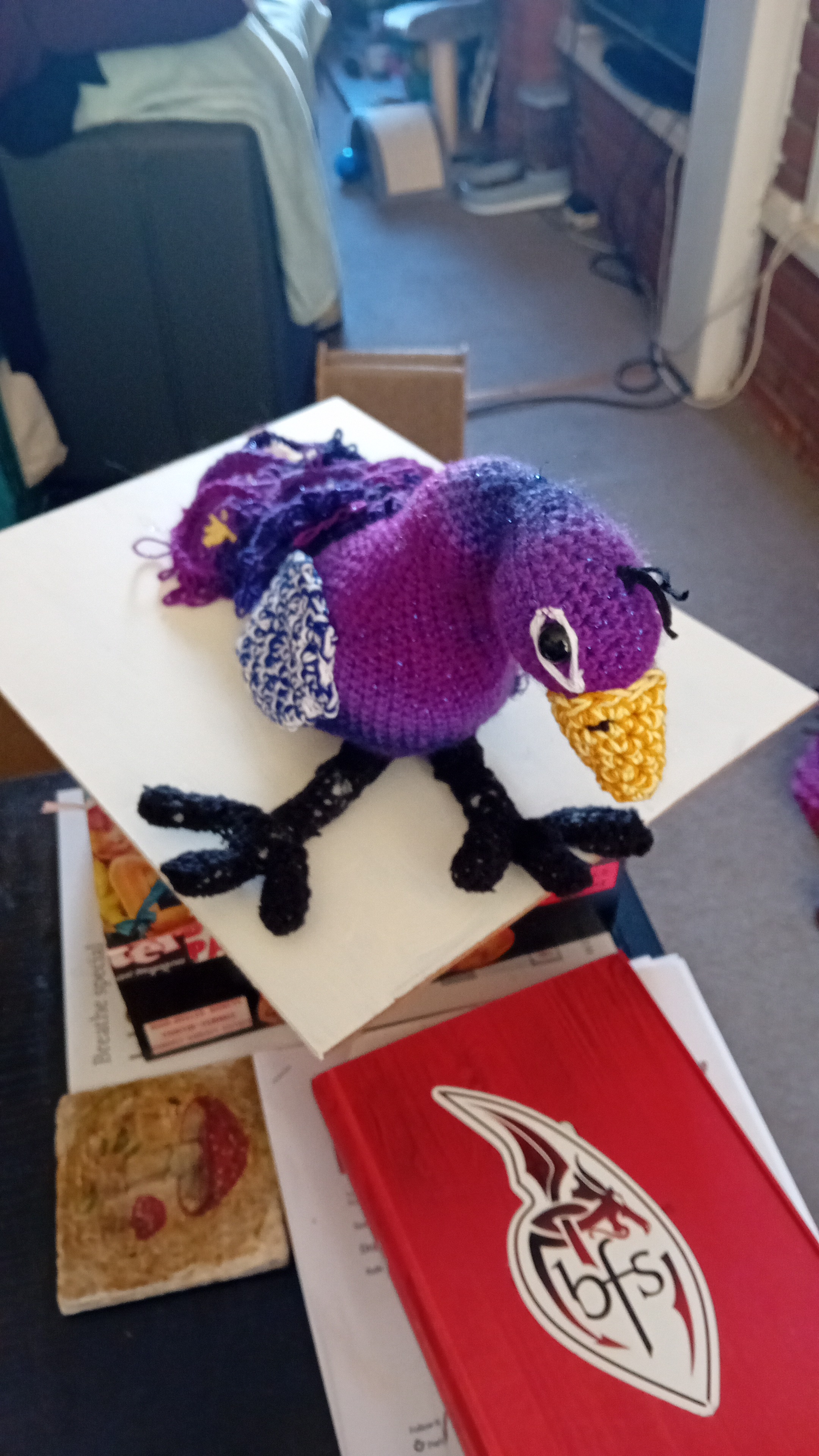
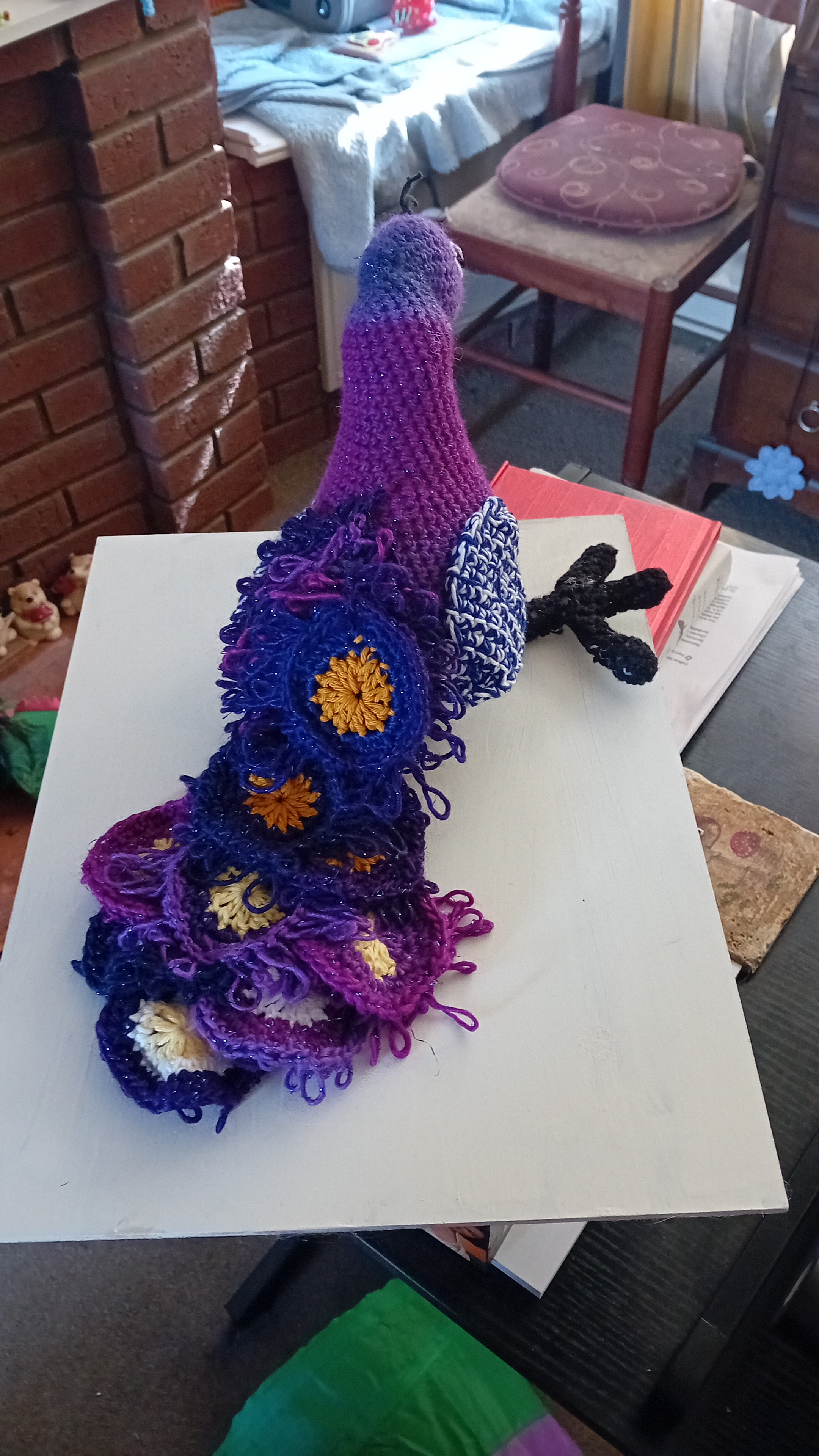
August was a busy month, with four blog tours and going to Autscape at the beginning of the month for work. I also needed to finish a crochet project for an exhibition at TT88 on 30th August, and a short story that I needed to finish and submit to Humber SFF by today.

I’ve also been reading books for the BFS Awards. I’m a judge for the Best Collection award. My fellow judges and I decided to have a deadline of 1st September, so I’ve been fitting them in around my tours. I also needed to read a book for a tour tomorrow.

The last week of August was very successful. I completed the crochet project, finished reading three books, and the short story.

I have other news, quite big news.

I work for an organisation that supports autistic adults, and have done for 5 years, but I’ve been involved with an arts organisation for several years as well. First the gallery, Turntable, hosted my Neurodivergent History project, and then my friend started Lucy’s Art Club, and it’s gone from there. I’m now a Director of a new organisation, Purple Peacock CIC, helping disadvantaged creatives in our region. At the end of the year I’m giving up my salaried job to take on self-employed work, both independently and with Purple Peacock CIC. I want to focus on my writing and creative work. I told my employer two weeks ago and it has been a weight lifted.

I feel like I’m able to access the creative part of me that was gradually locked up by my job taking all my focus.

I’ve also made contact with the editor at Spondylux Press about doing some proof reading and editing work for them. If you’re ND and want to find a publisher, I recommend Spondylux, I met the editor at Autscape and I will be reviewing two of the books I bought at a later date. Nema (the editor) is lovely.

In addition, I am going to build on the editing I’ve done with my current employer, for a couple of projects. I’ve edited short stories for authors and an anthology of art, poetry, memoir and short stories by Autistic authors. I have decided that I’m open for business self-employed as an editor and proof reader. See here for details.

Some of my projects with Purple Peacock CIC will be managing a reference library of poetry books we inherited, running a writing café, presenting writing and editing workshops for Lucy’s Art Club, and eventually, in several years, starting a small press for local disadvantaged authors.

I plan to finish the first draft and the second draft/blog version of my Maria and the space dragons – investigation no.1 novella before the end of October.

There’s a novel I’m working on that’s only a few chapters in on the first draft. I’m planning to use up all of my annual leave in December, so I’ll have a whole, free month to write! Ahhh, it’ll be blissful!

I’ve got loads of crochet projects to do too, but they’re personal projects. However, if you want a monster crocheting, let me know and I’ll cost it for you.

TBR Review: The Last Gifts of the Universe, by Riley August

Format: 208 pages, Paperback
Published: July 31, 2025 by Penguin
ISBN: 9781804950647

A dying universe.

When the Home worlds finally achieved the technology to venture out into the stars, they found a graveyard of dead civilizations, a sea of lifeless gray planets and their ruins. What befell them is unknown. All Home knows is that they are the last civilization left in the universe, and whatever came for the others will come for them next.

A search for answers.

Scout is an Archivist tasked with scouring the dead worlds of the cosmos for their last gifts: interesting technology, cultural rituals—anything left behind that might be useful to the Home worlds and their survival. During an excavation on a lifeless planet, Scout unearths something unbelievable: a surviving message from an alien who witnessed the world-ending entity thousands of years ago.

A past unraveled.

Blyreena was once a friend, a soul mate, and a respected leader of her people, the Stelhari. At the end of her world, she was the last one left. She survived to give one last message, one final hope to the future: instructions on how to save the universe.

An adventure at the end of a trillion lifetimes.

With the fate of everything at stake, Scout must overcome the dangers of the Stelhari’s ruined civilization while following Blyreena’s leads to collect its artifacts. If Scout can’t deliver these ground-breaking discoveries back to the Archivists, Home might not only be the last civilization to exist, but the last to finally fall.

Continue reading “TBR Review: The Last Gifts of the Universe, by Riley August”

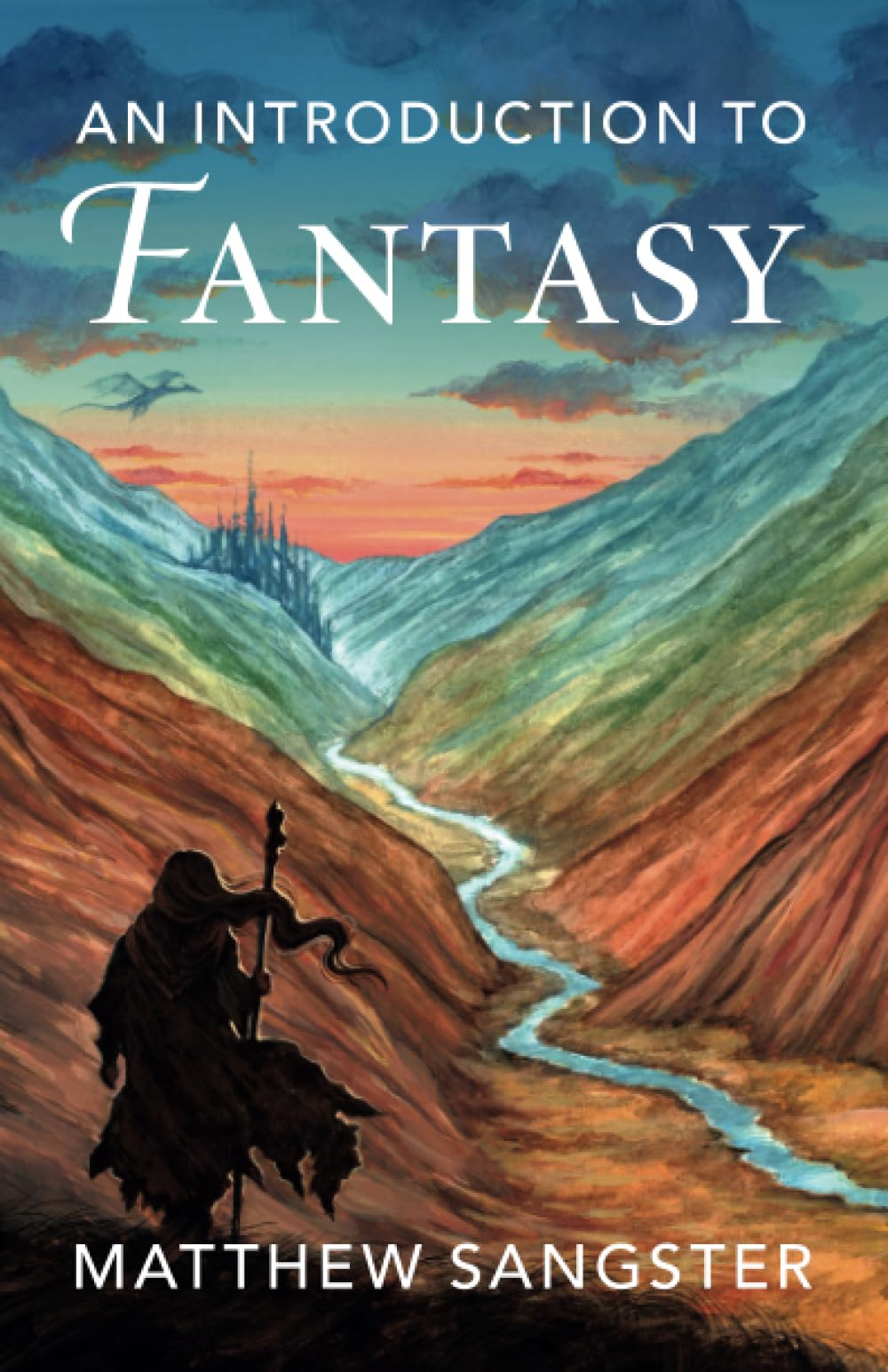
Review: An Introduction to Fantasy, by Matthew Sangster

Format: 469 pages, Paperback
Published: September 7, 2023 by Cambridge University Press
ISBN: 9781009429948 

Providing an engaging and accessible introduction to the Fantasy genre in literature, media and culture, this incisive volume explores why Fantasy matters in the context of its unique affordances, its disparate pasts and its extraordinary current flourishing. It pays especial attention to Fantasy’s engagements with histories and traditions, its manifestations across media and its dynamic communities.

Matthew Sangster covers works ancient and modern; well-known and obscure; and ranging in scale from brief poems and stories to sprawling transmedia franchises. Chapters explore the roles Fantasy plays in negotiating the beliefs we live by; the iterative processes through which fantasies build, develop and question; the root traditions that inform and underpin modern Fantasy; how Fantasy interrogates the preconceptions of realism and Enlightenment totalisations; the practices, politics and aesthetics of world-building; and the importance of Fantasy communities for maintaining the field as a diverse and ever-changing commons.

Literary awards:

Mythopoeic Scholarship Award for Myth and Fantasy Studies (2024)


My Review

I’ve been working my way through this book since last October, around blog tours, getting slightly too obsessed with YouTube , and a lot of crochet. I finished the last 40 pages this evening and now I need to tell you all about it. Matthew Sangster is a product of Glasgow University’s Centre for Fantasy and the Fantastic, and the access to many fantasy novels and academic works show in the text. Sangster mentions works by some of the most well-known in fantasy, such as Le Guin and Tolkein, and some more unexpected authors, especially those from earlier centuries. He draws out six important points about fantasy, over the chapters of this books and they form his core arguments:

  • Fantasy arises from figurative language
  • Iteration is a defining technique – new stories build on old in new ways
  • Contemporary fantasy builds on some of the oldest forms
  • Fantasy exists in conversation with realism
  • Worldbuilding is both the prevailing metaphor of modern fantasy and used to develop plots and characters
  • Fantasy is a form practised in community rather than one by unique geniuses.

I had to read the ‘Envoi’ chapter to get that. Sangster helpfully lists these points for the reader. It certainly helps with the summary. He does try to be accessible throughout the book, and uses a lot of examples to make his points, referencing very well-known authors, TTRPG series, video games, and film franchises in the process. It was heavy going at times, but that might be my lack of formal education in Literature at University Level. My M.A. is in Creative Writing, not Literature, after all.

Sangster raises some good points, especially about the tendency of ‘literary’ culture to consider ‘genre’ fiction as lesser, as the mode of storytelling is not ‘realistic’ and therefore can’t possibly impact readers. Fantasy, Sangster argues, explores the real world using the fantastical as a foil, a universalising storytelling mode that draws on cultural language. Fantasy can tell stories in ways that resonate with people far more effectively than straight up realism. It digs down into the root, builds on older foundations and finds new ways to explore ancient concerns.

I certainly find fantasy a useful vehicle for understanding the world, particularly in the work of Terry Pratchett. Fantasy communities, whether specific fandoms, organisations for writers, or online groups (such as the BFS Discord – Join the BFS, and come to our Discord, we have quiz nights and shadow daddies!), work in dialogue with the stories and their creators. New worlds spin off from the original, and people have a shared language to communicate with, across time and culture (see: Vimes’ Boots Theory of Economics).

I found Sangster’s work thoughtful and interesting, although it is very much an academic text so possibly not something a casual reader might go for. Useful for those interested in SFFH in an academic setting e.g., if you’re doing your M.A. in Fantasy and Sci-Fi literature or as a basis for a Doctorate in the field. Yes, those do exist, and yes, they’re a bit serious. (Again, see Glasgow University).

TBR Pile Review: The Blacktongue Thief, by Christopher Buehlman

Format: 416 pages, Paperback
Published: May 27, 2021 by Orion Publishing
ISBN: 9781473231160 (ISBN10: 1473231167)

Kinch Na Shannack owes the Takers Guild a small fortune for his education as a thief, which includes (but is not limited to) lock-picking, knife-fighting, wall-scaling, fall-breaking, lie-weaving, trap-making, plus a few small magics. His debt has driven him to lie in wait by the old forest road, planning to rob the next traveler that crosses his path.

But today, Kinch Na Shannack has picked the wrong mark.

Galva is a knight, a survivor of the brutal goblin wars, and handmaiden of the goddess of death. She is searching for her queen, missing since a distant northern city fell to giants.

Unsuccessful in his robbery and lucky to escape with his life, Kinch now finds his fate entangled with Galva’s. Common enemies and uncommon dangers force thief and knight on an epic journey where goblins hunger for human flesh, krakens hunt in dark waters, and honor is a luxury few can afford.


My Review

I appear to be late to the party on this one. I only realised this book existed in June because The Broken Binding sent me an email about a special edition set they’re doing of The Blacktongue Thief and The Daughters’ War, the first book’s stand-alone prequal about Galva. I didn’t order them in the end because I’m trying to save money for FantasyCon in October, but I did like the sound of the books, so I ordered a paperback copy of this book, and I have a paperback of The Daughters’ War on pre-order. It’ll be out next March.

Kinch is a thief who owes his Guild money, so they send him on a mission. With a blind cat. Who has swallowed an assassin. Don’t ask, it makes sense in context. Galva is a veteran of the goblin wars and is heading west to find her king’s niece, heir to the throne, lost in the giant-ravaged capital of her husband’s kingdom. Galva needs help, and Kinch has no choice, so off they go. Along the way they pick up a witchlet, who turns out to be more than anyone expected; an old neighbour of Kinch’s who resents Kinch for going to be a thief instead of a soldier; and Galva’s old sword master, who is faster than lightning.

They also fight a kraken, goblins, and giants, meet the powerful magician who created the war ravens that won the goblin wars, (and who might be Kinch’s father), after which Kinch may or may not have lost a bet with a criminal boss that resulted in him going to bed with said criminal boss in the city of Hrava (Kinch isn’t into men, but needs must when a queen needs rescuing).

In the mountains they find their answers, and more questions, before Galva and her queen leads an army riding the only stallion in the world, and Kinch heads further west, running from his Guild with the weapons that could potentially defeat them for good.

Other stuff happens, but I’ve summarised the salient points. Hopefully, I haven’t given away too much.

I enjoyed this book, Kinch is a funny narrator, and as the story is told from his perspective he has to be to keep things interesting. First -person limited and be quite a difficult point of view, but Buehlman does it well. the story is told in chronological order, but Kinch gives us the important bits of his memories and his reactions, missing the dull days of traveling where nothing happens. He includes the odd ballad or piece of history to locate us in the world he’s traveling through and add depth.

Kinch falls in love with Norrigal, a witchlet, great niece of Deadlegs, a famous witch who has to cut off the legs of the dead because her own have died. The relationship is short but intense and I was quite lost at the end of the book. I want to know what happens to them, even changed as they are. Norrigal utterly entrances Kinch and his falling in love is described delightfully, although not graphically.

The other characters, seen from Kinch’s perspective, aren’t as solid, but then that’s one of the difficulties of writing 1st person limited. We don’t get the interiority of other characters, only what they do and say in the view of the narrator and the narrator’s thoughts about them. Kinch develops a lot of respect for Galva and his shock at certain aspects of her character and physicality helps flesh her out. I definitely want to know what happens next for Galva, and also how she came to be a warrior of the Death Goddess. So, I need to read The Daughters’ War, and hopefully there will be a follow up, with events after The Blacktongue Thief as well.

I hope the giants find out they were tricked by the Takers too, and help bring down the Guild. We only really get to know one giant, Misfa, at the end, who tells the humans what happened, and helps them defeat the assassin in the cat (again, it makes sense in context) but Kinch hints, when he first encounters giants in the city of Hrava, that he knows more about giants at the time he’s writing his narrative than he did at that time, so presumably, at a later date, after the narrative in the novel, he spends time around Misfa’s people and learns about their culture? I want to know what they do with all those horses tattooed on to her.

The magical systems were really well thought out, clearly drawing on folk traditions, like the power of iron to break a spell, or with rules found in ttrpg (like you can only use a spell once and it only lasts a certain amount of time) but were also original enough to be entertaining. The hand tattooed on Kinch’s cheek which can only be seen in firelight, but allows someone to slap him without retaliation in return for an alcoholic drink, made me laugh. Especially when Norrigal made some alterations of her own.

The descriptions of places and people are very memorable, from the upside down tower of Deadlegs, to the cities they travel through and the creatures they meet, to the fights with other humans, goblins and giants. They’re all very vivid.

The underlying conspiracy is slowly revealed, with some dropped hints and interesting consequences, and sets the main characters on their future paths. It leaves the story open ended, the author could leave the novel where it is, as a stand-alone work, but I hope he doesn’t. I want to see how Kinch and Deadlegs reveal the conspiracy to the world and the fall out for everyone, what the giants do after conquering Oustrim, and how Galva and her queen fight the false king in Ispanthia.

This is clearly a world based on a pseudo-Renaissance Europe, and written by someone who’s played a bit of D&D or other fantasy table-top role-playing games (ttrpg). It has the structure you’d expect, with magical artifacts appearing that might or might not be useful later, random unexpected events that throw off the expected narrative, and traps everywhere.

Criticisms: The pseudo-Irish got a bit much at times, almost parodying Irish accents and turns of phrase. The same with Galva and the Spanth – they’re patterned on the people of the Italian or Greek regions of the Mediterranean – black hair, fanatic cleanliness, wine, olive oil, and garlic. I get that the author is using real world inspirations to people his secondary world, but it was a bit much. Felt like he was taking the piss, at times, honestly, or was working from caricatures rather than reality.

A fun bit of fantasy and an enjoyable world I’d happily come back to for more adventures.

TBL List Review: The Incredible Unlikeliness of Being, written and read by Alice Roberts

Format: 392 pages, Paperback
Published: January 1, 2014 by Heron Books
ISBN: 9781848664791 (ISBN10: 1848664796)
Language: English

Alice Roberts takes you on the most incredible journey, revealing your path from a single cell to a complex embryo to a living, breathing, thinking person. It’s a story that connects us with our distant ancestors and an extraordinary, unlikely chain of events that shaped human development and left a mark on all of us. Alice Roberts uses the latest research to uncover the evolutionary history hidden in all of us, from the secrets found only in our embryos and genes – including why as embroyos we have what look like gills – to those visible in your anatomy. This is a tale of discovery, exploring why and how we have developed as we have. This is your story, told as never before.


My Review

The book takes the foetal development from before ovum and sperm meet to birth, and going from head to toe, to discuss both foetal development and evolution. The author is uniquely place to write this sort of book, having spent years as both a scientist and a science communicator. I enjoyed Alice Roberts’ documentaries that I’ve seen, and this book from ten years ago holds up well, although the science continues to move on.

I found this book really interesting. I have some background in biology, but not a huge amount, I only did a year of university chemistry, mostly biochemistry and molecular biology. I suspect if you didn’t manage to pass GCSE biology and don’t watch documentaries, you might struggle with this book, but for the reasonably educated, it’s a good book. It’s a foundation at least, for university study. It’s not a textbook however, it is written with a general audience on mind. If you enjoy Dr Roberts’ documentary series’ you’ll be fine with this book.

I giggled at the occasional digs at creationists, because they deserve it for their wilful ignorance. If you’re sensitive about that, you probably need a slightly less advanced book before you get to this one. And you need to escape whatever cult you’re in that’s stopping you from getting an education…

I’m listening to Ancestors, by Alice Roberts next.

Coming up

Hey, dear readers, there’s going to be a bit of a change, due to the current pandemic. I have, as many know, a brain weasel issue that makes reading ebooks hard. (I also have various lurgies making me cough, snotty and generally feel rubbish, but as far as I know, it’s not COVID-19.) Unfortunately, due to the dreaded lurgy going around, many blog tours are now digital only.

So, much of this months content will be extract posts, with the odd review booked months ago thrown in.

  • Wednesday (6th) there will be an audiobook review of The Road Not Taken, by Paul Dodgson. This is a memoir of a musical life.
  • 16th – a book review of Black blood, by Jane Eddie. This is a post-Brexit dystopian novel of crime, murder and oil.
  • 22nd – sci fi in translation, The City Among The Stars, by Francis Carsac. I understand this is a Golden Age classic, first time in English. I’m looking forward to it, although the book hasn’t arrived yet.
  • 23rd – These Lost and Broken Things, by Helen Fields. Historical crime, looking forward to getting my teeth into it.
  • 26th – Girl with a gun, by Diama Nammi and Karen Attwood. A biography of Diama, a Kurdish woman who really upset the Iranian government (good for her!). I was originally getting a book for this but SARS-COV-2 decided to unleash itself on humanity so it’s the only ebook I’ll read this month. And that’s because I like Anne and had already agreed to do the review.
  • Currently, June and July are sparsely populated with extracts and promo posts. I apologise for the slow down in my usual review content. I have also had to refuse indie author reviews if they can’t send physical books, because of said disease and brain weasels. It’s a shame because I like supporting them.
  • Pen & Sword reviews will appear intermittently as I get through the towering piles.
  • There may be other books, I’m working my way through my personal TBR pile. I’m working through some of the ones I’ve already started but had to put down to complete blog tour obligations.

Ode to my TBR pile

I keep reading,

One, two, three, books on the left of my chair, books on the right of me

Books in the loo, books in the bedroom, books waiting to be read,

On the TBR pile.

I read and I read,

But it just keeps getting bigger.

There are so many good books, so many authors I need to read and support.

So many indie bookshops and publishers I want to help.

It is inevitable.

I will die surrounded by the books I never had the time to read.

What a cruel world!


So, random reviews might pop up. And, I promise, very little poetry.

January 2015 Reviews

Hello, and welcome to the first review post of 2015. There’s a lot of variety in this month’s post, but I’ll let you get on with reading the actual reviews now.
Continue reading “January 2015 Reviews”