Price: £20.00 Fiction: FICTION / Fantasy / Historical Product format: Hardback ISBN: 978-1-80552-020-7 Pages: 336 Imprint: FLAME TREE PRESS
Blurb
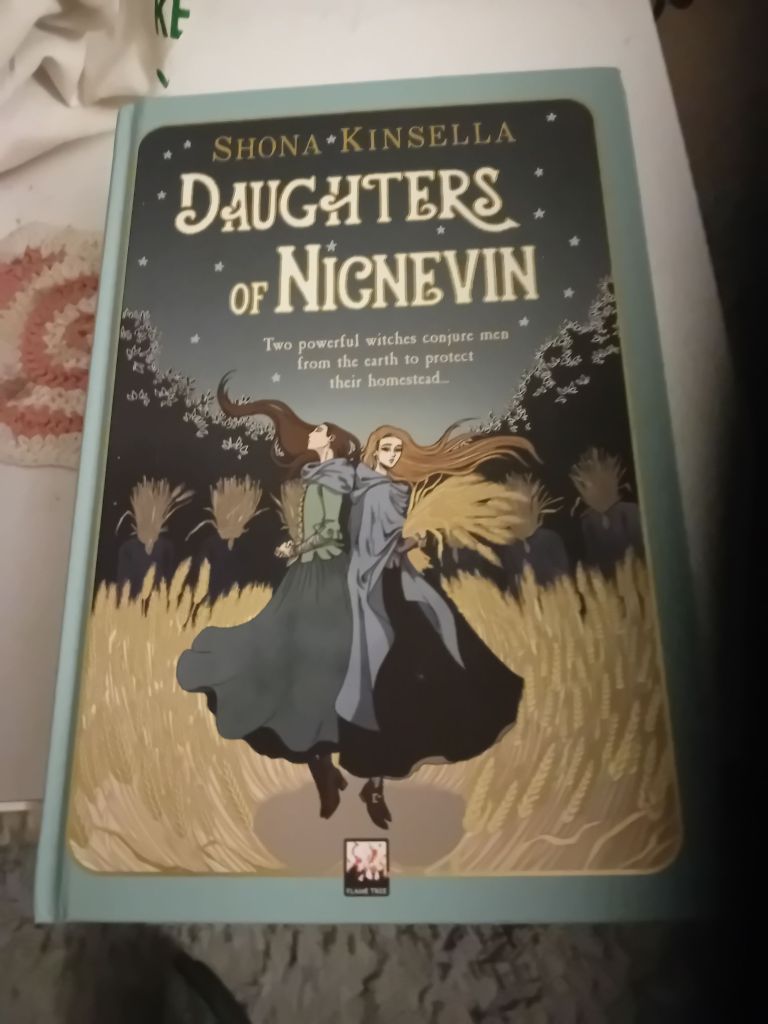
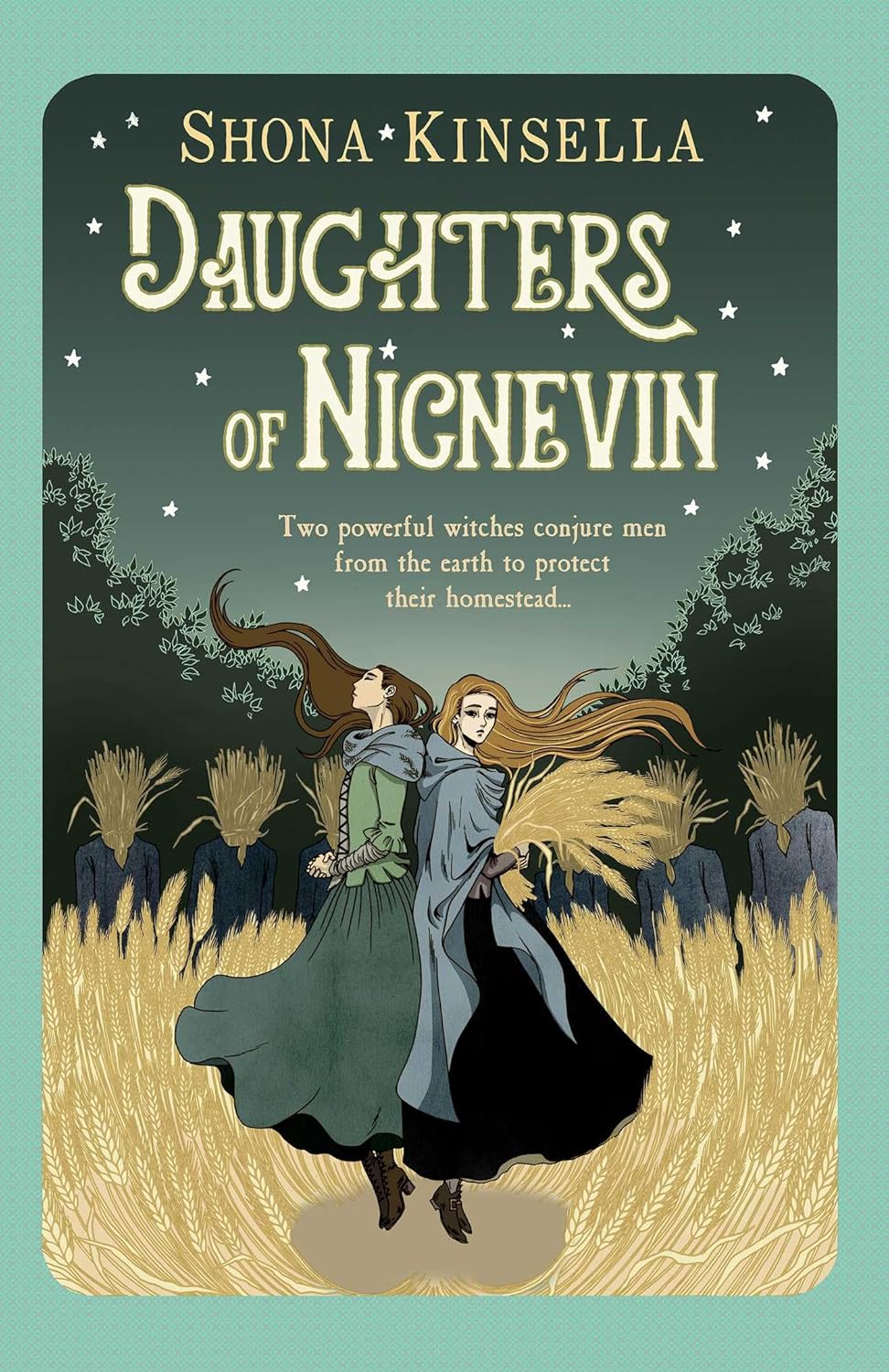
Mairead and Constance, two powerful witches, meet in the early days of the 1745 Jacobite uprising. While the men of the village are away fighting, the villagers face threats from both the Black Watch and raiders, and the women are confronted with their vulnerability. They enlist the help of Nicnevin, fae queen of witches, to bring men made of earth to life to help protect their village. But just who do they need protection from? And what will happen when the village men return?
Release Date 2023-07-11 Formats: Ebook, Paperback EBook ISBN 11th July 2023 | 9781915202529 | epub & mobi | £4.99/$6.99/$7.99 Paperback ISBN 11th July 2023 | 9781915202192 | Paperback
Book I of The Nightingale and the Falcon
1260, Persia:
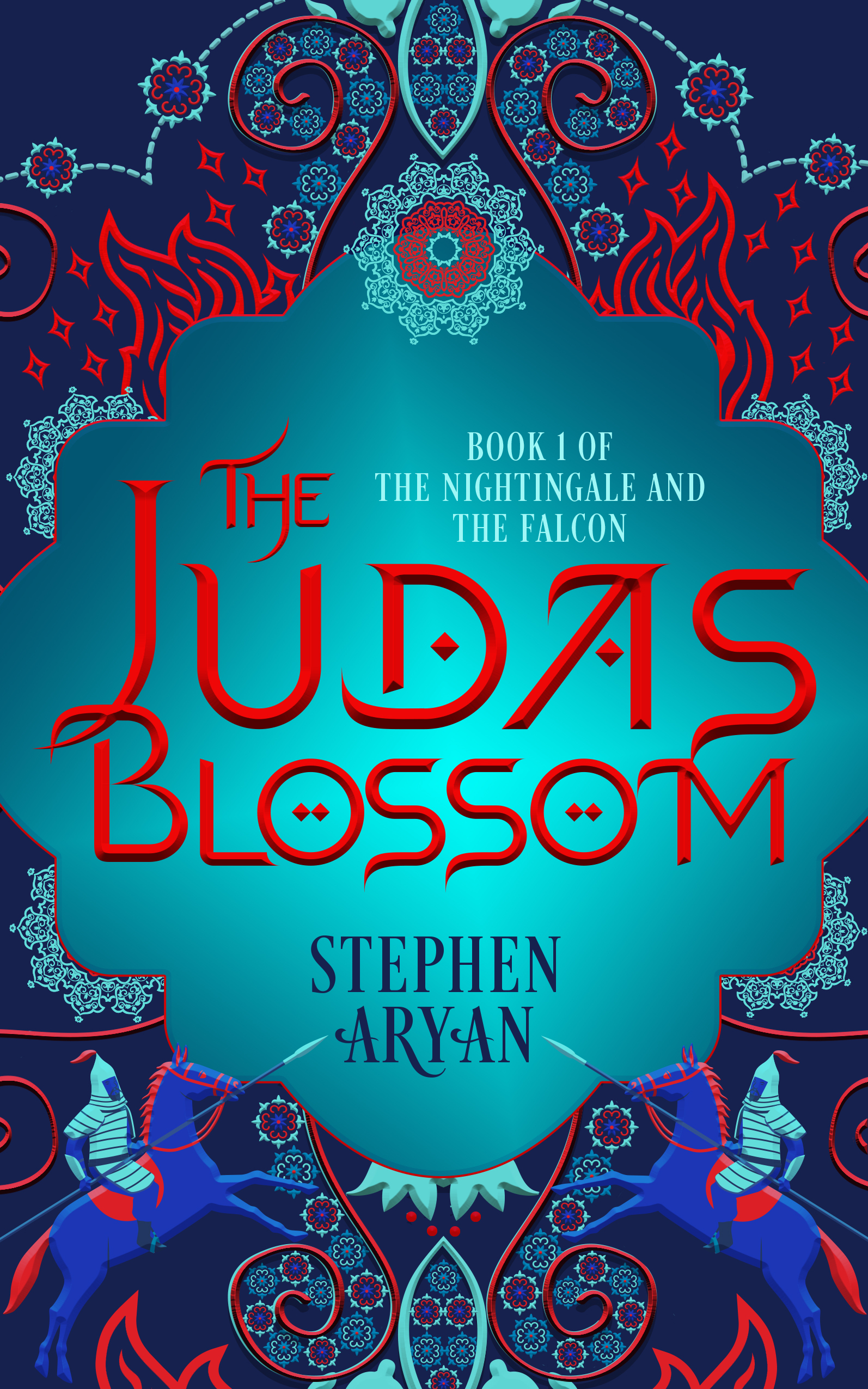
Due to the efforts of the great Genghis Khan, the Mongol Empire covers a vast portion of the known world. In the shadow of his grandfather, Hulagu Khan, ruler of the Ilkhanate, is determined to create a single empire that covers the entire world. His method? Violence.
His youngest son, Temujin Khan, struggles to find his place in his father’s bloody rule. After another failure, Temujin is given one last chance to prove himself to Hulagu, who is sure there is a great warrior buried deep inside. But there’s something else rippling under the surface… something far more powerful and dangerous than they could ever imagine…
Reduced to the position of one of Hulagu’s many wives, the famed Blue Princess Kokochin is the last of her tribe. Alone and forgotten in a foreign land, Kokochin is unwilling to spend her days seeking out trivial pursuits. Seeking purpose, she finds herself wandering down a path that grants her more power than a wife of the Khan may be allowed.
Kaivon, the Persian rebel who despises the Mongols for the massacre of his people, thirsts for revenge. However, he knows alone he cannot destroy the empire. When given the opportunity to train under the tutelage of Hulagu, Kaivon must put aside his feelings and risk his life for a chance to destroy the empire that aims to conquer the world.
Family and war collide in this thrilling and bloody reimagining of the Mongol Empire’s invasion of Persia.
Stephen Aryan is the author of The Coward and The Warrior (the Quest for Heroes Duology), as well as the Age of Darkness and Age of Dread trilogies. His first novel, Battlemage, was a finalist for the David Gemmell Morningstar Award for best debut fantasy novel. It also won the inaugural Hellfest Inferno Award in France. He has previously written a comic book column and reviews for Tor.com. In addition, he has self-published and kickstarted his own comics.
You can find out more about Stephen and his books on his website: Stephen-Aryan.com
Category: Fantasy, Historical Fantasy ISBN: 9781399734783 Publication date: October 17, 2024 Format: Hardback RRP: £20.00 Publisher: Hodderscape
Book Description
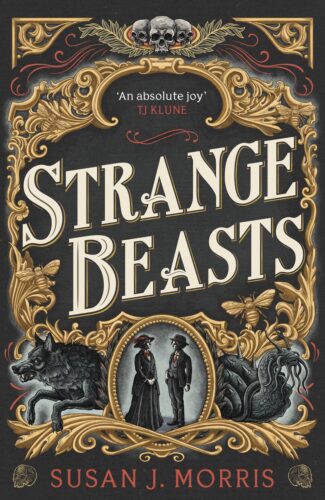
When the Gendarmes ask the Royal Society for the Study of Abnormal Phenomena for help, they don’t expect them to send Samantha Harker.
She’s a researcher, more used to papercuts than knife fights. Sam is also the daughter of Dracula’s killer and can see into the minds of monsters. It’s a perilous power, one that could help her crack this case ─ or have her thrown into an asylum.
Dr Helena Moriarty is Sam’s reluctant partner, the Society’s finest agent who has forged a formidable path in her notorious father’s shadow. Professor Moriarty is in hiding, but he still makes his presence known: Hel’s partners have a way of dying in mysterious circumstances.
From Paris’ glittering opera house to its darkest catacombs, the investigation pits Sam and Hel against magic, monsters, and men. And beneath their tenuous partnership, something else is growing . . .
But is trusting Hel the key to solving the murders? Or is Sam just another pawn in a Moriarty game?
With characters drawn from the worlds of Dracula and Sherlock Holmes, Strange Beasts is a twisty puzzle box of a historical fantasy ─ perfect for fans of Genevieve Cogman, Theodora Goss, Freya Marske, T. Kingfisher, and Gail Carriger.
About the author
Susan J. Morris is a fantasy author and editor, best known for a writing advice column featured on Amazon’s Omnivoracious blog and her work editing Forgotten Realms novels. Susan delights in running workshops for Clarion West and in moderating panels for writing symposiums. When not writing or reading, Susan indulges in playing video games, training in Pilates, and experimenting with new plant-based food recipes. She lives in Sammamish, Washington with her partner, two cats, and entirely too many plants.
Susan had that pink hair at FantasyCon in October. It’s very distinctive and eye-catching…and distracting.
I read this book for the British Fantasy Society book club meeting on Sunday afternoon. I got an Audible code from the book club organiser because my Goldsboro Books special edition of Strange Beasts hasn’t arrived yet. It was the October SFF Fellowship book, but I had to cancel my subscription because funds are a bit tight. I ordered it impulsively after chatting to Susan a few times at FantasyCon.
Conversations in the courtyard are responsible for a number of books I’ve bought in the last month…
Anyway, I also ordered a copy of the standard hardback from bookshop.org when I found out it would be the first BFS Book Club book and before Dave sent me an Audible code. So, once again, I have multiple copies of a book.
Totally worth it!
The main characters of Sam Harker and Dr Helena Moriarty are well-rounded, complex characters, each working through their own problems and dealing with their own secrets. They’re officially investigating the Beast attacks, but they both have their own secret missions and they’re being manipulated by multiple parties. They struggle to trust, because they’ve been taught by other people that they can’t trust anyone and can’t trust themselves. Their growth as people and the tentative nature of their relationship from start to finish is realistic.
Sam is the view point character, so we read her thoughts and see events from her perspective, and see her fears and confusion as she deals with the things the mission throws at her.
They’re also really fun characters.
Jacob Van Helsing is not a fun character. He’s an absolute dickhead. Sam’s memories of him as a loving child contrast with the adult man poisoned by his father – the Van Helsing who helped kill Dracul – into hating and fearing her as a Channel. His comeuppance is well-deserved, although I don’t like that he got credit for Sam and Hel’s work. I suspect even if he hadn’t chosen to take credit, Mr Wright would have given him the credit, because the Society, and society in general, is incredibly misogynistic.
I did not work out who the killer was until quite late on; there are a lot of red herrings. Even the identity of the alchemist was a red herring really, when you think about it, another piece on the chess board, but not the player moving the pieces around.
I felt the mix of science and magic was really well done – a delicate balance of folklore and early 20th century science was found and use consistently. The details of Paris in 1903 feel realistic, although I’ve only been to Paris once and didn’t get to go into the catacombs, but I can imagine them being full of mythical beasts and human criminals. The descriptions were very vivid and events tightly plotted. There are characters I’d like to know more about but they don’t come back into the narrative, and other characters that the reader learns about slowly. Each character has their own backstory and personal history.
Also, chemistry is magic, and fun to play with. So long as you don’t accidentally gas people or blow things up.
The plot starts with a bang and doesn’t stop. Well, actually it starts with a threat, then a few bangs, and then a monster attack in a carriage…you get the picture. You’re just taking a breath when the next thing happens. It’s fun, but I had to take a day between reading/listening to a few chapters at a time.
I have listened to the first 14 chapters as audio and read from chapter 15 to the end. The audiobook was really well read, with multiple accents! I would not have been able to pronounce most of the French and German names without hearing them first. It’s been a lot of years since I sturdied French and I wasn’t very good at it even then, and my German is non-existent. I could not understand the French phrases. I’m just going to assume they’re all in good French, make sense, and not question it.
If you enjoyed Gail Carriger’s books, I highly recommend this historical fantasy of Bell Époque Paris. It’s darker and the focus is on the developing friendship/potential romantic relationship rather than a ‘destined partners’ type narrative. I love it.
One-Time
Monthly
Yearly
Make a one-time donation – If you want. No pressure.
Make a monthly donation
Make a yearly donation
Choose an amount
£5.00
£15.00
£100.00
£5.00
£15.00
£100.00
£5.00
£15.00
£100.00
Or enter a custom amount
£
Your contribution is appreciated. I put a lot of effort into reading and reviewing books for readers.
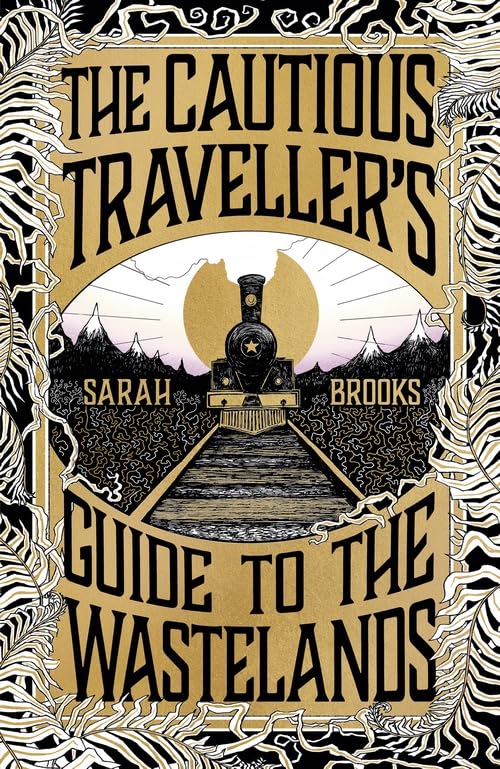
Format: 384 pages, Hardcover Published: June 20, 2024 by W&N ISBN: 9781399607537
It is said there is a price that every passenger must pay. A price beyond the cost of a ticket.
It is the end of the 19th Century and the world is awash with marvels. But there is nothing so marvellous as the Wastelands: a terrain of terrible miracles that lies between Beijing and Moscow.
Nothing touches this abandoned wilderness except the Great Trans-Siberian Express: an impenetrable train built to carry cargo across continents, but which now transports anyone who dares to cross the shadowy Wastelands.
On to the platform steps a curious cast of characters: a grieving woman with a borrowed name, a famous child born on the train and a disgraced naturalist, all heading for the Great Exhibition in Moscow.
But the old rules are changing, and there are whispers that the train isn’t safe. As secrets and stories begin to unravel the passengers and crew must survive their journey through the Wastelands together, even as something uncontrollable seems to be breaking in . . .
My Review
I picked this book up at the ‘It’s Strange Up North’ event in June. Sarah Brooks is delightful, and signed this book for me. Actually, I think the books sold at that event were officially sold before publication date.
We have here a tale of a train that runs through the Siberian landscape from Beijing to Moscow, but a landscape transformed by some magical power. The land is utterly strange and bizarre creatures live there. It’s dangerous for humans to travel across the ‘Wasteland’, but trade demands that they must, so ‘the Company’ built a railway track and sends one train back and forth across it.
But the landscape is changing, it’s mimicking the the world that is intruding on it and eventually things go very wrong.
In this novel, set in 1899, we follow Marya, a young woman grieving the deaths of her parents, out to find the truth of the last crossing, and Weiwei, the child of the train – born on the train and raised by the crew – who also wants to know what happened. In the process of their separate investigations, they rouse the suspicions of the Company consultants, known as ‘Crows’.
As they seek answers they are changed, and the choices they, and their allies make – the Wasteland Girl, Elena, Alexei the engineer, Suzuki the Cartographer, and The Professor – bring changes to the whole world.
The action builds up as the train travels, there’s tension as they struggle with water shortages and mad English naturalists running off to get samples, while a Russian priest screams about blasphemy, and French aristocrats laze about. Someone has clearly been reading Agatha Christie.
This was something like Murder On The Orient Express, in that there’s a mystery to be solved – what happened on the last crossing? It’s also a historical fantasy of the late nineteenth century, with luxury carriages for the wealthy, crowded third class accommodation, steam trains, fantastical technology, and a landscape that is utterly strange but entrancing. The transformation of the train from a mechanical wonder to another kind of wonder, a terrifying, moving forest, luxuriant and free, a travelling Eden, is the central narrative, around which everything else is built, everything else is just the humans trying to understand it, understand their places in this new reality, and decide if they want to be a part of it or not.
It reminds me a bit of the magic used by Priya in Tasha Suri’s The Burning Kingdoms series. Except the magic isn’t controlled by anyone, the train and the landscape decides where it’s going.
The train and the landscape are intertwined, and the people realise they are intertwined with the landscape too, and the Walls are false promises of strength holding up ultimately weak Empires and greedy corporations.
How lovely! What a wonderous thought, a wonderous world it would be, if the old empires fell because a magical forest rose, rather than because we started murdering each other by the millions.
‘The Company’ is clearly modelled after the East India Companies of the 17th to 19th centuries (Dutch and British – both equally greedy and murderous, with their own armies), with a Victorian railway company thrown into the mix. If the East India Company hadn’t fallen apart by the 1850s, they might have got into trans-continental railways, I suppose, and the trans-Siberian train route has been around for about 100 years. It’s actually three or four connected routes, that started when the Russian Empire decided it would quite like to get to it’s furthest eastern reaches, near China, more easily. You can travel all the way from Moscow to Beijing, which would be fun, if you didn’t have to go to multiple dictatorships to do so. The train network made it easy for Russian troops to support China during the Japanese invasion in the 1940s, but also meant the Chinese and Russians could kill each other easily over bits of territory they both claimed in the 1910s.
I would call them silly buggers, but come on, we didn’t do much better. Empires are bad for everyone.
Anyway, I was quite enthralled by this book. I loved the lavish descriptions of the Wastelands and the way the train transformed. I found Marya and Weiwei, two very different people, to be sympathetic and engaging characters, and the narrative tightly constructed.
Enjoyable historical fantasy. Especially if you like trains. And magical, murderous landscapes.
Publication date November 2023 Price £9.99 ISBN-13 978178842459
Description The adventures of a group of friends, pre-war, with far too much time on their hands. The Rabbits, as they call themselves, are Archie Mannering, his sister Myra, Samuel Simpson, Thomas of the Admiralty, Dahlia Blair and the narrator, with occasional guests. Their conversation is almost entirely frivolous, their activity vacillates between immensely energetic and happily lazy, and their social mores are surprisingly progressive.
Originally published as sketches in Punch, the Rabbits’ escapades are a charming portrait of middle-class antics on the brink of being shattered by World War I, and fail entirely to take themselves seriously.
Gogmagog tells the story of an epic journey through the sixty-mile long ghost of a dragon.
Travel is by boat, a rickety steam launch captained by veteran taxi pilot Cady Meade, on the river Nysis. In her heyday Cady carried people and goods from the thriving seaports of the estuary into Ludwich, the capital city. Now she’s drunk, holed up in a rundown seaside resort, telling her bawdy tales for shots of rum.
All that’s about to change, when two strangers seek her out, asking for transport, one of whom – a young girl – is very ill, and in great danger. The other, an artificial being of singular character, has secrets hidden inside his crystal skull. So begins the voyage of the Juniper.
The Nysis is unlike any other river. Mysteries unfold with each port of call. Not many can navigate these channels, not many know of its whirlpools and sandbanks, and of the ravenous creatures that lurk beneath the surface.
Cady used to have the necessary knowledge, and the powers of spectral navigation.
But her glory days are well behind her now. This might well be her final journey.
Genre: steampunk historical fiction Publication Date 27 November 2023 ISBN 978-1-3999-5773-1 Dimensions 229 x 152mm Extent 306 pages RRP £9.99 BIC FL, FV Rights Worldwide
Published by Open Door Books. Page design and typesetting by SilverWood Books.
Key Selling Points
From the author of The Mechanical Maestro and The Copper Chevalier, a new story following the Abernathy siblings as they face an enigmatic adversary.
Character-driven story centred around three genius siblings.
A steampunk-tinged tale with Gothic overtones sure to enthral fans of clockwork, androids and the Victorian era alike.
Immersive world filled with colourful characters.
Blurb
1863
Six years have passed at Ravenfeld Hall. The Abernathy siblings’ fortunes continue to improve as George and Douglas’s android-building business thrives. But change looms on the horizon. Douglas’s engagement to the sweet, charming Clara Marsden threatens to take him from his family, while sister Molly contemplates whether a future with the man she loves means sacrificing her independence and academic pursuits.
Then the family face more pressing concerns…
One night, George’s latest invention escapes the Hall. Four months later, a charismatic inventor by the name of Gearhart appears in London, with an intellect to rival that of the Abernathys’. George senses there’s something sinister about the mysterious Mr Gearhart, who’s planning to unveil an invention that could change the world. But does he have far grander ambitions? And can George uncover the truth about him in time?
Thanks to Anne for organising this tour and to the publisher for my copy of this book.
Patience Leaton, 20ish, I think, and lean to emaciation, is the daughter of a Vicar. Her family (father Hector, brother Earnest) have been forced from their parish in Ely for reasons hinted at by Patience, to the Durham dales parish of Mutton Clog, a sheep farming village of farmers. The previous vicar has died at a fortunate time for the disgraced Leaton family and they’ve been given the meagre living. Used to a richer life in the town of Ely, and with a puritan conviction, Patience disdains the people of Mutton Clog before they even meet. The Leatons have secrets, and Patience has an urge to find witches.
Young Rose Driver is 16 and a skilled shepherdess on her family farm. The farm is prosperous but life is blighted by her bullying father and widowed grandmother. Her step-mother, May, is her mother June’s best friend. Marriage to Rose’s Widower Da, Andrew Driver, was an escape from an abusive father, and she took her sister Tilly with her.
Rose and Patience meet the day after the Leaton’s arrive in Mutton Clog. Rose also meets Earnest. He seems sweet, intelligent, and very handsome. He charms Rose while Patience looks on id disgust, immediately blaming Rose for Earnest’s behaviour. Patience decides Rose is a witch and goes about finding evidence to prove it.
One day, the pious, hypocritical, zealous Patience sees Rose at her work with the lambing ewes, and believes her to have engaged in a satanic ritual. From then on, everything bad that happens is Rose attempting to kill her. Rose meanwhile has sheep to care for. Earnest comes to visit her at the shepherding shed, and presses his suit, although Rose fights him off.
Things go down hill from there, involving a midsummer millpond, a death at the wool fair, and another at sea, imprisonment at Durham, and a death by hanging. Finally, there’s birth and life returning. Just as it should be.
I must admit that while I first started reading this book 3rd November, thinking it would be a quick read, but then I realised Patience was a bitch out to ruin Rose and that Rose was going to suffer unnecessarily. I put the book down to concentrate on another book I’m reviewing this week, The Lost Supper, because I struggle with stories that involve the unjust punishment of a good character by someone acting from malice. Today, 12th November, I decided to deal with that by looking at the last chapter. It helped, because I knew that I could get through the nasty stuff because I knew Rose would come out of things fairly well, although she loses a lot of people along the way. So I dived in. Took me three hours, maybe, to get through the book in the end, and it wasn’t as upsetting as I though it would be.
Through the novel we discover the lies Patience is telling people, and herself, to hide her family secrets, and I realised she was probably seriously mentally ill, at a time when there was only two possible ways to view mental illness – either madness or witchcraft. Patience is a ‘respectable girl’ so she can’t be mad (poor people or those not considered respectable could be mad, but they were probably curse), and she’s a god-fearing, diligent, vicar’s daughter, so she can’t be a witch.
Even I can tell she’s probably got some sort of religious mania, possibly anorexic, and with some delusions. There’s nothing inherently wrong with having any of these mental illnesses, and with treatment people can live a normal life and none of them usually cause murderous behaviour. Her neighbours and victims put it all down to her being a spoilt miss with too much time on her hands and not enough reading material to keep her mind educated and active. The magistrate in Durham thinks she’s a plain girl jealous of a pretty girl. I get the feeling, if she was in the North American colonies, she’d have murdered dozens. We learn that she has already killed one woman, and as the book goes on, it looks like her mania might actually be the reason her family is forced from Ely. Then we find out something else. Everyone else is always to blame, for Patience. It’s never her fault, her actions cause terrible consequences, but she always pushes it on to her victims.
It’s also interesting that we learn Patience is probably bisexual and is in conflict with herself for being attracted to anyone. She sees sexuality as a sin; her mother is dead to Patience because she is ‘promiscuous’, her brother is cursed with their mother’s promiscuity and needs to be guarded, her attraction to Tilly and Tom is their fault for being wanton (Tilly lifts her skirt up to cross a river, and Tom works shirtless in the graveyard on a hot day). It doesn’t occur to her that her parents’ marriage was loveless, and her mother almost dies giving birth to the twins. It doesn’t occur to her that Earnest is a creep who uses his position as a curate to seduce young women and then blames them for his own actions. It doesn’t occur to Patience that sex is a part of life and some people really enjoy it, and some people don’t, and social conventions will constrain people’s actions, and her religious convictions are constraining her thinking.
Earnest got a better death than he deserved after seducing Rose (and Tilly), blaming her for his actions, and then trying to force her to abort their child. His actions encourage Patience in her campaign against Rose. His behaviour is hypocritical and it seems his father knows how bad he is and is desperate to send him to sea, while Patience believes he’s just young and easily led, not the pillar of religious rectitude that she is. They’re twins; he was born first by a few minutes.
Rose is a steady farmer, daughter and granddaughter of farmers, daughter and granddaughter of herbalists, murdered as ‘witches’. She’s the backbone of her household, and continues to be so after her father dies, until she’s forced to live with the Leatons, who abuse her. Her time in Durham North Gate Gaol is wretched, and so evocatively described. People died before they even got their day on court in gaols, because they had to wait for the quarterly assizes.
Rose’s experiences as a child, which we only learn about when Rose learns about them, and later in court, are foreshadowed in childhood games and fears of going to church. The family she has in Mutton Clog are mostly not blood relatives, but they treat her as their child and grandchild, because that’s the right thing to do. We learn that Rose’s Da is a much worse man than we know from his actions in life, but he helped save Rose from a monster. The psychological damage she received as a child explains many things and it’s actually a fairly reasonable explanation. I don’t know enough about the sort of trauma seeing a violent murder as a young child would cause to be able to say it’s a realistic depiction, but it seems reasonable.
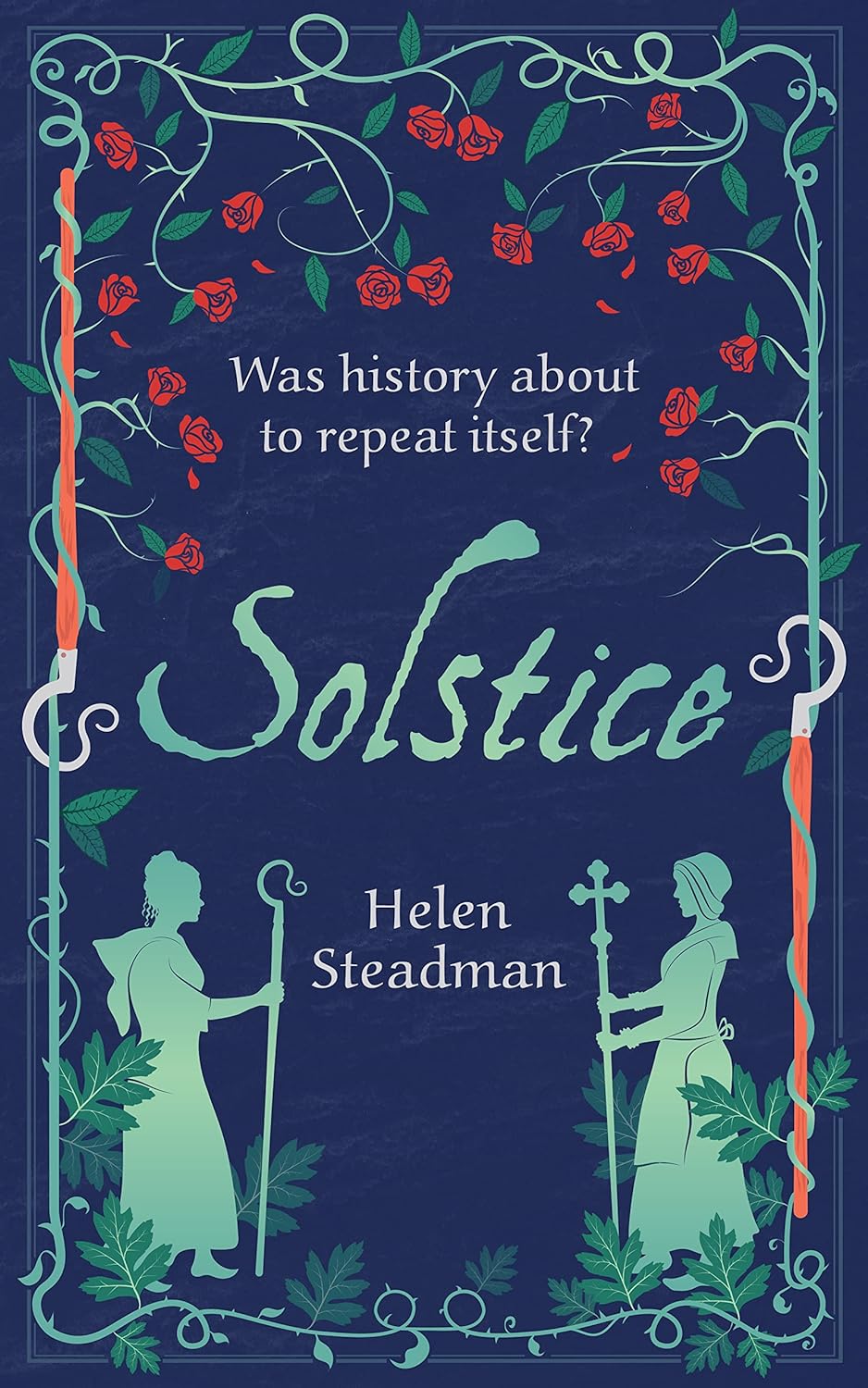
I love the way the community of Mutton Cleg come together to help Rose in gaol and in court; it’s clear no-one understands why Patience is targeting Rose, but they are there to get the truth out. That they will suffer for witnessing to the truth of events from the past and the present occurs to some of them. I haven’t read any of the other books, but the events of this book suggest they are good. I should probably get the first two in the series and The Running Wolf, which is set in 1687, when the baby born at the end of Solstice is an adult.
I’m assuming this book is set sometime in the 1650s or 1660s, during the puritan period. People in neighbouring dales are still having Midsummer Bonfires, and many of them stopped during the Civil Wars of the 1640s (yes, British, not English, because the civil wars engulfed all four countries/both main islands of the archipelago). Mutton Clog is rural enough that it might not have been involved. The church still has stained glass windows and the manse is comfortably furnished, which is very much not puritan practice.
I love the way Rose and the villagers are bemused by the plainness of the Leaton’s clothes and food. Hector Leaton seems to be fairly balanced, in that he’s comfortable with the changes in his housing and, when Tilly joins the household, his meals. He resists a lot of Patience’s stranger ideas and only weakens when he’s grieving; she is consciously manipulative of him. Even after his estranged wife returns and he’s grieving, he’s able to recognise that he was partly responsible for his wife leaving and that he needs to make amends. His actions speak when Patience refuses to record his words.
Tom Verger is an absolute hero in this novel. The history that develops through the novel shows that he was a hero in the earlier novels too. He is stoic and loving, and stands up to bullies for his community.
I really enjoyed this novel; it explores the psychological and cultural environment of the 1650s to explain the witch-obsessions. It draws on real events and realistically describes the lives of rural farmers in Northern England. Finally, it brings the Widdershins series to a satisfying conclusion, with hope and new life.
Helen Steadman’s first novel, Widdershins and its sequel, Sunwise were inspired by the 1650 Newcastle witch trials. Her third novel, The Running Wolf is about a group of master swordmakers who defected from Germany to England in 1687. Helen’s fourth novel, God of Fire, is a Greek myth retelling as seen through the eyes of Hephaestus, perhaps the least well known of all the Olympians.
Helen is particularly interested in revealing hidden histories and she is a thorough researcher who goes to great lengths in pursuit of historical accuracy. To get under the skin of the cunning women in Widdershins and Sunwise, Helen trained in herbalism and learned how to identify, grow and harvest plants and then made herbal medicines from bark, seeds, flowers and berries.
The Running Wolf is the story of a group of master swordmakers who left Solingen, Germany and moved to Shotley Bridge, England in 1687. As well as carrying out in-depth archive research and visiting forges in Solingen to bring her story to life, Helen also undertook blacksmith training, which culminated in making her own sword.
Format: 280 pages, Paperback Published: May 28, 2023 by Book Guild ISBN: 9781915603869 (ISBN10: 1915603862)
Blurb
London, September 1888. Jack the Ripper roams the streets. A scream rings out from beneath the stage of the Lyceum Theatre…
A young ‘actress’ has been attacked, suffering peculiar bite wounds to her neck; an event that announces a series of strange, vampiric happenings, and thrusts an unwitting Bram Stoker – acting manager of the Lyceum and aspiring author – into the limelight, and the action.
Increasingly perplexed by the unsettling behaviour of his ‘Guv’nor’, the brilliant but mercurial actor, Henry Irving, and Irving’s acclaimed leading lady, Ellen Terry, Stoker soon starts suspecting the worst. And then, another attack reveals a vicious Prussian baron, returned to London as a vampire seeking revenge…
Alive with Gothic intrigue, reversal and surprise, Mr Stoker will keep the reader enthralled and confounded until its final, shocking scene – indeed, until its very last word.
‘This is a fully realised Gothic world, a stimulating mix of homely familiarity and lurking menace which will engage readers of all ages.’ David Punter, author of The Literature of Terror








 Everything Is Better With Dragons