They looked into darkness. The darkness looked back . . .
An utterly gripping story of survival and first contact on a hostile planet from Adrian Tchaikovsky, author of the Arthur C. Clarke Award-winning Children of Time.
A commercial expedition to a distant star system discovers a pitch-black moon alive with radio activity. Its high-gravity, high-pressure, zero-oxygen environment is deadly to human life, but ripe for exploitation. They named it Shroud.
Under no circumstances can a human survive Shroud’s inhospitable surface – but a catastrophic accident forces Juna Ceelander and Mai Ste Etienne to make an emergency landing in a barely adequate escape vehicle. Alone, and fighting for survival, the two women embark on a gruelling journey across land, sea and air in search of salvation.
But as they travel, Juna and Mai begin to understand Shroud’s unnerving alien species. It also begins to understand them. If they escape Shroud, they’ll somehow have to explain the impossible and translate the incredible. That is, if they make it back at all . . .
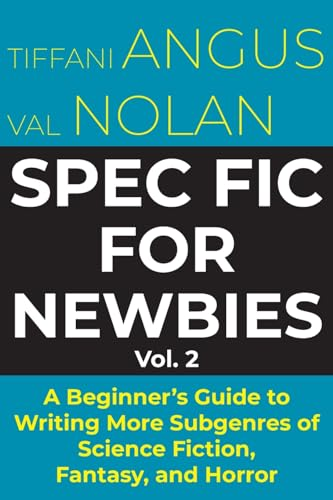
Beam aboard your own Science Fiction, Fantasy, and Horror classroom with the next volume of the BSFA-shortlisted writing-guide series!
Join Tiffani Angus (Ph.D.) and Val Nolan (Ph.D.) for a whirlwind introduction to the storytelling basics of 30 more subgenres and major tropes from across the limitless realms of Speculative Fiction.
Learn about Space Opera, Folk Horror, Climate Fiction, Werewolves, Astronauts, Mythic Fantasy, Goblin Markets, Dragons, and many more with deep dives into each subgenre’s history and development, spotter’s guides to typical examples, pitfalls to watch out for in your own writing, and activities to help you get started! All derived from a combined two decades of university-level practices and experience!
Spec Fic for Newbies breaks genres into bite-sized pieces for students or for any budding writer. It offers a welcoming introduction to how writers, filmmakers, and other creatives can begin to explore the infinite potential of Science Fiction, Fantasy, and Horror to create new stories beyond the boundaries of the ordinary.
This is not another dusty rulebook. This is a portal to endless other worlds!
The Tyrant Philosophers, Book 3 Narrated by David Thorpe Release date: 05-12-24 Language: English Format: Unabridged Audiobook Length: 21 hrs and 39 mins
Bloomsbury presents Days of Shattered Faith by Adrian Tchaikovsky, read by David Thorpe.
Welcome to Alkhalend, Jewel of the Waters, capital of Usmai, greatest of the Successor States, inheritor to the necromantic dominion that was the Moeribandi Empire and tomorrow’s frontline in the Palleseen’s relentless march to bring Perfection and Correctness to an imperfect world.
Loret is fresh off the boat, and just in time.
As Cohort-Invigilator of Correct Appreciation, Outreach department, she’s here as aide to the Palleseen Resident, Sage-Invigilator Angilly. And Sage-Invigilator Angilly – Gil to her friends – needs a second in the spectacularly illegal, culturally offensive and diplomatically inadvisable duel she must fight at midnight.
Outreach, that part of the Pal machine that has to work within the imperfection of the rest of the world, has a lot of room for the illegal, the unconventional, the unorthodox. But just how much unorthodoxy can Gil and Loret get away with?
As a succession crisis looms, as a long-forgotten feat of necromantic engineering nears fruition, as pirate kings, lizard armies and demons gather, as old gods wane and new gods wax, sooner or later Gil and Loret will have to settle their ledger.
Just as well they are both very, very good with a blade…
My Review
I enjoyed the first two books in this series, but I think this third book is my favourite. We encounter re-occurring characters, like Jack, the former priest, and some of the crew from the hospital, who have settled in Alkhaland, and set up a new hospital in the poor district of the city. Jack has made a new friend who runs the local prison and has an un/comfortable relationship with his demon bride. This comes in very handy later in the story.
Into a complicated city comes Loret, a young, scared woman from Pallisand, sent to be aide to Gil, the Resident. Except Loret is a very bad aide, other than rescuing Gil a couple of times. Loret knows what has been happening in the isles and it scares her. She is too scared to tell Gil, and we learn what happened after the characters from book two return to the Palleseen Sway – the ‘infection’ of belief in Jack’s former god, a healer, and the Fisher King, who is very much not a healer, spreads in the army and then in the general population.
I loved this development in the background story, which travels through all three books. It’s the landscape that the stories take place in, with each book being a focused pinpoint in the wider picture. Nothing in the story-world is static, although the Palles want the world to be static and perfect and are constantly fighting against difference and variation.
Alkhaland has an elderly, grief-stricken ruler, who has three sons and a daughter. Tradition says that only a whole man can rule. The eldest is in exile, the second son, Cam, is his father’s right hand and designated heir, the third son is a child obsessed with death. His daughter is a pawn in the game of alliances.
The worldbuilding and descriptions of Alkhaland’s culture and society are vivid and lively. The characters are individual and have their own complex motivations. Gil is truly distressed by the difficult choices she has to make and her complex relationship with Cam.
When the ruler dies, the sons go to war. Except the youngest who goes to meet death. The daughter joins the demon at the hospital. Cam wins with the help of his friend Gil and her Palleseen troops, who promtly move in and make themselves at home.
The people of Alkhaland do not want to be part of the sway, and after some difficulties they free themselves, with the help of a motley crew of aliens, disaffected Palls, demons, and pirates. The final battle is climactic and exciting to read. The advances and reversals, the personal decisions that could make or break the battle, are brilliantly written.
It’s a complex story, exploring how imperialism sneaks into free places around the world, and the small things and well-meaning people that help it along. The Palleseen Sway reminds me of the British Empire, especially the way we took control of India. Trusted representatives of different European states rolled up in the Indian kingdoms and started cultivating influence, until the kings supported one or the other, and then European states sent armies to ‘help’ the Indian kings, until they control the states themselves.
Adrian Tchaikovsky leaves an author’s note that the places in the book aren’t based on real places but he was influenced by the podcast Revolutions. I don’t think I’ve listened to that podcast but I’ve had a quick scan of the episode titles, it seems to cover the revolutionary period from the reign of Charles II onwards. I shall have to have a listen. I also recommend Cool People Who Did Cool Stuff if you’re interested in revolutionaries.
I highly recommend this book and the series in general. I need more stories set in this world, but I think this trilogy is complete as it is, charting the beginning of the end of empire. I hear there’s a short story hiding in an anthology somewhere, so I need to get hold of that anthology.
The narration was excellent and fully embodied the different characters.
Format: 464 pages, Paperback Published: December 3, 2024 by Orbit ISBN: 9780316430609
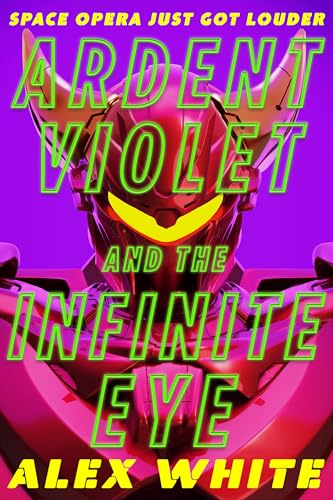
In this new wide-screen space opera, humanity has met its match. An alien race of enormous robotic AI have destroyed most of humanity’s outposts. But, on the eve of the Earth’s destruction, a musician made one last desperate attempt to reach out and convince one of humanity’s enemies to switch sides. Now, earth just might have a chance to survive…
A ragtag band of misfits is all that stands in the way between an army of giant mechas and humanity’s total destruction in the second book of this big-hearted, technicolor space opera trilogy by one of the most exciting voices in science fiction, Alex White.
Ultra-glam enby pop star Ardent Violet thought they could catch a break and enjoy some time with their new boyfriend August Kitko after defeating the giant mechas hellbent on humanity’s destruction. However, Ardent didn’t count on their mecha allies summoning a host of extraterrestrials to defend Earth.
Between the diplomatic entanglements of the newly-arrived alien Coalition, and a mysterious all-powerful AI establishing a base within their solar system, there’s no rest for the wicked.
When August makes a discovery that could turn the tide of the war, Ardent Violet finds they are back in the spotlight for an encore!
My Review
I read the first book in this series August Kitko and the Mechas from Space in 2022, so I’ve been waiting a while for this book. I hope I don’t have to wait another two years for book three, because I need to know what happens to everyone!
This book is mainly written from Ardent’s perspective, although we sometimes get Gus’. Having survived the Mechas from Space, Ardent, Gus, Nisha and Hjalmar, and their Vanguards are still looking to save Earth, and humans generally, from Infinite, the A.I. that is causing all the trouble. Gus discovers that there is a way to do it, about the same time as a Coalition of alien species arrives to ‘help’. They’re all in a similar situation, having developed A.I.s that took over their species. It’s a bit complicated, but they all have Vanguards, and the Conduits all have to meet each other to work together. This happens in a great space city and it goes as well as can be expected, given that the alien civilisations are somewhat more advanced than humans. One species, a giant crab-like creature with shells encrusted with electronics, weapons, and a bad attitude, take an instant dislike to humans.
In an attempt to remove Infinite from the solar system, human and Coalition Conduits and Vanguards attack Titan. But things get a bit messy when the supposedly non-sentient Ghosts start fighting back, running away and screaming. Gus realises that something is going on and changes the mission. Which upsets the crab-alien Conduit, Scent of Rot. Their fight causes all sorts of fallout and Gus spends the rest of the novel under a death sentence for heresy against the A.I./god King.
Lots of things happen in the fight against Infinite. There are some fantastic space battles, a rescue mission that gets Dahlia a pardon and a probable suicide mission in return, people die, Vanguards are destroyed, Gus, Ardent and Nisha play a concert in DeepSync. I cried. And enemies become friends.
I want to know who picked up Gus and Scent of Rot’s escape craft! I want to know how Ardent handles the possible death and escape of Gus. I want to return to this world as soon as possible, it’s so much fun! I loved the characters, especially the development of Nisha as a character, and the complex negotiations that come with inter-species cooperation. The alien species were based on Earth animals, mostly, but changed in a way that would be strange, and logical. Except the octopus-like species; octopuses are alien enough as it is. Them running around in giant bubbles of water in non-marine environments is relatively expected. They would if they could.
Seriously, Alex White, hurry up and write book three!
Format: Audible Audio Published: June 6, 2024 by Tor Language: English Narrated by the author
Description
To fix the world they first must break it further.
Humanity is a dying breed, utterly reliant on artificial labour and service. When a domesticated robot gets a nasty little idea downloaded into their core programming, they murder their owner. The robot then discovers they can also do something else they never did before: run away. After fleeing the household, they enter a wider world they never knew existed, where the age-old hierarchy of humans at the top is disintegrating, and a robot ecosystem devoted to human wellbeing is finding a new purpose.
My Review
I listened to this book through the ‘get one audiobook a month using Amazon Music’ thing, so I can’t keep it, but as soon as the book comes out in paperback, I’m getting it.
Charles is a valet robot who murders his master. But he doesn’t know why. Sent to be assessed and probably destroyed, he discovers freedom. He’s very confused by the world outside of the manor where he served is reclusive master for years. It’s all very disorderly and untidy. Estates are falling down, robot servants are rusting at their posts, and there’s no humans about.
Until Charles meets ‘The Wonk’. For the sake of Charles not getting crushed, The Wonk tells Charles, now going by UnCharles, that she’s a robot too. Despite all evidence to the contrary, Charles believes this to be the case almost to the end of the book. It is quite funny. UnCharles sets off to find humans to serve and The Wonk sets off to find the Library.
They meet later, and then go off on an adventure together, first to find the Library, and then to meet god. Turns out god is an A.I. judge, programmed to mete out justice. He also knows a lot about why Charles killed his master. And why the world collapsed.
Adrian Tchaikovsky can never be accused of not being political. His work always has a point. In this one, the subject of A.I. is discussed using humour and allegory. A.I. can only learn from what we feed it, it can only work within the parameters given.
Tchaikovsky also alludes to the compounds and bunkers wealthy people are building all over the world to escape to, when disaster strikes. They’ve managed to hoard all the wealth and destroy everything, and then they plan to run away when consequences occur. Since a lot of these people are the same people playing around with A.I. this is an easy inclusion in the novel.
But everyone dies. You can’t hide from death. Hopefully, the evil gits will die in attempting to run away and the resources they’ve hoarded can be share fairly among the survivors. (I don’t like billionaires.)
I enjoyed this novel, especially UnCharles’ confusion, and The Wonk’s sarcastic responses to his desire to serve. The vision of a destroyed wasteland was haunting and the critique of the way humans treat each other is spot on.
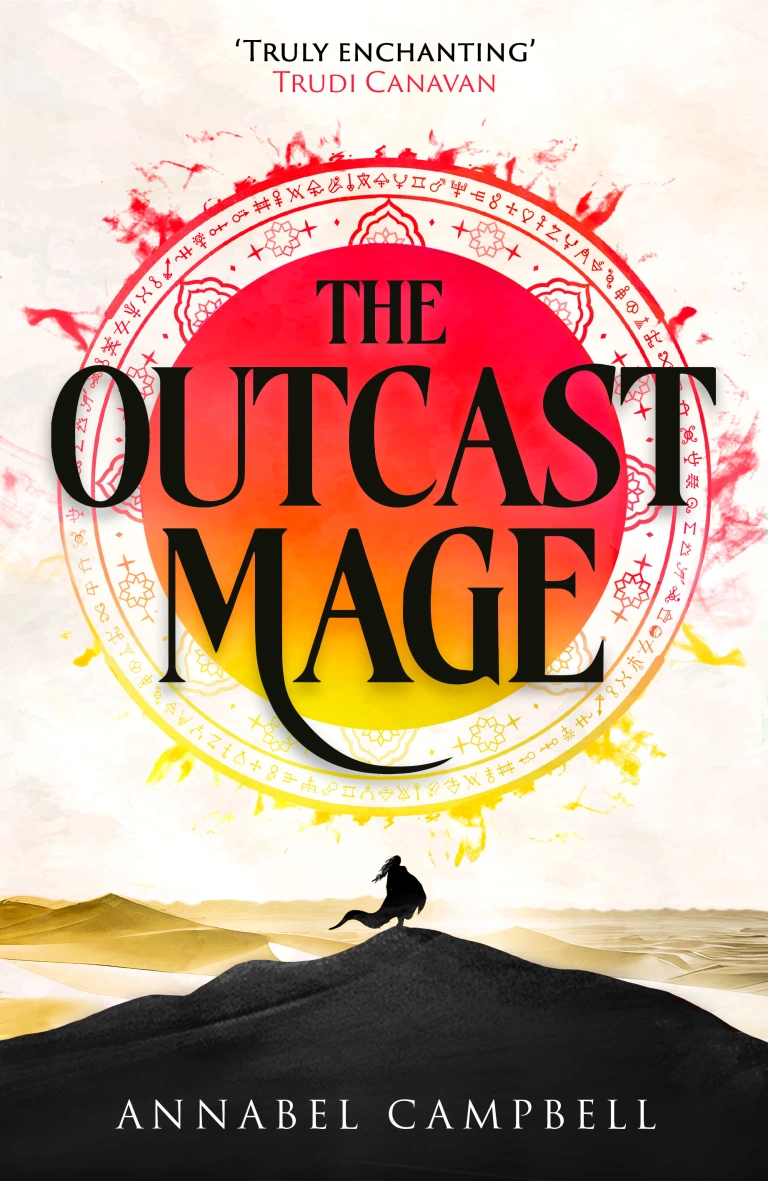
In the city of Amoria, where magic rules all, Naila is the ultimate conundrum. A student under the watchful eye of Amoria’s sprawling Academy, Naila is undeniably gifted, yet she has never been able to harness her abilities. And time is running out. If she fails, she’ll be forced into exile, or worse – consumed by her own magic.
For decades mages and the magicless Hollows have lived side-by-side peacefully. But now that peace is threatened as old resentments bubble over. A powerful anti-Hollow faction led by Amoria’s most influential mages is determined to cast the Hollows out. With her Hollow background, Nalia is in danger of being exiled from everything she knows and everyone she loves if she cannot unlock her power.
When a tragic incident threatens her place at the Academy, Naila is saved by Haelius Akana, the most powerful living mage. A scholar and fellow outcast, Haelius is fascinated by Naila’s inability to use magic. Eager to help someone in whom he sees so much of himself, he stakes his position at the Academy on teaching her. Trapped in the deadly schemes of Amoria’s elite, Naila must dig deep to discover the truth of her powers – or watch the city she loves descend into civil war.
Annabel writes fantasy with fierce female characters and disaster wizards, and believes everything is improved by dragons.
She lives in a tiny village in Scotland, where most of her neighbours are sheep. She has a PhD in cardiovascular science, and when not making things up for a living, she works as a Medical Writer.
Her other joys are red wine, playing games, or showing you too many pictures of her dog.
Category: Fantasy, Historical Fantasy ISBN: 9781399734783 Publication date: October 17, 2024 Format: Hardback RRP: £20.00 Publisher: Hodderscape
Book Description
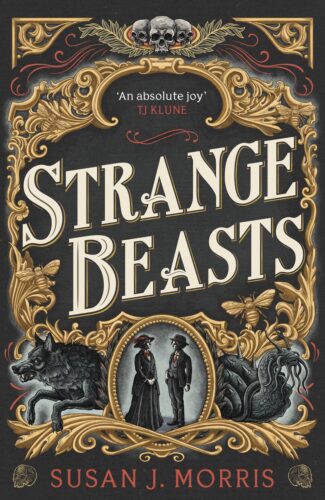
When the Gendarmes ask the Royal Society for the Study of Abnormal Phenomena for help, they don’t expect them to send Samantha Harker.
She’s a researcher, more used to papercuts than knife fights. Sam is also the daughter of Dracula’s killer and can see into the minds of monsters. It’s a perilous power, one that could help her crack this case ─ or have her thrown into an asylum.
Dr Helena Moriarty is Sam’s reluctant partner, the Society’s finest agent who has forged a formidable path in her notorious father’s shadow. Professor Moriarty is in hiding, but he still makes his presence known: Hel’s partners have a way of dying in mysterious circumstances.
From Paris’ glittering opera house to its darkest catacombs, the investigation pits Sam and Hel against magic, monsters, and men. And beneath their tenuous partnership, something else is growing . . .
But is trusting Hel the key to solving the murders? Or is Sam just another pawn in a Moriarty game?
With characters drawn from the worlds of Dracula and Sherlock Holmes, Strange Beasts is a twisty puzzle box of a historical fantasy ─ perfect for fans of Genevieve Cogman, Theodora Goss, Freya Marske, T. Kingfisher, and Gail Carriger.
About the author
Susan J. Morris is a fantasy author and editor, best known for a writing advice column featured on Amazon’s Omnivoracious blog and her work editing Forgotten Realms novels. Susan delights in running workshops for Clarion West and in moderating panels for writing symposiums. When not writing or reading, Susan indulges in playing video games, training in Pilates, and experimenting with new plant-based food recipes. She lives in Sammamish, Washington with her partner, two cats, and entirely too many plants.
Susan had that pink hair at FantasyCon in October. It’s very distinctive and eye-catching…and distracting.
I read this book for the British Fantasy Society book club meeting on Sunday afternoon. I got an Audible code from the book club organiser because my Goldsboro Books special edition of Strange Beasts hasn’t arrived yet. It was the October SFF Fellowship book, but I had to cancel my subscription because funds are a bit tight. I ordered it impulsively after chatting to Susan a few times at FantasyCon.
Conversations in the courtyard are responsible for a number of books I’ve bought in the last month…
Anyway, I also ordered a copy of the standard hardback from bookshop.org when I found out it would be the first BFS Book Club book and before Dave sent me an Audible code. So, once again, I have multiple copies of a book.
Totally worth it!
The main characters of Sam Harker and Dr Helena Moriarty are well-rounded, complex characters, each working through their own problems and dealing with their own secrets. They’re officially investigating the Beast attacks, but they both have their own secret missions and they’re being manipulated by multiple parties. They struggle to trust, because they’ve been taught by other people that they can’t trust anyone and can’t trust themselves. Their growth as people and the tentative nature of their relationship from start to finish is realistic.
Sam is the view point character, so we read her thoughts and see events from her perspective, and see her fears and confusion as she deals with the things the mission throws at her.
They’re also really fun characters.
Jacob Van Helsing is not a fun character. He’s an absolute dickhead. Sam’s memories of him as a loving child contrast with the adult man poisoned by his father – the Van Helsing who helped kill Dracul – into hating and fearing her as a Channel. His comeuppance is well-deserved, although I don’t like that he got credit for Sam and Hel’s work. I suspect even if he hadn’t chosen to take credit, Mr Wright would have given him the credit, because the Society, and society in general, is incredibly misogynistic.
I did not work out who the killer was until quite late on; there are a lot of red herrings. Even the identity of the alchemist was a red herring really, when you think about it, another piece on the chess board, but not the player moving the pieces around.
I felt the mix of science and magic was really well done – a delicate balance of folklore and early 20th century science was found and use consistently. The details of Paris in 1903 feel realistic, although I’ve only been to Paris once and didn’t get to go into the catacombs, but I can imagine them being full of mythical beasts and human criminals. The descriptions were very vivid and events tightly plotted. There are characters I’d like to know more about but they don’t come back into the narrative, and other characters that the reader learns about slowly. Each character has their own backstory and personal history.
Also, chemistry is magic, and fun to play with. So long as you don’t accidentally gas people or blow things up.
The plot starts with a bang and doesn’t stop. Well, actually it starts with a threat, then a few bangs, and then a monster attack in a carriage…you get the picture. You’re just taking a breath when the next thing happens. It’s fun, but I had to take a day between reading/listening to a few chapters at a time.
I have listened to the first 14 chapters as audio and read from chapter 15 to the end. The audiobook was really well read, with multiple accents! I would not have been able to pronounce most of the French and German names without hearing them first. It’s been a lot of years since I sturdied French and I wasn’t very good at it even then, and my German is non-existent. I could not understand the French phrases. I’m just going to assume they’re all in good French, make sense, and not question it.
If you enjoyed Gail Carriger’s books, I highly recommend this historical fantasy of Bell Époque Paris. It’s darker and the focus is on the developing friendship/potential romantic relationship rather than a ‘destined partners’ type narrative. I love it.
One-Time
Monthly
Yearly
Make a one-time donation – If you want. No pressure.
Make a monthly donation
Make a yearly donation
Choose an amount
£5.00
£15.00
£100.00
£5.00
£15.00
£100.00
£5.00
£15.00
£100.00
Or enter a custom amount
£
Your contribution is appreciated. I put a lot of effort into reading and reviewing books for readers.
Format: 120 pages, Paperback Published: July 28, 2022 by 404 Ink ISBN: 9781912489602 (ISBN10: 1912489600)
Description
Since its inception decades ago, the tabletop roleplaying game Dungeons & Dragons has offered an escape from the real world, the chance to enter distant realms, walk in new shoes, and be part of immersive, imaginative tales as they unfold. More so, in Thom James Carter’s opinion, it’s a perfect vessel for queer exploration and joy.
Journey on, adventurer, as Dungeon Master Thom invites readers into the game’s exciting queer, utopian possibilities, traversing its history and contemporary evolution, the queer potential resting within gameplay, the homebrewers making it their own, stories from fellow players, and the power to explore and examine identity and how people want to lead their lives in real and imagined worlds alike.
Grab a sword and get your dice at the ready, this queer adventure is about to begin.
My Review
This was an interesting little book about D&D and Queer culture, exploring the background and history of D&D, and the use of D&D by Queer people to explore their identities. It’s an interesting essay and the structure is fun. It is a introduction to the game and TTRPGs generally, but if you’re already in the fandom, you might not find much useful in it.
One-Time
Monthly
Yearly
Make a one-time donation – If you want. No pressure.
Make a monthly donation
Make a yearly donation
Choose an amount
£5.00
£15.00
£100.00
£5.00
£15.00
£100.00
£5.00
£15.00
£100.00
Or enter a custom amount
£
Your contribution is appreciated. I put a lot of effort into reading and reviewing books for readers.
Format: 496 pages, Paperback Published: May 2, 2023 by Head of Zeus — an AdAstra Book ISBN: 9781801108430 (ISBN10: 1801108439)
Description
Arthur C. Clarke winner and Sunday Times bestseller Adrian Tchaikovsky’s triumphant return to fantasy with a darkly inventive portrait of a city under occupation and on the verge of revolution.
There has always been a darkness to Ilmar, but never more so than now. The city chafes under the heavy hand of the Palleseen occupation, the choke-hold of its criminal underworld, the boot of its factory owners, the weight of its wretched poor and the burden of its ancient curse.
What will be the spark that lights the conflagration?
Despite the city’s refugees, wanderers, murderers, madmen, fanatics and thieves, the catalyst, as always, will be the Anchorwood – that dark grove of trees, that primeval remnant, that portal, when the moon is full, to strange and distant shores.
Ilmar, some say, is the worst place in the world and the gateway to a thousand worse places.
Format: 280 pages, Paperback Published: February 18, 2023 by Aethervale Publishing ISBN: 9798987850206
Description
When life gives you lemons, squeeze them into a stiff drink and stir.
After twenty years defending the frozen north against some of the most dangerous threats in the nine kingdoms, Rhoren “Bloodbane” has finally earned his retirement. While the blood mage’s service to the realm may have ended, burning veins and aching joints remain, and Rhoren soon learns that a warmer climate offers relief from his chronic pain.
And a chance at a fresh start.
In the warm and relaxing atmosphere of Eastborne, the umbral elf finds a new purpose and a sense of belonging. He may have left the frozen north behind, but he brings with him the skills and strength gained from a lifetime of defending the realm. Along with his most prized possession—a book of drink recipes inherited from his father.
Spilled cocktails may not carry the same weight as spilled blood, but opening a tavern brings a unique brand of challenges. With the right friends and a little bit of luck, he might just have a recipe for success.





 Everything Is Better With Dragons