Alright, I’m back with more. It took less time than I thought.
Chapter 15, part 2
“Mrrh-wAa, what are you doing?” The new comer sounded desperate, “The Elders told you not to contact the aliens, Supai said it was dangerous!”
“Prrt-hai! Are you following me? They’re from igassss, like Supai. They’re looking for Supai!” Mrrh-wAa hurried their words out, “I told you it would be fine, you fussing will just worry the brood.”
“Yes, yes, the brood worries and the Elders were very specific; you are not to talk to the aliens.”
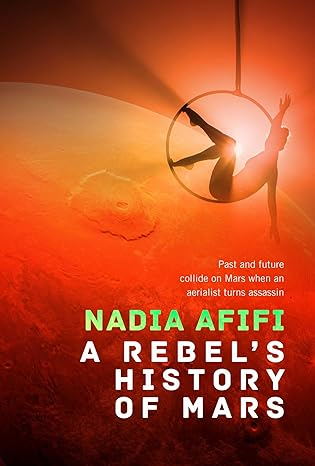
Expected publication July 15, 2025 by Flame Tree Press
ISBN 9781787589452
Rocky Mountain Fiction Writer member’s striking new book of time travel and biological science fiction is a thrilling ride.
Kezza, an aerialist in the Martian circus, can never return to Earth – but she can assassinate the man she blames for her grim life on the red planet. Her murderous plans take an unexpected turn, however, when she uncovers a sinister secret.
A thousand years into the future, Azad lives a safe but controlled life on the beautiful desert planet of Nabatea. His world is upended when he joins a crew of space-traveling historians seeking to learn the true reason that their ancestors left Mars
Separated by time and space, Kezza and Azad’s stories collide in the Martian desert.
They looked into darkness. The darkness looked back . . .
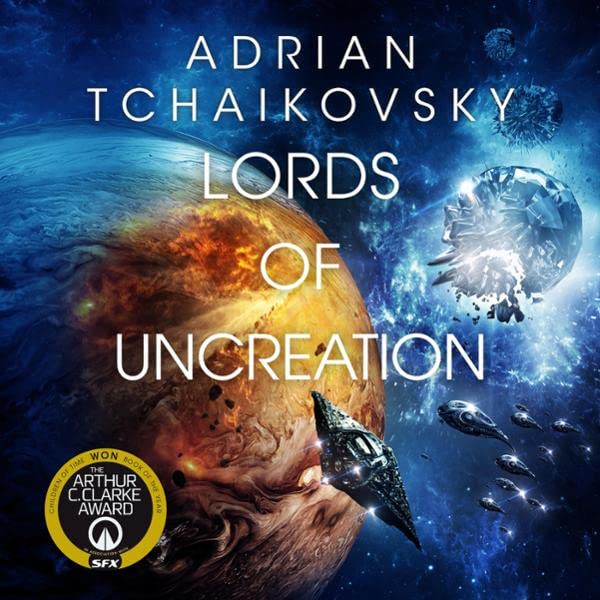
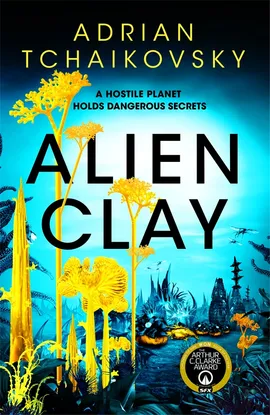
An utterly gripping story of survival and first contact on a hostile planet from Adrian Tchaikovsky, author of the Arthur C. Clarke Award-winning Children of Time.
A commercial expedition to a distant star system discovers a pitch-black moon alive with radio activity. Its high-gravity, high-pressure, zero-oxygen environment is deadly to human life, but ripe for exploitation. They named it Shroud.
Under no circumstances can a human survive Shroud’s inhospitable surface – but a catastrophic accident forces Juna Ceelander and Mai Ste Etienne to make an emergency landing in a barely adequate escape vehicle. Alone, and fighting for survival, the two women embark on a gruelling journey across land, sea and air in search of salvation.
But as they travel, Juna and Mai begin to understand Shroud’s unnerving alien species. It also begins to understand them. If they escape Shroud, they’ll somehow have to explain the impossible and translate the incredible. That is, if they make it back at all . . .
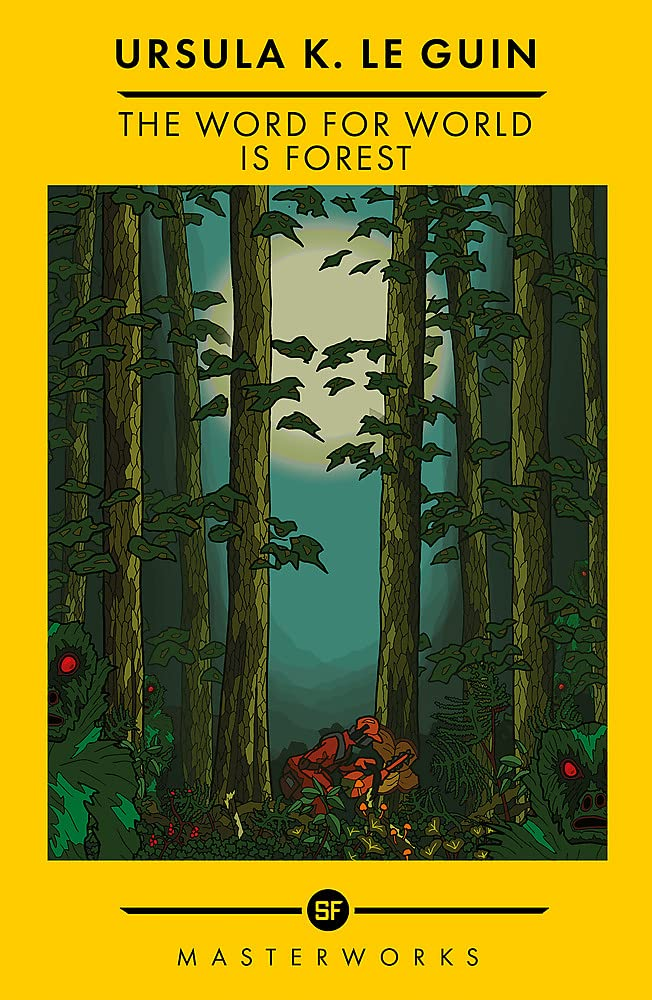
Format: 123 pages, Paperback Published: November 24, 2022 by Gollancz ISBN: 9781399607797
Winner of the 1973 Hugo award for Best Novella, and nominated for many others, The Word for World is Forest is part of Le Guin’s ‘Hainish Cycle’. It explores a future history of Earth and pacifistic ideals in its depictions of violence, colonialism and resistance.
A world of peaceful aliens conquered by bloodthirsty yumens, their existence is irrevocably altered. Forced into servitude, the Athsheans find themselves at the mercy of their brutal masters.
Desperation causes the Athsheans to retaliate against their captors, abandoning their strictures against violence. In defending their lives, they endanger the very foundations of their society. Every blow against the invaders is a blow to the core of Athsheans’ culture.
And once the killing starts, there is no turning back.
My Review
This novella has been on my TBR pile for a while; my sleep pattern has been messed up by doing too much last week, so I slept most of yesterday, and as such I was awake half the night. Since I needed to keep myself entertained, I picked a book off my TBR pile. I read all 113 pages in one go, after reading the 2022 introduction by the series editor, and the author’s 1976 introduction. I found them both helpful in my reading of the novella, to understand the context. When LeGuin wrote this story, the U.S. was fighting an unjust war in Vietnam. She admits to being preachy in writing the story and not being subtle about her anger. LeGuin writes in her 1976 introduction that she tried to make the characters complex, except Davidson, who is a caricature of the evil invader. I think it’s important to remember the context and author’s own thoughts about the work when reading it.
This novella is part of the Hainish series. The context of the Hainish universe, with multiple humanoid species in the wider story-universe. The humans are part of a League with these other civilisations, but on the planet, Athshe, they are 27 light years from Earth and have only old orders to follow. On the planet, there is a humanoid species, the Athsheans, who are smaller, and furred. The Athsheans have a complex society and live partly in world-time and dream-time, with a multiphasic sleep pattern.
The humans are soldiers and loggers. They’re destroying the forest, which kills the land, as the continuous rain washes the soil away without the tree roots to hold it in place. After one of the soldiers, Davidson, rapes and murders one of the Athsheans, he’s attacked by her husband. Later, the husband leads an attack on the logging camp that Davidson runs, killing all of the humans and freeing the Athsheans. This man becomes a god among the Athsheans, the first to commit murder.
What follows is a war as the Athsheans demand promises from the humans that they’ll free the Athshean slaves, stay in their already deforested area, and stop destroying the forest. Davidson, a paranoid soldier, continues his war on the Athsheans, resulting in retaliatory attacks on the main human settlement and one of the logging camps.
It’s a short, punchy story, told from the perspective of multiple characters in eight chapters. I found it thought-provoking and painful to read at times. It’s probably not the book you should start with when reading LeGuin. You need more of the context of the Hainish series.
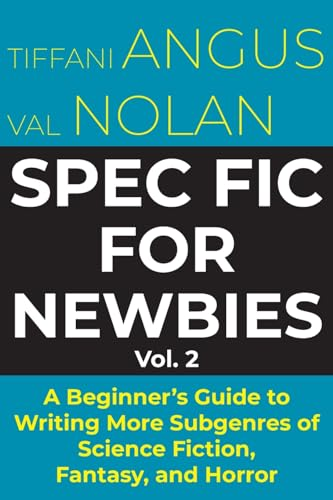
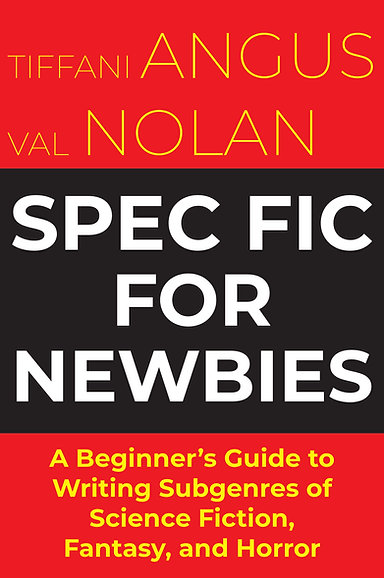
Beam aboard your own Science Fiction, Fantasy, and Horror classroom with the next volume of the BSFA-shortlisted writing-guide series!
Join Tiffani Angus (Ph.D.) and Val Nolan (Ph.D.) for a whirlwind introduction to the storytelling basics of 30 more subgenres and major tropes from across the limitless realms of Speculative Fiction.
Learn about Space Opera, Folk Horror, Climate Fiction, Werewolves, Astronauts, Mythic Fantasy, Goblin Markets, Dragons, and many more with deep dives into each subgenre’s history and development, spotter’s guides to typical examples, pitfalls to watch out for in your own writing, and activities to help you get started! All derived from a combined two decades of university-level practices and experience!
Spec Fic for Newbies breaks genres into bite-sized pieces for students or for any budding writer. It offers a welcoming introduction to how writers, filmmakers, and other creatives can begin to explore the infinite potential of Science Fiction, Fantasy, and Horror to create new stories beyond the boundaries of the ordinary.
This is not another dusty rulebook. This is a portal to endless other worlds!
Format: 464 pages, Paperback Published: December 3, 2024 by Orbit ISBN: 9780316430609
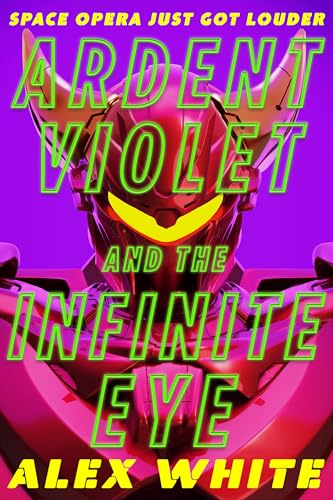
In this new wide-screen space opera, humanity has met its match. An alien race of enormous robotic AI have destroyed most of humanity’s outposts. But, on the eve of the Earth’s destruction, a musician made one last desperate attempt to reach out and convince one of humanity’s enemies to switch sides. Now, earth just might have a chance to survive…
A ragtag band of misfits is all that stands in the way between an army of giant mechas and humanity’s total destruction in the second book of this big-hearted, technicolor space opera trilogy by one of the most exciting voices in science fiction, Alex White.
Ultra-glam enby pop star Ardent Violet thought they could catch a break and enjoy some time with their new boyfriend August Kitko after defeating the giant mechas hellbent on humanity’s destruction. However, Ardent didn’t count on their mecha allies summoning a host of extraterrestrials to defend Earth.
Between the diplomatic entanglements of the newly-arrived alien Coalition, and a mysterious all-powerful AI establishing a base within their solar system, there’s no rest for the wicked.
When August makes a discovery that could turn the tide of the war, Ardent Violet finds they are back in the spotlight for an encore!
My Review
I read the first book in this series August Kitko and the Mechas from Space in 2022, so I’ve been waiting a while for this book. I hope I don’t have to wait another two years for book three, because I need to know what happens to everyone!
This book is mainly written from Ardent’s perspective, although we sometimes get Gus’. Having survived the Mechas from Space, Ardent, Gus, Nisha and Hjalmar, and their Vanguards are still looking to save Earth, and humans generally, from Infinite, the A.I. that is causing all the trouble. Gus discovers that there is a way to do it, about the same time as a Coalition of alien species arrives to ‘help’. They’re all in a similar situation, having developed A.I.s that took over their species. It’s a bit complicated, but they all have Vanguards, and the Conduits all have to meet each other to work together. This happens in a great space city and it goes as well as can be expected, given that the alien civilisations are somewhat more advanced than humans. One species, a giant crab-like creature with shells encrusted with electronics, weapons, and a bad attitude, take an instant dislike to humans.
In an attempt to remove Infinite from the solar system, human and Coalition Conduits and Vanguards attack Titan. But things get a bit messy when the supposedly non-sentient Ghosts start fighting back, running away and screaming. Gus realises that something is going on and changes the mission. Which upsets the crab-alien Conduit, Scent of Rot. Their fight causes all sorts of fallout and Gus spends the rest of the novel under a death sentence for heresy against the A.I./god King.
Lots of things happen in the fight against Infinite. There are some fantastic space battles, a rescue mission that gets Dahlia a pardon and a probable suicide mission in return, people die, Vanguards are destroyed, Gus, Ardent and Nisha play a concert in DeepSync. I cried. And enemies become friends.
I want to know who picked up Gus and Scent of Rot’s escape craft! I want to know how Ardent handles the possible death and escape of Gus. I want to return to this world as soon as possible, it’s so much fun! I loved the characters, especially the development of Nisha as a character, and the complex negotiations that come with inter-species cooperation. The alien species were based on Earth animals, mostly, but changed in a way that would be strange, and logical. Except the octopus-like species; octopuses are alien enough as it is. Them running around in giant bubbles of water in non-marine environments is relatively expected. They would if they could.
Seriously, Alex White, hurry up and write book three!
Format: Audible Audio Published: June 6, 2024 by Tor Language: English Narrated by the author
Description
To fix the world they first must break it further.
Humanity is a dying breed, utterly reliant on artificial labour and service. When a domesticated robot gets a nasty little idea downloaded into their core programming, they murder their owner. The robot then discovers they can also do something else they never did before: run away. After fleeing the household, they enter a wider world they never knew existed, where the age-old hierarchy of humans at the top is disintegrating, and a robot ecosystem devoted to human wellbeing is finding a new purpose.
My Review
I listened to this book through the ‘get one audiobook a month using Amazon Music’ thing, so I can’t keep it, but as soon as the book comes out in paperback, I’m getting it.
Charles is a valet robot who murders his master. But he doesn’t know why. Sent to be assessed and probably destroyed, he discovers freedom. He’s very confused by the world outside of the manor where he served is reclusive master for years. It’s all very disorderly and untidy. Estates are falling down, robot servants are rusting at their posts, and there’s no humans about.
Until Charles meets ‘The Wonk’. For the sake of Charles not getting crushed, The Wonk tells Charles, now going by UnCharles, that she’s a robot too. Despite all evidence to the contrary, Charles believes this to be the case almost to the end of the book. It is quite funny. UnCharles sets off to find humans to serve and The Wonk sets off to find the Library.
They meet later, and then go off on an adventure together, first to find the Library, and then to meet god. Turns out god is an A.I. judge, programmed to mete out justice. He also knows a lot about why Charles killed his master. And why the world collapsed.
Adrian Tchaikovsky can never be accused of not being political. His work always has a point. In this one, the subject of A.I. is discussed using humour and allegory. A.I. can only learn from what we feed it, it can only work within the parameters given.
Tchaikovsky also alludes to the compounds and bunkers wealthy people are building all over the world to escape to, when disaster strikes. They’ve managed to hoard all the wealth and destroy everything, and then they plan to run away when consequences occur. Since a lot of these people are the same people playing around with A.I. this is an easy inclusion in the novel.
But everyone dies. You can’t hide from death. Hopefully, the evil gits will die in attempting to run away and the resources they’ve hoarded can be share fairly among the survivors. (I don’t like billionaires.)
I enjoyed this novel, especially UnCharles’ confusion, and The Wonk’s sarcastic responses to his desire to serve. The vision of a destroyed wasteland was haunting and the critique of the way humans treat each other is spot on.
I know this post is a few weeks late, but I’ve been ill, and in pain. I’ve decided to make this one publicly available rather than behind a pay wall. The story is over 19000 words long now, and there’s some difference between the story I’ve written in my notebook and the one you’ll read here.
Chapter 12 – Lah-Shah – In the asteroid belt
Lah-Shah looked over the scan data. The asteroid was quite large, dense and peanut shaped. There was plenty of metal in it, and the shape suggested that two asteroids had got a bit too close to each other and collided at some point. It surprised Lah-Shah that the humans on Aurox hadn’t sent auto-miners out here; despite the distance from the planet, it would be worth the effort.
A large object showed up on the scans; it lay buried beneath the surface, in the waist of the asteroid, hidden by scattered debris and surface shadows. It had a familiar outline on the scans. Lah-Shah ran the images through the control system and found a match: an IGASS science division mission ship.
Locus Recommended Reading List 2023 BSFA for Best Non-Fiction, Shortlist 2024 BFS for Best Non-Fiction, Shortlist 2024
Spec Fic For Newbies: A Beginner's Guide to Writing Subgenres of Science Fiction, Fantasy, and Horror. Tiffani Angus (Ph.D.) and Val Nolan (Ph.D.) met at the 2009 Clarion Writers’ Workshop in California and since then have collaborated many times as fans and scholars on panels for SFF conventions and writing retreats.Working together on this book and combining their experience as SFF writers and as university lecturers in Creative Writing and Literature made perfect sense!
Every year they see new students who want to write SFF/Horror but have never tried the genres, have tried but found themselves floundering, or, worse, have been discouraged by those who tell them Science Fiction, Fantasy, and Horror are somehow not “real” literature.
This book is for all those future Science Fiction, Fantasy, and Horror writers. Tiffani and Val are approaching these three exciting fields by breaking them down into bite-sized subgenres with a fun, open, and contemporary approach.Each chapter contains 10 subgenres or tropes, with a quick and nerdy history of each derived from classroom teaching practices, along with a list of potential pitfalls, a description of why it’s fun to write in these subgenres, as well as activities for new writers to try out and to get them started!
My Review
I bought this book at FantasyCon 2023. I’ve got quite a collection of Academia Lunare books now, mostly genre stuff and Tolkien books. Look at the Luna Press Publishing website, under non-fiction and academic, to get a sense of the books I mean. Most of the are small, A6 size, usually with monographs on a uniting subject matter.
This book is different.
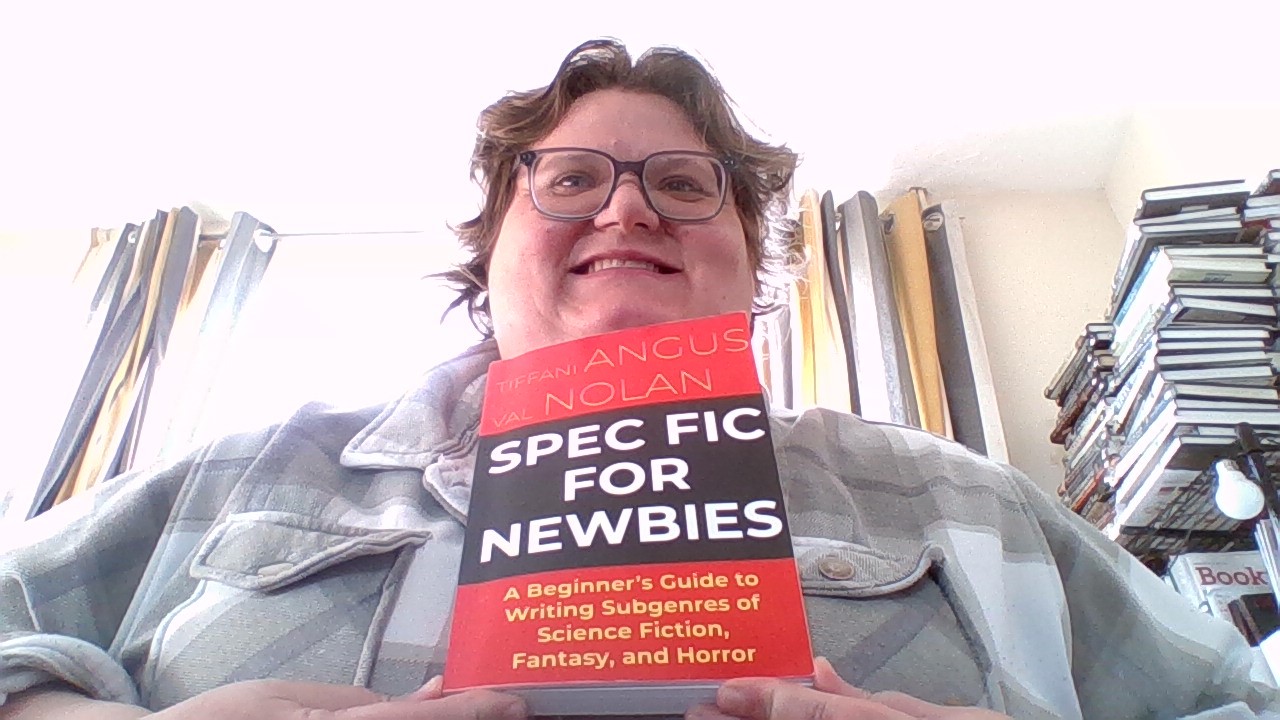
Yes, that’s me. I got the laptop camera to work properly. Yes, that’s the Pen & Sword TBR pile behind me.
It’s a guide to the sub-genres of SFFH, with two writing exercises for each sub-genre. I’m not exactly a ‘newbie’, but I don’t know all of the sub-genres, and it was interesting to read about the ones they included.
I enjoyed to quick tour and chatty writing style of this book, especially the genre and sub-genre histories. This book is informed by years of teaching by both authors, and it shows. They’ve clearly come across the same mistakes time and time again, but the enjoyment of both spec fic and teaching also really shines through. I could easily devour a volume on each sub-genre by these authors, but I’m weird like that. I like depth and breadth. I don’t think that’s a criticism of this book, but if you’re expecting in-depth discussions of the nuances of each sub-genre you’re not going to get that. The book provides broad overviews of each sub-genre with reference to specific tropes or movements within the sub-genre.
I enjoyed the tour of 30 sub-genres and the writing left me want more on some subject and no more about others (splatterpunk for example, is really not my thing). There’s enough to get you started on any sub-genre, and that’s what this book is for.
If you’re looking for something to read in a specific sub-genre, I think you could flip to the section in this book and find a place to start in a new sub-genre, because the authors provide lots of examples of works – both film and literary – that sit in a sub-genre.
There are also lots of references if you want to follow up on a particular statement or idea. I like references. More references and access to a database of papers, please. Because I don’t have enough to read…
I found the writing exercises prompted me to come up with new ideas and think it’ll be useful when I’m struggling to put an idea down on paper. I’ve got an idea about zombies and cruise ships, but it’s not going anywhere yet… Anyway, the activities make up a small section of each sub-genre entry, but the information packed in before them informs the activities. I think for a writer at any stage of their career, the activities will prompt the brain to try something new. If you’re a new writer they’ll give you a place to start, and for experienced writers they’re a reminder and refresher when your brain is fried. The writing advice found throughout the text is useful and explained well.
While I read this book from start to finish, I think it could be a good ‘dipping’ book, for those having a go at a new genre or sub-genre. There’s always something new to try – nobody could have written in all thirty of the sub-genres in this book – so dipping in and out as the mood takes you can give the writer practice in a variety of stories.
I have already recommended this book to a very new writer (my nibbling is doing creative writing as part of their OU Open Degree – I’m so proud!) and will be buying volume 2 at FantasyCon in three weeks – Francesca, make sure there’s a copy put aside for me, please!
I mentioned on my book Instagram that I was reading this book and Dr Angus kindly told me to contact her if I need any PhD advice, which I thought was lovely.
Tiffani Angus signed the book. It was signed when I bought it, so Tiffani must have been at FantasyCon last year.















 Everything Is Better With Dragons