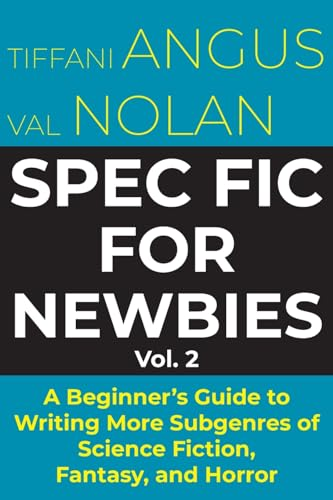
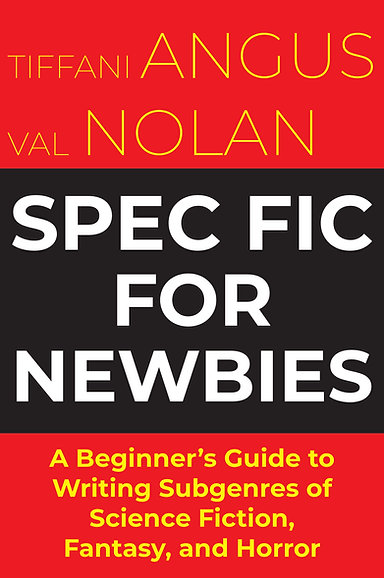
Beam aboard your own Science Fiction, Fantasy, and Horror classroom with the next volume of the BSFA-shortlisted writing-guide series!
Join Tiffani Angus (Ph.D.) and Val Nolan (Ph.D.) for a whirlwind introduction to the storytelling basics of 30 more subgenres and major tropes from across the limitless realms of Speculative Fiction.
Learn about Space Opera, Folk Horror, Climate Fiction, Werewolves, Astronauts, Mythic Fantasy, Goblin Markets, Dragons, and many more with deep dives into each subgenre’s history and development, spotter’s guides to typical examples, pitfalls to watch out for in your own writing, and activities to help you get started! All derived from a combined two decades of university-level practices and experience!
Spec Fic for Newbies breaks genres into bite-sized pieces for students or for any budding writer. It offers a welcoming introduction to how writers, filmmakers, and other creatives can begin to explore the infinite potential of Science Fiction, Fantasy, and Horror to create new stories beyond the boundaries of the ordinary.
This is not another dusty rulebook. This is a portal to endless other worlds!
EBook ISBN 25th March 2025 | 9781915998514 | epub | £5.99/$9.99/$11.99 Paperback ISBN 25th March 2025 | 9781915998507 | Trade Paperback | £9.99/$18.99/$24.99
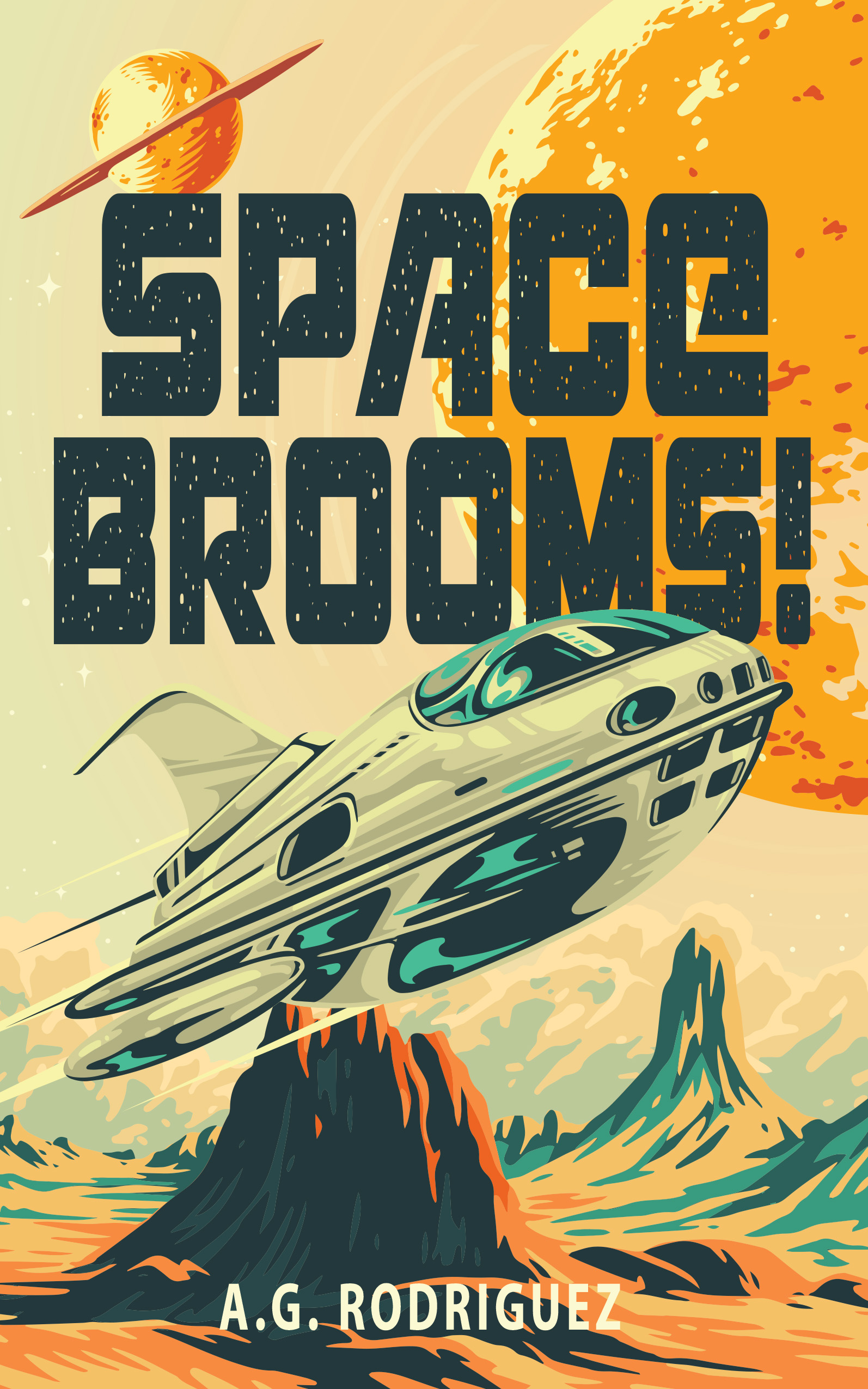
Johnny Gomez, a custodian – or space broom – on Kilgore Station, teams up with a pair of smugglers to sell a stolen data chip full of video game avatars and finally make his fortune
Everyone aboard Kilgore Station is living their best life. Everyone except for Johnny Gomez.
While humans, the augmented, and aliens of all shapes and sizes enjoy exotic cuisine on the dining deck, or gamble away their credits on the entertainment deck, Johnny is elbow-deep in oily, black, alien excrement. A ‘space broom’ custodian for the entire station.
This was obviously not the life Johnny dreamt of. Ten years ago, he travelled to Kilgore, the farthest space station in our solar system, in search of fortune like everyone else. Some people are just luckier than others.
Yet his meaningless, uneventful existence is immediately turned upside down when he happens upon a tiny glass data-chit, hidden amongst the alien poop he must clean up. Unbeknownst to him, every nefarious creature in the solar system will soon be after him to claim it for their own.
With the help of his augmented roommate, a pair of smugglers and a mysterious and beautiful stranger, Johnny fights off thugs and sails as fast as possible to earth’s moon, Luna, in effort to sell the chit to the Obinna Crime Syndicate. But with assassins and mobsters on their tail, the trip is anything but a cakewalk. And Luna itself proves to be nothing like a safe haven, when Johnny’s painful past finally catches up to him…
Space Brooms! is a heart-warming, tongue-in-cheek homage to all things sci-fi, from television and movies, to video games and books.
The Tyrant Philosophers, Book 3 Narrated by David Thorpe Release date: 05-12-24 Language: English Format: Unabridged Audiobook Length: 21 hrs and 39 mins
Bloomsbury presents Days of Shattered Faith by Adrian Tchaikovsky, read by David Thorpe.
Welcome to Alkhalend, Jewel of the Waters, capital of Usmai, greatest of the Successor States, inheritor to the necromantic dominion that was the Moeribandi Empire and tomorrow’s frontline in the Palleseen’s relentless march to bring Perfection and Correctness to an imperfect world.
Loret is fresh off the boat, and just in time.
As Cohort-Invigilator of Correct Appreciation, Outreach department, she’s here as aide to the Palleseen Resident, Sage-Invigilator Angilly. And Sage-Invigilator Angilly – Gil to her friends – needs a second in the spectacularly illegal, culturally offensive and diplomatically inadvisable duel she must fight at midnight.
Outreach, that part of the Pal machine that has to work within the imperfection of the rest of the world, has a lot of room for the illegal, the unconventional, the unorthodox. But just how much unorthodoxy can Gil and Loret get away with?
As a succession crisis looms, as a long-forgotten feat of necromantic engineering nears fruition, as pirate kings, lizard armies and demons gather, as old gods wane and new gods wax, sooner or later Gil and Loret will have to settle their ledger.
Just as well they are both very, very good with a blade…
My Review
I enjoyed the first two books in this series, but I think this third book is my favourite. We encounter re-occurring characters, like Jack, the former priest, and some of the crew from the hospital, who have settled in Alkhaland, and set up a new hospital in the poor district of the city. Jack has made a new friend who runs the local prison and has an un/comfortable relationship with his demon bride. This comes in very handy later in the story.
Into a complicated city comes Loret, a young, scared woman from Pallisand, sent to be aide to Gil, the Resident. Except Loret is a very bad aide, other than rescuing Gil a couple of times. Loret knows what has been happening in the isles and it scares her. She is too scared to tell Gil, and we learn what happened after the characters from book two return to the Palleseen Sway – the ‘infection’ of belief in Jack’s former god, a healer, and the Fisher King, who is very much not a healer, spreads in the army and then in the general population.
I loved this development in the background story, which travels through all three books. It’s the landscape that the stories take place in, with each book being a focused pinpoint in the wider picture. Nothing in the story-world is static, although the Palles want the world to be static and perfect and are constantly fighting against difference and variation.
Alkhaland has an elderly, grief-stricken ruler, who has three sons and a daughter. Tradition says that only a whole man can rule. The eldest is in exile, the second son, Cam, is his father’s right hand and designated heir, the third son is a child obsessed with death. His daughter is a pawn in the game of alliances.
The worldbuilding and descriptions of Alkhaland’s culture and society are vivid and lively. The characters are individual and have their own complex motivations. Gil is truly distressed by the difficult choices she has to make and her complex relationship with Cam.
When the ruler dies, the sons go to war. Except the youngest who goes to meet death. The daughter joins the demon at the hospital. Cam wins with the help of his friend Gil and her Palleseen troops, who promtly move in and make themselves at home.
The people of Alkhaland do not want to be part of the sway, and after some difficulties they free themselves, with the help of a motley crew of aliens, disaffected Palls, demons, and pirates. The final battle is climactic and exciting to read. The advances and reversals, the personal decisions that could make or break the battle, are brilliantly written.
It’s a complex story, exploring how imperialism sneaks into free places around the world, and the small things and well-meaning people that help it along. The Palleseen Sway reminds me of the British Empire, especially the way we took control of India. Trusted representatives of different European states rolled up in the Indian kingdoms and started cultivating influence, until the kings supported one or the other, and then European states sent armies to ‘help’ the Indian kings, until they control the states themselves.
Adrian Tchaikovsky leaves an author’s note that the places in the book aren’t based on real places but he was influenced by the podcast Revolutions. I don’t think I’ve listened to that podcast but I’ve had a quick scan of the episode titles, it seems to cover the revolutionary period from the reign of Charles II onwards. I shall have to have a listen. I also recommend Cool People Who Did Cool Stuff if you’re interested in revolutionaries.
I highly recommend this book and the series in general. I need more stories set in this world, but I think this trilogy is complete as it is, charting the beginning of the end of empire. I hear there’s a short story hiding in an anthology somewhere, so I need to get hold of that anthology.
The narration was excellent and fully embodied the different characters.
Format: 464 pages, Paperback Published: December 3, 2024 by Orbit ISBN: 9780316430609
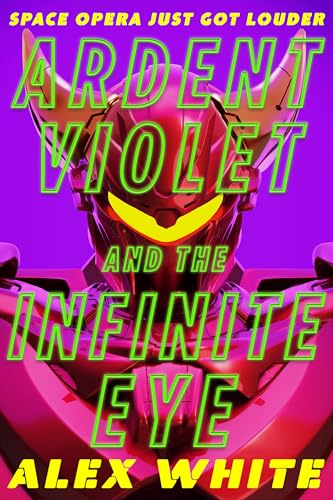
In this new wide-screen space opera, humanity has met its match. An alien race of enormous robotic AI have destroyed most of humanity’s outposts. But, on the eve of the Earth’s destruction, a musician made one last desperate attempt to reach out and convince one of humanity’s enemies to switch sides. Now, earth just might have a chance to survive…
A ragtag band of misfits is all that stands in the way between an army of giant mechas and humanity’s total destruction in the second book of this big-hearted, technicolor space opera trilogy by one of the most exciting voices in science fiction, Alex White.
Ultra-glam enby pop star Ardent Violet thought they could catch a break and enjoy some time with their new boyfriend August Kitko after defeating the giant mechas hellbent on humanity’s destruction. However, Ardent didn’t count on their mecha allies summoning a host of extraterrestrials to defend Earth.
Between the diplomatic entanglements of the newly-arrived alien Coalition, and a mysterious all-powerful AI establishing a base within their solar system, there’s no rest for the wicked.
When August makes a discovery that could turn the tide of the war, Ardent Violet finds they are back in the spotlight for an encore!
My Review
I read the first book in this series August Kitko and the Mechas from Space in 2022, so I’ve been waiting a while for this book. I hope I don’t have to wait another two years for book three, because I need to know what happens to everyone!
This book is mainly written from Ardent’s perspective, although we sometimes get Gus’. Having survived the Mechas from Space, Ardent, Gus, Nisha and Hjalmar, and their Vanguards are still looking to save Earth, and humans generally, from Infinite, the A.I. that is causing all the trouble. Gus discovers that there is a way to do it, about the same time as a Coalition of alien species arrives to ‘help’. They’re all in a similar situation, having developed A.I.s that took over their species. It’s a bit complicated, but they all have Vanguards, and the Conduits all have to meet each other to work together. This happens in a great space city and it goes as well as can be expected, given that the alien civilisations are somewhat more advanced than humans. One species, a giant crab-like creature with shells encrusted with electronics, weapons, and a bad attitude, take an instant dislike to humans.
In an attempt to remove Infinite from the solar system, human and Coalition Conduits and Vanguards attack Titan. But things get a bit messy when the supposedly non-sentient Ghosts start fighting back, running away and screaming. Gus realises that something is going on and changes the mission. Which upsets the crab-alien Conduit, Scent of Rot. Their fight causes all sorts of fallout and Gus spends the rest of the novel under a death sentence for heresy against the A.I./god King.
Lots of things happen in the fight against Infinite. There are some fantastic space battles, a rescue mission that gets Dahlia a pardon and a probable suicide mission in return, people die, Vanguards are destroyed, Gus, Ardent and Nisha play a concert in DeepSync. I cried. And enemies become friends.
I want to know who picked up Gus and Scent of Rot’s escape craft! I want to know how Ardent handles the possible death and escape of Gus. I want to return to this world as soon as possible, it’s so much fun! I loved the characters, especially the development of Nisha as a character, and the complex negotiations that come with inter-species cooperation. The alien species were based on Earth animals, mostly, but changed in a way that would be strange, and logical. Except the octopus-like species; octopuses are alien enough as it is. Them running around in giant bubbles of water in non-marine environments is relatively expected. They would if they could.
Seriously, Alex White, hurry up and write book three!
Format: 496 pages, Paperback Published: May 2, 2023 by Head of Zeus — an AdAstra Book ISBN: 9781801108430 (ISBN10: 1801108439)
Description
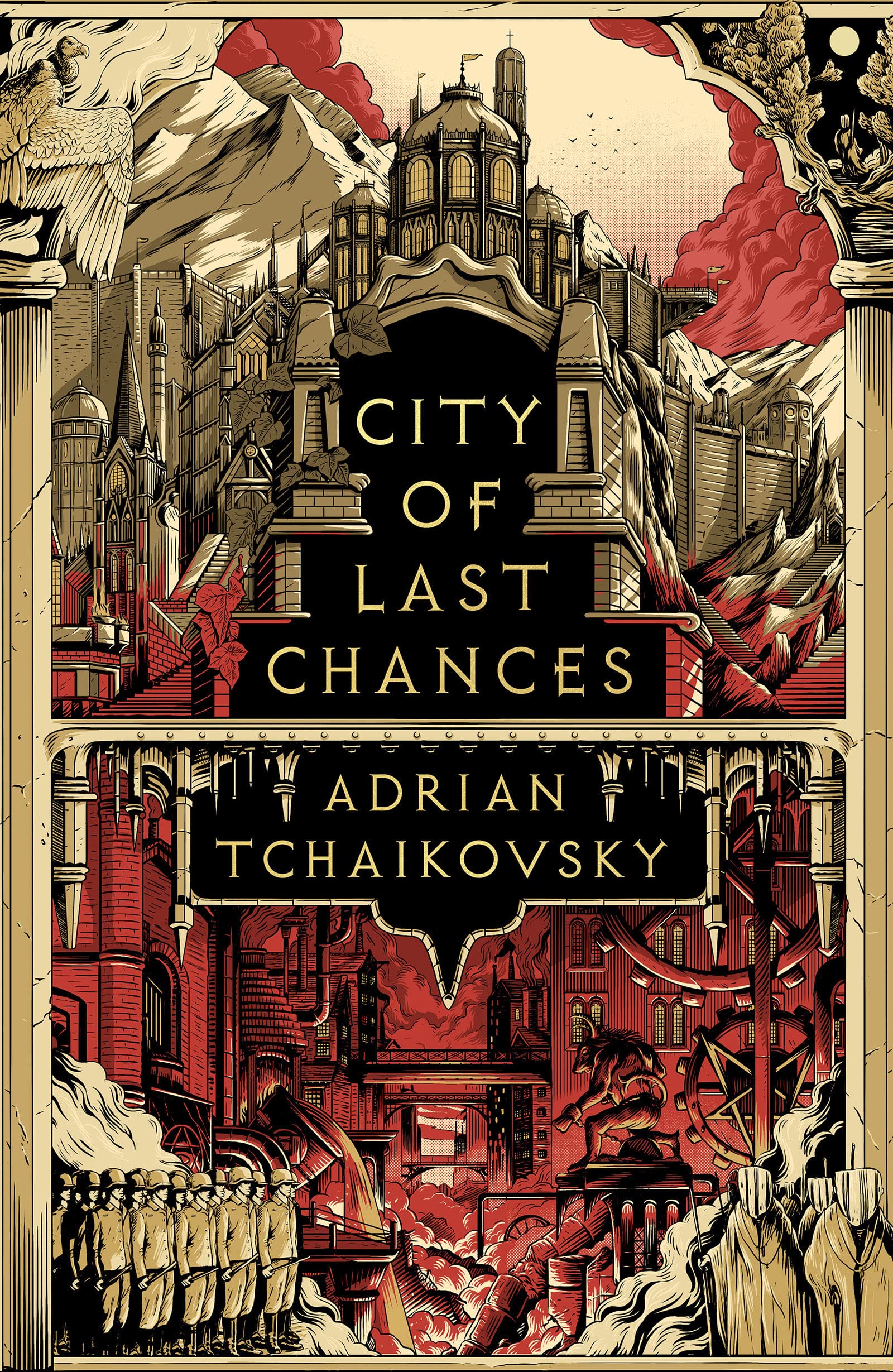
Arthur C. Clarke winner and Sunday Times bestseller Adrian Tchaikovsky’s triumphant return to fantasy with a darkly inventive portrait of a city under occupation and on the verge of revolution.
There has always been a darkness to Ilmar, but never more so than now. The city chafes under the heavy hand of the Palleseen occupation, the choke-hold of its criminal underworld, the boot of its factory owners, the weight of its wretched poor and the burden of its ancient curse.
What will be the spark that lights the conflagration?
Despite the city’s refugees, wanderers, murderers, madmen, fanatics and thieves, the catalyst, as always, will be the Anchorwood – that dark grove of trees, that primeval remnant, that portal, when the moon is full, to strange and distant shores.
Ilmar, some say, is the worst place in the world and the gateway to a thousand worse places.
Release Date: 2024-09-24 Formats: Ebook, Paperback EBook ISBN 24th September 2024 | 9781915998019 | epub | £4.99/$6.99/$7.99 Paperback ISBN 24th September 2024 | 9781915998002 | epub | £9.99/$18.99/$23.99
Description
On the heels of the terrorist attacks on the planet Nova’s capital, the Special Projects Team finds itself targeted by the ambitious new head of the Commonwealth Intelligence Directorate, Aidan Kester. When Kovalic and General Adaj are arrested on charges of treason, Tapper, Brody, Sayers, and Taylor are forced to go on the run. While Kovalic and the general attempt to uncover an Illyrican mole within the Commonwealth’s intelligence apparatus, it’s up to the rest of the team to clear their friends’ names, even if that means making a deal with an old enemy to carry out a daring heist that might just get them all killed.
Release Date 2024-08-13 Formats Ebook, Paperback EBook ISBN 13th August 2024 | 9781915998132 | epub & mobi | £4.99/$7.99/$8.99 Paperback ISBN 13th August 2024 | 9781915998125 | Paperback | £9.99/$17.99/$23.99
Blurb
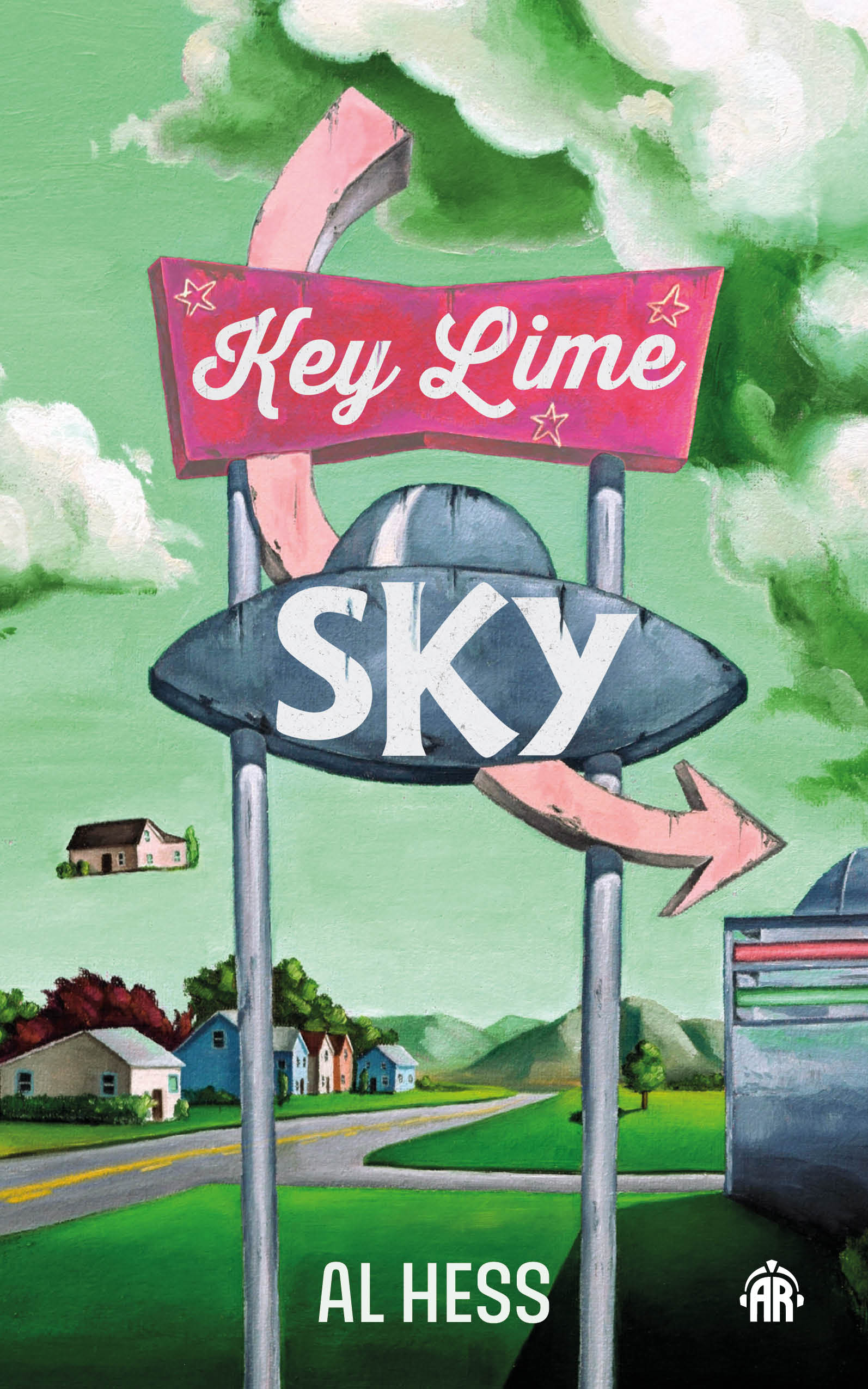
An alien invasion hits the town of Muddy Gap, but a disgruntled pie aficionado is the only one who seems to remember it…
Denver Bryant’s passion for pie has sent him across Wyoming in search of the best slices. Though he dutifully posts reviews on his blog, he’s never been able to recreate his brief moment of viral popularity, and its trickling income isn’t enough to pay his rent next month.
Driving home from a roadside diner, Denver witnesses a UFO explode directly over his tiny town of Muddy Gap. When he questions his neighbors, it appears that Denver is the only person to have seen anything – or to care that the residents’ strange behavior, as well as a shower of seashell hail, might be evidence of something extraterrestrial. Being both non-binary and autistic, he’s convinced his reputation as the town eccentric is impeding his quest for answers. Frustrated, he documents the bizarre incidents on his failing pie blog, and his online popularity skyrockets. His readers want the truth, spurring him to get to the bottom of things.
The only person in town who takes him seriously is handsome bartender, Ezra. As the two investigate over pie and the possibility of romance, the alien presence does more than change the weather. People start disappearing. When Denver and Ezra make a run for it, the town refuses to let them leave. Reality is folding in on itself. It’s suddenly a race against time to find the extraterrestrial source and destroy it before it consumes not only Muddy Gap but everything beyond. Denver’s always been more outsider than hero, but he’s determined to ensure that a world with Ezra – and with pie – still exists tomorrow.
Key Lime Sky is the second book from AL Hess at Angry Robot – check out his previous work, World Running Down.
Format: 416 pages, Paperback Published: July 23, 2024 by Titan Books ISBN:9781803362984 (ISBN10: 1803362987)
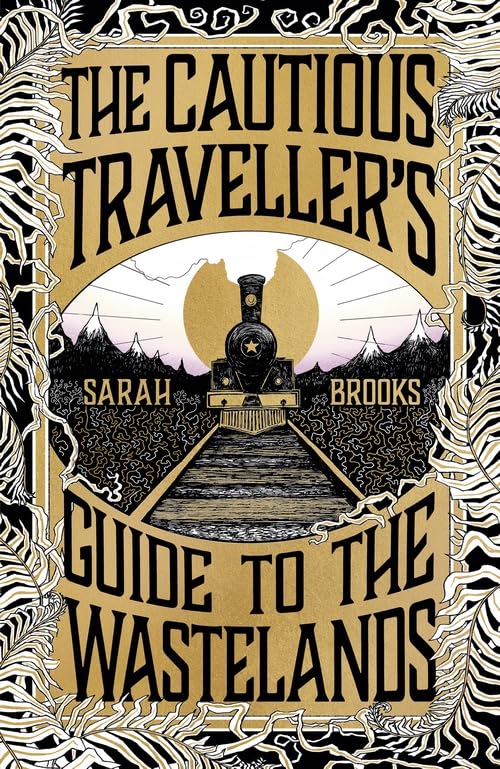
After forty years of wreaking havoc across the galaxy, the outlaw Nine Lives – AKA Former General Gabriella Ortiz – has finally run out of lives. Shot down into a backwater at the system’s edge, she is rescued by Deputy Air Marshall Havemercy Grey.
Hav is a true soul, trying to uphold what is right in the heedless wastes. Hav is determined to see justice done. And Hav could sure use that 20-million bounty…
But escorting the most dangerous fugitive in the system across the stars is no easy task, especially when decades of fire and destruction are catching up with her, and every gutspill with a pistol wants that payday. So when Ortiz offers a deal – to keep them both alive, as long as Hav listens to the stories of her lives – Hav can’t refuse.
There’s just one catch: everywhere they go, during every brawl and gunfight and explosive escape, people say the same thing – don’t let her talk…
My Review
Fabulous final instalment of the Factus trilogy, following Gabi, the former General, and Factan faction leader. We read of Gabi’s, now known as Nine Lives, deaths from before she crashed on Factus (see Hel’s Eight) to her final adventure with Hel, originally Ten ‘Doc’ Low (see Ten Low), as told by Hav and a future archivist, Idrisi Blake, who has been tasked with chronicling the life of Gabrielle Ortiz.
A riveting adventure through space, full of action and tension. The narrative moves between Blake’s increasingly disordered search for information and Hav’s recollections of their adventures with Gabi and the tale Gabi told Hav, supplemented by information Blake manages to retrieve from Accord sources to include in his report, such as interview transcripts and newspaper reports. It’s layered and each layer builds on the readers’ knowledge.
If you’ve read the other books in this series, then this will be a satisfying end to the trilogy, but if you haven’t it might be a bit confusing. The entire series covers a century of life on and off Factus, as the little community on the dessert moon fights for something resembling independence from the Accord and the greed of industrial tycoon, Xoon, while living with the Edge and the Ifs. The Seekers and the G’hals make an appearance, fighting their way across the Dead Line to keep the Factans supplied and take their tithe of the living and the dead.
These books are delightfully reminiscent of Westerns and pulp fiction. The characters are a mix of sandblasted marshals, scavenging frontiers people, pirates in neon ships and tie-dyed overalls, and death incarnate. The world of Factan, the mining asteroid of JP-V and the many other planets, moons, space stations and ships visited are each unique and quite, quite terrifying in their own ways.
The ideas explored in the series are fascinating; this is a literary exploration of Schrodinger’s Cat, but with life and death, the potential of events, choices made and paths not taken. The Seekers have an interesting philosophy. If people are going to die anyway, they may as well be useful in death, by saving lives. It’s very pragmatic and practical, but in these novels the basic principle of organ donation is elevated to a religion, led by a medic named after the Goddess of Death. From the outside the Ifs and The Seekers appear to be a terrifying death cult, but for those on the inside, they are life savers. The interplay of these ideas builds a complex world that I found riveting, while the story is brutal and gripping. I couldn’t put it down.
Extra kudos for the continued introduction of non-binary and Queer characters with complex lives and interests.
Format: 444 pages, Paperback Published: February 8, 2022 by Angry Robot ISBN: 9780857669667 (ISBN10: 0857669664) Language: English
Description
Lesbian gunslinger fights spies in space!
Three factions vie for control of the galaxy. Rig, a gunslinging, thieving, rebel with a cause, doesn’t give a damn about them and she hasn’t looked back since abandoning her faction three years ago.
That is, until her former faction sends her a message: return what she stole from them, or they’ll kill her twin sister.
Rig embarks on a journey across the galaxy to save her sister – but for once she’s not alone. She has help from her network of resistance contacts, her taser-wielding librarian girlfriend, and a mysterious bounty hunter.
If Rig fails and her former faction finds what she stole from them, trillions of lives will be lost–including her sister’s. But if she succeeds, she might just pull the whole damn faction system down around their ears. Either way, she’s going to do it with panache and pizzazz.
My Review
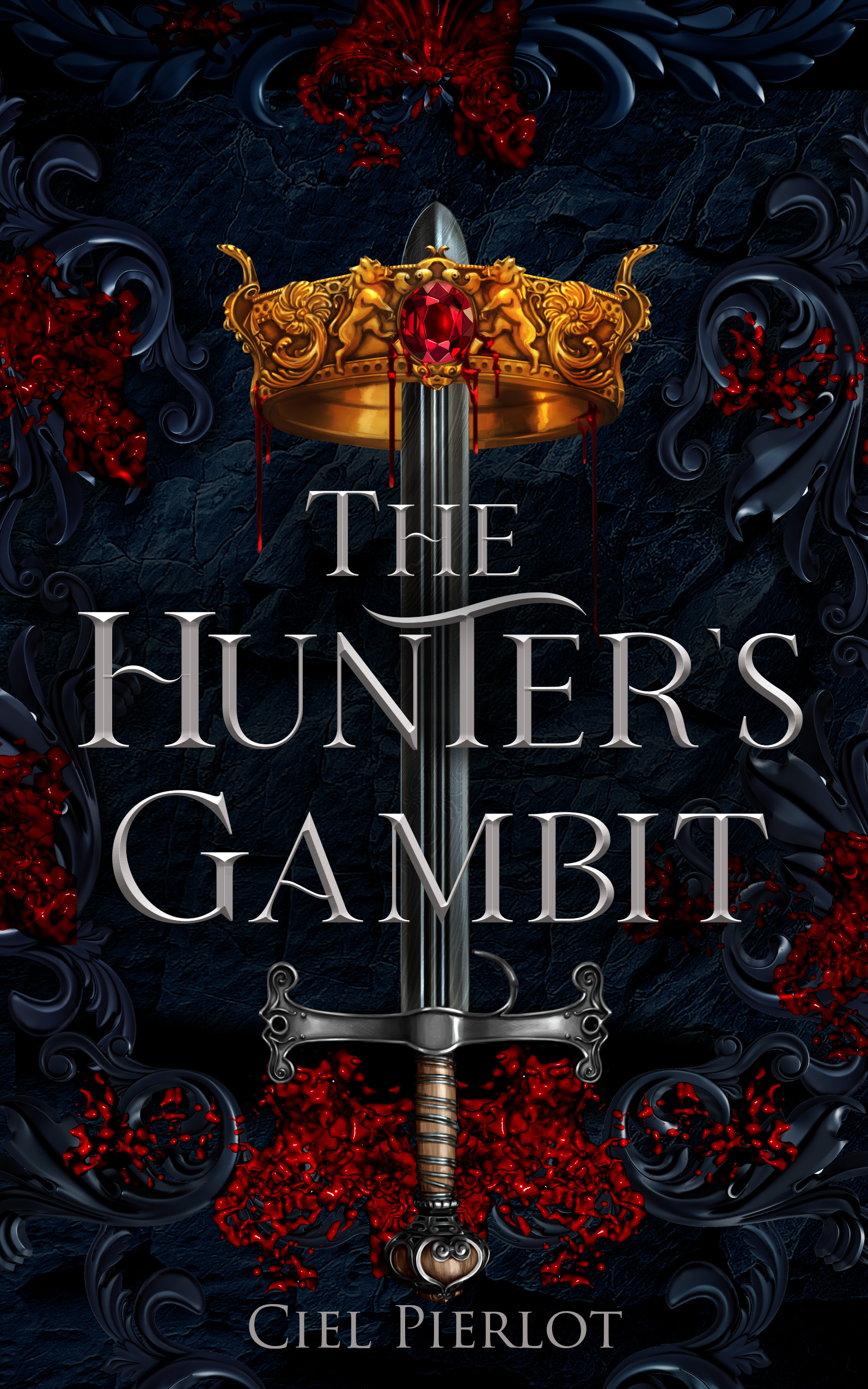
Angry Robot sent me a copy of Bluebird to read while I waited for The Hunter’s Gambit, also by the same author. The Hunter’s Gambit is fantasy and I’m reviewing it in late June. Bluebird is sci fi and I had no review date planned, I just happened to sit down yesterday and read the book. I started reading it when the book arrived, but stuff got in the way, so I only read three chapters. Yesterday, I read the remaining 370 pages. Totally worth spending my Saturday afternoon/evening reading it.
We meet Rig, a Kashrini, who has escaped the human faction Pyrite that took over her species’ homeworld and enslaved her species, when they aren’t murdering them, on a mission to rescue more indentured people. In the process she meets Ginka, from a felidae sentient species who’s species has come under the control of the Ossuary faction of humans. Ginka is a fighting machine with strange technology. And then Rig’s former faction catches up with her. This sends Rig and Ginka on a series of adventures as they avoid and/or fight both Pyrite and Ossuary spies. We get interludes where we find out about Ginao’s background and discover why she is out in space alone.
Rig wants to rescue her sister, Daara (loyal to Pyrite but now imprisoned), and protect her partner, Jane, who is an Ascetic faction librarian; Ginka wants to go home to her husband, Crane. They have allies known and unknown who want freedom. There are two powerful intelligence agencies against them. They might have to take down the factions to do it.
I wish I’d had time to read this earlier, it’s so good! As we journey across space with the pair, and meet various allies and enemies, and both of them almost die, the tension pulls the reader on, to keep turning the page. I needed to know what was going to happen next. We learn about the deeper issues in this ancient space empire, and humans don’t come out of it well. This is a richly imagined space adventure, with well-developed characters. The relationships between Rig and the other characters are fascinating and develop across the 400+ pages as they travel and fight.
The book ends with love and hope. We get happy endings for Rig and Ginka, while Daara has to make her own choices in life. One faction has been beaten and the other two have been forced to back off.














 Everything Is Better With Dragons