The first fantasy-writing textbook to combine a historical genre overview with an anthology and comprehensive craft guide, this book explores the blue prints of one of the most popular forms of genre fiction. The first section will acquaint readers with the vast canon of existing fantasy fiction and outline the many sub-genres encompassed within it before examining the important relationship between fantasy and creative writing, the academy and publishing. A craft guide follows which equips students with the key concepts of storytelling as they are impacted by writing through a fantastical lens. These
– Character and dialogue – Point of view – Plot and structure – Worldbuilding settings, ideologies and cultures – Style and revision
The third section guides students through the spectrum of styles as they are classified in fantasy fiction from Epic and high fantasy, through Lovecraftian and Weird fiction, to magical realism and hybrid fantasy. An accompanying anthology will provide students with a greater awareness of the range of possibilities open to them as fantasy writers and will feature such writers as Ursula Le Guin, China Miéville, Theodora Goss, Emrys Donaldson, Ken Liu, C.S.E. Cooney, Vandana Singh, Sofia Samatar, Rebecca Roanhorse, Jessie Ulmer, Yxta Maya Murray, and Rachael K. Jones. With writing exercises, prompts, additional online resources and cues for further reading throughout, this is an essential resource for anyone wanting to write fantastical fiction.
Format 344 pages, Paperback Published January 11, 2024 by Bloomsbury Academic ISBN 978135016692
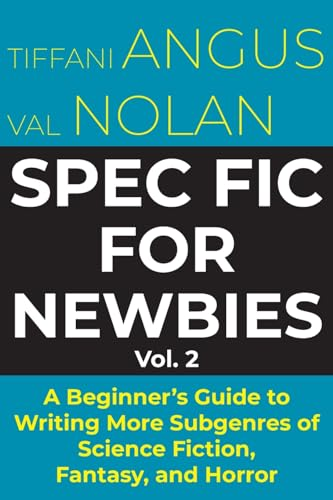
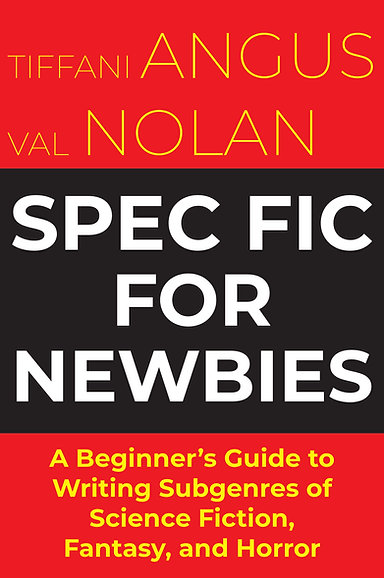
Beam aboard your own Science Fiction, Fantasy, and Horror classroom with the next volume of the BSFA-shortlisted writing-guide series!
Join Tiffani Angus (Ph.D.) and Val Nolan (Ph.D.) for a whirlwind introduction to the storytelling basics of 30 more subgenres and major tropes from across the limitless realms of Speculative Fiction.
Learn about Space Opera, Folk Horror, Climate Fiction, Werewolves, Astronauts, Mythic Fantasy, Goblin Markets, Dragons, and many more with deep dives into each subgenre’s history and development, spotter’s guides to typical examples, pitfalls to watch out for in your own writing, and activities to help you get started! All derived from a combined two decades of university-level practices and experience!
Spec Fic for Newbies breaks genres into bite-sized pieces for students or for any budding writer. It offers a welcoming introduction to how writers, filmmakers, and other creatives can begin to explore the infinite potential of Science Fiction, Fantasy, and Horror to create new stories beyond the boundaries of the ordinary.
This is not another dusty rulebook. This is a portal to endless other worlds!
Locus Recommended Reading List 2023 BSFA for Best Non-Fiction, Shortlist 2024 BFS for Best Non-Fiction, Shortlist 2024
Spec Fic For Newbies: A Beginner's Guide to Writing Subgenres of Science Fiction, Fantasy, and Horror. Tiffani Angus (Ph.D.) and Val Nolan (Ph.D.) met at the 2009 Clarion Writers’ Workshop in California and since then have collaborated many times as fans and scholars on panels for SFF conventions and writing retreats.Working together on this book and combining their experience as SFF writers and as university lecturers in Creative Writing and Literature made perfect sense!
Every year they see new students who want to write SFF/Horror but have never tried the genres, have tried but found themselves floundering, or, worse, have been discouraged by those who tell them Science Fiction, Fantasy, and Horror are somehow not “real” literature.
This book is for all those future Science Fiction, Fantasy, and Horror writers. Tiffani and Val are approaching these three exciting fields by breaking them down into bite-sized subgenres with a fun, open, and contemporary approach.Each chapter contains 10 subgenres or tropes, with a quick and nerdy history of each derived from classroom teaching practices, along with a list of potential pitfalls, a description of why it’s fun to write in these subgenres, as well as activities for new writers to try out and to get them started!
My Review
I bought this book at FantasyCon 2023. I’ve got quite a collection of Academia Lunare books now, mostly genre stuff and Tolkien books. Look at the Luna Press Publishing website, under non-fiction and academic, to get a sense of the books I mean. Most of the are small, A6 size, usually with monographs on a uniting subject matter.
This book is different.
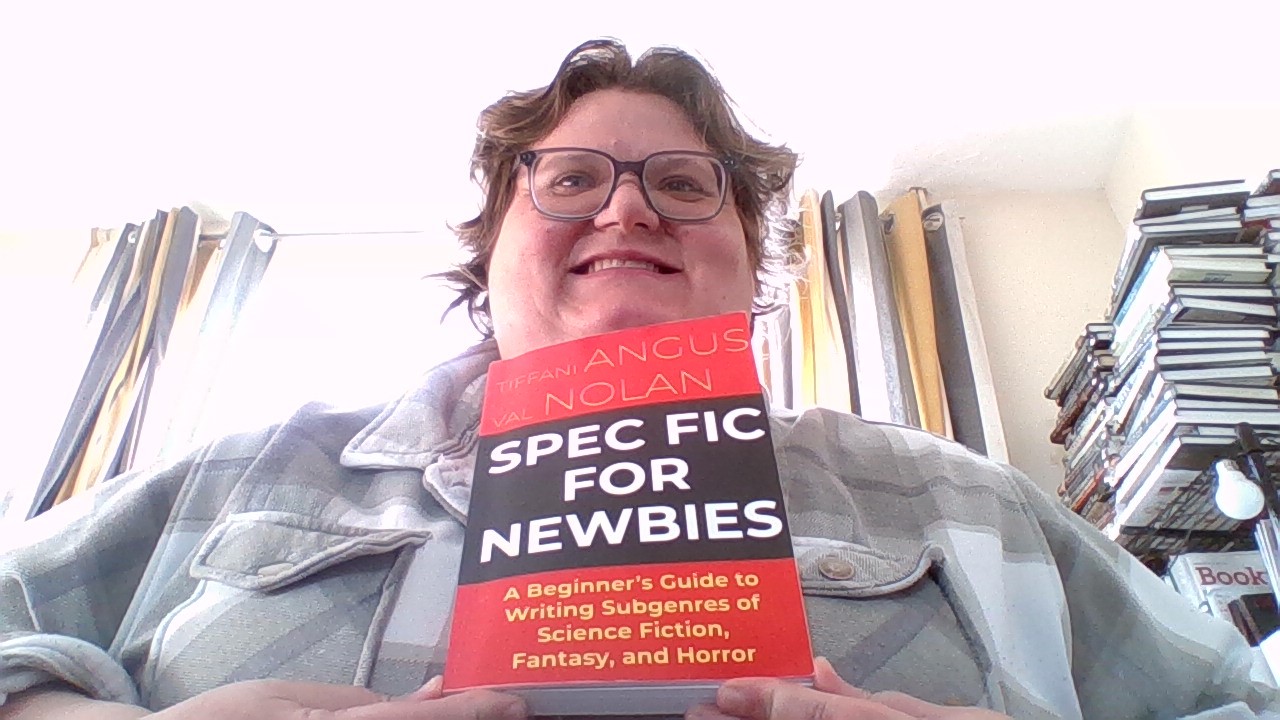
Yes, that’s me. I got the laptop camera to work properly. Yes, that’s the Pen & Sword TBR pile behind me.
It’s a guide to the sub-genres of SFFH, with two writing exercises for each sub-genre. I’m not exactly a ‘newbie’, but I don’t know all of the sub-genres, and it was interesting to read about the ones they included.
I enjoyed to quick tour and chatty writing style of this book, especially the genre and sub-genre histories. This book is informed by years of teaching by both authors, and it shows. They’ve clearly come across the same mistakes time and time again, but the enjoyment of both spec fic and teaching also really shines through. I could easily devour a volume on each sub-genre by these authors, but I’m weird like that. I like depth and breadth. I don’t think that’s a criticism of this book, but if you’re expecting in-depth discussions of the nuances of each sub-genre you’re not going to get that. The book provides broad overviews of each sub-genre with reference to specific tropes or movements within the sub-genre.
I enjoyed the tour of 30 sub-genres and the writing left me want more on some subject and no more about others (splatterpunk for example, is really not my thing). There’s enough to get you started on any sub-genre, and that’s what this book is for.
If you’re looking for something to read in a specific sub-genre, I think you could flip to the section in this book and find a place to start in a new sub-genre, because the authors provide lots of examples of works – both film and literary – that sit in a sub-genre.
There are also lots of references if you want to follow up on a particular statement or idea. I like references. More references and access to a database of papers, please. Because I don’t have enough to read…
I found the writing exercises prompted me to come up with new ideas and think it’ll be useful when I’m struggling to put an idea down on paper. I’ve got an idea about zombies and cruise ships, but it’s not going anywhere yet… Anyway, the activities make up a small section of each sub-genre entry, but the information packed in before them informs the activities. I think for a writer at any stage of their career, the activities will prompt the brain to try something new. If you’re a new writer they’ll give you a place to start, and for experienced writers they’re a reminder and refresher when your brain is fried. The writing advice found throughout the text is useful and explained well.
While I read this book from start to finish, I think it could be a good ‘dipping’ book, for those having a go at a new genre or sub-genre. There’s always something new to try – nobody could have written in all thirty of the sub-genres in this book – so dipping in and out as the mood takes you can give the writer practice in a variety of stories.
I have already recommended this book to a very new writer (my nibbling is doing creative writing as part of their OU Open Degree – I’m so proud!) and will be buying volume 2 at FantasyCon in three weeks – Francesca, make sure there’s a copy put aside for me, please!
I mentioned on my book Instagram that I was reading this book and Dr Angus kindly told me to contact her if I need any PhD advice, which I thought was lovely.
Tiffani Angus signed the book. It was signed when I bought it, so Tiffani must have been at FantasyCon last year.
Paperback Published December 23rd 2019 ISBN:1677313129 (ISBN13: 9781677313129)
Blurb
Overwhelmed by creating fantasy worlds?
Lost in your world? Unsure where to go next?
30 Days of Worldbuilding breaks the task into manageable chunks. By following 30 creative prompts, this book will guide you from idea, to full world.
This workbook will help you to:
* Break the epic task of worldbuilding into easy steps * Build a full and complete world with prompts you may not have thought of * Tie your worldbuilding into your story to increase tension and conflict * Bring your worldbuilding back to your characters to get your readers hooked
This book also includes a bonus lesson on building magic systems that work. By completing just one prompt each day, you can have a fully created fantasy world in a month. You will also have an invaluable book of worldbuilding notes to keep beside you as you write.
Get 30 Days of Worldbuilding today, and stop getting lost in your world.
Available as both an ebook Guidebook and a paperback Workbook with space for answering each prompt.
My Review
I bought this book on a whim yesterday and it arrived this afternoon while I was out swimming. As some of my long-time readers might know, I occasionally write fantasy.
I know the world I built, Erce, from the core upwards, but I don’t know know how I know. I have written some of it down on here. There have been some changes to the world since then, and I’m working on a massive rewriting project. The main character of Lizzy remains but the world is changing a touch, with more obvious magic and fantasy elements.
In July I’m running a four part fantasy writing workshop through The Faraway CIC, and I needed some ideas for writing exercises. I wanted to check I had enough content as well. There are bound to be things I’ve missed if I don’t check it against other people’s work.
As it happens, this book has been quite though-provoking both for my own worldbuilding and for the workshops. I’ve ordered a couple of other books by the author because I think this workbook will be very useful to me as a writer. The author is a massive fantasy fan and a writer of speculative fiction herself, so she knows what she’s talking about (I have doubts about her taste – Narnia, really? Everyone knows Tolkien was the best Inkling!). I think I will return to this book every time I build a world (there are a couple sitting in my notebooks and several stories waiting to be written in those worlds), and I will be using it to work on the re-writes of the Erce stories.
I’m not going to write in the book itself, although there is space in the book for that. It’s the sort of book you can dip into and work on an aspect of your worldbuilding or work your way through it over a month, perhaps in preparation for NaNoWriMo, or a writing retreat. The author always brings it back to the question of ‘how do these aspects of your world affect your character?’ How does a particular law or cultural event affect them and their lives? What conflict does it bring? The author reminds the reader that you have to keep these things in mind even if you don’t use it in the story. It gives the story depth, by implying that there is a history and culture that is totally normal to the characters even if it is alien to us as readers.
Very happy to recommend this book and I’ll be happy to read the other books I’ve ordered.















 Everything Is Better With Dragons