Format: 496 pages, Paperback Published: May 2, 2023 by Head of Zeus — an AdAstra Book ISBN: 9781801108430 (ISBN10: 1801108439)
Description
Arthur C. Clarke winner and Sunday Times bestseller Adrian Tchaikovsky’s triumphant return to fantasy with a darkly inventive portrait of a city under occupation and on the verge of revolution.
There has always been a darkness to Ilmar, but never more so than now. The city chafes under the heavy hand of the Palleseen occupation, the choke-hold of its criminal underworld, the boot of its factory owners, the weight of its wretched poor and the burden of its ancient curse.
What will be the spark that lights the conflagration?
Despite the city’s refugees, wanderers, murderers, madmen, fanatics and thieves, the catalyst, as always, will be the Anchorwood – that dark grove of trees, that primeval remnant, that portal, when the moon is full, to strange and distant shores.
Ilmar, some say, is the worst place in the world and the gateway to a thousand worse places.
Format: 280 pages, Paperback Published: February 18, 2023 by Aethervale Publishing ISBN: 9798987850206
Description
When life gives you lemons, squeeze them into a stiff drink and stir.
After twenty years defending the frozen north against some of the most dangerous threats in the nine kingdoms, Rhoren “Bloodbane” has finally earned his retirement. While the blood mage’s service to the realm may have ended, burning veins and aching joints remain, and Rhoren soon learns that a warmer climate offers relief from his chronic pain.
And a chance at a fresh start.
In the warm and relaxing atmosphere of Eastborne, the umbral elf finds a new purpose and a sense of belonging. He may have left the frozen north behind, but he brings with him the skills and strength gained from a lifetime of defending the realm. Along with his most prized possession—a book of drink recipes inherited from his father.
Spilled cocktails may not carry the same weight as spilled blood, but opening a tavern brings a unique brand of challenges. With the right friends and a little bit of luck, he might just have a recipe for success.
It’s about half six on Sunday afternoon. The last panel ended almost three hours ago. I’ve had a nap and finally have some time to write about my experience of FantasyCon 2024.
Release Date: 2024-09-24 Formats: Ebook, Paperback EBook ISBN 24th September 2024 | 9781915998019 | epub | £4.99/$6.99/$7.99 Paperback ISBN 24th September 2024 | 9781915998002 | epub | £9.99/$18.99/$23.99
Description
On the heels of the terrorist attacks on the planet Nova’s capital, the Special Projects Team finds itself targeted by the ambitious new head of the Commonwealth Intelligence Directorate, Aidan Kester. When Kovalic and General Adaj are arrested on charges of treason, Tapper, Brody, Sayers, and Taylor are forced to go on the run. While Kovalic and the general attempt to uncover an Illyrican mole within the Commonwealth’s intelligence apparatus, it’s up to the rest of the team to clear their friends’ names, even if that means making a deal with an old enemy to carry out a daring heist that might just get them all killed.
Locus Recommended Reading List 2023 BSFA for Best Non-Fiction, Shortlist 2024 BFS for Best Non-Fiction, Shortlist 2024
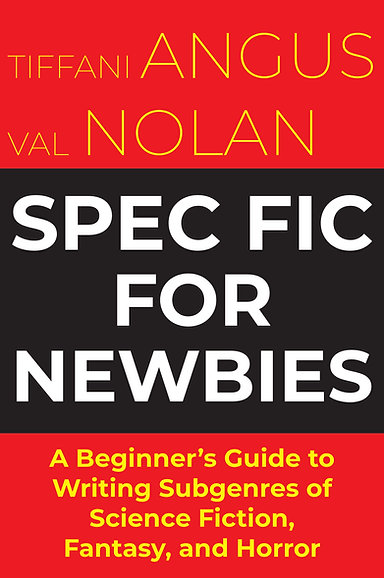
Spec Fic For Newbies: A Beginner's Guide to Writing Subgenres of Science Fiction, Fantasy, and Horror. Tiffani Angus (Ph.D.) and Val Nolan (Ph.D.) met at the 2009 Clarion Writers’ Workshop in California and since then have collaborated many times as fans and scholars on panels for SFF conventions and writing retreats.Working together on this book and combining their experience as SFF writers and as university lecturers in Creative Writing and Literature made perfect sense!
Every year they see new students who want to write SFF/Horror but have never tried the genres, have tried but found themselves floundering, or, worse, have been discouraged by those who tell them Science Fiction, Fantasy, and Horror are somehow not “real” literature.
This book is for all those future Science Fiction, Fantasy, and Horror writers. Tiffani and Val are approaching these three exciting fields by breaking them down into bite-sized subgenres with a fun, open, and contemporary approach.Each chapter contains 10 subgenres or tropes, with a quick and nerdy history of each derived from classroom teaching practices, along with a list of potential pitfalls, a description of why it’s fun to write in these subgenres, as well as activities for new writers to try out and to get them started!
My Review
I bought this book at FantasyCon 2023. I’ve got quite a collection of Academia Lunare books now, mostly genre stuff and Tolkien books. Look at the Luna Press Publishing website, under non-fiction and academic, to get a sense of the books I mean. Most of the are small, A6 size, usually with monographs on a uniting subject matter.
This book is different.
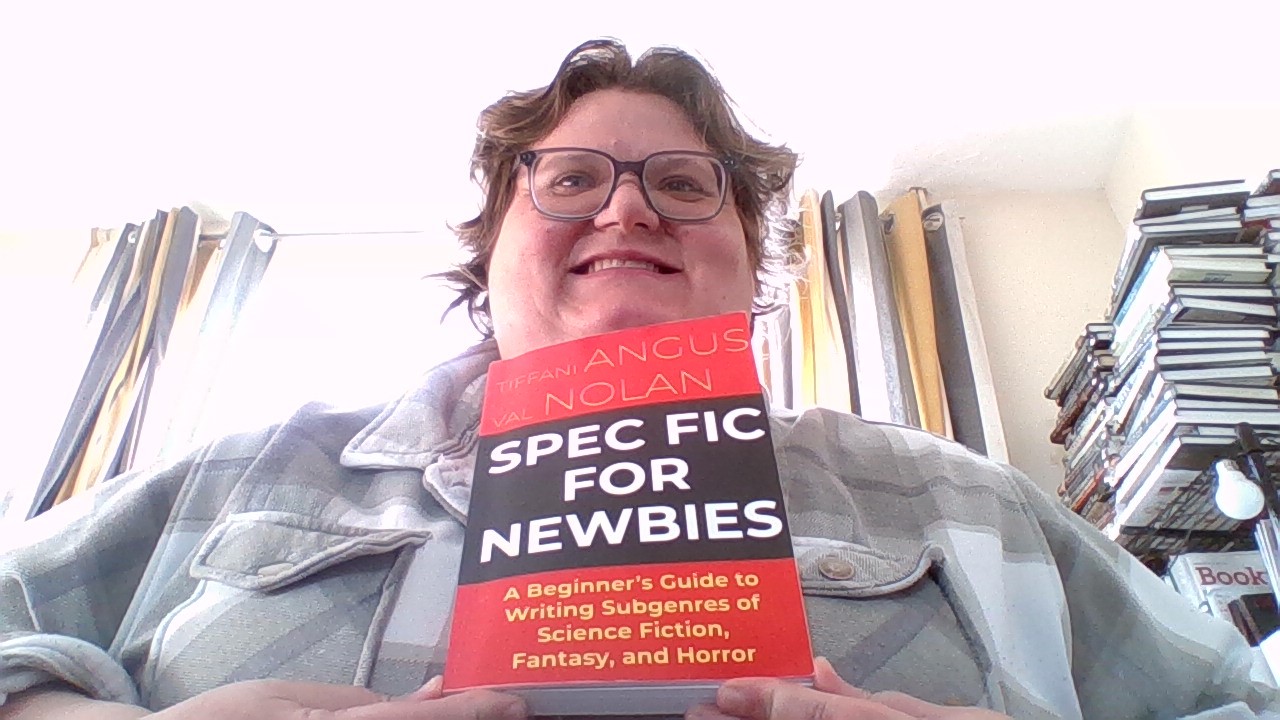
Yes, that’s me. I got the laptop camera to work properly. Yes, that’s the Pen & Sword TBR pile behind me.
It’s a guide to the sub-genres of SFFH, with two writing exercises for each sub-genre. I’m not exactly a ‘newbie’, but I don’t know all of the sub-genres, and it was interesting to read about the ones they included.
I enjoyed to quick tour and chatty writing style of this book, especially the genre and sub-genre histories. This book is informed by years of teaching by both authors, and it shows. They’ve clearly come across the same mistakes time and time again, but the enjoyment of both spec fic and teaching also really shines through. I could easily devour a volume on each sub-genre by these authors, but I’m weird like that. I like depth and breadth. I don’t think that’s a criticism of this book, but if you’re expecting in-depth discussions of the nuances of each sub-genre you’re not going to get that. The book provides broad overviews of each sub-genre with reference to specific tropes or movements within the sub-genre.
I enjoyed the tour of 30 sub-genres and the writing left me want more on some subject and no more about others (splatterpunk for example, is really not my thing). There’s enough to get you started on any sub-genre, and that’s what this book is for.
If you’re looking for something to read in a specific sub-genre, I think you could flip to the section in this book and find a place to start in a new sub-genre, because the authors provide lots of examples of works – both film and literary – that sit in a sub-genre.
There are also lots of references if you want to follow up on a particular statement or idea. I like references. More references and access to a database of papers, please. Because I don’t have enough to read…
I found the writing exercises prompted me to come up with new ideas and think it’ll be useful when I’m struggling to put an idea down on paper. I’ve got an idea about zombies and cruise ships, but it’s not going anywhere yet… Anyway, the activities make up a small section of each sub-genre entry, but the information packed in before them informs the activities. I think for a writer at any stage of their career, the activities will prompt the brain to try something new. If you’re a new writer they’ll give you a place to start, and for experienced writers they’re a reminder and refresher when your brain is fried. The writing advice found throughout the text is useful and explained well.
While I read this book from start to finish, I think it could be a good ‘dipping’ book, for those having a go at a new genre or sub-genre. There’s always something new to try – nobody could have written in all thirty of the sub-genres in this book – so dipping in and out as the mood takes you can give the writer practice in a variety of stories.
I have already recommended this book to a very new writer (my nibbling is doing creative writing as part of their OU Open Degree – I’m so proud!) and will be buying volume 2 at FantasyCon in three weeks – Francesca, make sure there’s a copy put aside for me, please!
I mentioned on my book Instagram that I was reading this book and Dr Angus kindly told me to contact her if I need any PhD advice, which I thought was lovely.
Tiffani Angus signed the book. It was signed when I bought it, so Tiffani must have been at FantasyCon last year.
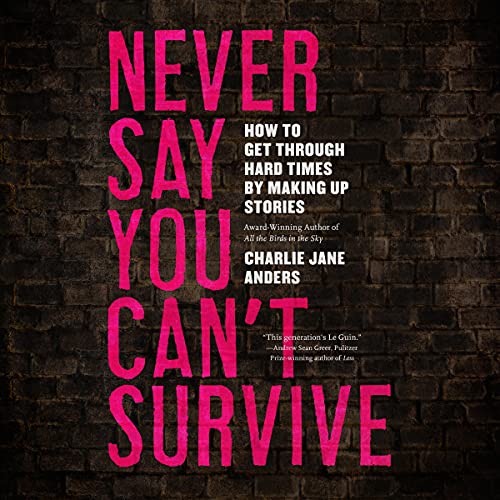
Format: Audiobook Published: August 17, 2021 by Macmillan Audio ISBN: 9781250830777 (ISBN10: 125083077X) Language: English
Description
Things are scary right now. We’re all being swept along by a tidal wave of history, and it’s easy to feel helpless. But we’re not helpless: we have minds, and imaginations, and the ability to visualize other worlds and valiant struggles. And writing can be an act of resistance that reminds us that other futures and other ways of living are possible.
Full of memoir, personal anecdote, and insight about how to flourish during the present emergency, Never Say You Can’t Survive is the perfect manual for creativity in unprecedented times.
My Review
I listened to this book last week and I’ve been digesting it ever since. I am also reading another writing advice book at the moment, so I needed time to separate the two.
In this collection of essays written for tor.com during the pandemic, Anders covers memoir, dealing with catastrophic life events, the utility of positive writing, and writing advice. I enjoy Charlie Jane Anders’ podcast Our Opinions Are Correct, so I’m familiar with her audio work. I don’t generally read YA or comics so I haven’t read any of her books, and this was an opportunity to learn more about her writing style and techniques, as well as receive a bit of a pep talk.
Before I continue, I would like to point out that I cried, a lot, listening to this book. Walking down the street. At the wellbeing centre. On the bus. Seriously, I don’t think I’ve ever had a writing craft book make me cry before! Both the essays that cover her own story and the essays that explore purpose of positive writing in bad times hit me right in the emotions. I probably needed the cry, to be honest.
I have been struggling with my writing recently, for a variety of reasons – work stress, financial anxiety, another ear infection, not being able to get to the pool, just the usual stuff. I’m torn between working on the sci-fantasy star dragons, autistic human and a mysterious disappearance in space story I’ve been sharing monthly with paid subscribers, and working on the fantasy novel I want to write for my PhD (it will contain dragons, autistic people, and shapeshifting. Also murder. But not a murder mystery. The murderer is known, revenge is plotted.) but getting started on the PhD is taking longer than planned, what with me not yet submitting my application and struggling with writing the proposal and writing samples.
Last Friday, after listening to this book for several hours, I sat down and write outlines and a couple of scenes from the end of the novel. I just have to work out how to get back from there to the beginning… There will definitely be murder, pirates, and dragons, that you can be certain of. I was writing for so long I had to reheat my tea! And I’ve had ideas for the space dragon mystery story too, so I’m going to work on that next week. I also made progress on my PhD proposal, so thanks Charlie Jane, I appreciate the kick up the bum.
The author narrates this audiobook, and does rather a good job of it. You can tell she’s been presenting a podcast for a while now. Very smooth, clear diction.
I would say this is one of the best writing guides I’ve read/listened to. There are a lot of writing books out there, but I’ve recommended this one to people already, so I think that’s a positive sign.
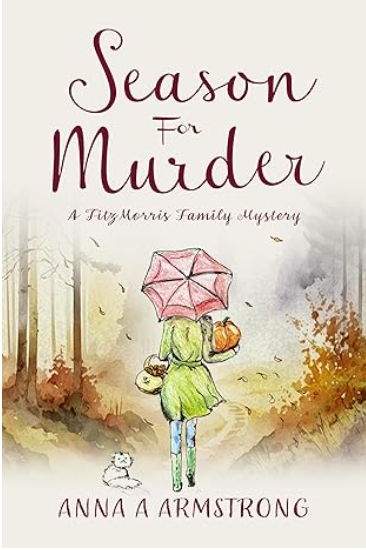
Enjoy a visit to the idyllic Cotswolds where the blackberry jam is delicious, the pumpkins are ripe and a killer is plotting death.
Vivian Plover is an unlikely murderer but needs must. If her bumbling husband is ever going to reach the exalted office of Lord-Lieutenant, Vivian, in sensible shoes, twin set and pearls has some murderous work to do. She is beset by challenges, from her godson’s fake fiancée to Dee’s meddling.
With the worthies of Little Warthing falling foul of accidents, can Dee FitzMorris thwart her scheme or will she find herself yet another victim?
Rarely has murder been so amusing.
Indulge in this quirky and humorous cosy crime novel that will keep you entertained from start to finish. Set in modern-day England, amidst the charming British Cotswold countryside, “Season for Murder” delivers a captivating blend of mystery and comedy. With its light-hearted atmosphere and engaging whodunit plot, this British detective series is a must-read for fans of cosy crime murder mysteries.
My Review
I was supposed to review this book for the blog tour but I couldn’t write a positive review. I was feeling very unhappy with this book, but I’ve decided to try to write a constructive review and post it now that the tour is over. I’m also not going to tag the author, because I don’t want to upset anyone.
So, here are my problems:
It’s all tell, no show.
The characters are caricatures. I don’t need to read all their inane thoughts.
There’s no mystery, the murderer tells the reader when, how, and why they did it.
The main character isn’t really made clear until a few chapters in.
The author keeps jumping from head-to-head.
It feels like the author read about NPD and decided to make their murderer a caricature of someone with NPD and loudly signal it with one of the minor characters studying narcissistic personality disorder for university.
I got bored, but pushed through in the hopes it’d improve. It didn’t
The thing is, if it was better written, it’d be a really good mystery. People in a Cotswolds village mysteriously almost dying, clearly murder attempts, but unsuccessful.
I had so many questions:
Who is the main character meant to be?
Is it the older woman who does taekwondo and is involved in her community. She, her daughter, and her granddaughter could have been the main investigators, helped by two admiring police officers, but they aren’t.
Or is it the young couple in a ‘fake couple becomes a real couple through surviving overbearing relatives and murder attempts’ narrative, but they aren’t.
Or it could even have been told exclusively from the villain’s perspective, but it isn’t.
It could have been a sensitive exploration of childhood trauma, the changing nature of wealth and country life, and village pettiness. But it’s heavy-handed, unsubtle, and not funny. I think it’s supposed to be funny, but I could be wrong.
I do feel sorry for the murderer’s husband, but he needed bringing into the story more, and some of the side characters have an outsized position in the plot, but their scenes barely add to the narrative. There are clearly difficulties in the marriage of one couple, but it doesn’t seem important to the plot, for example.
I tried to find something positive, but even the complicated relationship between Emily and Tristan, which could have been a driving force for emotion and comedy in the plot, isn’t engaging. The inclusion of an Italian family, a disabled side character and a gay couple in a long-term relationship feel shoved in for ‘diversity’, rather than being a solid part of the plot. The author treats their ‘differences’ from the majority of the characters as something that needs to be mentioned repeatedly, rather than just a thing that is.
It’s like the author wrote down the village gossip and threw in a murdering posh woman and gave her NPD as the cause, to produce a cosy mystery novel. And it doesn’t work like that in fiction!
I know there will be readers who love the POV shifting and seeing the day to day lives and thoughts of the characters, but my head is loud enough without adding fictional characters thoughts to the jumble, and it slows down the story and confuses the plot.
Okay, I failed at writing a constructive review. I tried. It’s up to you though, if you enjoy cosy crime/slice of village life fiction, borrow a copy from the library and see how you feel. I understand there are two other books in the series.
Talking of libraries, when you borrow a book from the library the author gets a small payment. Twice a year, the ALCS collects and distributes payments to authors, writers, and, journalists. I get about £100 a year from ALCS payments; it’s a life saver. Support your local library – they’re one of the few third spaces left where you can just go and hang out, use a computer, read a book, get help. They also support authors.
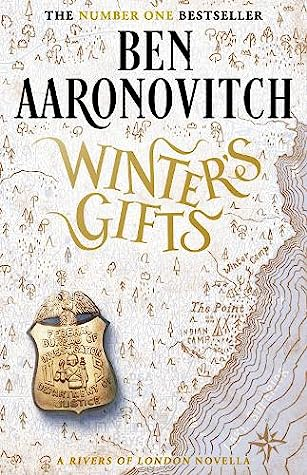
Series: Rivers of London (#9.5) Characters: Kimberley Reynolds Format: 211 pages, Hardcover Published: June 8, 2023 by Orion ISBN: 9781473224377 (ISBN10: 1473224373)
Description
When retired FBI Agent Patrick Henderson calls in an ‘X-Ray Sierra India’ incident, the operator doesn’t understand. He tells them to pass it up the chain till someone does.
That person is FBI Special Agent Kimberley Reynolds. Leaving Quantico for snowbound Northern Wisconsin, she finds that a tornado has flattened half the town – and there’s no sign of Henderson.
Things soon go from weird to worse, as neighbours report unsettling sightings, key evidence goes missing, and the snow keeps rising – cutting off the town, with no way in or out…
Something terrible is awakening. As the clues lead to the coldest of cold cases – a cursed expedition into the frozen wilderness – Reynolds follows a trail from the start of the American nightmare, to the horror that still lives on today…
My Review
A novella from last year that’s been sat on my TBR pile for a while! I’ve been prompted to read it by the arrival of the latest Rivers of London novella. I thought I’d better get up to date.
Kimberley Reynolds is sent to the Great Lakes in the middle of winter to deal with an incident with unusual characteristics, and is snowed in almost immediately. Stuck without back-up, and her contact missing, she must discover what’s going on, what it has to do with an exhibition by the Virginia Gentlemen in 1848 and where Henderson in. Unfortunately, she’s not the only one looking into things, and it gets complicated when the local meteorologist takes her out to the site of the 1848 winter camp. Malevolent forces are at work, a teenage genius loci comes to the rescue, and Kimberly falls in love.
Kimberley Reynolds is a character that pops up in some of the novels but to be honest, she never struck me as a interesting character, or one I’d taken much note of. However, this novella gives the reader more information about her background and develops her character. I enjoy these novellas because they allow Aaronovitch to explore characters and locations without a full novel focused on Peter. He does make an appearance, over the phone and in her head, but it’s mainly about Kimberley and her slowly blossoming romance with William, while investigating both modern and historical crimes.
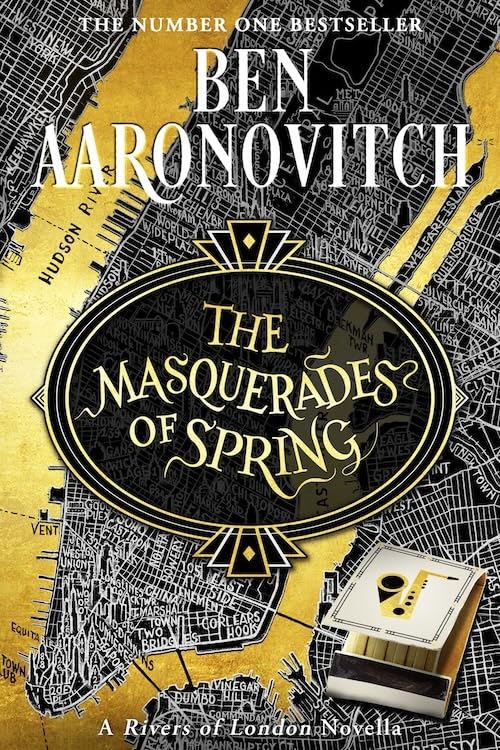
Format: 182 pages, Hardcover Published: September 5, 2024 by Orion Publishing Co ISBN: 9781398723887 (ISBN10: 1398723886)
Description
New York City, New York.
Meet Augustus Berrycloth-Young – fop, flaneur, and Englishman abroad – as he chronicles the Jazz Age from his perch atop the city that never sleeps.
That is, until his old friend Thomas Nightingale arrives, pursuing a rather mysterious affair concerning an old saxophone – which will take Gussie from his warm bed, to the cold shores of Long Island, and down to the jazz clubs where music, magic, and madness haunt the shadows…
My Review
A fun novella set in jazz-age New York, with a queer cast and inter-racial love. Nightingale turns up unexpectedly, and Gussie must help him rescue a fae. Interrupting things in the US, and upsetting lots of politicians, businessmen and mobsters, and people of a magical persuasion, events culminate at a drag ball, with policemen amusingly debagged, and explosions on lonely roads.
Aaronovitch conjures the air of excitement and danger that pervades New York in the 1920s and 30s, as jazz clubs and bathtub gin fill the need for escape after the horrors of war, and chronicle a forgotten period of cultural explosion, particularly exemplified by the Harlem Renaissance, in which Black culture and Queer culture flourished, before being appropriated and repressed after the second world war. He also captures the culture of corruption in the city, from police shakedowns for personal gain to gang violence. I loved the inclusion of the drag ball. I’ve heard about them, and how popular they were, but I don’t think they’re particularly well known outside of people interested in Queer history.
Gussie and Lucy are adorable, and I was sure Beauregard is some species of fae, although he might just be a practitioner with connections. I hope Lucy, Gussie and the gang all have long and fun lives, although I think they’d be old before their relationship becomes legal.
I enjoyed the ‘Jeeves and Wooster’ tone of the narrative, and Gussie is a funny narrator. He’s self-deprecating and observant, and astute enough to know when and when not to be himself, even if he has a low opinion of his own intelligence. The references to golden age crime fiction made me laugh – especially when Gussie decides to be a detective for a minute.
Enjoyable novella that introduces new aspects of the Rivers of London universe. Highly recommended.
Format: 320 pages, Hardcover Published: March 19, 2024 by Allen Lane ISBN: 9780241595824 (ISBN10: 0241595827)
Description
Judith Butler, the ground-breaking philosopher whose influential work has redefined how we think about gender and sexuality, confronts the attacks on gender that have become central to right-wing movements today. Global networks have formed “anti-gender ideology movements” dedicated to circulating a fantasy that gender is a dangerous threat to families, local cultures, civilization –and even “man” himself. Inflamed by the rhetoric of public figures, this movement has sought to abolish reproductive justice, undermine protections against violence, and strip trans and queer people of their rights. But what, exactly, is so scary about gender?
In this vital, courageous book, Butler carefully examines how “gender” has become a phantasm for emerging authoritarian regimes, fascist formations, and trans-exclusionary feminists. They illuminate the concrete ways that this phantasm displaces anxieties and fears of destruction. Operating in tandem with deceptive accounts of critical race theory and xenophobic panics about migration, the anti-gender movement demonizes struggles for equality, fuels aggressive nationalism, and leaves millions of people vulnerable to subjugation.
An essential intervention into one of the most fraught issues of our moment, Who’s Afraid of Gender? is a bold call to make a broad coalition with all those whose struggle for equality is linked with fighting injustice. Imagining new possibilities for both freedom and solidarity, Butler offers us an essentially hopeful work that is both timely and timeless.
My Review
Interesting, definitely one to re-read and digest. I struggled with parts of the text – it was a bit dense.
The author challenges the phantasm of ‘gender ideology’, pushed by those with a stake in maintaining the cis-heteronormative, patriarchal status quo as part of religious and Right wing ideology. The author takes the reader through the various talking points, and explains how those opposed to equal rights for gender and sexual minorities elide between talking points without logical argument. They assume ‘allowing trans people to live their lives’ automatically means ‘anyone will identify as anything in order to attack children’. There’s no logical way to get from one to the other. This is a way to displace the fear of living in late-stage capitalism, with the attendant global warming and population displacement that comes with it. Instead of focusing our anger and fear on the causes of the world becoming unliveable, humans are distracted by false ghosts, phantasms, bundled under the word ‘gender’.
The book seems to be aimed at a non-academic audience, covering what should be fairly obvious arguments, if you’ve kept up with the whole anti-trans movement. However, it does become very academic and falls into philosophy-speak at times. I did enjoy reading this book, but sometimes, I wish they’d written it in plain English.
It’s late, I’ll write more when I’ve had a think about it.





 Everything Is Better With Dragons